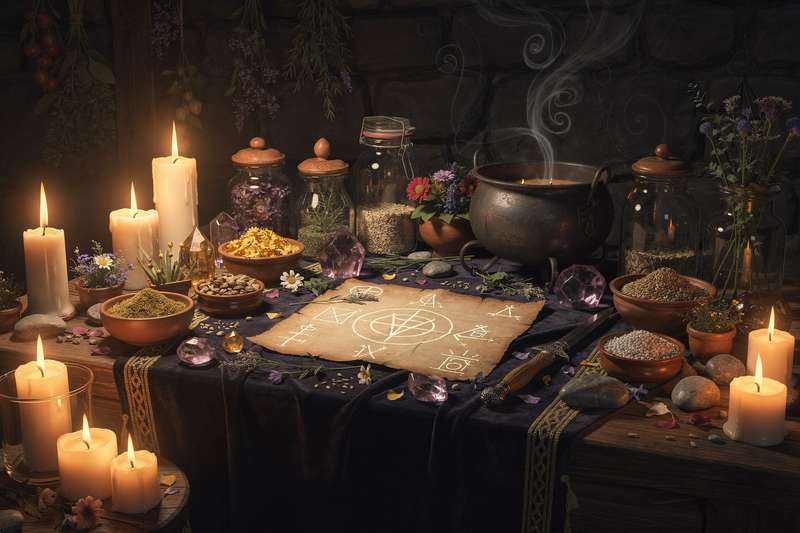
Shadow work prompts offer one of the most transformative practices you can bring into your witch’s journal. This sacred inner work helps you face the hidden parts of yourself—the emotions you’ve buried, the patterns you repeat without understanding why, and the wounded aspects of your psyche that still need your compassion. Whether you’re a kitchen witch seeking emotional clarity or a solitary practitioner ready to deepen your craft, shadow work journaling creates a bridge between your conscious intentions and the unconscious forces shaping your life.
Right now, more witches are turning to shadow work because surface-level spirituality no longer satisfies. You can cast all the abundance spells you want, but if your shadow self believes you’re unworthy, your magic will falter. Shadow work journaling cuts through the spiritual bypassing and gets to the root—helping you reclaim fragmented pieces of yourself, heal old wounds, and step into authentic power. Your witch’s journal becomes a sacred container for this courageous work.
This guide will walk you through everything you need to begin: what shadow work actually means, how to use prompts safely and effectively, step-by-step instructions for your first session, and dozens of powerful questions to explore in your practice.
What Is Shadow Work in Witchcraft?
Shadow work is the practice of exploring and integrating the parts of yourself you’ve rejected, repressed, or hidden away. The psychologist Carl Jung coined the term “shadow self” to describe these unconscious aspects—the traits, emotions, memories, and desires that you’ve learned to suppress because they felt unacceptable, shameful, or too painful to acknowledge.
In witchcraft, shadow work serves as both psychological healing and spiritual initiation. When your shadow remains buried, your energy splits. Part of you moves forward while another part stays stuck in old pain, limiting your magic and personal growth. Shadow work brings these fragments into the light, not to judge them, but to understand and integrate them. This integration makes you whole, authentic, and far more powerful in your craft.
Common myths suggest shadow work means dwelling on negativity or that it’s only for “dark” witches. Neither is true. Shadow work is for anyone ready to stop repeating toxic patterns, heal emotional wounds, and reclaim the energy they’ve spent hiding from themselves. Your witch’s journal becomes the sacred space where this honest reckoning happens.
Common Approaches to Shadow Work Practice
Different witches approach shadow work in ways that align with their paths and temperaments. Here are the main styles you’ll encounter:
- Jungian Shadow Work: Based on Carl Jung’s psychological framework, this approach uses journaling, dream analysis, and active imagination to identify and integrate shadow aspects. It’s introspective, therapeutic, and works beautifully for witches who love depth psychology and self-analysis.
- Lunar Shadow Work: This practice aligns shadow exploration with moon phases, especially the waning and dark moon. You use the moon’s natural cycle of release and rest to guide your inner work, making it perfect for witches who already work with lunar magic.
- Ritual-Based Shadow Work: Some practitioners prefer ceremony over journaling. They create sacred space, call on deities or guides, use scrying or tarot, and process shadow material through symbolic ritual action. This suits witches who need embodied, energetic processing.
- Prompted Journaling: The most accessible method, using specific questions to guide your exploration in your witch’s journal. This structured approach helps beginners stay focused and prevents overwhelm, which is why we’re focusing on it in this guide.
You don’t need to choose just one method. Many witches blend approaches—using moon phases to time their journaling sessions, or following up written work with ritual release. Trust what calls to you.
How to Use Shadow Work Prompts: Step-by-Step Guide
Step 1: Create Your Sacred Space
Before you begin shadow work journaling, prepare both your physical environment and your mental state. Choose a quiet, private place where you won’t be interrupted. This might be your altar space, a corner of your bedroom, or anywhere you feel safe and held. Consider lighting a black candle (for protection and shadow work) or a white candle (for clarity and healing). You might also burn mugwort or lavender incense to support introspection and calm.
Place grounding crystals nearby—obsidian, smoky quartz, or black tourmaline work beautifully for shadow work. These stones help you stay anchored as you explore deep emotions. Set up your witch’s journal, a comfortable pen, and perhaps a cup of tea. The physical ritual of preparation signals to your psyche that you’re entering sacred, honest space.
Step 2: Ground and Set Your Intention
Shadow work can stir powerful emotions, so grounding beforehand is essential. Take several deep breaths, feeling your body against the chair or floor. Visualize roots extending from your body into the earth, anchoring you. You might place your hands on your heart and belly, connecting with your physical presence.
Next, set a clear intention for your session. Why are you doing this work today? What do you hope to understand or heal? Your intention might be simple: “I want to understand why I self-sabotage in relationships,” or “I’m ready to meet the anger I’ve been avoiding.” Speak this intention aloud or write it at the top of your journal page. This focused purpose guides your shadow work and keeps you from spiraling into unproductive rumination.
Step 3: Choose Your Shadow Work Prompts
Select prompts that resonate with your current emotional landscape or the patterns you’re noticing in your life. If you’re new to shadow work, start with gentler prompts about childhood needs or daily patterns. Save the deep trauma and shame questions for when you’ve built more capacity and trust in the process.
You might work with just one prompt per session, or cluster related prompts together. There’s no requirement to answer everything—your witch’s journal practice should feel manageable, not overwhelming. Quality of reflection matters far more than quantity of answers. Some prompts will hit immediately; others won’t feel relevant. Trust your intuition about what your shadow needs to explore right now.
Step 4: Write Freely and Honestly
This is where the real work happens. Read your chosen prompt, then begin writing whatever comes to mind. Don’t censor yourself, don’t worry about grammar or coherence, and definitely don’t judge what emerges. Your witch’s journal is a completely safe space—no one else will read these words unless you choose to share them.
If you get stuck, try stream-of-consciousness writing: just keep your pen moving even if you’re writing “I don’t know what to write” until something breaks through. Sometimes the most important insights hide behind initial resistance. Let emotions arise as you write—tears, anger, grief, even unexpected laughter. These are signs your shadow work is touching something real.
Write until you feel complete with that prompt, which might be three sentences or three pages. There’s no right amount. You’ll know you’re done when the energy shifts or you feel a sense of release or recognition.
Step 5: Ask Deeper Follow-Up Questions
Once you’ve responded to a prompt, read what you wrote and notice what stands out. What emotions showed up? What memories surfaced? What patterns are you seeing? Now ask yourself follow-up questions to go even deeper: “Why do I believe this about myself?” “When did I first learn this pattern?” “What would it feel like to let this go?” “What does this part of me actually need?”
This deepening layer often reveals the core wound or belief beneath the surface pattern. You might start writing about current frustration with a friend and realize it connects to childhood feelings of invisibility. These connections are gold—they show you exactly where healing needs to happen. Write down these insights in your witch’s journal. They become touchstones for ongoing transformation.
Step 6: Practice Self-Compassion Throughout
As shadow material surfaces, meet it with kindness rather than judgment. This is perhaps the most challenging and most crucial aspect of shadow work. When you encounter parts of yourself you don’t like—jealousy, rage, pettiness, neediness—remember that these aspects developed as coping mechanisms. They were trying to protect you or get needs met when you had limited resources.
Speak to your shadow self as you would comfort a frightened child or wounded friend: “I see you. I understand why you’re here. You’re not bad—you’re hurt, and I’m here to help now.” This compassionate witness transforms shame into healing. Write these kind words directly in your journal. Let your witch’s journal hold both the shadow material and the loving response.
Step 7: Identify Integration Steps
Shadow work isn’t complete when you close your journal. The insights need integration into your daily life. After your writing session, ask yourself: “What one small action can I take based on what I’ve learned today?” This might be setting a boundary, having an honest conversation, changing a habit, or simply noticing a pattern as it arises.
Write these integration intentions in your witch’s journal. Make them specific and achievable. Instead of “be less codependent,” try “notice when I’m about to say yes when I mean no, and pause before responding.” Small, conscious actions compound into lasting transformation. This is how shadow work moves from journal pages into embodied change.
Step 8: Ground and Close Your Practice
After shadow work journaling, you need to ground and return to ordinary consciousness. This prevents you from staying in heavy emotional states or feeling unmoored. Place your hands on the earth or floor, or eat something nourishing. Visualize your roots drawing supportive energy up from the ground. You might wash your hands or face with cool water as a symbolic release.
Thank yourself for having the courage to do this work. Snuff out your candle, acknowledging that the sacred shadow work space is closing. Some witches like to journal a brief closing statement: “I release what no longer serves me and integrate what I’ve learned.” Move gently back into your day, giving yourself permission to rest, hydrate, and be tender with yourself. Shadow work is deep magic—treat yourself accordingly.
80+ Essential Shadow Work Prompts for Your Witch’s Journal
Understanding Your Shadow Self
- What emotions am I most afraid to feel, and why?
- When did I first feel unworthy or not enough?
- What parts of myself have I learned to hide from others?
- What traits do I judge most harshly in other people? (These often mirror our own rejected aspects.)
- If my shadow self could speak freely, what would it say?
- What does my inner critic tell me most often?
Childhood Wounds and Patterns
- What did I need most as a child that I didn’t receive?
- What does my inner child need from me right now?
- What beliefs did I form about myself before age ten?
- When did I learn it wasn’t safe to express my true feelings?
- What childhood experience still triggers me today?
- If I could tell my younger self one thing, what would it be?
Relationships and Boundaries
- What toxic patterns do I keep repeating in relationships?
- Where do I sacrifice my needs to keep others comfortable?
- What am I afraid will happen if I set firm boundaries?
- Who do I need to forgive, including myself?
- What relationship taught me the most painful lesson?
- Where am I seeking external validation instead of self-worth?
Fear and Self-Sabotage
- What am I most afraid of, and what does this fear protect me from facing?
- How do I sabotage myself when I’m close to success?
- What would I do if I weren’t afraid of judgment?
- What dream have I given up on, and why?
- What lies do I tell myself to stay small or safe?
- What part of my authentic self am I hiding?
Anger, Rage, and Resentment
- What anger have I been suppressing?
- Who am I most resentful toward, and what boundary did they cross?
- When was I taught that my anger was unacceptable?
- What would I say if I let myself be completely honest?
- What injustice am I tired of accepting?
- How can I express anger in healthy, boundaried ways?
Shame and Guilt
- What am I most ashamed of about myself?
- What secret do I carry that weighs on me?
- Where do I feel guilty for having needs or taking up space?
- What mistake can I not forgive myself for?
- What would change if I released this shame?
- Who taught me that this part of me was shameful?
Desires and Needs
- What do I truly desire that I’m afraid to admit?
- What needs am I not allowing myself to have?
- If I could live without others’ expectations, how would my life look?
- What brings me joy that I’ve denied myself?
- Where am I performing instead of being authentic?
- What would my life look like if I chose pleasure and peace?
Self-Worth and Identity
- What do I believe I must achieve to be worthy of love?
- Where do I measure my worth by external standards?
- What aspects of my identity have I rejected or hidden?
- When do I feel most like my authentic self?
- What would I do differently if I truly believed I was enough?
- What parts of myself am I reclaiming through this work?
Body, Sexuality, and Power
- What messages did I receive about my body growing up?
- Where do I give away my power to others?
- What aspects of my sexuality have I suppressed?
- When do I feel most powerful, and what diminishes that power?
- What would change if I fully inhabited my body?
- How do I disconnect from my body, and why?
Limiting Beliefs and Stories
- What story about myself am I ready to release?
- What limiting belief runs my life unconsciously?
- What would I do if I believed I couldn’t fail?
- What narrative about my worth or capability is false?
- Where do I play victim instead of taking responsibility?
- What new story am I ready to write about who I am?
Integration and Healing
- What shadow aspect am I ready to integrate and accept?
- How has my shadow self actually protected me?
- What gift or strength is hidden in my shadow?
- What needs to be grieved before I can move forward?
- How can I thank my shadow for the lessons it’s brought?
- What does wholeness look and feel like for me?
Essential Tools and Supplies for Shadow Work
Shadow work doesn’t require elaborate tools, but certain items can support and deepen your practice. Most importantly, you’ll need a dedicated witch’s journal—whether a beautiful bound book or a simple notebook doesn’t matter as much as keeping it private and sacred. Choose something that invites honesty.
Candles help create ritual space and shift your consciousness. Black candles represent shadow work, protection, and banishing old patterns. White candles offer clarity, healing, and divine support. Light one before you begin and let the flame witness your courage.
Crystals for grounding and protection include obsidian (reveals shadow material), smoky quartz (transmutes heavy energy), black tourmaline (shields during vulnerable work), and amethyst (provides spiritual protection and insight). Hold one while journaling or place it on your journal after writing.
Herbs that support shadow work include mugwort (enhances introspection and dream work), lavender (calms emotions and nerves), rosemary (brings clarity and remembrance), and wormwood (facilitates deep psychic work—use sparingly). Burn as incense or drink as tea before your session.
Finally, have comfort items nearby: water to stay hydrated, tissues for tears, a soft blanket, or anything that helps you feel safe and held. Shadow work is vulnerable magic—support yourself well.
Ethics and Best Practices for Shadow Work
Shadow work operates differently than other magical practices, and certain ethical guidelines keep you safe and effective. First, approach this work from a harm-none principle directed at yourself. Don’t use shadow work as self-punishment or as a reason to reinforce negative self-beliefs. The goal is integration and healing, not deeper wounding.
Honor your pace and timing. You don’t need to excavate every trauma in one sitting. Shadow work unfolds over months and years. If a prompt feels too intense, skip it and return when you’re ready. There’s no prize for pushing yourself into retraumatization. Slow, consistent work outpaces aggressive deep-diving that leaves you destabilized.
Seek professional support when needed. Shadow work journaling is powerful, but it’s not therapy. If you’re working with significant trauma, active mental health issues, or find yourself consistently overwhelmed by what surfaces, please work with a qualified therapist alongside your journal practice. Healing happens in relationship, and professional support is a strength, not a weakness.
Respect confidentiality—especially your own. Your witch’s journal entries are for your eyes only unless you explicitly choose to share. This privacy creates the safety needed for brutal honesty. Finally, balance shadow work with joy and lightness. Don’t make your entire practice about darkness. Integrate shadow sessions with celebration, gratitude work, and activities that bring you pleasure. Shadow work is one tool in a rich spiritual life, not the entire path.
Common Beginner Mistakes
- Going too deep too fast: Starting with your most traumatic experiences can overwhelm your nervous system and make you shut down or abandon the practice. Build capacity gradually with less intense prompts first.
- Using shadow work to confirm negative beliefs: Shadow work should reveal the falseness of limiting beliefs, not reinforce them. If you’re only finding evidence that you’re broken or bad, you’ve slipped into rumination rather than healing inquiry.
- Skipping the grounding steps: Beginning without grounding or ending without closing leaves you energetically vulnerable and emotionally raw. These bookends aren’t optional—they’re essential safety practices.
- Journaling without integration: Writing about patterns without taking action to change them keeps you stuck in insight without transformation. Always identify at least one small step toward embodied change.
- Comparing your shadow to others: Your shadow material is uniquely yours. Don’t judge your issues as too small or too big compared to others. Every person’s wounds deserve compassionate attention.
- Avoiding emotions as they arise: If you only intellectualize or analyze without feeling, shadow work becomes sterile. Let yourself cry, rage, or grieve as needed. Emotion is information and release.
How to Build Your Shadow Work Practice Over Time
Shadow work isn’t a one-time event but an ongoing practice that deepens your witchcraft and personal growth. Start with a manageable commitment—perhaps one session per week or during specific moon phases. Consistency matters more than intensity. As you become more comfortable with the process, you’ll naturally recognize shadow material arising in daily life and can journal about it in the moment.
Over time, you’ll notice patterns across multiple journal entries. This is where the real magic happens—seeing the threads that connect seemingly separate wounds, understanding the core beliefs driving your behavior, and recognizing when you’ve actually integrated and transformed an aspect of your shadow. Periodically review older entries to witness your growth and healing.
Let your practice evolve. You might start with prompted journaling and eventually incorporate ritual, tarot, dreamwork, or meditation. Some phases of life call for intensive shadow work; others need gentler approaches. Trust your intuition about what you need and when. The shadow work that serves you at twenty-five will look different at forty or sixty, and that’s exactly right. Your witch’s journal grows and changes with you, becoming a sacred record of your becoming whole.
Final Thoughts
Shadow work prompts transform your witch’s journal into a powerful tool for self-reclamation and healing. By facing what you’ve hidden, you stop leaking energy into repression and reclaim that power for your magic and your life. This work requires courage, but it also offers profound gifts: deeper self-understanding, healthier relationships, freedom from repeated patterns, and the authentic wholeness that comes from accepting all of who you are. Your shadow isn’t your enemy—it’s the part of you waiting to come home. Pick up your journal, light your candle, and begin the conversation. Your most powerful magic starts with knowing yourself completely.
Frequently Asked Questions About Shadow Work Journaling
How often should I do shadow work journaling?
Most practitioners find that once or twice a week provides consistency without overwhelm. Many witches align their shadow work with the waning or dark moon phases, working through one or two prompts per session. Quality and integration matter far more than frequency—it’s better to deeply process one prompt monthly than rush through many without real reflection.
Is shadow work dangerous or can it make me feel worse?
Shadow work is emotionally intense and can bring up difficult feelings, but it’s not inherently dangerous when practiced with proper grounding and self-compassion. You may feel temporarily worse as suppressed emotions surface, which is a normal part of healing. However, if you have significant trauma or active mental health concerns, work with a qualified therapist alongside your journaling practice to ensure proper support.
What’s the difference between shadow work and regular journaling?
Regular journaling often focuses on daily events, gratitude, or surface-level reflection. Shadow work journaling specifically targets unconscious patterns, repressed emotions, and rejected aspects of self. It uses targeted prompts to access deeper psychological material and aims for integration and healing rather than simple documentation. Shadow work is intentional excavation; regular journaling can be more free-form processing.
Can I do shadow work without being a witch or practicing witchcraft?
Absolutely. Shadow work originated in psychology and can be practiced by anyone seeking self-understanding and healing, regardless of spiritual path. The witch’s journal framing simply integrates shadow work into a magical practice, but the core journaling techniques work for anyone. You don’t need to cast circles or call quarters—just honest reflection and willingness to face yourself.