Knot magic and cord magic are among the oldest, most accessible forms of spellwork on the planet. With nothing more than a length of string and a focused intention, you can cast spells for protection, love, abundance, healing, and release — no elaborate altar required. This is the kind of magic that fits in your pocket, works on a lunch break, and speaks to something deeply intuitive inside you. It is no surprise that so many witches — new and seasoned alike — keep coming back to it. Whether you follow a Wiccan path, practice as an eclectic or kitchen witch, or simply feel drawn to practical folk magic, cord and knot spellwork has a place in your practice. This guide walks you through everything you need to know: the history, the methods, the tools, and the first spells you can try today.
What Is Knot and Cord Magic?
At its heart, knot magic is the practice of channeling intention into a physical act — the tying (or untying) of a knot. Each knot becomes a container for energy, sealed into the cord and released when the time is right. Cord magic is the broader term for any spellwork that uses rope, string, ribbon, yarn, or thread as its primary medium.
A common myth is that knot magic is only about binding or restricting things — cursing, trapping, or controlling. In reality, it is one of the most versatile tools in a witch’s kit. You can use it to draw things in, push things away, mark a commitment, time a spell over days, or simply create a wearable talisman. Its roots stretch across cultures: Viking sea witches reportedly sold knotted cords to sailors to control the winds, ancient Egyptians used knotted magic in healing rituals, and folk healers throughout Europe and the Americas have used knot work to seal blessings and remove illness for centuries. This is not fringe practice — it is deeply human.
Common Types of Knot and Cord Spellwork
Before you cast your first knot spell, it helps to know the main styles. Different situations call for different approaches.
- Binding knots: Used to restrict or contain an energy, situation, or influence. Binding is often misunderstood — it is not inherently harmful. Binding yourself to a goal, or binding a bad habit so it loses its hold on you, is a common and ethical use.
- Ladder or chain spells: A sequence of knots tied in a specific order, often with a chant or affirmation at each knot. The classic nine-knot spell falls into this category. Each knot builds on the last, creating a layered, cumulative energy.
- Releasing spells: Here, you tie a knot with an intention and later untie it — or burn or bury the cord — to release what was held. Excellent for letting go of grief, old patterns, or stagnant energy.
- Wearable cord magic: Friendship bracelets, knotted anklets, and macramé talismans all have magical roots. A cord tied around the wrist or ankle becomes a continuous, wearable spell.
- Cord cutting: The act of physically cutting a cord that was either tied or simply held symbolically between two points to sever an energetic connection — commonly used in cord-cutting rituals for closure after relationships end.
- Witches’ ladder: A longer cord woven with feathers, bones, shells, or beads at each knot, used as a meditation tool, a prayer rope, or a spell that unfolds over time.
How to Cast a Knot Spell: Step-by-Step
Below is a complete beginner-friendly method. Work through these steps at your own pace — magic rewards presence over speed.
Step 1 — Clarify Your Intention
Before you touch a single cord, know exactly what you are asking for. Vague intentions produce vague results. Instead of “I want more money,” try “I am opening pathways to steady, ethical income.” Write it down if that helps you. The more specific and emotionally resonant your intention, the more energy you have to feed the spell.
Step 2 — Choose Your Cord
Pick a cord that feels right for your purpose. Natural fibers — cotton, hemp, silk, wool, jute — are preferred by many practitioners because they hold energy well and return to the earth easily. Synthetic cords work fine if that is what you have. Aim for a length of at least 12 inches so you have enough room to work. For a nine-knot spell, 18–24 inches is comfortable.
Step 3 — Select Your Color
Color correspondence is one of the easiest ways to amplify cord magic. Red for passion, courage, and vitality. Green for abundance, growth, and healing. Blue for calm, communication, and truth. Purple for intuition and spiritual connection. Black for protection and banishing. White for cleansing, clarity, and new beginnings. Yellow for joy, confidence, and mental clarity. Trust your instincts — if a color feels right for your need, use it.
Step 4 — Cleanse Your Materials
Before you begin, clear any residual energy from your cord. Pass it through incense smoke, hold it in moonlight overnight, or simply run it through your hands while visualizing it as pure and blank. This is your clean slate. Even a brief moment of mindful intention counts as cleansing.
Step 5 — Enter a Focused State
You do not need a formal ritual to do this. Simply sit quietly, take a few slow breaths, and bring your full attention to the present moment. Some practitioners cast a circle or call in guides at this point — do what feels aligned with your path. The key is that your mind is genuinely present, not planning dinner or scrolling mentally through your to-do list.
Step 6 — Tie Your Knots With Intent
The classic nine-knot sequence follows this order: 1st knot, 9th knot, 5th knot, 3rd knot, 7th knot, 2nd knot, 8th knot, 4th knot, 6th knot. This pattern builds energy in a balanced, interwoven way. As you tie each knot, speak your intention aloud or internally. A traditional chant goes something like: “By this knot I seal this spell, the magic held inside it dwells.” Feel free to write your own words — your personal language carries more power than borrowed phrases.
If nine knots feel like too much for a first attempt, a single, deeply intentional knot is completely valid. One focused knot beats nine distracted ones every time.
Step 7 — Seal the Spell
When your last knot is tied, hold the cord between your palms and take a moment to feel the energy you have woven into it. Visualize your intention as already complete — not as a wish, but as a reality that exists in the cord right now. Say a closing phrase that resonates with you. “It is done,” “So mote it be,” “And so it is” — or simply a heartfelt thank-you to whatever forces you work with.
Step 8 — Decide What to Do With the Cord
Your options here shape how the spell unfolds. Wear the cord on your body to keep the energy active and close. Bury it in the earth to let the spell grow organically. Place it on your altar, under your pillow, or in a drawer where it will not be disturbed. If you tied the spell with the intention to release something, untie the knots one at a time during a waning moon phase, then burn or bury the cord to complete the working.
Step 9 — Trust and Release
One of the hardest parts of spellwork is not second-guessing it afterward. Once a spell is cast, try not to obsess over it. Write the intention in your journal, note the date, and then let it work. Checking on it constantly is the magical equivalent of digging up a seed every day to see if it sprouted. Trust the process, stay open to unexpected ways your intention might manifest, and take any aligned real-world actions that present themselves.
Essential Tools and Supplies for Cord Magic
One of cord magic’s greatest gifts is how little equipment it actually needs. Here is a practical starter list:
- Cords and strings: Stock a small selection in multiple colors. Embroidery floss, hemp twine, satin ribbon, and wool yarn are all excellent starting points.
- Scissors or a ritual knife: For cutting cords to length — and for cord-cutting spells.
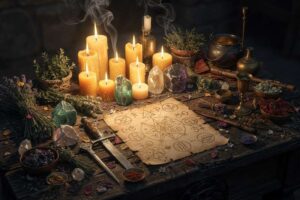
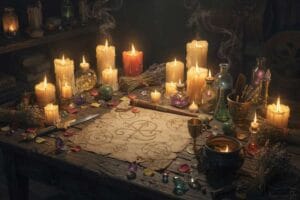
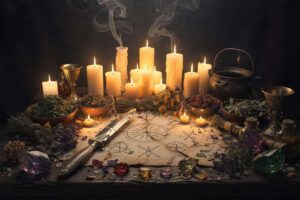
- Candles: Optional, but lighting a candle in a coordinating color while you work helps anchor focus and mark the space as sacred.
- Crystals: Hold a relevant crystal in your non-dominant hand as you tie knots to amplify the energy. Clear quartz is a go-to for any intention. Rose quartz for love and self-compassion. Black tourmaline for protection.
- Incense or herbs: For cleansing your materials and marking the beginning and end of your working.
- A journal: Record your spells — date, intention, cord color, number of knots, and any sensations or symbols that arise. This becomes an invaluable reference over time.
Ethics and Best Practices in Knot Magic
Magic comes with responsibility, and cord magic is no exception. A few principles worth holding close:
Consent matters. Casting a spell that affects another person without their knowledge or agreement — even with good intentions — is ethically murky territory. If you want to send healing to someone, ask first. If you want to attract love, focus the spell on drawing a relationship that is right for you, rather than targeting a specific person.
The harm-none principle is a cornerstone for many witches, particularly those on Wiccan paths. Even if you do not follow the Rede strictly, it is wise to regularly ask: does this spell serve my highest good and do no unnecessary harm?
Cultural respect is also important. Many knotting traditions belong to specific cultural or indigenous practices. You can be inspired by them and acknowledge their roots without appropriating sacred rites that were never offered for general use.
Finally, magic works best as a complement to action, not a replacement for it. Tie a knot for career growth — and then update your resumé.
Common Beginner Mistakes to Avoid
- Skipping the intention-setting step: Tying knots with a wandering mind produces muddled results. Always know what you are asking for before you begin.
- Using an uncomfortable number of knots: You do not need to do nine knots on your first try. One or three is perfectly effective and far less overwhelming.
- Forgetting to release or close the spell: A spell with no ending can linger and become stagnant. Always complete your working with a clear closing statement or action.
- Casting from a place of fear or desperation: The energy you bring into a spell infuses it. Whenever possible, wait until you feel calm and grounded before you begin.
- Storing cords carelessly: Keep finished spell cords wrapped or stored separately so their energies do not mingle or get disrupted.
- Expecting instant results: Some spells move quickly, others need weeks. Impatience, followed by casting the same spell again and again, often cancels the original working out.
How to Build Your Cord Magic Practice Over Time
Start simple. One cord, one intention, one genuine moment of focus. Keep notes in your journal and review them after a month — you will start to notice which colors, materials, and timing choices produce the most resonant results for you personally.
As you grow more confident, experiment with the witches’ ladder, multi-color braid spells, or moon phase timing — tying knots during a waxing moon for drawing energy in, and releasing them during a waning moon for letting go. Connect with other practitioners, read widely across traditions, and remember that the rules in books are starting points, not ceilings. Your practice is yours to shape.
Final Thoughts
Knot and cord magic ask very little of you materially, but they invite you to show up fully — present, intentional, and clear in what you want to create. There is something quietly radical about that. In a world that moves fast and rarely pauses, tying a knot with full awareness is a genuine act of power. You do not need a perfect altar, a long lineage, or a library of books. You need a cord, an intention, and the willingness to begin.
Frequently Asked Questions
Can beginners really practice knot magic effectively?
Absolutely. Knot magic is one of the most beginner-friendly forms of spellwork because it requires minimal tools and relies on intention above all else. A single, focused knot tied with genuine purpose is more effective than a complex ritual performed half-heartedly.
What is the best cord material for knot spells?
Natural fibers like cotton, hemp, wool, and silk are widely favored because they are biodegradable and are believed to conduct energy well. That said, if synthetic cord is all you have, it will still work — your intention is the primary ingredient.
How do you undo or reverse a knot spell?
To reverse or release a knot spell, untie the knots one at a time during a waning moon, focusing on releasing the energy as you work. Once all knots are undone, dispose of the cord by burying it, burning it, or placing it in running water, depending on your tradition.
What is the difference between cord magic and binding magic?
Cord magic is a broad category that includes any spellwork using string or rope, from drawing abundance to creating wearable talismans. Binding magic is one specific type within cord magic, used to restrict, contain, or seal an energy. Not all cord magic is binding magic, and binding is not inherently negative.