Ostara rituals mark one of the most hopeful moments in the Wheel of the Year — the spring equinox, when day and night finally stand equal and the light begins its long return. This is the sabbat of new beginnings, of seeds stirring underground, of intentions that have been quietly forming through winter finally finding the courage to grow. Whether you practice Wicca, eclectic witchcraft, kitchen magic, or simply feel called to honour the turning of the seasons, spring equinox magic offers something genuinely powerful: a chance to align your inner world with the world waking up outside your window. You don’t need a perfectly curated altar or years of experience. You need presence, intention, and a willingness to begin.
What Is Ostara? Understanding the Spring Equinox Sabbat
Ostara (pronounced oh-STAR-ah) is the Pagan and Wiccan sabbat that falls on the spring equinox, usually around March 20–21 in the Northern Hemisphere. The name is associated with the Germanic spring goddess Eostre, a deity of dawn, fertility, and renewal. In the Wheel of the Year, Ostara sits between Imbolc (early February) and Beltane (May Day), representing the moment when the promise of spring becomes real and visible.
A common misconception is that Ostara is simply a Pagan version of Easter. While both share symbols — eggs, hares, flowers — Ostara is its own celebration with its own spiritual depth. It honours the precise astronomical moment of balance between light and dark, and the spiritual themes that arise from it: renewal, fertility of all kinds, hope, and the courage to begin again. You do not have to be Wiccan to celebrate it. Ostara belongs to anyone who feels the pull of the season.
Styles of Spring Equinox Practice: Finding Your Path
One of the most beautiful things about Ostara celebrations is how many forms they take. There is no single correct way. Here are the most common approaches:
- Traditional Wiccan practice: Follows the ritual structure of casting a circle, calling the quarters, invoking the God and Goddess (often the young Maiden and the returning Sun God), performing seasonal rites, and closing the circle. Often done solo or in a coven.
- Eclectic witchcraft: Mixes traditions freely — drawing from Celtic, Norse, Greco-Roman, and folk magic sources. An eclectic practitioner might light candles, work with crystals, plant seeds, and pull tarot cards all in the same session.
- Kitchen and hearth witchcraft: Centres the ritual in the home, using food, herbs, and everyday objects. Baking seed bread, brewing spring teas, and decorating eggs as spellwork are all examples of kitchen witch Ostara practice.
- Hedge witchcraft and nature-based practice: Takes the ritual outdoors — into a garden, a park, or a forest. The focus is on direct communion with the natural world: planting seeds in actual earth, sitting with trees, listening to birdsong as a form of divination.
- Secular seasonal celebration: Some people simply want to mark the equinox as a moment of mindful transition, without a formal magical framework. Journalling, spring cleaning with intention, and creating a seasonal display are all valid forms of celebration.
Step-by-Step Ostara Ritual: Spring Equinox Magic You Can Do Today
The following steps are designed to be modular — use all of them for a full ritual, or choose the ones that resonate with you. Adapt freely to your path and your space.
Step 1: Cleanse Your Space
Before you begin, clear away stagnant winter energy. Open windows if the weather allows. Sweep your ritual space — physically and energetically. You can use a bundle of dried rosemary or lavender, a feather fan, sound (a bell, a singing bowl, or clapping your hands in the corners of the room), or simply a bowl of salt water carried through the space with clear intention. Say aloud or in your mind: “I release what is stale and welcome what is new.”
Step 2: Set Up Your Ostara Altar
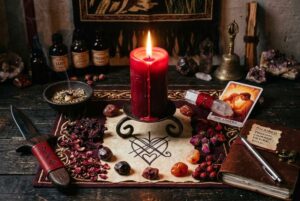
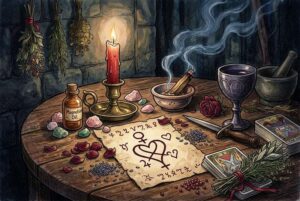
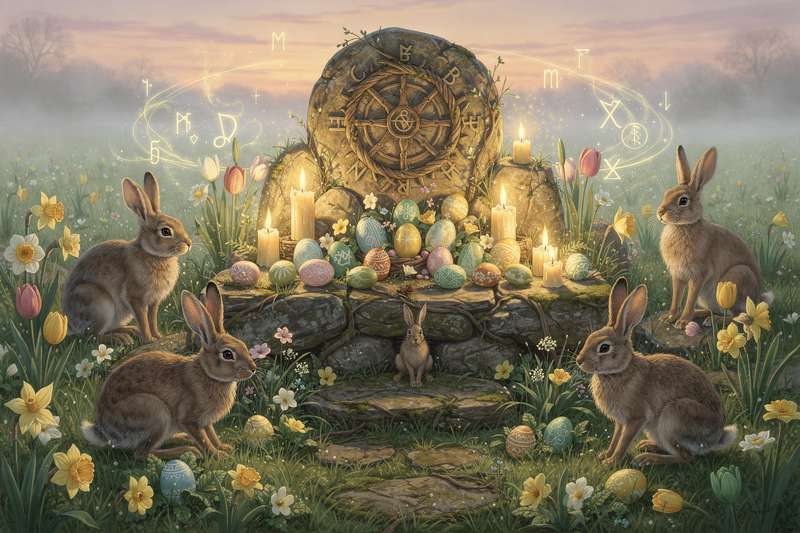
Your altar is the heart of your ritual — a physical space that gathers the season’s energy. Use a green, yellow, white, or pastel altar cloth. Place on it any combination of the following: spring flowers (daffodils, tulips, forsythia), decorated or ceramic eggs, a small bird’s nest, seeds, candles in spring colours, and crystals such as green aventurine, rose quartz, citrine, or clear quartz. You don’t need all of these — even a single candle and a handful of flowers create a meaningful focal point.
Step 3: Light Your Candles with Intention
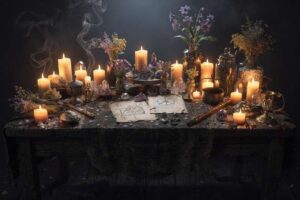
Candles are one of the simplest and most effective tools in seasonal ritual. For Ostara, choose yellow for solar energy and new ideas, green for growth and abundance, or white for clarity and new beginnings. As you light each candle, speak your intention into the flame. This doesn’t have to be elaborate: “I light this candle to welcome the returning light and the growth it brings.” Let the flame hold your intention throughout the ritual.
Step 4: Work with the Egg — the Central Ostara Symbol
The egg is Ostara’s most powerful symbol. Everything that will become is held within it, waiting. Take a raw, blown, wooden, or ceramic egg and hold it in both hands. Close your eyes and think of one thing you want to call into being this season — a project, a relationship, a new version of yourself. Feel that intention as something real and alive, the way a chick is real and alive inside a shell. Then place the egg on your altar as a living seed of that intention. If you’re working with a real egg, you might later plant it in your garden as an offering to the earth.
Step 5: Plant Seeds — Literally or Symbolically
Planting seeds at Ostara is one of the most grounding and meaningful rituals you can do. If you have outdoor space, plant something — herbs, flowers, vegetables — and as you press each seed into the soil, whisper your intention into the earth. If you don’t have outdoor space, a small pot on a windowsill works beautifully. If planting isn’t possible right now, write your intentions on small slips of paper and bury them in a pot of soil, or place them under a crystal on your altar. The act of placing something in the earth and trusting it to grow mirrors exactly what you are doing with your intentions.
Step 6: Perform a Spring Equinox Balancing Meditation
The equinox is a moment of perfect balance — and that balance is worth dwelling in. Sit comfortably at your altar, close your eyes, and take several slow breaths. Visualise yourself standing at the centre of a set of scales. On one side, place everything that belongs to winter — what was heavy, dark, slow, or hard. On the other side, place what you are calling in — light, growth, movement, possibility. Watch the scales find their balance. Then feel the scales tip, gently, toward the light. This is the moment you are living in. Let yourself feel the tipping.
Step 7: Write Your Spring Intentions
Ostara is a powerful time for intention-setting, and writing makes intentions concrete. Take your journal or a piece of paper and write freely: What do you want to grow between now and Samhain? What seeds are you planting — in your creative life, your relationships, your spiritual practice, your health? What did winter teach you that you want to carry forward? Write without editing yourself. When you’re done, fold the paper toward you (drawing things in) and place it under your central candle or beneath a piece of green aventurine or citrine.
Step 8: Make an Offering
Offerings are a way of entering into a reciprocal relationship with the season, the land, and whatever spiritual forces you work with. At Ostara, appropriate offerings include spring water poured on the earth, flower petals scattered in the garden, seeds left for birds, honey offered to the soil, or a simple meal shared in gratitude. If you work with deities, ancestors, or spirit guides, speak your thanks aloud. If you work with nature alone, step outside and simply say thank you — to the returning sun, to the earth, to the green things pushing through.
Step 9: Close Your Ritual
Closing your ritual is just as important as opening it. Extinguish your candles mindfully — don’t blow them out carelessly; snuff them or pinch the flame and thank them for their service. If you cast a circle, close it now. Speak a closing that feels true to you: “The ritual is complete. The seeds are planted. So it is.” Then do something ordinary — eat something, drink water or tea, step outside. This grounds you back into everyday life and signals to your body and spirit that the formal work is done.
Essential Tools and Supplies for Ostara Rituals
You do not need to spend money to celebrate Ostara. The most important tools are already inside you. That said, these items can enrich your practice:
- Candles: Yellow, green, white, or pastel. Even a single tealight works.
- Crystals: Green aventurine, rose quartz, citrine, clear quartz, moonstone, or amazonite. Choose one or two to start.
- Fresh or dried herbs: Rosemary, lavender, mint, dandelion. Use what grows near you.
- Spring flowers: Daffodils, tulips, or any seasonal blooms from your local area.
- Eggs: Decorated, ceramic, wooden, or real. The symbol matters more than the material.
- Seeds: Any seeds you intend to grow — herbs, flowers, vegetables.
- A journal: For intention-setting, reflections, and recording what arises during ritual.
- An altar cloth: Any cloth in spring colours, even a folded scarf or piece of fabric.
Ethics and Best Practices for Spring Equinox Magic
Magic of any kind works best when it is rooted in clear, honest intention. A few principles to keep in mind:
Harm none: The most widely held ethical principle in modern witchcraft is that your magic should not harm others — including yourself. Before setting any intention, ask: does this serve the highest good? Does it respect the autonomy of everyone involved?
Consent matters: Avoid casting spells that direct specific outcomes for specific people without their knowledge. Spells for general love, abundance, or healing are very different from spells that target individuals.
Cultural respect: Ostara is rooted in European Pagan traditions. When incorporating symbols, practices, or deities from other cultures, research carefully, credit sources, and ask yourself whether it is yours to use.
Intention over perfection: You will not ruin a ritual by mispronouncing a word, using the wrong crystal, or lighting the wrong colour candle. Sincerity matters far more than precision.
Common Beginner Mistakes in Ostara Practice
- Waiting until everything is perfect: There is no perfect altar, perfect ritual, or perfect moment. Start with what you have. A candle and a flower are enough.
- Copying rituals without understanding them: It’s fine to follow a guide (like this one), but take time to understand why each element is included so you can adapt it meaningfully.
- Setting too many intentions at once: Focus is more powerful than volume. Choose one to three clear intentions rather than listing everything you want.
- Neglecting the closing: Skipping the ritual close can leave you feeling ungrounded or scattered. Always take a moment to formally end your practice.
- Treating magic as a substitute for action: Planting a seed intention at Ostara is the beginning, not the end. Magic supports action — it doesn’t replace it.
- Comparing your practice to others: Your practice is yours. A simple candle ritual performed with full presence is more powerful than an elaborate ceremony performed out of obligation or imitation.
How to Build Your Ostara Practice Over Time
The Wheel of the Year turns whether or not you do anything to mark it. But the more you show up — season after season — the richer your relationship with these cycles becomes. In your first year, simply observe: notice the light changing, the plants emerging, the shift in your own energy as spring arrives. Keep a seasonal journal. Try one or two of the steps above.
In your second year, you’ll begin to have your own sense of what resonates. Maybe seed planting is your anchor ritual. Maybe it’s the meditation. Maybe Ostara eggs become a creative practice you return to every year. Let your practice grow organically, the way a garden does — slowly, with attention, one season at a time.
Final Thoughts on Ostara Rituals
Ostara is not a complicated sabbat. At its heart, it asks something simple: are you willing to begin? To plant something, tend it, and trust the process of growth? The spring equinox is one moment in a turning cycle that has been turning long before you arrived and will turn long after. Your ritual is a way of saying: I see this. I am part of this. I choose to grow. That is magic enough.
Frequently Asked Questions About Ostara Rituals
When exactly is Ostara celebrated?
Ostara falls on the spring equinox, which occurs around March 20–21 in the Northern Hemisphere and September 22–23 in the Southern Hemisphere. The exact date shifts slightly each year based on the astronomical equinox. Many practitioners celebrate on the closest weekend or for the entire equinox week.
Do I have to be Wiccan to celebrate Ostara?
Not at all. While Ostara is part of the Wiccan Wheel of the Year, it is celebrated by eclectic witches, Pagans of many traditions, nature spirituality practitioners, and people with no formal religious affiliation. What matters is your connection to the season and your intention, not a specific belief system.
What are the most important symbols of Ostara?
The egg (representing potential and new beginnings), the hare (associated with fertility and the moon), spring flowers such as daffodils, seeds, and the sunrise are the most traditional Ostara symbols. The balance of light and dark — the equinox itself — is perhaps the deepest symbol of all.
Can I celebrate Ostara if I live in an apartment with no garden?
Absolutely. A windowsill pot of herbs or flowers works beautifully for seed planting rituals. An altar on a shelf, a candle on a table, and a journal beside your morning coffee are all the space you need. Ostara magic is about intention and attention, not the size of your outdoor space.