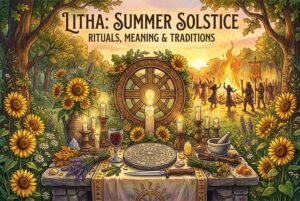
Celtic witchcraft is one of the oldest and most richly layered magical traditions in the world. Rooted in the spiritual life of the ancient Celts — a people who stretched across Ireland, Scotland, Wales, Brittany, and beyond — this path weaves together reverence for nature, ancestral wisdom, seasonal ritual, and a deep relationship with the Otherworld. Whether you are drawn by your heritage, a love of Celtic mythology, or simply a gut-level pull toward the land and its rhythms, this tradition has something genuine to offer. In recent years, more and more modern witches have been returning to Celtic magical roots, seeking practices that feel grounded, meaningful, and connected to something older than themselves.
What Is Celtic Witchcraft?
At its heart, Celtic witchcraft is a nature-based spiritual practice inspired by the beliefs, ceremonies, and folklore of the ancient Celtic peoples. It is not a single rigid system — it never was. The Celts were a diverse collection of tribal cultures, and their spiritual life varied by region and era. What they shared was a profound sense that the natural world is alive, that spirits inhabit rivers, trees, and mountains, and that the boundary between the physical world and the spirit realm is thin and permeable.
One common myth worth clearing up: Celtic witches were not feared outcasts. In ancient Celtic society, those who practiced magic — the wise women, healers, and seers — were respected community figures. The Druids, too, held positions of great social authority as scholars, ritualists, and spiritual intermediaries. The sinister image of the “wicked witch” came much later, shaped by centuries of religious and political pressure. Celtic witchcraft, in its original form, was fundamentally about service, healing, and harmony.
Common Paths Within Celtic Magical Traditions
Celtic witchcraft is not one-size-fits-all. Here are some of the main paths practitioners tend to follow:
- Druidry: Focused on the scholarly and priestly aspects of Celtic spirituality, Druidry emphasizes lore, ritual, and relationship with the land. Modern Druid orders exist worldwide and welcome both devotional and magical practice.
- Celtic Wicca: A path that blends Wiccan structure (the Wheel of the Year, the Lord and Lady, the circle) with Celtic deities, symbols, and mythology. A good fit if you appreciate organized ritual but want Celtic flavor throughout.
- Hedge Witchcraft (Celtic-inspired): The hedge witch works at the boundary between worlds — communicating with spirits, practicing herbalism, and journeying into liminal states. Deeply personal and intuitive, this path draws heavily on Celtic otherworld lore.
- Kitchen and Hearth Witchcraft: Inspired by Celtic hearth goddess traditions (especially Brigid), this path infuses daily domestic life with magic — cooking, fire-tending, and home blessing rituals.
- Eclectic Celtic Witchcraft: Many practitioners blend Celtic elements with other traditions, pulling from what resonates while honoring Celtic roots with care and respect.
How to Start Your Celtic Witchcraft Practice: Step by Step
Starting any spiritual practice can feel overwhelming. These steps are meant to give you a clear, grounded path forward — no initiation required, no special bloodline needed. All you need is genuine curiosity and a willingness to show up.
Step 1: Learn the Land and the Lore
Before casting a single spell, spend time learning. Read about Celtic mythology — the Irish mythological cycles, the Welsh Mabinogion, the tales of the Tuatha Dé Danann. Understand who the gods and goddesses are, what they represent, and how they were honored. This is not just academic groundwork; it shapes your intuition and gives your magic genuine roots.
Equally important: learn about the land you live on. Celtic tradition is inseparable from place. Even if you are not in Ireland or Wales, you can build a relationship with local rivers, trees, and hills through the same animist lens the ancient Celts used.
Step 2: Attune to the Wheel of the Year
The four major Celtic fire festivals — Imbolc, Beltane, Lughnasadh, and Samhain — form the backbone of this tradition. Begin by observing each one as it arrives. You do not need elaborate rituals at first. Light a candle. Go outside. Notice what is changing in nature around you.
Samhain (around October 31) is the Celtic New Year and the time when the veil between worlds is thinnest — a powerful entry point for ancestor work and divination. Imbolc (around February 1) honors Brigid and the first stirring of spring. Beltane (around May 1) celebrates life, fire, and fertility. Lughnasadh (around August 1) marks the first harvest. Each festival is a living conversation with the seasonal cycle, not just a date on a calendar.
Step 3: Begin Ancestor Work
Ancestor reverence is one of the most defining features of Celtic spirituality. Your ancestors — biological, spiritual, or cultural — are considered an active source of guidance and protection. Set up a small ancestor altar: a photograph, a meaningful object, a glass of water, and a candle. Speak to them. Thank them. Ask for their wisdom.
You do not need to know your ancestors by name for this to be meaningful. The practice of acknowledging those who came before you opens a channel of connection that many practitioners find deeply healing.
Step 4: Work with Celtic Deities (Respectfully)
Celtic witchcraft has a rich pantheon. Brigid governs healing, smithcraft, and poetry. The Morrígan rules sovereignty, battle, and prophecy. Cernunnos is the antlered lord of wild nature and the underworld. Danu is associated with the primordial earth. Lugh is the master of skill and solar energy.
Approach deity work gradually. Research a deity thoroughly before inviting their presence. Make offerings — a bowl of milk for Brigid, a feather for the Morrígan — and listen as much as you speak. Relationships with deities develop over time through consistency and sincerity.
Step 5: Practice Herbalism and Plant Magic
Celtic witches were renowned herbalists. Plants like mugwort, rowan, hawthorn, elderflower, and blackthorn all carry long histories in Celtic folk magic. Rowan is used for protection; hawthorn marks the entrance to the Otherworld; mugwort supports dreams and divination.
Start simply: grow one herb, learn its folklore and properties, and find one practical use for it — a protective charm, a healing tea, a smoke bundle. Do not rush to collect every herb at once. Depth of relationship matters more than breadth of inventory.
Step 6: Learn Celtic Divination
Divination has always been central to Celtic magic. The Ogham — an ancient Irish alphabet carved in stone and wood — is one of the most powerful and distinctly Celtic divination systems available to modern practitioners. Each Ogham letter corresponds to a tree, carrying layers of symbolic and practical meaning.
You can make a simple set of Ogham staves from fallen branches. Alternatively, explore other Celtic-adjacent tools like runes or scrying with water (a practice common in Celtic folk tradition). Approach divination as a conversation with the Otherworld, not a fortune-telling trick.
Step 7: Build a Ritual Practice
Ritual creates the container for magic to happen. A basic Celtic ritual structure might include: casting a circle or calling to the four directions, invoking a deity or the ancestors, stating your intention, performing your magical working (a charm, a spell, a divination), giving thanks, and closing the circle. Keep it simple at first. Consistency matters far more than complexity.
Working outdoors — even briefly — adds powerful resonance to Celtic practice. If you can perform rituals near water, trees, or open sky, do so whenever possible.
Step 8: Keep a Magical Journal
Record everything. Write down your rituals, your dreams, your Ogham readings, what herbs you worked with, and how you felt before and after. Over time, your journal becomes your personal Book of Shadows — and more importantly, it shows you your own patterns, growth, and recurring signs from the Otherworld.
Essential Tools and Supplies for Celtic Witchcraft
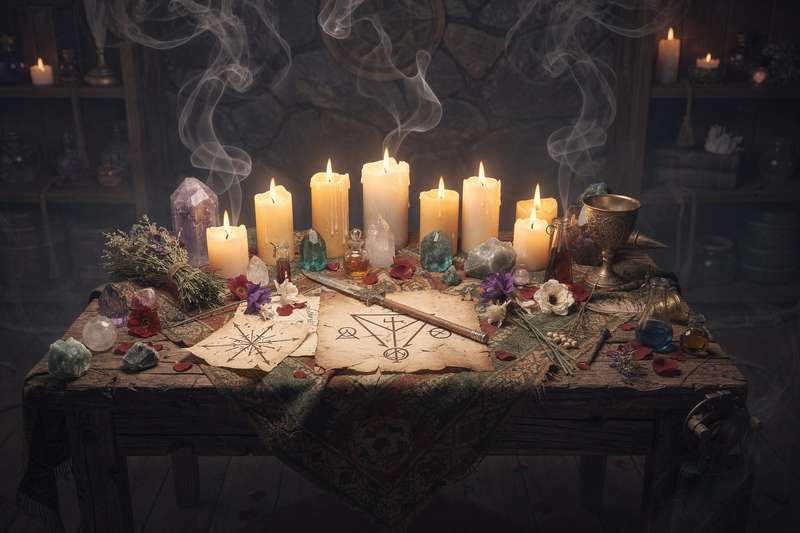
You do not need to spend a fortune to practice Celtic magic. Many of the most traditional tools are natural objects you can find or make yourself.
- Candles: White, green, and silver are all associated with Celtic energy, though candle color correspondences are flexible. A simple beeswax candle works beautifully.
- Herbs: Start with rowan berries or leaves, mugwort, and hawthorn. Dried herbs kept in small cloth bags make excellent protective charms.
- Crystals: Moonstone, labradorite, and clear quartz all resonate with Celtic magical themes of the Otherworld, intuition, and clarity.
- Ogham staves or a divination tool: Carved or written staves made from fallen wood are the most traditional choice.
- An altar cloth: In a Celtic color like deep green, grey, or earthy brown.
- A journal: Your most irreplaceable tool for long-term growth.
- Offerings: Milk, honey, bread, flowers, and clean water — simple, heartfelt offerings for the deities and ancestors.
Ethics and Best Practices in Celtic Witchcraft
Celtic witchcraft, like most serious spiritual paths, carries an implicit ethical framework. The ancient Celts believed deeply in reciprocity — giving back to the land, the spirits, and the community in proportion to what you received. Modern Celtic practitioners often carry this forward as a core ethical principle.
Work with clear and honest intention. Magic directed toward manipulation, harm, or control of another person’s free will tends to backfire — not because of a cosmic law written in stone, but because it corrupts the practitioner’s own relationship with the powers they work with. Always consider the impact of your workings on others.
Cultural respect is essential. Celtic traditions belong to living cultures — Irish, Scottish, Welsh, Breton, and more. Approach these traditions with genuine reverence, not costume or aesthetic. Learn from authentic sources. Avoid reducing rich mythology to decorative imagery. If you have Celtic ancestry, honor it; if you do not, approach the tradition as a respectful student.
Common Beginner Mistakes to Avoid
- Skipping the lore: Jumping straight to spells without learning the mythology leaves your practice shallow. The stories teach you how to think like a Celtic witch.
- Treating all Celtic traditions as one: Irish, Welsh, and Gaulish traditions each have distinct deities, symbols, and myths. Try not to blur them into a generic “Celtic” soup.
- Over-purchasing supplies: A crowded altar full of unused tools does not make you more powerful. One candle and genuine intention beats a $200 supply haul with no focus.
- Ignoring the seasonal cycle: Celtic magic is rooted in time as much as place. Practicing without awareness of the festivals disconnects your magic from its natural rhythm.
- Expecting instant results: Relationships — with deities, ancestors, and the land — take time. Magic that grows slowly tends to last.
- Copying rituals word-for-word without understanding them: Know why you are doing each step. Personal understanding makes ritual far more potent than perfect recitation.
How to Build Your Celtic Witchcraft Practice Over Time
Think of your practice as a garden rather than a project with a deadline. In the first few months, focus on just one or two things: perhaps the seasonal festivals and a daily candle ritual. After six months, add a divination practice. After a year of honoring the Wheel of the Year, you will have firsthand experience of how each festival feels — and your intuition will begin guiding your next steps.
Connect with other practitioners when it feels right — local Druid groups, online Celtic witchcraft communities, or simply a trusted friend on a similar path. Sharing experience accelerates growth in ways solo study cannot. But always return to your own direct experience of the land, the seasons, and the Otherworld. That is where the real magic lives.
Final Thoughts
Celtic witchcraft is an invitation to slow down, look at the world with wonder, and take your place in the long conversation between humans and the living earth. It asks nothing of you except sincerity and respect. Whether you adopt it fully as your primary path or weave elements of it into an existing practice, its gifts — rootedness, ancestral connection, seasonal awareness, and a relationship with the sacred — are available to anyone willing to show up with an open heart.
Frequently Asked Questions
Do I need Celtic ancestry to practice Celtic witchcraft?
No ancestral bloodline is required to study or practice Celtic witchcraft. What matters most is a genuine respect for the cultures and traditions you are drawing from, a commitment to learning the lore properly, and an ethical approach to working with Celtic deities and symbols. Many practitioners worldwide with no Celtic ancestry follow this path with integrity.
What is the difference between Celtic witchcraft and Wicca?
Wicca is a modern religious tradition developed in the mid-20th century, though it drew on Celtic and other pagan elements. Celtic witchcraft refers to practices rooted in the beliefs and customs of the ancient Celtic peoples, predating Wicca by thousands of years. Some practitioners blend the two, while others keep them distinct — both are valid choices.
What is the Ogham and how is it used in Celtic magic?
The Ogham is an ancient Irish alphabet, with each letter corresponding to a tree or plant and carrying layers of symbolic meaning. In modern Celtic witchcraft, Ogham staves — pieces of wood inscribed with Ogham characters — are used for divination and spellwork. Each stave is drawn or cast to receive guidance from the Otherworld.
Which Celtic goddess is most commonly worked with in witchcraft?
Brigid is among the most widely honored Celtic goddesses in modern witchcraft, associated with healing, smithcraft, poetry, the hearth, and the sacred flame. The Morrígan is also deeply popular, especially among those drawn to shadow work, sovereignty, and transformation. Both goddesses have rich mythological records and active devotional communities today.