A Thanksgiving gratitude ritual is one of the most accessible, heart-opening practices you can bring into this season. Whether you follow a formal Wiccan path, practice as an eclectic or kitchen witch, or simply feel drawn to infuse the holiday with deeper meaning, a gratitude ritual helps you move beyond the feast and into genuine spiritual reflection. Across traditions — from ancient harvest celebrations to modern earth-based spirituality — gratitude has always been recognized as a form of sacred currency. When you give thanks with intention, you align yourself with the natural flow of abundance, and the season itself becomes your altar.
What Is a Thanksgiving Gratitude Ritual?
At its core, a gratitude ritual is any intentional act of recognizing and honoring the blessings in your life. It is not a spell designed to force an outcome or a complicated ceremony requiring years of training. It is simply you, pausing, and saying: I see what I have been given, and I honor it.
A common misconception is that rituals must be elaborate or rooted in a specific tradition to be valid. They do not. A gratitude ritual can be as simple as lighting a candle and speaking three things aloud, or as involved as building a full blessing altar with herbs, crystals, and a candle circle. What matters most is the sincerity of your attention. Intention is the engine; the tools and structure simply help you focus it. No lineage, initiation, or special title is required — only an open heart and a willingness to slow down.
Styles of Gratitude Practice in Witchcraft and Earth-Based Spirituality
There is no single correct way to perform a Thanksgiving gratitude ritual. Practitioners across different paths bring their own flavors to the practice. Here are some of the most common approaches:
- Kitchen Witch Gratitude: This style weaves thankfulness into the preparation of food itself. Stirring intention into a pot of soup, blessing bread before baking, or placing herbs on the table as sacred offerings are all expressions of kitchen witch gratitude. The meal becomes the ritual.
- Candle Magic Gratitude: Lighting candles with focused intention is one of the oldest and most widely practiced forms of sympathetic magic. A candle flame represents illumination, warmth, and the living spark of divine connection. Inscribing symbols or words onto a candle before lighting it amplifies your intention beautifully.
- Blessing Bowl or Abundance Altar: This approach involves creating a physical focal point — a bowl, dish, or small altar — filled with meaningful objects like herbs, coins, crystals, and written affirmations. It serves as a magnet for gratitude energy throughout the season.
- Ancestral Honoring: Many witches and spiritual practitioners use Thanksgiving as an opportunity to acknowledge those who came before. Setting a small candle for ancestors, speaking their names, or placing a photograph on the altar honors the lineage that shaped you.
- Circle or Group Ritual: Gratitude multiplies when shared. A group ritual — even just with family — can channel collective intention into something deeply powerful. It does not require everyone to identify as a witch; simply gathering with shared focus is enough.
- Daily Journaling Practice: Some practitioners prefer integrating gratitude into an ongoing spiritual journal rather than one ceremonial moment. Recording blessings regularly trains the spirit to recognize abundance even on difficult days.
How to Perform a Thanksgiving Gratitude Ritual: Step by Step
The following guide walks you through a complete, beginner-friendly Thanksgiving gratitude ritual that draws on candle magic, herbal wisdom, and heart-centered intention. Feel free to adapt any step to suit your path, tools, or available time.
Step 1 — Set Your Space
Before you begin, clear the physical space where you will work. This does not need to be a formal altar — a kitchen table, a windowsill, or even a small corner of a shelf will do. Remove clutter, wipe the surface clean, and lay down a cloth in a color that resonates with you. Warm earth tones, gold, deep orange, and white are all fitting for Thanksgiving. Opening a window briefly or burning a cleansing incense like sandalwood or cedar helps shift the energy from ordinary to sacred.
Step 2 — Gather Your Tools
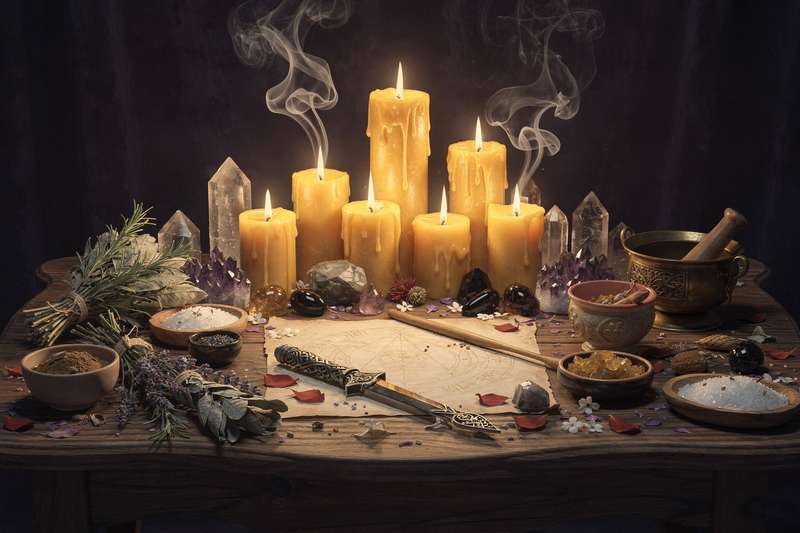
Collect the items you plan to work with before you sit down to focus. Interrupting the ritual to search for supplies breaks the energetic thread you are building. For a basic Thanksgiving gratitude ritual, you might gather a white or gold candle, a fireproof holder, matches or a lighter, a small bowl or dish, a few dried herbs (bay leaves, cinnamon, basil, and chamomile are classic gratitude and abundance allies), a piece of paper and pen, and any personal objects that carry meaning — a photograph, a crystal, a coin.
Step 3 — Ground and Center Yourself
Take three slow, deliberate breaths before you begin. Feel your feet on the floor and your weight on your seat. This simple act of grounding brings your awareness fully into the present moment. You might visualize roots extending from the soles of your feet down into the earth, anchoring you. Release any mental noise — the to-do list, the family tensions, the noise of the season — and arrive fully in this quiet space. Even two minutes of intentional breathing changes the quality of everything that follows.
Step 4 — Write Your Gratitude List
On your piece of paper, write down at least five things you are genuinely grateful for from the past year. Be specific rather than general — not just “my health” but “the morning I felt strong enough to walk in the autumn leaves.” Specificity deepens emotional resonance, and emotional resonance is what gives a ritual its power. You may also choose to include the names of people who supported you, moments of unexpected grace, or challenges that ultimately taught you something valuable.
Step 5 — Build Your Blessing Bowl
Place your bowl at the center of your space. Begin adding your herbs one by one, pausing with each to call to mind its meaning. Bay leaves are associated with wishes and achievement. Cinnamon carries warmth, success, and prosperity. Basil invites abundance and positive energy. Chamomile brings peace and calm. If you have three small coins, drop them into the bowl as a symbol of generosity in motion — given, received, and circulating freely. As you add each element, speak its intention aloud or in your mind.
Step 6 — Light the Candle with Intention
Hold your candle for a moment before lighting it. You may inscribe a word, symbol, or short phrase into the wax using a toothpick, nail, or small pin — something like “thanks,” a heart, or the word “abundance.” As you light the flame, state your intention clearly. Something simple works well: “As this flame burns, my gratitude grows. May all that I have been given return in kindness to the world around me.” You do not need to memorize a script. Speaking from your own heart is always more powerful than reciting words that feel hollow.
Step 7 — Read Your Gratitude List Aloud
With the candle burning, read your list aloud — or if you are in a group, pass it around so others can hear or add their own. Hearing your blessings spoken in your own voice moves them from the intellectual realm into the felt, embodied one. If you are performing this with family, invite each person to share at least one thing they are grateful for without pressure or judgment. Children especially bring a beautiful naturalness to this part of the ritual.
Step 8 — Send Kindness Outward
Gratitude is not only about receiving — it is also about acknowledging those who have contributed to your life. On a second small slip of paper, write the names of three people who lifted you this year, and one person who may be struggling and could use some warmth sent their way. Place this paper beneath the candle or beside the blessing bowl. Visualize soft, warm light radiating from your space and reaching each person named. This outward movement transforms personal gratitude into a genuine act of spiritual service.
Step 9 — Close with Silence and a Commitment
After you have completed the spoken and visual portions of your ritual, sit in silence for a few minutes. Let the candle burn safely — either for several hours if circumstances allow, or for a focused period while you remain present. Before you leave the space, commit to one small act of gratitude or kindness that day: writing a message to someone you appreciate, donating to a cause, or simply pausing to notice beauty. Grounding your ritual in real-world action is what bridges the spiritual and the everyday.
Essential Tools and Supplies for Your Gratitude Ritual
You do not need a fully stocked apothecary to perform a meaningful gratitude ritual, but having a few reliable tools makes the practice richer over time. Here are the basics worth keeping on hand:
- Candles: White (universal, purifying), gold (abundance, solar energy), and pink (love, compassion) are the most versatile for gratitude work.
- Herbs: Bay leaves, cinnamon, chamomile, basil, and allspice all carry traditional associations with gratitude, prosperity, and harmony.
- Crystals: Citrine for abundance and joy, rose quartz for heart-opening and compassion, and clear quartz for amplifying intention are ideal companions.
- A journal: A dedicated spiritual journal allows you to track your practice, record what you are grateful for each day, and observe how your relationship with abundance shifts over time.
- A bowl or dish: Any decorative bowl you love can serve as a blessing bowl. It does not need to be purchased from a spiritual shop — what matters is the meaning you assign it.
- Incense: Sandalwood, vanilla, or frankincense support a warm, grounded atmosphere for gratitude work.
Ethics and Best Practices
Gratitude rituals are gentle by nature, but a few ethical considerations are always worth holding in mind. First, the principle of free will: when you send good energy to others, do so with the intention of supporting their highest good — not directing a specific outcome for them. Wishing someone peace and healing is beautiful; willing them to behave in a certain way crosses into territory that most ethical practitioners avoid.
Cultural respect matters, too. Some herbs, symbols, and practices carry deep cultural significance in specific traditions. If you incorporate an element from a tradition that is not your own, take time to understand its origins and use it with reverence rather than appropriation. Finally, fire safety is a genuine responsibility: never leave burning candles unattended, and always use proper holders on stable, heat-safe surfaces. Sacred space is also safe space.
Common Beginner Mistakes to Avoid
- Skipping the grounding step: Jumping straight into ritual without settling your mind first results in scattered energy and a less impactful experience. Even one minute of conscious breathing matters.
- Being vague with gratitude: Generic statements like “I am grateful for everything” carry less emotional weight than specific, felt acknowledgments. Name things clearly.
- Believing expensive tools make better magic: A birthday candle and a heartfelt intention outperform a costly candle lit with a distracted mind every single time. Your focus is the most powerful tool you own.
- Treating the ritual as a transaction: Gratitude rituals are not bargaining sessions. Approaching the practice with “I am grateful so now good things must come to me” misses the deeper spiritual truth — gratitude is its own reward.
- Performing rituals out of obligation: If you are exhausted, resentful, or completely disconnected, it is perfectly valid to simplify or postpone. A brief, sincere moment of thanks is always more meaningful than an elaborate ritual performed without heart.
- Not closing the ritual: Always mark the end of your ritual with a deliberate action — blowing out the candle with intention, speaking a closing word, or simply taking three final breaths. This signals to your subconscious and the energetic field that the working is complete.
How to Build Your Gratitude Practice Over Time
One ritual, however beautiful, is a seed — not a harvest. The most transformative shift happens when gratitude becomes a daily orientation rather than a once-a-year ceremony. Start small: three things each morning before you reach for your phone, or a single line in a journal before bed. Notice what changes over weeks and months. Many practitioners find that consistent gratitude practice genuinely alters what they notice in daily life — not because reality has changed, but because their attention has been retrained.
Consider returning to your blessing bowl throughout the season, adding a whispered word of thanks each time you pass it. Relight the candle on the new moon or full moon to refresh the intention. These small, repeated gestures build a living practice that deepens far more reliably than any single dramatic ceremony.
Final Thoughts
A Thanksgiving gratitude ritual does not require perfection, a specific tradition, or a fully decked altar. It requires only your honest attention and a willingness to pause in the rush of the season and say: I see my blessings, and I am grateful. That simple act — repeated with sincerity — is a profound form of magic. May your table be full, your candles burn bright, and your heart feel the quiet abundance that is already yours.
Frequently Asked Questions
Do I need to be a witch or follow a specific path to perform a Thanksgiving gratitude ritual?
Not at all. A gratitude ritual is accessible to anyone regardless of spiritual background or tradition. The practices described here draw on common elements like candle magic and herbal symbolism, but they are designed to be adapted to any path — or to no formal path at all. What matters is sincere intention.
What is the best time of day to perform a Thanksgiving gratitude ritual?
There is no single correct time, but many practitioners prefer the morning (to set an intentional tone for the day) or early evening around the meal (to weave it into the celebration naturally). If you are working with the moon, performing the ritual on or near a full moon amplifies the energy of abundance and completion beautifully.
Can children participate in a gratitude ritual?
Yes, and they often bring a genuinely beautiful energy to it. Inviting children to share one thing they are grateful for, add a herb to the blessing bowl, or simply sit quietly while a candle burns teaches them meaningful spiritual habits without pressure. Keep it light, playful, and age-appropriate.
What should I do with leftover herbs and candle wax after the ritual?
A common practice is to return organic materials — herbs, flowers, plant matter — to the earth by burying or scattering them in a garden or natural space. Any remaining candle wax can be buried as well, or wrapped and disposed of thoughtfully. The intention is to complete the energetic cycle by returning the offerings to nature.