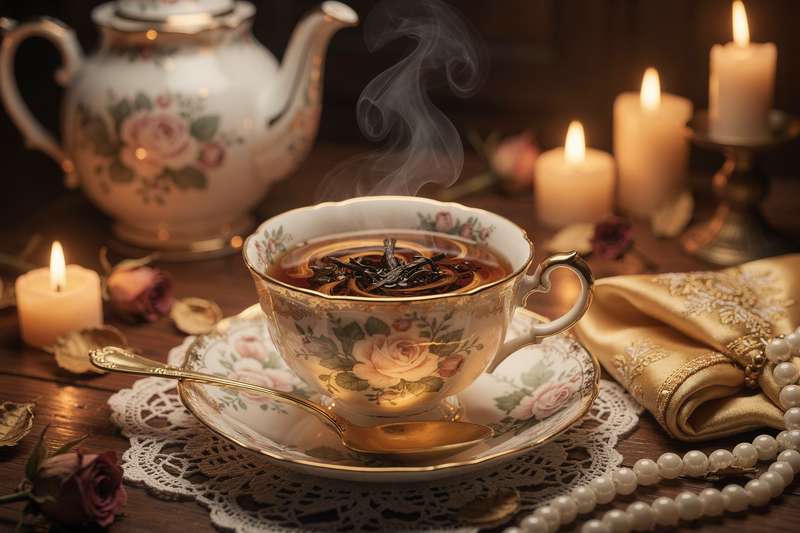
What Is Tasseography?
Tea leaf reading, known formally as tasseography or tasseomancy, is an ancient divination practice that interprets the patterns and symbols formed by tea leaves settling in your cup. When you drink loose-leaf tea and leave behind the leaves, you’re creating a unique visual landscape that holds meaning specific to your life, your questions, and your moment in time.
This isn’t fortune-telling in the stereotypical sense. Rather, it’s a deeply personal practice that bridges your conscious mind and your intuition. The tea leaves become a mirror, reflecting the knowledge you already carry within yourself but haven’t yet voiced aloud. Whether you’re seeking clarity about love, career decisions, or your spiritual path, tasseography offers a gentle, accessible way to tap into your inner wisdom.
A Brief History of Tea Leaf Reading
The practice of reading tea leaves emerged during the 17th century when tea became widely available in Europe and the Middle East. As tea drinking became a social ritual among the upper classes, people began noticing patterns in the leaves and wondering what they meant. What started as casual observation evolved into a respected divination method, taught and practiced across cultures.
Unlike tarot or oracle cards, which have structured systems and ancient symbolism, tasseography grew organically from everyday observation. This accessibility is part of its beauty—you don’t need to memorize complex rulebooks or study for years. You simply need your intuition, a cup of tea, and an open mind.
Tools You Need to Get Started
One of the most appealing aspects of tea leaf reading is how few supplies it requires. You probably already have everything you need at home.
The Teacup
A traditional teacup works best for tasseography—not a mug. Teacups have a gentle slope from the narrow base to the wider rim, which creates diverse leaf formations as they settle. A mug’s straight sides limit the variety of patterns you’ll see. Look for a cup with a light interior; white or cream-colored cups make it easier to see the leaves clearly. Some people prefer teacups with astrological or symbolic designs on the inside, which can deepen your connection to the practice, but this is entirely optional.
The Tea Leaves
Always use loose-leaf tea rather than tea bags. The leaves need to move freely in the water to create meaningful patterns. Coarse-cut dried leaves work better than fine, powdery tea dust. Choose a blend you genuinely enjoy—Earl Grey, chamomile, green tea, or herbal blends all work beautifully. The flavor you love becomes part of the ritual, grounding you in the present moment.
Additional Items
You’ll need a saucer to catch the cup when you invert it, hot water (around 200°F is ideal for most teas), and a teaspoon for measuring. Some people keep a journal nearby to record their readings and track patterns over time. This isn’t essential but can deepen your learning as you recognize recurring symbols and themes.
Step-by-Step Method for Reading Tea Leaves
Step 1: Set Your Intention
Before you even heat the water, pause and clarify what you want from this reading. Are you seeking guidance about a specific situation? Do you want a general insight into your current life? Are you exploring a relationship question or career decision? Your intention acts as an invisible thread, connecting your subconscious to the symbols that will appear. Hold this question gently in your mind without forcing or overthinking it. Write it down if that helps anchor it.
Step 2: Brew Your Tea Mindfully
Heat water and add your loose-leaf tea to the cup—about one teaspoon per person, plus one for the pot if you’re following traditional tea-making. Pour hot water over the leaves and let them steep for three to five minutes. This isn’t just practical; it’s meditative. Watch the leaves unfurl, notice the color shifting in the water, and breathe. You’re already beginning your reading by quieting your mind and attunement your energy to this moment.
Step 3: Drink and Observe
Sip your tea slowly and mindfully. As you drink, stay present. Notice the warmth, the flavor, the sensations. When you’ve finished most of the tea, leave about a teaspoon of liquid at the bottom—this small amount helps the leaves move fluidly in the cup. Some readers believe the last sips carry special significance, so don’t rush this part.
Step 4: Swirl the Leaves
Once you’ve left the remaining tea, gently swirl the cup three times in a circular motion. This distributes the leaves around the interior walls, creating the patterns you’ll interpret. Move slowly and intentionally. Some readers swirl counterclockwise to move backward through time and understand the roots of current situations, or clockwise to look forward into potential futures. Choose the direction that feels right to you.
Step 5: Invert the Cup
This is the transformative moment. Carefully place the cup upside down onto the saucer. This gesture symbolizes the shift from the physical act of drinking into the intuitive realm of interpretation. Let it sit for a moment, allowing any remaining liquid to drain. Hold the saucer and cup together briefly, infusing them with your energy and your question.
Step 6: Turn and Examine
Now flip the cup right-side up and begin your examination. Look at the arrangement of leaves with fresh eyes. What catches your attention first? Are there clusters or scattered patterns? Do certain shapes stand out? Pay attention to where leaves are positioned—near the rim, in the middle, at the base—as placement carries meaning too. Leaves near the rim often represent immediate or recent events, while those deeper in the cup suggest longer-term influences or deeper truths.
Step 7: Interpret with Intuition
This is where your unique gifts shine. There’s no single “correct” interpretation for any symbol. A heart shape might speak to love for one person but self-love and compassion for another. Trust what you feel when you see each image. Let your mind make associations freely. If a shape reminds you of a bird, but you also see it as a butterfly, both interpretations matter. Your intuition knows what you need to hear.
Common Tasseography Symbols and Their Meanings
These interpretations are starting points, not rules. Your personal associations are always more important than traditional meanings.
- Heart: Love in any form—romantic connection, self-love, emotional healing, or the importance of nurturing relationships in your life right now.
- Key: Solutions, unlocking potential, access to hidden knowledge, or an opportunity coming your way. Sometimes it suggests that you already have the answer you’re seeking.
- Tree: Growth, health, stability, and strong foundations. It can represent your inner strength or the natural unfolding of circumstances in your favor.
- Ship: A journey ahead—physical travel, spiritual progression, or entering a new chapter. It suggests movement and adventure.
- Snake: Transformation and shedding what no longer serves you. It’s not negative; it’s about necessary change and personal evolution.
- Bird: Freedom, communication, spiritual messages, or news coming your way. Different birds carry different energy—a dove speaks of peace, while an eagle suggests vision and power.
- Cross: A decision point, challenge, or spiritual significance. It calls your attention to something important that requires discernment.
- Crescent Moon: Intuition, emotions, cycles, and the feminine principle. It suggests trusting your instincts and honoring your emotional truth.
- Circle: Wholeness, completion, unity, or a cycle coming full circle. It can represent harmony or the need for closure.
- Star: Hope, guidance, clarity, or spiritual alignment. It’s an encouraging symbol suggesting you’re on the right path.
- Mountain: Obstacles to overcome or the strength within you to climb toward your goals. It represents challenges that build character.
- Flower: Beauty, joy, new beginnings, or something coming into bloom in your life.
- Anchor: Stability, grounding, or the need to stay steady during transitions. It suggests security and reliable support.
- Butterfly: Transformation, growth, and the beauty of change. It often appears when you’re moving into a lighter, freer version of yourself.
- Clock: Timing, deadlines, or the message that something is about to happen. It emphasizes the importance of patience or action.
- Crown: Achievement, recognition, power, or your inherent dignity and worth. It can suggest success or stepping into your authority.
- Sword: Conflict, clarity, truth-telling, or the need to cut through confusion. It’s not always negative—sometimes truth requires a sharp edge.
- Fish: Abundance, prosperity, and good fortune. It’s often a positive sign related to manifestation and flow.
- House: Home, family, foundations, or the need for stability. It can represent domestic matters or finding your safe place.
- Feather: Lightness, freedom from worry, spiritual support, or a message from your guides.
Common Mistakes to Avoid
Forcing Meanings
If you don’t see a clear symbol, that’s okay. Not every leaf formation needs to represent something specific. Blank spaces and scattered leaves are valid parts of your reading. They might suggest clarity, emptiness, or the absence of obstacles.
Ignoring Your First Instinct
When you flip the cup, your first impression often carries the most power. Don’t overthink or try to talk yourself into a different interpretation. If your gut says “bird,” trust that, even if it takes you a moment to see how a bird symbol applies to your question.
Reading While Distracted
Tea leaf reading requires presence. Put your phone away, find a quiet space, and give yourself permission to slow down. Your intuition communicates most clearly when you’re genuinely attentive.
Memorizing Instead of Connecting
Don’t treat this as a code to crack with fixed answers. The real magic happens when you make personal connections. What does a heart mean to you? What does a key unlock in your life right now? Your unique interpretation is more powerful than any traditional meaning.
How to Develop Your Tea Reading Practice
Read Regularly
The more you practice, the more fluent you become in the language of symbols. Try reading once a week or whenever you feel drawn to it. Keep a journal of your readings and the interpretations you received. Over time, you’ll notice patterns—recurring symbols, themes that echo across multiple readings, or symbols that consistently appear before certain life events.
Trust Your Unique System
As you read more, you’ll develop personal meanings for symbols. A star might mean one thing the first time you see it and another thing later as your understanding deepens. This evolution is beautiful and necessary. Your tea leaf reading practice becomes increasingly personal and powerful as you create your own symbolic language.
Combine with Other Practices
Tea leaf reading pairs beautifully with tarot, oracle cards, journaling, or meditation. You might pull a tarot card to clarify a confusing symbol in your tea leaves, or journal about what you’ve seen before the cup cools. Many readers also read for others once they feel confident, which deepens their own understanding through fresh perspectives.
Honor the Ritual
The power of tea leaf reading comes partly from the ritual itself. Create an experience you love—light a candle, play soft music, use your favorite tea blend, sit in a place that feels sacred to you. The ceremony prepares your mind for intuitive insight.
FAQ
Do I need special tea for tasseography?
No special tea is required, but you do need loose-leaf tea rather than tea bags. Choose a blend you genuinely enjoy—the flavor and quality matter less than your connection to the tea. Some readers prefer coarser-cut leaves because they form clearer patterns, but any loose-leaf tea works.
What if I can’t see any clear symbols in my cup?
This happens to everyone, especially when starting out. Sometimes scattered leaves represent clarity and open space rather than obstacles. Trust that you’ve received exactly what you need. Not every reading produces dramatic symbols, and that’s perfectly valid. Return to your original question and see what the emptiness might be telling you.
Can I read tea leaves for other people?
Yes, once you feel confident in your own practice. Have the person hold their intention while they drink, then follow the same steps. Some readers find that reading for others feels different—sometimes easier because you’re not emotionally invested, sometimes harder because you want to help. Both are normal. Remember that you’re offering perspective, not predictions set in stone.
How accurate is tea leaf reading?
Accuracy depends on your openness, intuition, and willingness to sit with uncertainty. Tea leaves aren’t a crystal ball showing definite futures—they’re more like a conversation between your conscious and unconscious mind. The “accuracy” lies in whether the reading gives you insight, clarity, or a sense of recognition. If it helps you understand your situation differently or feel more grounded, it’s accurate for you.