Smudging—the ancient practice of burning sacred herbs to clear stagnant energy—has become a cornerstone of modern spiritual life. Whether you’re a kitchen witch tending to your home’s energy, an eclectic practitioner building your own rituals, or simply someone seeking clarity and peace, smudging offers a tangible, accessible way to reset your inner and outer worlds. The beauty of this practice lies not in complexity, but in intention. When you light a bundle of sage or cedar, you’re participating in a tradition that spans cultures and centuries, inviting transformation through the simple marriage of fire, plant, and purpose.
If you’ve felt drawn to sage cleansing or glimpsed smudging kits online, you may wonder where to begin. This guide walks you through everything—from choosing the right herb for your intention to executing a cleansing ritual that actually shifts how your space and spirit feel. You’ll learn the why behind each step, the ethics that matter, and the missteps that even experienced practitioners make.
What Is Smudging and Why Does It Work?
Smudging is the ritual burning of herbs—most commonly sage, cedar, sweetgrass, or palo santo—to cleanse and shift energy. The practice rests on a simple belief: smoke carries intention. As you guide the smoke through your home or over your body, you’re not just scenting the air. You’re creating a bridge between your conscious desire for change and the subtle energetic layers of your life.
The smoke itself does real work. Burning herbs releases volatile compounds that interact with your nervous system, subtly calming you and opening your awareness. But the true power comes from you. Your focus, your prayer, your clear intention—these animate the ritual. You are not passively waiting for sage to fix things. You are actively participating in your own energetic renewal.
A common myth suggests that smudging requires specific words, perfect timing, or special tools. In truth, you can smudge with intention and a single match. Ritual is flexible. What matters is your sincerity and your willingness to be present with the smoke and what it represents.
Sage Cleansing and Other Plant Allies: Understanding Your Options
Not all herbs carry the same energy, and choosing the right one aligns your ritual with your actual need. Here’s how to match plant to purpose:
White Sage
The most well-known smudging herb, white sage is potent for deep purification. It cuts through heavy, stagnant energy quickly and thoroughly. Use white sage when you’re clearing after conflict, moving into a new home, or when a space feels emotionally thick. Many witches reach for white sage during the full moon or after a difficult period. Its smoke is strong—some find it intense—so open your windows and use it mindfully in smaller spaces.
Cedar
Cedar brings protection and grounding. Unlike sage, which clears, cedar invites safety and strengthens boundaries. Some practitioners smudge with sage first, then follow with cedar to seal protection into the space. Cedar is also gentler, making it suitable for sensitive people, children, or pets who may find white sage overwhelming. Its warm, woody aroma supports emotional calm.
Sweetgrass
Sweetgrass is the invitation after the clearing. While sage removes what no longer serves, sweetgrass calls in blessings, positivity, and good energy. Many traditions reserve sweetgrass as a second step, braiding it with sage or using it alone after you’ve done the deeper purification work. It smells sweet and grounding, like fresh hay.
Palo Santo
Palo santo means “holy wood” in Spanish and carries warm, healing energy. It’s excellent for emotional balance, gentle renewal, and grounding your spirit when you feel anxious or scattered. Palo santo is less intense than white sage and often preferred by people with respiratory sensitivity or those working with children and animals.
Each herb is a teacher. Start with one and build familiarity before experimenting with others.
Step-by-Step: How to Smudge Your Home
Step 1: Set Your Intention
Before lighting anything, sit quietly and get clear on why you’re smudging. Do you want to release old tension? Welcome fresh energy? Mark a transition? Create safety? Your intention becomes the invisible architecture of the ritual. You might whisper it aloud, write it down, or simply hold it in your heart. This clarity directs the smoke’s work far more than any words you’ll speak later.
Step 2: Gather Your Tools
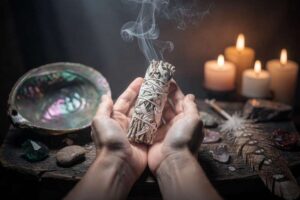
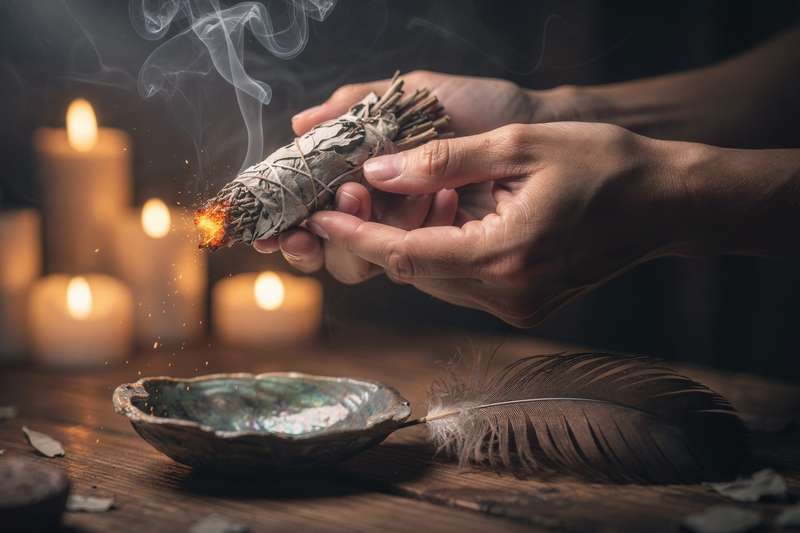
Place your smudge bundle, a fireproof container (ceramic bowl, abalone shell, or soapstone dish), a lighter or matches, and a cup of water within arm’s reach. Open windows and exterior doors to create a path for stagnant energy to leave. You don’t need a dramatic draft—just an open window or door signals to your mind and spirit that energy has somewhere to go. Some practitioners also keep a feather nearby to direct smoke, though your hand works equally well.
Step 3: Ground and Center Yourself
Stand with your feet firmly on the floor (or earth, if you’re outside). Take three deep breaths. Feel your body. Feel the space around you. This pause creates a threshold between ordinary time and ritual time. You are not rushing through a chore; you are tending to something sacred. Even thirty seconds of genuine attention changes how the whole practice unfolds.
Step 4: Light the Bundle and Create Smoke
Hold your smudge bundle at a slight angle in the flame of your lighter or match until the end catches fire. You’ll see a small flame. Let it burn for a few seconds, then gently blow it out so the bundle smolders and produces steady smoke. If it goes out, simply relight it. Some bundles catch and smolder easily; others need coaxing. Patience here prevents frustration later. Once you have good smoke, rest the bundle in your fireproof dish.
Step 5: Begin at Your Entry Point
Start at your front door or the threshold where you entered the space. This symbolically begins the clearing at the boundary between outside and inside. Hold your hand or feather in the smoke and begin waving it gently around the door frame and along the threshold. As you do, speak your intention silently or aloud: “I cleanse this space with love and light,” or simply, “Clear and renew.” Words matter less than the feeling behind them.
Step 6: Move Through Each Room Mindfully
Walk slowly through your home, guiding smoke into corners, along baseboards, and into closets and cupboards where energy often stagnates. Pay special attention to the places where you spend the most time—your bedroom, your altar space, anywhere you’ve sat with heavy emotions. Linger longer in these spots. There’s no rush. This is not cleaning house; it’s tending to invisible layers. You might whisper thanks to each room or to the plants supporting you. Many witches find that naming what they’re releasing—”I release this old argument” or “I let go of this sadness”—deepens the work.
Step 7: Cleanse Your Own Body
Before finishing, bring the smoke over your own body. Start at your head and slowly move downward, allowing the smoke to wash over your face, your chest, your arms and hands, and finally your legs and feet. This step is crucial: you’re not separate from your home’s energy. Clearing the space means clearing yourself too. As the smoke touches you, feel it carrying away tension, worry, and anything that no longer serves you. Many practitioners cup their hands in the smoke and draw it toward their face, breathing deeply and consciously releasing as they exhale.
Step 8: Close the Ritual and Extinguish Safely
When you feel complete, thank the herbs: “Thank you, sage. Thank you for your medicine and your service.” Gratitude is not sentimental; it completes the energetic circuit and deepens your relationship with the plants. To extinguish, gently press the glowing end of the bundle into your fireproof dish, or let it burn out naturally. Never leave a smoldering bundle unattended. Some practitioners extinguish by carefully submerging the end in water, though this can make relighting difficult. Find what works for you.
Step 9: Seal the Cleansing (Optional)
After smudging, some practitioners light a white candle and place a tiny drop of cedarwood oil on windowsills, doorways, or altar items to anchor protective energy in the space. This seals the clearing and invites what you want to stay. This step is optional—the cleansing is complete without it—but many find it adds a tangible sense of closure.
How to Smudge Yourself: Personal Energy Clearing
Smudging your own body is intimate and powerful. You might do this alone after a difficult conversation, before sleep, during your moon ritual, or anytime your energy feels cloudy. Hold your smudge bundle over your fireproof dish, positioning it so smoke rises steadily. Stand comfortably and let the smoke envelope you—face, neck, chest, arms, belly, legs, and feet. Use your hand or a feather to direct the smoke, or simply stand in it and breathe consciously.
As the smoke touches you, imagine it carrying away whatever weighs you down: self-doubt, anger, sadness, fatigue, old stories. You are not pushing it away violently; you are gently releasing it and watching it dissolve. Many practitioners whisper affirmations during this time: “I am clear and at peace,” “I shed what no longer serves me,” or “I am light.” The words anchor your intention and give your mind something focused to hold.
This practice takes only three to five minutes and often produces a shift you can feel immediately. Your shoulders may drop. Your breath may deepen. Your clarity may sharpen. Trust what you sense.
Essential Tools and Supplies
You don’t need much to smudge, but a few items make the practice easier and safer:
- Smudge Bundle: Sage, cedar, sweetgrass, or palo santo. Buy from ethical sources that support indigenous growers and sustainable harvesting.
- Fireproof Container: An abalone shell, ceramic bowl, soapstone dish, or cast iron. This catches ash and burning embers, preventing accidents.
- Lighter or Matches: Keep near your supplies. Some people prefer wooden matches for a more ritual feel.
- Water Cup: For safety and as a backup extinguishing method.
- Feather (Optional): Some use a feather to direct smoke, but your hand is equally effective and more personal.
- White Candle (Optional): Many seal their cleansing with a fresh candle and a drop of cedarwood oil.
- Journal (Optional): After smudging, jot down what you noticed, how your space and body feel, and any insights that arose. Over time, this creates a record of your practice.
Ethics and Best Practices: Honoring the Tradition
Smudging carries deep roots in Indigenous and Native American spiritual traditions. As someone borrowing this practice, your responsibility is threefold: source ethically, practice respectfully, and acknowledge the origins.
Source Responsibly: Buy smudge bundles from suppliers who support indigenous growers and ensure sustainable harvesting. White sage is increasingly overharvested; some native populations are working to restore wild populations. Consider rotating your herbs—use cedar, sweetgrass, and palo santo alongside sage. Research your supplier’s practices. Better yet, if you have space, grow your own sage, cedar, or other herbs.
Practice with Intention, Not Trend: Smudging is not a trendy aesthetic or a quick fix for “bad vibes.” It is a spiritual practice requiring your presence and sincerity. When you smudge, you are not performing for social media; you are tending to your inner and outer worlds. This distinction matters.
Acknowledge the Source: If someone asks where smudging comes from, say truthfully: “This comes from Indigenous traditions.” You need not claim ownership or pretend it originated elsewhere. Respect is simple honesty.
Common Beginner Mistakes to Avoid
- Using smudging as a substitute for real change: Smudging clears energy, but it doesn’t resolve relational conflicts, heal trauma, or replace professional help. It supports your inner work; it doesn’t replace it.
- Smudging without intention: Lighting a bundle and waving it around is motion without meaning. Always pause and get clear on your why before you light it.
- Over-smudging: You don’t need to smudge every day unless you’re moving through an intense period. Weekly or monthly is sufficient for most people. Too much can feel jarring to your energy.
- Ignoring smoke signals: If a room fills with thick smoke or you feel dizzy, open more windows or step outside. Your body gives you information; honor it.
- Leaving bundles unattended: Always stay present while your bundle smolders. Never leave a burning smudge stick alone, even briefly.
- Dismissing quieter herbs: White sage is potent, but cedar and sweetgrass offer gentler, equally valuable work. Not every clearing requires the strongest medicine.
Building Your Practice Over Time
Your smudging practice will deepen as you repeat it. After a few times, you’ll sense when your space needs clearing without overthinking it. You’ll notice which herbs resonate most with you. You may discover that you prefer smudging at particular times—during the full moon, at seasonal shifts, or whenever intuition calls. This is how ritual becomes alive and personal rather than formulaic. Trust your own experience. If white sage feels right, use it. If you’re drawn to cedar and palo santo instead, honor that draw. Your practice is yours to build.
Frequently Asked Questions
Is smudging the same as burning incense?
Smudging and incense are similar but distinct. Both involve burning plant material and using smoke intentionally. Smudging typically uses bundled herbs (especially sage) and carries spiritual cleansing intention rooted in specific traditions. Incense is a broader category—it can be sticks, cones, or resins burned for fragrance, meditation, or ritual without the same cultural specificity. You can use either in your practice; the key difference is intention and source awareness.
Can I smudge if I have pets or respiratory sensitivities?
Yes, with adjustments. If you have asthma, bronchitis, or chronic respiratory issues, smudging indoors may irritate you. Smudge outside instead, or use gentler herbs like palo santo or cedar that produce less intense smoke. For pets, use less smoke, open windows wider, and keep the ritual brief. Watch your animal’s behavior; if they seem stressed, move to a well-ventilated space. Some animals appreciate gentle smudging from a distance; others prefer you cleanse yourself and your own space separately.
What if my smudge bundle won’t light or keeps going out?
Bundles vary in density and moisture content. If yours resists lighting, hold the flame longer against the tip and blow gently but steadily once it catches. If it lights but smokes briefly then dies, it may be too tightly wrapped or too moist. Try loosening it slightly or letting it dry in sunlight for a day. Once lit, keep a gentle breath on it until it smolders steadily. If this continues frustrating you, try palo santo sticks, which ignite more easily.
How often should I smudge my home?
There’s no universal rule. Some practitioners smudge weekly; others monthly. Trust your intuition. If your space feels heavy, cloudy, or emotionally charged, smudge. If it feels clear and light, you probably don’t need to. Many people smudge at seasonal shifts, on full moons, or after guests visit or conflict arises. Listen to your home and your instinct rather than following a rigid schedule.
Can I smudge if I’m not spiritual or religious?
Absolutely. You don’t need to believe in a specific deity or subscribe to any religion to benefit from smudging. The practice works through intention, mindfulness, and your own presence. Even a secular approach—burning herbs as part of a conscious clearing ritual—shifts your awareness and your space. The science of aromatic compounds plus the psychology of intentional ritual equals real change, regardless of your spiritual framework.
Final Thoughts
Smudging is an invitation to slow down and tend to yourself and your space with care. It asks nothing of you except presence and sincerity. Whether you smudge once a month or weekly, in your bedroom or throughout your home, your practice is valid. Start where you are, with what you have, and trust that intention is enough. As you repeat this ritual, you may find that clearing your space begins to clear your inner world too—and that simplicity is where the real power lives.