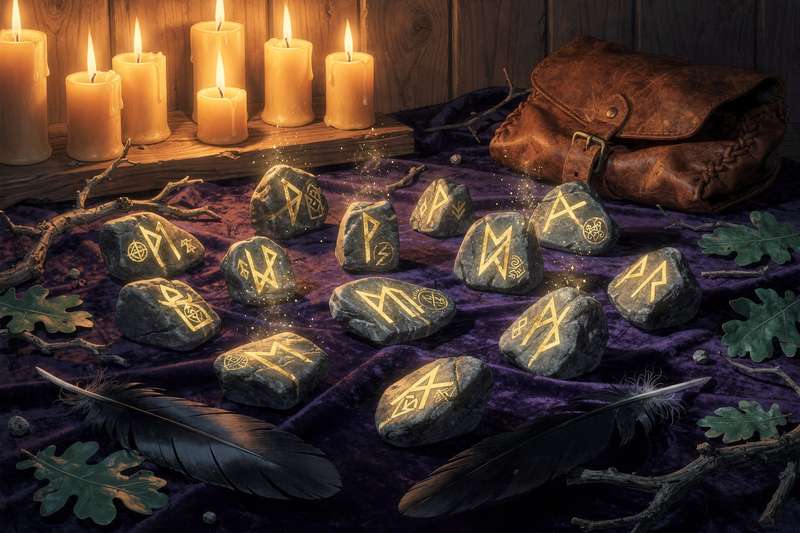
What Are Runes, Really?
You’ve probably heard the word “rune” and imagined ancient magic or mysterious symbols—and you’re not entirely wrong. But runes are something more grounded and accessible than you might think.
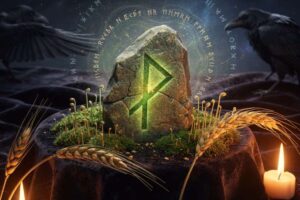
Runes are letters from alphabets used by Germanic, Norse, and Anglo-Saxon cultures centuries ago. The word itself comes from Old Norse and means “secret” or “mystery.” What makes them special isn’t just their age; it’s that each symbol carries layered meaning—spiritual, practical, and intuitive all at once. Unlike ordinary letters that simply represent sounds, each rune embodies a concept, an energy, or an archetype.
Today, runes function primarily as a divination tool, similar to tarot cards. They help you gain insight into your situation, clarify your questions, and strengthen your connection to your own inner wisdom. They’re a mirror for reflection and a guide for understanding what’s happening in your life right now.
A Brief History: From Ancient Writing to Modern Divination
The oldest runic system still in widespread use is the Elder Futhark, a collection of 24 symbols that date back to around 150 CE. The name “Futhark” comes from the first six runes: Fehu, Uruz, Thurisaz, Ansuz, Raidho, and Kennaz. This system remained in use until roughly 800 CE, when the Younger Futhark (containing 16 runes) emerged among Viking cultures.
According to Norse mythology, runes weren’t invented—they were discovered. The god Odin hung wounded from Yggdrasil, the World Tree, for nine nights, fasting and barely alive, until he perceived the runes and gained their knowledge. This story tells us something important: runes were understood as eternal forces woven into reality itself, not human creations.
Historically, runes appeared on amulets and artifacts meant to invoke divine protection or aid in battle. They were carved into bone, stone, and metal—objects that were meant to carry power and intention. Archaeological findings, including inscribed amulets from the early centuries CE, show that people used runes ritually for centuries.
However, rune reading as a divination practice—the way you’ll use them—really took off in the 20th century. In 1982, Robert Blum published The Book of Runes, which introduced a simplified, intuitive approach to reading runes that made them accessible to modern spiritual seekers. Blum’s method framed runes as a self-reflective tool, much like tarot, and it sparked a renaissance in rune practice that continues today.
The Three Main Runic Systems
- Elder Futhark: 24 runes, used from roughly 150–800 CE. This is the most commonly used system for modern divination and the one we recommend for beginners.
- Younger Futhark: 16 runes, developed by Vikings and used from around 800–1100 CE. More compact but less detail in meanings.
- Anglo-Saxon Futhorc: 29+ runes, used in England. More complex and less commonly taught to beginners.
For your practice, start with the Elder Futhark. It’s the most widely documented, has the richest symbolic meanings, and benefits from the most modern teaching resources.
Getting to Know Key Runes
Each rune in the Elder Futhark represents a distinct concept or energy. You don’t need to memorize all 24 meanings at once—let them reveal themselves to you gradually as you practice. Here are some foundational runes you’ll encounter frequently:
- Fehu (ᚠ): Wealth, prosperity, new beginnings, abundance flowing into your life
- Uruz (ᚢ): Strength, vitality, personal power, the raw energy within you
- Algiz (ᛉ): Protection, defense, intuition, boundaries that keep you safe
- Raidho (ᚱ): Journey, movement, your life path, transition and direction
- Perthro (ᛈ): Mystery, fate, hidden knowledge, what remains to be revealed
As you work with the runes, you’ll develop your own felt sense of what each symbol means. Your intuition matters as much as any guidebook.
What You Need to Begin: Essential Tools
Starting a rune practice doesn’t require expensive equipment or years of study. Here’s what you actually need:
Your Rune Set
You have two paths here. The easiest option is to purchase a pre-made rune set. Quality sets come in various materials—wood, stone, bone, or ceramic—each offering its own energy and feel. Wood tends to be warm and accessible; stone feels grounding and durable; bone carries historical resonance. Browse options and choose the material that calls to you.
If you want a deeper personal connection, consider making your own set. This is absolutely doable: paint or carve the rune symbols onto pebbles, wooden discs, or clay tiles. The act of creating your set strengthens your bond with the runes and their meanings. You’ll know each symbol intimately before you ever cast them.
A Rune Bag
You need something to hold and shake your runes before casting. Most purchased sets include a small pouch; if you’re making your own set, any small drawstring bag works perfectly.
A Casting Cloth
A simple cloth—perhaps a small tapestry, scarf, or dedicated fabric—gives you a designated space for your casts and protects your runes from damage. This also creates a ritualistic boundary that signals to yourself and your intuition that you’re entering a practice space.
A Question or Intention
Before you cast, you need clarity about why you’re consulting the runes. Are you seeking guidance on a decision? Insight into a relationship? Understanding of a pattern in your life? A clear intention focuses the reading and makes the answer more relevant to you.
How to Start Reading Runes: Your First Steps
Prepare Your Space
Find a quiet place where you won’t be interrupted. Lay out your cloth. This isn’t about perfection; it’s about creating a moment of attention and intention.
Hold Your Question or Intention
Think clearly about what you want to know. You’re not asking runes to predict your future like a fortune teller in a movie. Instead, you’re asking them to reflect patterns, possibilities, and wisdom relevant to your situation. Hold this question in your mind as you prepare to cast.
Mix and Cast
Shake your rune bag gently, focusing on your question. Then cast the runes onto your cloth. How many you use depends on the spread you choose (more on that below). Some runes will land face-up; some may turn over or land on their edge. Pay attention to which runes appear and their positions.
Interpret What Appears
Look at each rune that appeared. What does its symbol mean to you? Consult your guidebook, but also listen to your intuition. Sometimes the most powerful insight comes from what the rune makes you feel or think of, not just its traditional meaning.
Simple Spreads to Begin With
The Single Rune Draw
Cast just one rune. This is perfect when you want a quick answer, a daily guidance, or to focus on one central question. The single rune serves as a message or theme for you to sit with.
The Three-Rune Spread
Cast three runes. A common way to read them: the first represents the situation or foundation, the second shows a challenge or hidden factor, and the third reveals guidance or the direction forward. You can also use three runes to represent past, present, and future—though be gentle with yourself about “future” predictions; runes show possibilities, not certainties.
The Five-Rune Spread
Cast five runes, often arranged in an X pattern or a line. Five runes give you more nuance: situation, challenge, help or resources, outcome, and advice, for example. This spread works well when you’re navigating something complex with multiple layers.
The Nine-Rune Spread
Cast nine runes arranged in a three-by-three grid. This is a fuller reading, offering detailed perspective on multiple aspects of your question. It’s beautiful when you really want to understand something thoroughly, but it requires more interpretation skill. Save this for when you’re more comfortable reading.
Questions to Ask Your Runes
Runes respond best to clear, open-ended questions. Instead of “Will I get the job?” try “What do I need to know about this job opportunity?” Instead of “Does he love me?” ask “What is the nature of this relationship right now?”
Good rune questions include:
- What guidance do I need about this situation?
- What am I not seeing clearly?
- What energy or quality should I bring to this decision?
- What does this pattern in my life want to teach me?
- What is my next step forward?
- What strength do I already possess that I’m underusing?
Common Mistakes Beginners Make (And How to Avoid Them)
Expecting Prediction Instead of Reflection
Runes aren’t fortune-telling machines. They reflect patterns and possibilities, not fixed futures. Approach them as a tool for understanding, not as external authorities telling you what will happen.
Ignoring Your Intuition in Favor of “Correct” Meanings
Guidebooks are helpful, but your gut feeling matters just as much. If a rune’s traditional meaning doesn’t resonate, ask yourself what it’s trying to tell you. Your intuition is part of the oracle.
Casting Too Many Times for the Same Question
If you don’t like an answer, don’t keep casting until you get one you prefer. This muddies your intuition and wastes the clarity the runes offered. Sit with the reading, sleep on it, and let its meaning unfold over days or weeks.
Skipping the Preparation Step
Rushing into a cast without a clear question produces muddled readings. Take 30 seconds to ground yourself and clarify your intention. This simple pause dramatically improves the relevance of your reading.
Making Your Rune Practice a Real Practice
Start small. Cast a single rune each morning and sit with it throughout your day. Notice where its energy shows up in your life. This builds familiarity and trust with the runes organically.
Keep a journal. Write down the rune you drew, your question, and what you discovered. Over weeks and months, you’ll see patterns emerge and your interpretive skills will deepen naturally.
Treat your runes with care. They’re objects that carry intention and meaning. Store them respectfully, handle them with attention, and cleanse them periodically—some people use moonlight, others pass them through smoke, others simply hold them with gratitude and the intention to clear their energy.
Most importantly, remember that you’re not learning runes to become an expert or impress anyone. You’re learning them because you trust your own wisdom and you want tools to help you access it more clearly. The runes are there to support your journey, not to replace your own knowing.
FAQ
Do I need to buy an expensive rune set to start?
No. An affordable set made of wood or stone works beautifully, or you can make your own by painting or carving symbols onto small stones or tiles. The materials matter far less than your intention and attention.
What if a rune lands reversed or on its edge—does that change the meaning?
Some traditions say yes; some say no. When you’re starting, keep it simple: if a rune lands face-down, you can choose to reshuffle and cast it again, or you can read it in the reversed position (which often represents blocked energy or the opposite of its upright meaning). Pick an approach and stay consistent.
Can I use runes to make major life decisions?
Runes are powerful tools for gaining insight and clarity, but they work best alongside your own judgment and practical thinking. Use them to illuminate possibilities and blind spots, not to make decisions for you. You’re the authority on your own life.
How often should I practice rune reading?
As often as feels meaningful to you. Some people cast daily; others use them weekly or when facing a specific question. There’s no “right” frequency. Let your intuition guide how often you reach for them.