Understanding Cartomancy and Tarot
You may have heard both terms used interchangeably, but cartomancy and tarot are distinct practices—though they’re more alike than different. Both use cards as spiritual mirrors, reflecting your situation and illuminating hidden truths. The key difference? The tools and the depth of their symbolism.
Cartomancy is divination using a standard 52-card deck—the same cards you’d use for poker or bridge. Tarot, by contrast, uses a specialized 78-card deck with elaborate imagery and two distinct card categories. Understanding which one resonates with you depends on your goals, budget, and spiritual style.
The Core Differences Between Cartomancy and Tarot
Card Count and Structure
A traditional tarot deck contains 78 cards divided into two sections: the Major Arcana (22 cards) and the Minor Arcana (56 cards). These major cards represent life’s profound lessons and transformative moments—the cards that often carry the weightiest spiritual significance.
A playing card deck has 52 cards with four suits. There’s no Major Arcana equivalent, which means readings tend to focus more on immediate, practical matters rather than deep karmic themes. Some readers view this as a limitation; others see it as a strength for straightforward, actionable guidance.
Suit Correspondence
Here’s where the connection becomes clear. Playing card suits correspond directly to tarot’s Minor Arcana:
- Hearts = Cups (Water element, emotions, relationships, matters of the heart)
- Diamonds = Pentacles (Earth element, finances, career, material security)
- Clubs = Wands (Fire element, passion, creativity, action, conflict)
- Spades = Swords (Air element, intellect, truth, challenges, clarity)
This alignment means you can interpret playing cards using tarot frameworks. However, tarot includes a fourth court card per suit (four face cards instead of three), offering more nuance in character readings.
Imagery and Interpretation
Tarot cards feature intricate, symbolic artwork designed to spark intuition and reveal layers of meaning. Each card tells a visual story—the Lovers shows two figures intertwined, the Tower depicts destruction and sudden change, the Hermit shows solitary wisdom. This richness makes tarot particularly powerful for deep self-reflection.
Playing cards are simple and uniform. A Jack is a Jack; a Nine is a Nine. There’s no visual narrative to guide you. This simplicity can feel liberating if you prefer working purely from intuition and memorized meanings, or limiting if you rely on visual symbolism to unlock insights.
The Historical Context
Cartomancy is the older practice. Playing card divination emerged in 14th-century Europe and became especially popular in France, England, and Russia. It thrived without fanfare for centuries—a grounded, practical form of fortune-telling accessible to ordinary people.
Tarot divination came later, developing in the late 18th century. It gained massive popularity during the Victorian era and has remained the dominant card-reading method ever since. Today, tarot dominates the spiritual marketplace, but cartomancy has experienced a quiet renaissance among readers who appreciate its simplicity and directness.
Cartomancy: The Practical Choice
Accessibility and Cost
You probably already own a deck. A standard playing card set costs a dollar or two, while quality tarot decks range from $15 to $50+. This makes cartomancy perfect if you want to begin immediately without financial investment, or if you’re testing whether card divination calls to you.
Portability and Discretion
A playing card deck is inconspicuous. You can keep it in your purse or pocket without signaling your spiritual interests to coworkers or skeptical family members. This matters if you prefer keeping your practice private.
Quick, Focused Readings
Cartomancy excels at straightforward questions: Will I get this job? Is this person trustworthy? Should I make this move? The 52-card structure encourages direct, practical answers rather than sprawling soul-searching explorations.
Card Meanings in Cartomancy
Hearts (Emotions & Relationships): Aces signal new love or emotional renewal. Tens bring ultimate happiness and family harmony. Kings and Queens represent romantic partners or emotionally significant people. Fives suggest heartbreak; Nines fulfill wishes.
Diamonds (Money & Career): Aces herald financial opportunities. Tens indicate inheritance or wealth. Kings represent successful businesspeople. Fives suggest financial loss; Fours bring security.
Clubs (Passion & Creativity): Aces spark new creative ventures. Sixes bring public recognition. Nines test your resilience before success. Tens warn of heavy workloads; Fives indicate conflict.
Spades (Intellect & Challenge): Aces offer mental clarity and powerful new beginnings. Tens represent rock bottom (but signal direction is upward). Nines bring anxiety; Eights suggest feeling trapped. Kings embody intellectual authority; Jacks represent sharp, ambitious people.
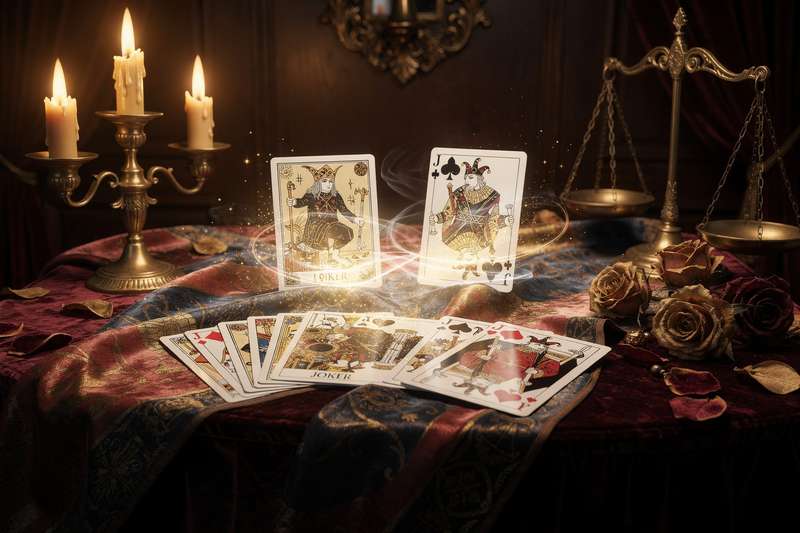
The Joker: If included, it corresponds to The Fool in tarot—representing new beginnings, risk, and the unknown.
Tarot: The Symbolic Deep Dive
Complexity and Nuance
Tarot’s 78 cards allow for far more detailed readings. The Major Arcana provides archetypal wisdom—cards like Death (transformation), The Magician (manifestation power), and The Hermit (inner knowing). This depth suits you if you want to explore underlying patterns, karmic themes, or transformational periods.
Visual Storytelling
When you look at a tarot card, the image speaks before the meaning does. This activates your intuition differently. You can read tarot without memorizing anything—just respond to what you see and feel. For many readers, this visual element is the entire appeal.
Versatility in Spreads and Questions
Tarot handles complex, multi-layered questions beautifully. “What’s blocking my creativity?” “What does my soulmate need me to know?” “How will this year unfold?” Tarot’s breadth allows spreads ranging from simple three-card draws to elaborate Celtic Cross layouts.
Relationship Work
Tarot shines when you’re examining dynamics, patterns, and emotional undercurrents. The court cards (Page, Knight, Queen, King) offer four distinct perspectives per suit, giving you more granular character information. This richness serves relationship readings exceptionally well.
Which Should You Use?
Choose cartomancy if you:
- Want immediate access without purchasing a deck
- Prefer straightforward, practical guidance
- Like working with intuition over memorized systems
- Value portability and discretion
- Appreciate simplicity and directness
- Are new to card divination and testing the waters
Choose tarot if you:
- Want to explore deeper psychological and spiritual themes
- Respond to visual symbolism and artwork
- Are willing to invest in learning a comprehensive system
- Enjoy complexity and nuance in readings
- Want archetypal wisdom through the Major Arcana
- Plan to read professionally or frequently
The honest truth? Many experienced readers practice both. You might use playing cards for quick daily guidance and tarot when someone seeks an in-depth reading. Some readers switch based on the question itself—tarot for soul work, cartomancy for practical matters.
Getting Started With Playing Cards
Basic Reading Process
Shuffle your deck while focusing on your question. Draw three, five, or nine cards depending on the spread you choose. Lay them in your chosen pattern. Interpret each card’s meaning, then consider how the cards interact. Red cards (Hearts, Diamonds) generally indicate favorable energy; black cards (Clubs, Spades) suggest challenges or obstacles.
Advanced Techniques
Once you’re comfortable with individual meanings, explore card combinations. The Ace of Hearts next to the King of Diamonds suggests romantic partnership with someone financially stable. The Nine of Spades appearing near joyful cards indicates anxiety clouding a happy moment.
Notice when multiple cards of the same number appear—four Aces signal major life change from all directions; three of any card suggests a theme is developing. Pairs indicate balance or duality.
Timing with Cards
Each suit connects to seasons. Hearts and Clubs relate to spring and summer energy. Diamonds connect to autumn’s harvest. Spades correspond to winter’s reflective period. Numbered cards can indicate weeks—a Three might mean three weeks from now.
Reading for Others
When someone asks you to read their cards, have them shuffle and cut the deck into three piles using their left hand (traditionally closest to the heart and subconscious). They reassemble the piles in any order, then you begin the reading. This involvement deepens their connection to the reading.
When reading for yourself, choose a quiet moment free from distractions. Ground yourself fully in your question before drawing cards. Your focused intention shapes the reading’s accuracy.
FAQ
Can I use playing cards instead of tarot?
Yes. Playing cards contain the same symbolic suits as tarot’s Minor Arcana. You’ll miss the Major Arcana’s archetypal wisdom and the visual richness of tarot imagery, but you can absolutely conduct meaningful readings with a standard deck. Many readers consider it more accessible for beginners.
Is cartomancy or tarot more accurate?
Accuracy depends on the reader’s intuition and skill, not the deck. A skilled cartomancer reading playing cards will be more accurate than a novice struggling with tarot. Both systems work when you approach them with intention and an open heart. Choose based on which resonates with you emotionally.
Do I need to memorize card meanings?
Not necessarily. Many intuitive readers work purely from what they feel when looking at a card. That said, learning traditional meanings provides a framework that deepens interpretation. Start with intuition; add structure later if it feels right.
Can I mix playing cards and tarot in the same reading?
Technically yes, but it’s not recommended when you’re learning. Mixing systems can create confusion about meanings and interpretations. Once you’re experienced with both, blending them becomes possible—but master one system first.