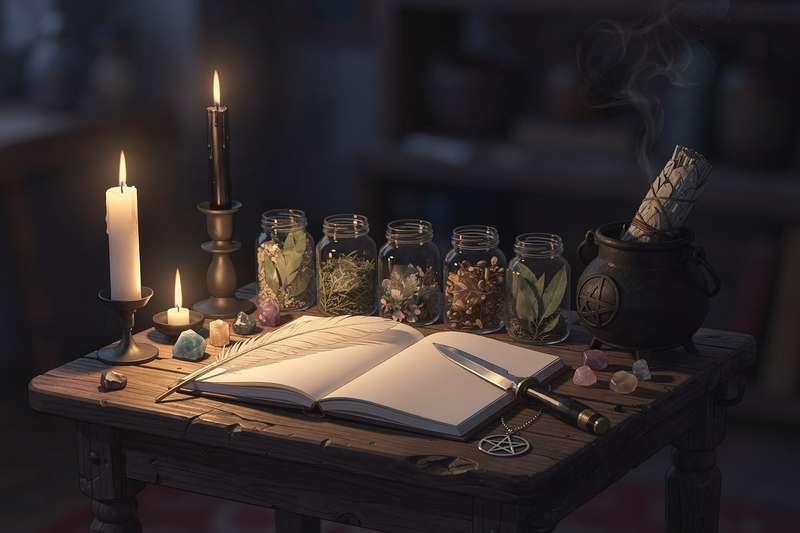
The wiccan path is calling to you—whether you’re drawn by curiosity about the craft, a deeper connection to nature, or a spiritual practice that honors both the sacred feminine and masculine. Wicca for beginners starts not with complex rituals or expensive supplies, but with an open heart and genuine desire to understand the magick already present in your world. If you’ve felt pulled toward this path, you’re not alone. Thousands of people discover Wicca every year because it offers something modern spirituality often lacks: a way to work with natural cycles, honor the divine in all its forms, and take responsibility for your own spiritual growth.
What Is Wicca? Understanding the Basics
Wicca is a modern, nature-based spiritual religion that honors the cycles of the earth, the power of intention, and the divine presence in all living things. Unlike common misconceptions, Wicca has nothing to do with Satanism, causing harm, or controlling others—quite the opposite. At its heart, Wiccan practice rests on a principle of respect: the harm-none ethic, often expressed as “An it harm none, do what ye will.” This ancient wisdom reminds you that your choices carry weight, and true power comes through acting with integrity.
Wiccans typically work with two primary deities: the God and the Goddess, representing masculine and feminine energies. However, this doesn’t mean Wicca requires believing in a specific deity or pantheon. Many practitioners honor different cultural traditions, work with specific gods and goddesses, or understand these forces as archetypal energies present in nature itself. The beauty of the wiccan path is its flexibility—you’re encouraged to find what resonates authentically with your own spiritual truth.
One common point of confusion: not all witches are Wiccans, and not all Wiccans identify as witches. A Wiccan practices the religion of Wicca. A witch is anyone who works intentionally with magick and natural forces. A pagan follows religious practices rooted in folk traditions or pre-Christian spirituality. You can be all three, or just one. The terms overlap, but they’re not identical. What matters most is finding language that honors your own practice.
Common Types of Wiccan Practice
Wicca is beautifully diverse, and the wiccan path looks different for each person who walks it. Understanding these variations helps you recognize where your own practice might fit—or how you might blend elements from different traditions to create something uniquely yours.
Traditional Wicca follows the teachings developed by Gerald Gardner and often involves formal initiation, working within a coven (a group of practitioners), and following established ritual structures. Traditional practitioners typically honor the God and Goddess, celebrate the eight seasonal festivals (called Sabbats), and work with the lunar cycles. This path emphasizes learning from experienced teachers and maintaining lineage.
Eclectic Wicca is far more common among beginners. Eclectic practitioners draw from multiple traditions, research, personal intuition, and their own cultural backgrounds to build a practice that feels true to them. You’re not bound to one lineage or set of rules—instead, you study widely and make conscious choices about what to incorporate. This path asks you to take responsibility for your own learning and to honor the sources of your practices respectfully.
Kitchen Witchcraft focuses on the magick of everyday life and the home. Kitchen witches work with herbs while cooking, infuse intention into household tasks, and understand their living space as sacred. If you love working with natural materials, growing herbs, and finding magick in ordinary moments, this path may call to you.
Hedge Witchcraft emphasizes solitary practice, meditation, and inner work. Hedge witches often focus on shamanic journeying, trance work, and personal spiritual development rather than group rituals. This is an excellent path if you prefer working alone and exploring your inner spiritual landscape.
Green Witchcraft centers on plants, herbs, crystals, and natural elements. Green witches have deep knowledge of botanicals and their properties and work closely with nature and seasons. If you’re drawn to gardening, herbalism, or feel most alive outdoors, this tradition aligns beautifully with your natural inclinations.
How to Start Your Wiccan Path: 7 Practical Steps
Step 1: Cultivate an Open Mind and Commitment to Learning
Before you light a single candle or gather any supplies, begin your wiccan path by deciding to approach this practice with genuine curiosity and respect. Read books by established authors in the community. Explore different traditions and perspectives. Follow your questions wherever they lead, even if the answers surprise you. This mindset—humble, hungry for understanding, and willing to challenge assumptions—is the true foundation of the craft. You don’t need to memorize anything yet or commit to a specific path. Simply begin observing your own beliefs about nature, divinity, and personal power.
Notice what draws you. Do you feel called to ritual structure or spontaneous practice? Solo work or group participation? Formal study or intuitive exploration? Your authentic preferences will guide you toward the expression of Wicca that’s right for you.
Step 2: Start a Book of Shadows
Your book of shadows is the most important tool you’ll create on the wiccan path. This is your personal grimoire—a journal where you record spells, correspondences, ritual observations, spiritual insights, questions, and anything else that deepens your practice. Think of it as a conversation between you and the craft, documented over time. It becomes a sacred record of your growth and a reference you’ll return to again and again.
Begin with a simple dedication page. Write today’s date and a brief statement of intention. For example: “This book of shadows is dedicated to my spiritual growth and honest exploration of the wiccan path.” Your book of shadows can be a traditional blank journal, a notebook, or even a digital document—whatever format honors your practice. Organize it however feels natural to you: chronologically, by topic (spells here, deities there, lunar observations elsewhere), or any way that serves your learning.
Step 3: Study the Wiccan Rede and Core Ethics
The Wiccan Rede—”An it harm none, do what ye will”—is far more than a catchy phrase. It’s the ethical foundation of responsible magic. This principle means that before you cast a spell, perform a ritual, or work with any form of intention-setting, you pause and ask yourself honestly: Could this choice harm anyone, including myself? Am I respecting free will and consent? Do I understand the full consequences of what I’m about to do?
Study this principle deeply. It means you can’t ethically force someone to love you, compel another’s choices, or harm someone to benefit yourself. It means your practice must be built on truth, responsibility, and integrity. This isn’t restriction—it’s power aligned with wisdom. When you work within these ethical boundaries, your magic becomes stronger because it flows in harmony with natural law rather than against it.
Step 4: Learn About the God and Goddess
Most Wiccan practice honors both masculine and feminine divine forces, often called the God and the Goddess. The Goddess represents fertility, intuition, the moon, the cycles of birth and death, nurturing, and mystery. The God represents strength, passion, the sun, growth, protection, and vitality. However, these aren’t the only way to understand divinity. Some practitioners work with specific pantheons—Celtic deities, Greek gods, Egyptian powers, or any cultural tradition that speaks to their soul. Others understand these as archetypal energies rather than literal beings.
Spend time reading about different deities and divine concepts. Notice what resonates. You don’t need to decide your entire spiritual cosmology right now—simply begin getting familiar with different expressions of the sacred masculine and feminine. This foundational knowledge will inform your rituals, spells, and spiritual work as you progress.
Step 5: Gather Basic Supplies and Create a Simple Altar
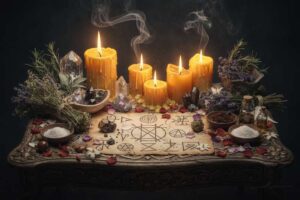
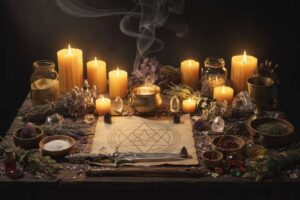
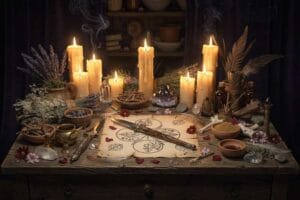
You don’t need much to begin your wiccan path. Start with whatever you have at home: a candle, a cup of water, a small dish of salt, and a space you can dedicate as your altar. This might be a corner of your shelf, a small table, or even a box you bring out when needed. The simplicity is perfect—it keeps focus on your intention rather than material accumulation.
As your practice grows, you might add crystals, herbs, a ritual knife (called an athame), a wand, or tarot cards. But these are enhancements, not necessities. Many experienced practitioners keep their altars simple and intentional. What matters is that your space feels sacred to you and supports your spiritual work.
Step 6: Observe the Lunar Cycles
One of the most accessible and powerful ways to begin the wiccan path is to pay attention to the moon. The moon has long been honored in Wiccan tradition as a symbol of the Goddess and a source of natural rhythm. The new moon is a time for setting intentions and new beginnings. The waxing moon supports growth and manifestation. The full moon brings energy to fruition and is ideal for divination or releasing what no longer serves you. The waning moon is for banishing, cleansing, and letting go.
For the next few months, simply track the lunar phases. Notice how you feel during each phase. Record observations in your book of shadows. You might time simple rituals or journaling practices with the moon’s movement. This single practice—honoring the moon’s cycles—connects you immediately to the rhythms that Wiccans have honored for generations.
Step 7: Learn and Practice a Simple Spell
Once you’ve spent time learning and observing, you’re ready to work with intention through a basic spell. A spell is simply focused intention combined with action and energy. You might create a spell for clarity, protection, courage, or any positive goal that harms no one. Begin with something simple: light a candle, speak your intention clearly and specifically, and sit with the energy you’ve raised for a few moments. Then release it—trust that your intention has been sent out into the universe and let go of attachment to the outcome.
Document this first spell in your book of shadows. Record your intention, what you did, how it felt, and what happened afterward. This becomes a learning tool and a record of your first conscious work with magic.
Essential Tools and Supplies for the Wiccan Path
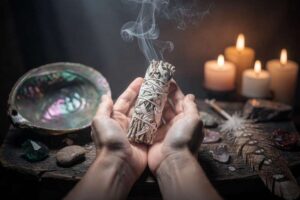
You can practice Wicca with almost nothing, but certain items support and deepen your work. A black or white candle serves as a focal point for energy and intention. Sea salt or regular salt represents purification and protection. Water (collected from a spring, or tap water with intention) symbolizes emotion and intuition. A small dish or bowl holds these elements on your altar. Herbs—dried rosemary, lavender, sage, or bay leaf—can be burned or infused into your practice. A journal becomes your book of shadows. Crystals like clear quartz or amethyst amplify energy, though they’re entirely optional. A tarot deck supports divination and reflection. As you grow, you might add a wand, athame, or other ritual tools, but none of these are required to begin your wiccan path authentically.
Ethics and Best Practices on the Wiccan Path
The heart of responsible Wiccan practice rests on the harm-none principle. Before any working, pause and examine your true intention. Are you seeking to control or influence someone else’s will? That violates this ethical foundation. Are you acting from fear, anger, or a desire for revenge? Pause until your energy is clearer and more aligned. Are you respecting the free will and sovereignty of everyone involved? If you can answer yes to these questions, you’re moving forward responsibly.
Respect other traditions and practitioners. Not all witches are Wiccan, and not all Wiccans express their practice the same way. Honor indigenous practices and don’t appropriate sacred traditions that aren’t yours. Take responsibility for your own learning—cite sources, give credit, and approach the craft with humility. Work with consent whenever possible, and understand that your magic affects not just others but also yourself. The energy you send out returns to you, often amplified. This isn’t punishment—it’s simply how energy works. Build your practice on this awareness.
Common Beginner Mistakes to Avoid
- Rushing into spell work without ethical consideration. Many beginners want to jump straight to “magic” without understanding the responsibility involved. Slow down. Study first. The most powerful work comes from alignment with your values.
- Assuming you need expensive tools and supplies. The craft industry thrives on convincing you that you need special items, but you truly don’t. Your intention and energy are what matter. Build gradually and authentically.
- Mixing traditions carelessly. Honoring different cultures’ spirituality is beautiful, but approach it respectfully. Don’t casually borrow sacred practices you don’t understand or aren’t part of your heritage.
- Expecting instant results. Magic isn’t a vending machine. You work with natural forces and cosmic timing, both of which operate on their own schedule. Trust the process and focus on your own growth.
- Neglecting to document your practice. Your book of shadows becomes invaluable over time. Recording what you do, how it feels, and what unfolds helps you refine your craft and track patterns.
- Isolating yourself from the wider community. While solo practice is valid, connecting with other practitioners—online or in person—provides learning, support, and accountability. Consider this as your path grows.
How to Build Your Practice Over Time
The wiccan path is a lifelong journey, not a destination. Begin exactly where you are with the time and resources you have. Spend your first few months simply learning and observing. When you feel ready, add one practice at a time—perhaps a monthly ritual, weekly meditation, or regular tarot readings. Let your practice evolve naturally as you discover what nourishes your spirit. Connect with books, communities, and teachers who inspire you. Most importantly, stay true to your own inner compass. The most powerful magic comes from walking your path with authenticity, not from following someone else’s blueprint. Your wiccan path is yours alone to create.
FAQ About the Wiccan Path
Is Wicca a religion or a practice?
Wicca is both. It’s a spiritual religion with its own beliefs, deities, and ethics, but it’s also a practice involving ritual, spell work, and intentional living. You can explore Wiccan ideas without formally identifying as Wiccan, just as you can be a committed practitioner without labeling yourself.
Do I need to believe in the God and Goddess to practice Wicca?
Not literally. Many Wiccans understand the God and Goddess as archetypal energies, symbols, or natural forces rather than literal beings. Others work with specific deities from their cultural traditions. What matters is finding a spiritual framework that feels authentic to you.
Can I practice Wicca alone, or do I need to join a coven?
Both paths are valid. Solitary practitioners work independently and often find deep fulfillment. Coven members gain community, mentorship, and shared ritual energy. Choose what aligns with your personality and lifestyle. Many practitioners flow between solo and group work over time.
Will practicing Wicca conflict with my other religious beliefs?
That depends on your faith and how you approach Wicca. Some people blend Wiccan practice with Christianity, Judaism, Buddhism, or other traditions. Others find them incompatible. Only you can determine what feels spiritually coherent and honest for you.
Final Thoughts
The wiccan path welcomes you with open arms and an invitation to discover your own power. You don’t need special gifts, expensive tools, or perfect knowledge to begin. You need only curiosity, a commitment to learning, and willingness to honor the sacred in yourself and the world around you. Start today, move at your own pace, and trust that the path unfolds exactly as it should. Your wiccan journey is already beginning.