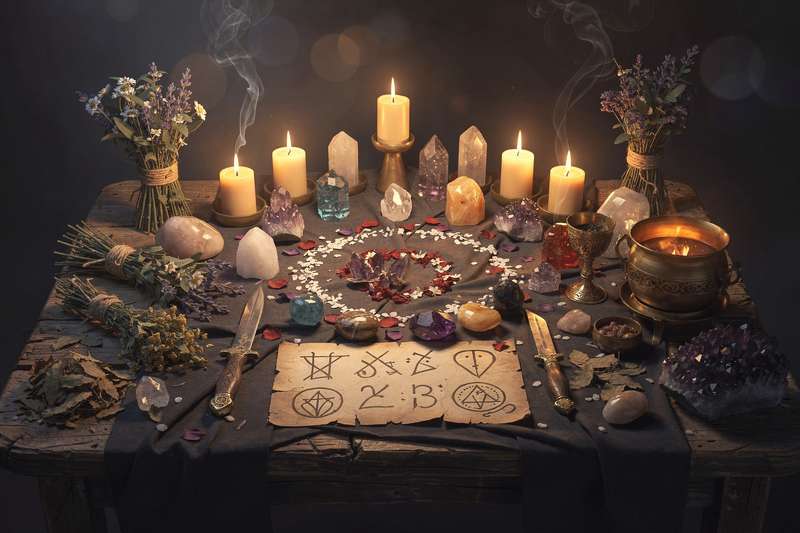
The Wheel of the Year is your sacred calendar—a cycle of eight seasonal celebrations that mark the sun’s journey through the seasons and the eternal dance between light and dark. For modern witches, following the Wheel means aligning your practice with nature’s rhythms, honoring ancient traditions, and creating meaningful rituals that ground you in the present moment. Whether you’re a kitchen witch baking seasonal breads or a solitary practitioner celebrating alone under the stars, the sabbats offer a framework for deepening your connection to the earth and your own spiritual path.
These eight festivals—Samhain, Yule, Imbolc, Ostara, Beltane, Litha, Lughnasadh, and Mabon—have roots in Celtic and Germanic traditions, though many cultures worldwide have honored similar seasonal turning points. Today, witches of all paths adapt these celebrations to fit their climate, heritage, and personal beliefs. You don’t need elaborate tools or years of experience to begin. The Wheel welcomes you exactly as you are, inviting you to observe, celebrate, and grow alongside the natural world.
What Is the Wheel of the Year?
The Wheel of the Year is a circular calendar that divides the year into eight points of celebration called sabbats. Four of these are solar festivals marking the solstices and equinoxes—the astronomical turning points when seasons officially change. The other four fall roughly midway between these solar events and are known as cross-quarter days, traditionally celebrated when certain agricultural milestones occurred.
This framework isn’t a rigid religious doctrine. It’s a living practice that you can adapt to your hemisphere, local climate, and spiritual inclinations. Witches in the Southern Hemisphere often flip the calendar to match their seasons—celebrating Yule in June and Litha in December, for example. The goal isn’t historical reenactment; it’s attunement. By observing these cycles, you become more aware of subtle shifts in energy, weather, plant life, and your own inner landscape.
A common misconception is that you must be Wiccan to follow the Wheel. While Wiccan traditions popularized this sabbat structure in the mid-20th century, witches from eclectic, hedge, green, and secular paths now embrace it. Some honor specific deities at each turn; others focus purely on natural phenomena. Your Wheel, your rules.
The Eight Sabbats: An Overview
Each sabbat has its own energy, themes, and traditional correspondences. Here’s a brief tour around the Wheel, starting where many witches begin their year—at the threshold between worlds.
Samhain (October 31 – November 1): The witch’s new year, when the veil between worlds grows thin. This is a time for honoring ancestors, reflecting on death and transformation, and releasing what no longer serves you. Traditional activities include silent suppers, divination, and lighting candles for the departed.
Yule (Winter Solstice, around December 21): The longest night of the year, followed by the sun’s rebirth. Themes include hope, renewal, and the return of light. Decorate with evergreens, burn a Yule log, exchange handmade gifts, and set intentions for the coming solar year.
Imbolc (February 1-2): The first stirrings of spring. Dedicated to hearth, home, and creative inspiration, Imbolc celebrates the lengthening days. Light candles in every window, cleanse your space, craft Brigid’s crosses, and plan the seeds—literal or metaphorical—you’ll plant soon.
Ostara (Spring Equinox, around March 20): Day and night stand in perfect balance before light tips the scale. This sabbat honors fertility, growth, and new beginnings. Color eggs, plant seeds, create flower crowns, and perform balance rituals to align your inner and outer worlds.
Beltane (May 1): The height of spring’s fertility and passion. Beltane is joyful, sensual, and wildly alive. Dance around a maypole, jump a bonfire for luck, craft flower garlands, gather morning dew for beauty magic, and celebrate pleasure in all its forms.
Litha (Summer Solstice, around June 21): The sun reaches its peak power before beginning its slow decline. This is a sabbat of abundance, protection, and solar magic. Harvest herbs at their potency, stay up to greet the sunrise, create sun water, and charge crystals in daylight.
Lughnasadh or Lammas (August 1): The first harvest, when grain is cut and summer begins to wane. Give thanks for abundance, bake bread from scratch, make corn dollies, share your harvest with others, and acknowledge sacrifices made for growth.
Mabon (Autumn Equinox, around September 21): The second harvest and another moment of balance. Gratitude and preparation for darker months dominate this sabbat. Preserve foods, create abundance altars, balance your personal accounts, and express thanks for the year’s blessings.
How to Begin Celebrating the Wheel of the Year
Step 1: Mark the Dates on Your Calendar
Start by identifying when each sabbat occurs in your location. The four solar festivals shift slightly each year based on astronomical events, so check an almanac or reliable pagan calendar. Write these eight dates in your planner, phone, or grimoire. Treat them as sacred appointments with yourself and the earth. You’re making a commitment to pause, observe, and participate in something larger than daily routine.
If you live in the Southern Hemisphere, flip the calendar: when it’s Samhain in the North, celebrate Beltane where you are. The Wheel follows the land you stand on, not arbitrary dates. Notice what’s actually happening outside your window—that’s your most reliable guide.
Step 2: Research Each Sabbat’s Themes and Correspondences
Before each celebration, spend time learning about its traditional meanings, symbols, colors, herbs, and deities. Read from multiple sources to get a rounded perspective—not every witch celebrates the same way, and that’s beautiful. Take notes on what resonates with you and what doesn’t. You might discover that Imbolc’s focus on inspiration speaks deeply to your creative practice, or that Lughnasadh’s sacrifice themes challenge you to examine what you’re willing to release.
Create a simple reference sheet for each sabbat listing its date, themes, correspondences, and a few ritual ideas. Keep these in your Book of Shadows or a dedicated sabbat journal. Over the years, you’ll add your own observations, recipes, and rituals, building a personalized guide that reflects your unique practice.
Step 3: Create a Simple Altar for Each Sabbat
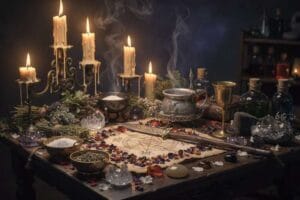
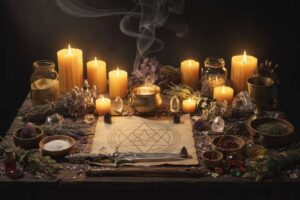
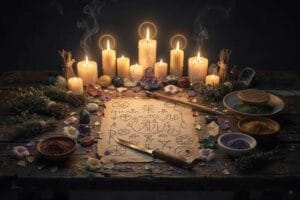
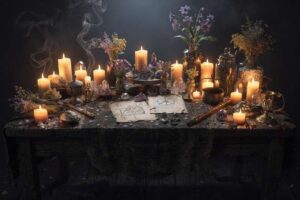
Your altar is a focal point for seasonal energy. It doesn’t need to be elaborate—a small corner of a shelf works perfectly. Before each sabbat, clear your altar and redecorate it with items that represent the season. For Samhain, you might include photos of deceased loved ones, black candles, and dried autumn leaves. For Ostara, fresh flowers, pastel candles, and painted eggs capture spring’s essence.
Use natural items when possible: seasonal flowers, leaves, nuts, shells, stones. Add candles in appropriate colors, relevant tarot cards, crystals that match the sabbat’s energy, and any deity representations you work with. Your altar becomes a visual reminder of where you are on the Wheel, anchoring your awareness in the present season’s gifts and lessons.
Step 4: Plan and Perform a Sabbat Ritual
Your ritual can be as simple or elaborate as feels right. Beginners often start with a basic structure: cleanse your space, cast a circle if that’s part of your practice, call the quarters or elements, state your intention for the ritual, perform your main activity (lighting a candle with specific words, making an offering, doing a meditation or visualization), give thanks, and close your circle.
The “main activity” is where sabbat-specific magic happens. At Yule, this might be burning intentions written on bay leaves in a cauldron. At Beltane, jumping over a small candle flame to invite passion and luck. At Mabon, creating a gratitude list and burying it in the earth. Let the season’s themes guide your creativity. Your ritual doesn’t need witnesses or fancy language—sincerity and presence matter infinitely more than performance.
Step 5: Incorporate Seasonal Foods and Feasting
Food magic is accessible, grounding, and deeply satisfying. Each sabbat has traditional foods that connect you to the season’s energy and historical practices. Bake soul cakes for Samhain, make wassail for Yule, craft Brigid’s bannock for Imbolc, prepare egg dishes for Ostara, enjoy strawberries and honey for Beltane, feast on fresh vegetables for Litha, bake bread for Lughnasadh, and cook harvest soups for Mabon.
As you prepare these foods, infuse them with intention. Stir clockwise while visualizing abundance, bless your ingredients, sing or hum while cooking. If you live alone, create a small feast just for yourself—you’re worthy of celebration. If you have family or friends who’ll join you, share the significance of the foods you’ve prepared. Kitchen witchery is powerful precisely because it weaves magic into everyday sustenance, making the sacred tangible and delicious.
Step 6: Spend Time in Nature Observing Seasonal Changes
The Wheel exists outside your door, not just in books. Around each sabbat, take time to walk outside and truly observe. What’s happening with local plants? Are leaves emerging, flowering, fruiting, or falling? What’s the quality of light? How does the air feel and smell? What birds, insects, or animals are active? These observations anchor your practice in reality and attune you to your specific ecosystem’s rhythms.
If mobility or location limits outdoor access, observe from a window, tend to houseplants, or work with seasonal imagery and meditations. Bring nature inside: a bowl of fallen leaves, a jar of snow, fresh flowers, or collected seeds. The practice is about relationship—connecting with the living world in whatever ways are available to you. Over time, you’ll notice patterns, anticipate changes, and feel yourself as part of nature’s great turning rather than separate from it.
Step 7: Record Your Experiences and Observations
After each sabbat celebration, write down what you did, how you felt, what you noticed, and what you’d like to try next year. This practice creates continuity and allows you to track your spiritual growth. You’ll start to see patterns: perhaps Imbolc always brings breakthrough ideas, or you struggle with Mabon’s introspective energy. These insights help you refine your practice and understand your personal relationship with the Wheel.
Your records don’t need to be polished or lengthy. Bullet points work. Sketches work. Voice memos work. The goal is reflection and remembrance. When the Wheel turns back to the same sabbat next year, you’ll have a foundation to build upon rather than starting from scratch. You’ll notice how you’ve changed, what’s remained constant, and how your practice has deepened.
Essential Tools and Supplies for Wheel of the Year Celebrations
You need very little to begin honoring the sabbats, but certain items appear repeatedly across the Wheel and are worth gathering over time. Candles in various colors are essential—they represent the element of fire, create sacred atmosphere, and can be dressed with oils or herbs for specific intentions. White, black, red, green, gold, and silver cover most sabbat needs. Beeswax or soy candles are lovely, but any candle lit with intention works beautifully.
A seasonal altar cloth helps define your sacred space and can change with each sabbat—warm oranges and browns for autumn festivals, deep greens for Yule, pastels for spring celebrations. Collect natural items throughout the year: acorns, pinecones, shells, interesting stones, fallen feathers, dried flowers. These cost nothing and carry authentic seasonal energy. A good kitchen knife for cutting herbs, a wooden spoon for stirring intentions into food, and basic baking supplies support food magic.
A journal or grimoire for recording rituals, observations, and recipes becomes invaluable. Seasonal herbs—dried rosemary, lavender, cinnamon, mugwort—enhance both rituals and cooking. A small cauldron or fireproof bowl allows safe burning of petitions or herbs. Finally, crystals aligned with each sabbat’s energy can amplify your intentions: clear quartz for Yule’s clarity, rose quartz for Beltane’s love, carnelian for Lughnasadh’s harvest abundance, obsidian for Samhain’s shadow work.
Ethics and Best Practices for Sabbat Celebrations
As you build your sabbat practice, approach it with respect for both tradition and living cultures. Many sabbat names and some practices come from Celtic and Germanic sources, reconstructed and adapted by modern practitioners. Acknowledge this history without claiming unbroken lineage or cultural authority you don’t possess. If you’re drawn to incorporate elements from cultures outside your heritage—smudging, for example—research deeply, understand the closed versus open nature of those practices, and consider whether appreciation has crossed into appropriation.
Follow the harm-none principle in your sabbat magic. Work for the good of all involved, respect free will, and never attempt to manipulate or bind another person without explicit consent—and even then, proceed with extreme caution. Your celebrations should add positive energy to the world, not drain or control others. If you gather wild plants for sabbat decorations or magic, harvest ethically: take only what you need, never take endangered species, leave offerings of gratitude, and ensure the plant population can regenerate.
Remember that not everyone celebrates these holidays, and that’s perfectly valid. Don’t pressure partners, roommates, or family members to participate in your practice. Create space for your spirituality while respecting others’ beliefs and boundaries. Your Wheel turns for you—it doesn’t need to be everyone’s path.
Common Beginner Mistakes When Following the Wheel
- Trying to celebrate all eight sabbats elaborately in your first year: This leads to burnout fast. Start with the sabbats that call to you most strongly—perhaps the solstices and equinoxes—and build from there. Simple, heartfelt celebrations beat exhausted, obligatory ones every time.
- Copying rituals exactly from books without personalizing them: Published rituals are templates, not scripts. Adapt language, symbols, and practices to reflect your beliefs, your environment, and your needs. Your authenticity matters more than historical accuracy.
- Ignoring your local climate and ecosystem: If you live in a place where Ostara arrives buried under snow, honor that reality rather than forcing spring imagery. Work with what’s actually happening around you—that’s where genuine connection lives.
- Feeling guilty about missing a sabbat or celebrating late: Life happens. A ritual performed three days late with full presence beats one rushed on the “correct” date. The earth’s cycles are patient and forgiving; extend that same grace to yourself.
- Comparing your practice to others on social media: Those elaborate altars and rituals represent a tiny, curated slice of someone’s practice. Your simple candle spell is no less valid or powerful. Focus on your experience, not external validation.
- Spending money you don’t have on sabbat supplies: Nature provides freely. A beautiful stone from a walk, branches from your yard, flowers from your garden—these cost nothing and carry more authentic energy than expensive purchased items. Witchcraft is not a wealth-gated practice.
How to Build Your Wheel of the Year Practice Over Time
Your first turn around the Wheel is about exploration and discovery. Approach it with curiosity rather than pressure. Try different ritual styles—some structured, some freeform. Notice which sabbats energize you and which feel challenging. Pay attention to how your body, emotions, and intuition respond to seasonal shifts. This isn’t a test you can fail; it’s a relationship you’re beginning.
In subsequent years, build on what worked and release what didn’t. Perhaps you’ll develop signature sabbat traditions: a special recipe you bake each Yule, a particular hilltop you always visit at Beltane, a divination practice reserved exclusively for Samhain. These personal traditions become anchors, creating continuity and deepening meaning. You might also start celebrating with others—finding or forming a coven, teaching children about the seasons, or hosting open sabbat gatherings for your community.
Let your practice evolve as you do. The witch you are at twenty will celebrate differently than the witch you become at forty or sixty. Your relationship with the Wheel should grow, shift, and mature alongside you. Trust that each turn brings new wisdom, and that even after decades of practice, the sabbats still have lessons to teach.
Final Thoughts
The Wheel of the Year offers you a sacred structure for living in harmony with nature’s cycles, but it’s not a rigid requirement—it’s an invitation. By honoring the eight sabbats in ways that feel authentic to you, you reconnect with rhythms that modern life often obscures. You learn to celebrate both light and dark, growth and rest, abundance and release. Whether you perform elaborate rituals or simply light a candle and whisper a prayer, you’re participating in something ancient and alive. The Wheel turns whether you acknowledge it or not, but when you choose to turn with it consciously, your whole practice—and life—becomes richer, deeper, and more intentionally magical.
Frequently Asked Questions About the Wheel of the Year
Do I need to be Wiccan to celebrate the Wheel of the Year?
No, the Wheel of the Year is celebrated by witches from many different paths including eclectic, hedge, green, and secular practitioners. While Wiccan traditions popularized this eight-sabbat structure in the 20th century, it’s now embraced across diverse spiritual practices. You can honor the sabbats in whatever way aligns with your personal beliefs and practice.
How do I celebrate the Wheel of the Year if I live in the Southern Hemisphere?
Simply flip the calendar to match your actual seasons. When it’s Samhain in the Northern Hemisphere (late October), celebrate Beltane in the South. When it’s Yule up north (December), honor Litha where you are. The Wheel follows the land and seasons of your physical location, not arbitrary dates, so always work with what’s genuinely happening in nature around you.
What if I miss celebrating a sabbat on the exact date?
The earth’s energy doesn’t disappear overnight. You can celebrate within a few days before or after the traditional date with full effectiveness. A mindful, present ritual done “late” holds far more power than one rushed or performed out of obligation on the “correct” day. The sabbats are about attunement and intention, not rigid timing.
Can I create my own sabbat traditions instead of following historical ones?
Absolutely. Personal, authentic practices often resonate more deeply than reconstructed historical rituals. Use traditional correspondences and themes as inspiration, then adapt them to your climate, heritage, resources, and spiritual inclinations. The goal is meaningful connection with seasonal cycles, not historical reenactment. Your Wheel should reflect your unique path and circumstances.