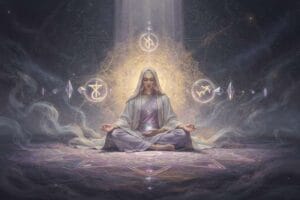
Stregheria — Italian witchcraft — is one of Europe’s oldest living magical traditions, rooted in the pre-Christian spiritual life of the Italian peninsula. Drawing on ancient Roman veneration of nature spirits, regional folk magic, and the enduring presence of goddess worship, stregheria (also called La Vecchia Religione, “the Old Religion”) offers a path that feels both earthy and luminous at once. You work with ancestors, seasonal rhythms, protective spirits, and a pantheon that includes the moon goddess Diana, her consort, and a cast of nature deities that have been honoured across Italian soil for millennia.
More and more people are finding their way to this path today — whether they have Italian heritage or simply feel called by its particular blend of folk magic, devotion, and natural wisdom. If you’re curious about where to begin, this guide will walk you through the history, the practice, and the first real steps you can take right now.
What Is Stregheria? Core Concepts and Common Myths
At its heart, stregheria is an Italian folk-magical and spiritual tradition that venerates nature spirits, ancestors, and a goddess-centred pantheon. The word strega simply means “witch” in Italian. Practitioners — called streghe (feminine plural) or stregoni (masculine) — work with lunar cycles, ancestral wisdom, herbs, and devotional rituals tied to the land.
A common myth is that stregheria is just “Italian Wicca.” It isn’t. While both are modern reconstructions drawing on older sources, stregheria has its own lineage of regional folklore, medieval trial records, and 19th-century field documentation that distinguishes it from Wicca’s largely British ceremonial roots. Another myth: that you must be Italian to practise it. Tradition and ancestry are respected, but the spirits of this path welcome sincere devotion regardless of background.
Stregheria also isn’t a single, fixed system. It exists on a spectrum from highly reconstructionist approaches (working closely with historical sources) to personal, devotional practices that blend Italian folk elements with your own spiritual calling.
The Historical Roots of Italian Witchcraft
Understanding where stregheria comes from deepens your practice enormously — you’re not working in a vacuum but in a long conversation with the past.
Ancient Roman Foundations
Early Roman religion was built on the concept of numina — impersonal spirit-forces that animated the natural world. The Lares protected households and crossroads; the Penates guarded the family larder. Over time these forces took on more defined personalities. The mystery cults — particularly the Dionysian and Bacchanalian rites — offered ecstatic, transformative experience outside official state religion, and they left a deep imprint on Italian magical culture. Roman writers from Horace to Pliny the Elder documented the use of spells, potions, and ritual magic, showing that folk practice ran parallel to the official pantheon throughout Roman history.
Diana, Herodias, and the Medieval Record
The figure of Diana — goddess of the moon, the hunt, and liminal spaces — sits at the centre of Italian witchcraft’s medieval footprint. The Canon Episcopi (906 CE), an early Church document, describes women who believed they rode out at night in the company of Diana. A second figure, Herodias, appears alongside Diana in later medieval sources. It’s worth being clear-eyed here: references to Herodias as a witch-goddess appear prominently in 15th- and 16th-century inquisitorial records and witch trial documents — this is the historical layer where her association with the old beliefs is best documented, not in the earliest strata of Italian folk religion. Scholars suggest she may represent a Christianised overlay on an older goddess figure, possibly blending the names Hera and Diana into “Herodiana.”
A notable 1390 Milan trial recorded two women who described attending the “Game of Herodias” — a nocturnal gathering with a female spirit called Madona Horiente. These records, however distorted by inquisitorial framing, hint at a living folk practice involving spirit-flight, ecstatic ritual, and goddess veneration that persisted across centuries.
The Modern Revival
In the late 19th century, folklorist Charles Leland conducted interviews in the Tuscan-Romagnol Apennines with individuals who identified as practitioners of an old religion centred on Diana. His documentation sparked lasting scholarly and spiritual interest. Later, historian Carlo Ginzburg’s research into Italian folk belief added important academic depth, tracing patterns of spirit-flight mythology across Northern Italy. These sources — read critically and not taken as perfect historical proof — form the scholarly backbone of modern stregheria reconstruction.
Major Paths Within Italian Witchcraft
Stregheria is not monolithic. Here are the main orientations you’ll encounter:
- Reconstructionist Stregheria: Closely follows historical sources, regional folklore, and documented practices. Emphasises fidelity to Italian deities, seasonal observances, and ancestral rites.
- Devotional / Folk Strega: Centres daily life around devotion to Diana, the ancestors, and household spirits. Practical, prayer-based, and often blended with Italian Catholic folk customs (candle offerings, saint veneration as a layer over older practice).
- Eclectic Italian Witchcraft: Draws on stregheria’s core figures and seasonal calendar while integrating other compatible traditions. Accessible and highly personal.
- Hereditary Strega Practice: Some Italian families carry down folk remedies, protective charms, and devotional customs across generations — often without calling it “stregheria” at all. If you have this heritage, honouring it is itself a form of the practice.
How to Begin Practising Stregheria: Step-by-Step
Step 1 — Study the Tradition’s History and Lore
Before you light a single candle, spend time reading. Familiarise yourself with Roman religion, Italian regional folklore, and the scholarly work that informs modern stregheria. Understanding the difference between verified history, scholarly interpretation, and modern reconstruction helps you make intentional choices about your own practice rather than following received ideas uncritically.
Step 2 — Build a Relationship with Diana
Diana is the central deity of stregheria — goddess of the moon, forests, crossroads, and the wild. Begin simply: spend time outdoors under the moon. Speak to her in your own words. Leave an offering of water, silver-coloured objects, or white flowers. You don’t need elaborate ritual to start; you need sincere attention. Over time, lunar observation will become second nature and your connection will deepen naturally.
Step 3 — Set Up Your Altar Space
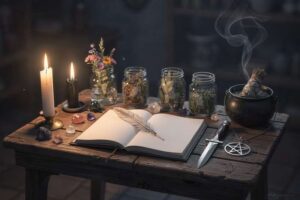
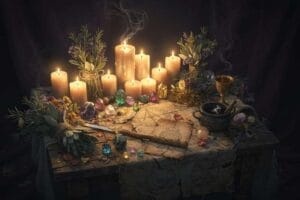
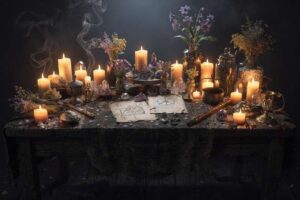
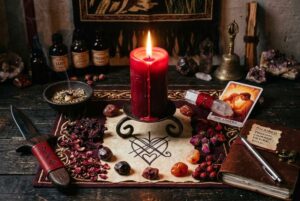
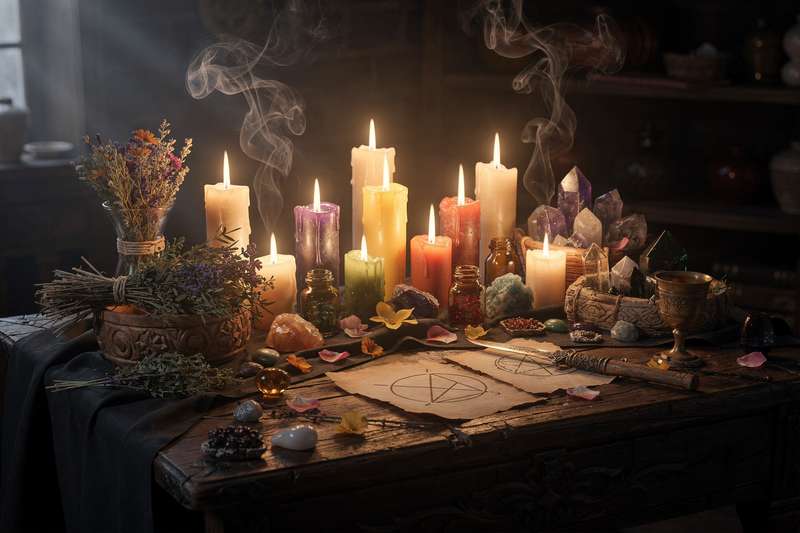
A stregheria altar is your focal point for ritual, prayer, and devotional work. Keep it simple at first: a white or silver cloth, a candle for Diana (white or silver), a candle for her consort (gold or red), a small dish for offerings, and a cup of water or wine. You can add symbols of the season, images or statues of deities, and found natural objects — feathers, stones, herbs — as you go. This is one unified working space; you don’t need separate altars for different purposes when you’re starting out.
Step 4 — Honour Your Ancestors
Ancestor veneration is woven through Italian folk magic. Add a photograph or a small memento of a beloved ancestor to your altar, or keep a separate ancestor dish nearby. Light a candle for them on the new moon or on significant dates. Speak their names. Ask for their guidance. This practice costs nothing and grounds your magic in genuine relationship rather than abstract technique.
Step 5 — Learn the Seasonal Wheel
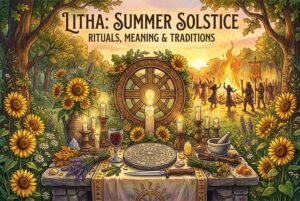
Stregheria marks the year with festivals tied to agricultural and solar cycles. Key observances include the winter solstice, spring equinox, summer solstice (particularly important — the midsummer fires are deeply embedded in Italian folk custom), and autumn harvest. Begin by simply noting these dates on your calendar and marking them with a meal, an outdoor walk, or a small ritual acknowledgment.
Step 6 — Work with Italian Herbs and Folk Remedies
Italian folk magic has always been rooted in the herb garden. Rosemary for protection and memory, rue (ruta) as a powerful protective herb deeply embedded in Southern Italian tradition, basil for love and prosperity, and garlic for warding are foundational. Research the folk uses of each plant before working with it medicinally, and grow what you can — even a windowsill pot of rosemary connects you to this tradition meaningfully.
Step 7 — Practise Divination and Dream Work
Oracular practices have always been part of Italian magical tradition. Dreams were regarded as communications from the ancestors and deities. Keep a dream journal beside your bed and write down what you receive each morning. Alongside dreams, explore divination forms that resonate with you — cards, scrying, or casting lots. The goal is to open your inner senses to guidance, not to predict the future mechanically.
Step 8 — Connect with the Nature Spirits
The Lares and regional nature spirits of Italian tradition are not just mythology — in stregheria, they are living presences in the land around you. Spend time in natural places with no agenda except presence. Leave small biodegradable offerings at the base of old trees or at crossroads. Over time, you’ll develop your own felt sense of the spirits in your particular landscape, wherever in the world you live.
Essential Tools and Supplies
You don’t need to spend heavily to practise stregheria. Here are the core items worth gathering gradually:
- Candles: White, silver, gold, and red are the most-used colours in Italian witchcraft.
- Herbs: Rosemary, rue, basil, bay laurel, and garlic are traditional staples.
- Crystals: Moonstone and selenite align with Diana’s lunar energy; obsidian supports ancestral and protective work; clear quartz amplifies intention generally.
- A ritual cup: For wine or water offerings.
- A journal: For recording dreams, observations, rituals, and reflections. This becomes your own book of practice over time.
- A small knife or athame: Optional, for casting sacred space.
- Natural objects from the land: Feathers, stones, shells, dried herbs — gathered with respect and gratitude.
Ethics and Best Practices
Stregheria, like all serious magical traditions, comes with ethical responsibility. A few principles to hold from the start:
- Intent matters. Magic worked from a place of fear, revenge, or compulsion tends to return to its source in complicated ways. Work from clarity and genuine need.
- Consent in spellwork. Avoid casting spells that override another person’s free will — love spells designed to force a specific person, or workings intended to harm. Protective and banishing magic is generally considered ethically sound when you or someone you care for is genuinely threatened.
- Cultural respect. If you don’t have Italian heritage, approach this tradition with humility. Study its context, credit its sources, and avoid reducing it to aesthetic borrowing.
- Care with psychoactive practices. Historical stregheria included the use of plant-based ointments for trance and spirit-flight. Today, practitioners substitute meditation, breathwork, and rhythmic trance techniques — these are safer and equally valid approaches to altered states for magical work.
Common Beginner Mistakes
- Skipping the history. Jumping straight to spells without understanding the tradition leaves your practice shallow. The historical and folkloric roots give your work real substance.
- Treating every source as equally reliable. Some popular stregheria books blend tradition with personal invention without being transparent about it. Cross-reference, question, and stay curious.
- Over-complicating early rituals. Simple, heartfelt practice outperforms elaborate ritual you don’t yet understand. Start with a candle, an offering, and genuine attention.
- Ignoring the ancestors. Ancestor work is not optional decoration in stregheria — it’s structurally central. Don’t skip it because it feels unfamiliar or emotionally charged.
- Expecting immediate results. Devotional practice builds relationship over time. The most significant shifts often happen slowly and quietly.
- Practising in isolation without any community. Even online, connecting with other practitioners helps you reality-check your experiences and grow faster than working entirely alone.
How to Build Your Practice Over Time
The most sustainable stregheria practice grows slowly, like a garden. In your first months, focus on observation: the moon’s phases, the turning of seasons, the feel of the land around you. Add one new element at a time — a deity to study, a herb to work with, a divination method to develop. Return to your journal regularly and notice what’s changing in your inner life.
As the seasons cycle, your rituals will deepen through repetition. What felt awkward at your first winter solstice will feel like homecoming at your second. Trust the process, keep showing up at your altar, and let the tradition teach you at its own pace.
Final Thoughts
Stregheria is a living tradition — not a museum piece. It has survived centuries of suppression, Christian overlay, and cultural transformation because something in it remains genuinely nourishing to human souls. Whether you come to it through Italian ancestry, a love of Roman mythology, or simply a felt pull toward the moon and the old ways, you are welcome here. Begin where you are, with what you have, and let the Old Religion meet you in return.
Frequently Asked Questions
Is stregheria the same as Wicca?
No — while both are modern reconstructionist paths with roots in pre-Christian European practice, they are distinct traditions. Stregheria draws specifically on Italian folk magic, Roman religion, and regional folklore, with a different deity structure and cultural context from Wicca’s primarily British ceremonial lineage.
Do I need to be Italian to practise stregheria?
Italian heritage is not a requirement, but cultural respect and genuine study are. Approaching the tradition seriously — learning its history, understanding its context, and not reducing it to surface aesthetics — is what matters. Many non-Italian practitioners have built meaningful, respectful relationships with this tradition over time.
Who is Diana in Italian witchcraft?
Diana is the central goddess of stregheria — a lunar deity associated with the moon, forests, crossroads, and wild creatures. In Italian folk tradition she is far more than the Roman huntress of classical texts; she represents the feminine divine, the keeper of the night, and the patron of witches and those who travel between worlds.
What is the role of ancestors in stregheria?
Ancestor veneration is a foundational practice, not an optional add-on. Practitioners honour deceased family members through offerings, candlelight, and spoken acknowledgment, asking for guidance and maintaining a living connection across generations. This is one of the oldest layers of Italian folk spiritual practice and runs through every regional variation of the tradition.