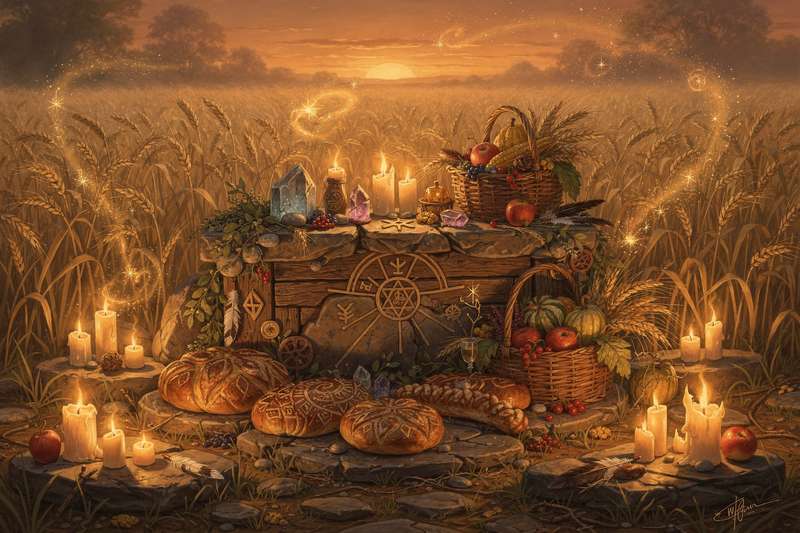
Lughnasadh (pronounced LOO-nah-sah) arrives on August 1st, and this first harvest festival carries a warmth and sweetness that few other sabbats can match. As a Lammas or Lughnasadh celebration, it sits at that golden threshold between the height of summer and the first breath of autumn — the grain is heavy in the fields, the blackberries are ripening on the hedgerows, and something in the air tells you the peak has passed. Whether you follow a Wiccan path, practice as an eclectic witch, or simply feel drawn to the rhythm of the natural year, this sabbat has something to offer you. It is a festival of gratitude, skill, sacrifice, and the very real magic of transformation — of seeds becoming bread, of effort becoming fruit.
What Is Lughnasadh? Core Concepts and Common Myths
Lughnasadh is the first of three harvest festivals on the Wheel of the Year, followed later in the season by Mabon and Samhain. Its name honors the Irish god Lugh — a solar deity celebrated as a master of all skills and crafts — who established this festival in memory of his foster mother Tailtiu. According to myth, Tailtiu gave her life clearing the plains of Ireland for agriculture. The festival is therefore rooted in a powerful dual theme: abundance and sacrifice. You cannot have one without the other.
In the English tradition, the same date is known as Lammas, from the Old English hlaf-maesse, meaning “loaf mass.” A freshly baked loaf of bread was brought to church as an offering — the sun‘s energy transformed into food, the grain’s sacrifice honored in every warm slice.
A common myth is that Lughnasadh is simply a “summer party.” It is far more layered than that. It asks you to look honestly at what has grown in your life since spring, to give genuine thanks for the effort and support that made it possible, and to acknowledge that every harvest involves something being given up so that something else may live.
Types of Lughnasadh Practice: Finding Your Path
One of the most beautiful things about modern earth-based spirituality is that there is no single “correct” way to mark a sabbat. Here are the main approaches practitioners take to Lughnasadh:
- Wiccan and Neopagan ritual: Structured circle-casting, calling quarters, and working within the Wheel of the Year framework. Lughnasadh here tends to focus on Lugh as a deity figure, ritual bread-baking, and formal acknowledgment of the harvest season.
- Kitchen witchcraft: The most natural home for Lammas energy. Kitchen witches celebrate through intentional cooking and baking — infusing bread dough, berry jams, and grain dishes with gratitude and abundance magic. The oven is the altar.
- Hedge witchcraft and folk practice: Focus on working with the land directly — gathering wild blackberries, making corn dollies, and honoring the spirits of field and hedgerow. Highly tactile and nature-led.
- Eclectic and secular spirituality: Many people mark Lughnasadh simply as a mindful pause — a journaling session, a gratitude ritual, a seasonal feast shared with loved ones. No formal tradition required.
- Craft and skill-based practice: Since Lugh governs all forms of mastery, some practitioners honor this sabbat by completing a creative project, learning a new skill, or dedicating their work to intentional excellence.
How to Celebrate Lughnasadh: Step-by-Step First Harvest Magic
Step 1 — Set Your Intention for the Harvest
Before you light a candle or bake a loaf, take ten quiet minutes to ask yourself: what has actually ripened in my life since Imbolc or the spring equinox? What seeds — literal or metaphorical — have come to fruition? Write these down without judgment. This is your personal first harvest list, and it forms the spiritual backbone of everything you do on this day.
Be honest about what hasn’t grown yet, too. Not every seed germinates on schedule. Part of the harvest wisdom is knowing which things still need time and which are genuinely ready to be gathered in.
Step 2 — Build Your Lughnasadh Altar
Your altar for this sabbat should feel golden, warm, and abundant. Lay down a cloth in gold, amber, or deep russet. Place a freshly baked loaf of bread at the center — this is the iconic Lammas symbol, the sun’s energy made edible. Surround it with sunflowers, a bundle of wheat sheaves, a bowl of fresh blackberries, and any early apples you can find.
Add crystals that resonate with the season’s energy: citrine for solar abundance and manifestation, tiger’s eye for skill and discernment, carnelian for vitality and gathering-in, and amber as literal fossilized sunlight. Light gold or amber candles. If you work with a cauldron, place it on the altar to honor the transformative magic of cooking and brewing.
Step 3 — Bake Bread as a Ritual Act
If you do nothing else for Lughnasadh, bake bread. You don’t need to be an experienced baker — a simple soda bread or a basic yeasted loaf will do. As you mix the ingredients, hold your intention clearly: gratitude for what has grown, willingness to be nourished by your own harvest. Knead in your thanks. When the bread comes out of the oven, let the smell fill your home like an offering to the season.
You can also purchase a good-quality artisan loaf if baking isn’t accessible to you right now. What matters is the mindfulness you bring to the act of breaking bread, not the method of its making.
Step 4 — Make a Corn Dolly or Grain Craft
The corn dolly is one of the oldest harvest charms in the British and European folk tradition. Traditionally woven from the last sheaf cut at harvest, it was believed to hold the spirit of the grain through winter until the next planting. You can make a simple version by binding a small bundle of wheat stalks (available at craft shops and florists) into a figure or woven cross shape. As you work, focus on what you want to carry forward through the darker months ahead.
Step 5 — Perform a First Fruits Gratitude Ritual
Gather a small selection of seasonal foods — blackberries, an apple, a slice of your bread, perhaps a little honey or a cup of ale or juice. Sit quietly at your altar or outside in a garden or park. Hold each item in turn and name something you are genuinely grateful for — something that has ripened in your life. Speak it aloud if you can. Then eat or drink each offering slowly and with full presence, letting the nourishment be a physical act of receiving what the season is giving you.
Step 6 — Honor a Skill or Creative Achievement
Lugh is the master of all crafts, and Lughnasadh has always been a time to celebrate human skill. On this day, honor something you have learned or made this year — a piece of writing, a painting, a garden you’ve tended, a professional skill you’ve built. Place it on your altar or simply acknowledge it with intention. Say: “This is what I have made. This is the skill I have sharpened. I honor the effort this required.”
Step 7 — Release What Didn’t Grow
Every harvest season involves letting go of what didn’t ripen. Write down on a small piece of paper any intentions from earlier in the year that simply didn’t come to fruition. Hold them with compassion — not self-criticism — and then safely burn the paper in a fireproof dish or candle flame, or tear it and bury it in the earth. This is not failure; it is composting. What didn’t grow this cycle feeds the ground for the next one.
Step 8 — Share the Harvest
Historically, Lughnasadh was a community festival — markets, games, feasting, and gatherings on hilltops. The harvest was never meant to be hoarded. Even the smallest act of sharing carries this spirit: bring bread to a neighbor, donate food to a local pantry, cook a meal for someone you love. The magic of the first harvest multiplies when it is given as well as received.
Step 9 — Journal the Turning of the Year
Lughnasadh marks the first real turn toward autumn. The days are noticeably shorter than they were at the summer solstice, even if the heat remains. Sit with your journal and reflect: what is beginning to wind down in my life? What am I being asked to prepare for? What will I need to sustain me through the coming darker months? This forward-looking reflection is as important as the gratitude work — the harvest is not just about looking back at what grew, but about wisely preparing for what comes next.
Essential Tools and Supplies for Lughnasadh
You don’t need a fully stocked witch’s cabinet to celebrate meaningfully. Here are the core items that genuinely serve this sabbat:
- Candles: Gold, amber, or deep yellow to honor solar energy and the harvest sun.
- Crystals: Citrine, tiger’s eye, carnelian, and amber. Peridot is also beautiful if you’re drawn to it.
- Herbs and plants: Wheat sheaves, sunflowers, blackberries, apples, hops, and meadowsweet.
- Bread: Baked or bought — it belongs on your altar.
- A journal: For the reflective work that is at the heart of this sabbat.
- A cauldron or cooking pot: Optional but beautifully symbolic — place it on the altar to honor transformation.
- Altar cloth: Gold, russet, amber, or deep orange.
Work with what you have. A windowsill with a piece of bread, a yellow candle, and a handful of blackberries is a Lughnasadh altar. Simplicity is not a lesser form of magic.
Ethics and Best Practices for Harvest Magic
Lughnasadh magic works best when it is rooted in authenticity. A few principles worth holding:
Honest gratitude over performative gratitude. Real thanks — even for difficult or complicated harvests — carries far more power than a list of things you feel you should be grateful for. If your harvest this year was thin, honor that honestly.
Respect cultural origins. Lugh is a deity from Irish mythology. If you work with him, do so with genuine curiosity and respect, not as a costume. Learn about the stories. Approach with humility.
Harm-none in your releases. When releasing what didn’t grow, be careful not to cast that energy onto others — relationships, former colleagues, or situations involving real people. Keep your release work focused on your own path.
The environment matters. If you gather natural materials, do so responsibly — take only what you need, leave the rest for wildlife, and never uproot or damage plants. The harvest ethic includes giving back to the earth.
Common Beginner Mistakes at Lughnasadh
- Skipping the reflection work. Lughnasadh is not just a “harvest party” with pretty decorations. The real magic lives in the honest inner audit of what has grown and what hasn’t.
- Treating sacrifice as purely negative. The sacrifice at the heart of this festival — the cutting of grain, the passing of summer’s peak — is not a tragedy. Resist the impulse to rush past it into pure celebration.
- Buying everything new. The harvest aesthetic is rustic, natural, and humble. Foraged blackberries and a home-baked loaf carry more of this sabbat’s spirit than an expensive curated kit.
- Ignoring the skill-honoring aspect. Many beginners focus only on food and grain symbolism and miss Lugh’s domain entirely. What have you made or learned this year? That belongs in this practice.
- Comparing your harvest to others. Your first harvest is yours alone. Social media sabbat aesthetics can make practitioners feel their practice isn’t “enough.” It always is.
- Saving it for “the perfect day.” August 1st is the traditional date, but the energy of Lughnasadh is accessible throughout the first week of August. Do what you can, when you can.
How to Build Your Practice Over Time
Your first Lughnasadh might be a piece of bread and a quiet moment of gratitude. That is a complete practice. Over time, you might add the corn dolly making, the formal altar, the ritual release, the skill dedication — layer by layer, year by year.
The Wheel of the Year is a spiral, not a checklist. Each time August 1st comes around, you bring a year’s more lived experience to it. The ritual deepens not because you add more tools, but because you show up more honestly. Track your harvests in a journal across years — what you planted at Imbolc, what bloomed at Beltane, what ripened at Lughnasadh. The patterns that emerge over several cycles will teach you more than any guide can.
Final Thoughts
Lughnasadh asks something simple and profound of you: to stop, look around at what has grown, and say thank you. In a world that constantly pushes toward the next goal, the next season, the next version of yourself, this festival is a genuine pause. The grain is in. The bread is baking. Something worked. Let yourself feel that — fully, warmly, and without immediately rushing toward what comes next. The harvest is now. You are allowed to receive it.
Frequently Asked Questions About Lughnasadh
What is the difference between Lughnasadh and Lammas?
Lughnasadh is the Celtic name for the August 1st harvest festival, rooted in Irish mythology and named for the god Lugh. Lammas is the Anglo-Saxon Christian equivalent, meaning “loaf mass,” and centers on the baking of bread from the first grain harvest. In modern pagan practice, the two names are often used interchangeably, and most practitioners blend elements from both traditions.
How do I celebrate Lughnasadh if I live in a city with no access to nature?
Urban celebration is entirely valid. Visit a farmers’ market and buy seasonal produce with intention. Bake bread in your kitchen. Place sunflowers and a bowl of blackberries on your windowsill altar. The spirit of the harvest lives in the food you eat and the gratitude you bring to it — you don’t need a field to access that magic.
Do I have to worship Lugh to celebrate Lughnasadh?
Not at all. Many practitioners honor the themes of the season — first harvest, gratitude, skill, the turning of the year — without working with any specific deity. You can celebrate Lughnasadh as a nature-based seasonal ritual, a kitchen witch’s feast, or a secular mindfulness practice. The festival belongs to anyone who feels the pull of it.
What foods are traditional for Lughnasadh?
Bread baked from the first grain is the most iconic Lughnasadh food. Beyond that, seasonal offerings include blackberries, early apples, corn, peaches, plums, and beverages made from grain — ale, beer, or whiskey. Honey, sunflower seeds, and any locally harvested produce also carry strong Lughnasadh energy. Share what you prepare — that act of generosity is part of the ritual itself.