Mabon — the autumn equinox — is one of those moments on the Wheel of the Year that stops you in your tracks. Day and night sit in perfect balance. The light you’ve been living in all summer is about to yield to the dark, and there is genuine magic in that threshold. For witches, pagans, and anyone drawn to seasonal living, Mabon is an invitation to pause, give thanks for what the year has brought you, and turn to face the quieter months with intention. Whether you follow a Wiccan path, practice kitchen witchery, or simply feel the pull of the turning seasons, this guide gives you practical, meaningful ways to mark the day.
What Is Mabon and the Autumn Equinox?
Mabon is the modern Pagan and Wiccan name for the autumn equinox festival, usually falling around September 21st–23rd each year. The name itself is relatively recent — it is widely attributed to writer Aidan Kelly, who coined it around 1970 as a nod to Mabon ap Modron, a figure from Welsh mythology. Before that, the equinox was honoured in many cultures simply as a harvest celebration — a time to count blessings before winter arrived.
In 2025, the autumn equinox falls on September 22nd. The precise moment of astronomical balance varies by timezone — in some parts of the world it technically tips into September 23rd — so check your local equinox time if exact timing matters to your practice. What all traditions agree on is the meaning: this is the second harvest festival, a point of balance between light and dark, and a time for gratitude, reflection, and preparation.
A common myth is that Mabon requires elaborate rituals or expensive tools. It does not. The most powerful thing you can bring to this sabbat is genuine presence.
Common Styles of Mabon Celebration
There is no single correct way to honour the autumn equinox. Here are some of the main approaches witches take — see what resonates with you.
- Wiccan sabbat ritual: A structured ceremony often held at dusk or dawn, incorporating a cast circle, quarter calls, deity invocations (such as the Goddess Demeter or the God in his dying-sun aspect), and formal gratitude workings.
- Kitchen witchery: Seasonal cooking and baking as ritual — infusing food with intention, blessing ingredients, and sharing meals as acts of magic. Apples, squash, root vegetables, and warm spices are classic Mabon kitchen staples.
- Hedge witchcraft: Solitary, nature-focused practice. A hedge witch might spend Mabon walking in the woods, collecting fallen leaves, planting bulbs, or sitting quietly at a favourite tree to mark the shift in energy.
- Eclectic practice: Mixing and matching elements from different traditions — a short candle ritual paired with a gratitude journal entry and a seasonal craft, for instance. No rules, just intention.
- Community celebration: Sharing the equinox with friends or coven members through a shared feast, a bonfire gathering, or a collective gratitude circle.
Step-by-Step Mabon Rituals to Try This Year
Below are seven rituals arranged from the simplest to the more involved. You do not need to do all of them — choose one or two that feel right for where you are right now.
1. Write a Mabon Gratitude List
This is the most accessible ritual of all, and arguably the most powerful. Find somewhere quiet, light a candle if you have one, and write down everything the year has given you — growth, lessons, relationships, small ordinary blessings. Be specific. Gratitude that names real things carries far more weight than a vague sense of thankfulness.
Read your list back aloud when you are done. Speaking your gratitude into the air is a simple act of magic that costs nothing and changes everything about your relationship to the present moment.
2. Build a Mabon Altar
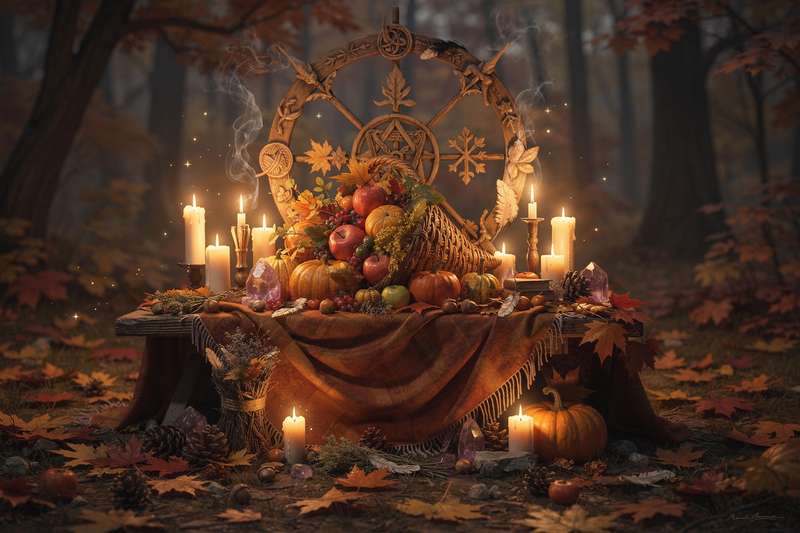
An altar gives your seasonal intention a physical home. Choose a shelf, windowsill, or small table and cover it with fabric in deep reds, burnt orange, gold, or brown. Then layer in seasonal items: apples, small gourds or pumpkins, acorns, dried corn, autumn leaves, and any grains you have on hand. A cornucopia, if you can find one, is a classic symbol of harvest abundance.
Add a candle (orange or gold works well), a small bowl of wine, cider, or water, and any crystals that feel appropriate — citrine for abundance, obsidian for the approaching dark half of the year. Arrange everything with care, and as you place each item, name what it represents to you. The altar becomes a focal point for your Mabon energy throughout the season.
3. Perform a Balance Candle Ritual
The equinox is the one day when light and dark are equals, and a simple candle ritual can help you embody that balance internally. You will need two candles — one white, one black — placed side by side on a fireproof surface. Light the white candle first and name something in your life that has been in the light this year: something flourishing, something you are proud of. Then light the black candle and name something you are ready to release or that needs more honest attention.
Sit with both candles burning together for at least ten minutes. Notice that neither flame diminishes the other. That is the teaching of Mabon: the light and dark within you are not opponents. Let both candles burn safely to completion, or snuff them with thanks if you need to stop.
4. Cook or Bake with Autumn Ingredients
Kitchen witchery is perfect for Mabon because the season’s produce is genuinely abundant and packed with symbolic meaning. Apples represent harvest, wisdom, and the descent into the underworld. Pumpkins and squash speak to protection and prosperity. Warming spices like cinnamon, clove, and nutmeg are associated with abundance magic.
Choose a recipe that calls to you — an apple pie, a squash soup, a loaf of seeded bread — and cook it with full attention. Set an intention before you begin. Stir clockwise to draw abundance in. As the food cooks, your home fills with the scent of the season and your intention becomes woven into something nourishing. Sharing the food with others amplifies the ritual.
5. Host or Attend a Harvest Gathering
Mabon has always been a communal festival. If you have witchy friends or simply people you love, consider gathering them for a shared meal or bonfire. A long table set with seasonal food, candles, and autumn decorations creates a feast that is inherently ritual — you are enacting gratitude, abundance, and connection all at once.
You do not need to frame it as a spiritual event for those who might not share your path. A simple autumn dinner with good food and meaningful conversation is Mabon magic in practice.
6. Plant Something in the Earth
Autumn is one of the best times to plant — the summer heat has passed, the ground is still workable, and what you put in now will establish strong roots before winter. Planting spring bulbs (tulips, daffodils, alliums) at Mabon is a powerful act of faith: you are choosing to invest in a future you cannot yet see. Trees planted now also establish themselves beautifully before the freeze.
As you dig into the soil, name what you are planting symbolically alongside the physical seed — a hope, a goal, an intention you want to see bloom when the light returns.
7. Make a Seasonal Craft with Intention
Crafting is one of the oldest forms of folk magic. A wreath made from dried herbs, leaves, and seed heads can carry intentions of protection for your home through the coming winter. A corn dolly made from braided husks is a traditional harvest charm. A jar filled with seasonal items — acorns, cinnamon sticks, dried apple slices, a slip of paper with your intentions — becomes a Mabon spell bottle.
The key is to work with awareness: as your hands are busy, your mind is holding the intention. That conscious combination of physical action and focused will is what transforms a craft into a ritual.
Essential Tools and Supplies for Mabon Rituals
You do not need much to celebrate Mabon meaningfully. Here is a starter list to work from:
- Candles: Orange, gold, red, or black — for the balance candle ritual or simple ambience
- Seasonal produce: Apples, pumpkins, gourds, corn, grapes, root vegetables
- Crystals: Citrine for abundance, clear quartz as an all-purpose amplifier, obsidian or smoky quartz for the darker half of the year, carnelian for warmth and vitality
- Herbs and spices: Cinnamon, clove, rosemary, sage, and dried apple slices all carry Mabon energy
- A journal: For gratitude lists, intention-setting, and seasonal reflection
- Natural materials: Fallen leaves, acorns, pine cones, seed pods — free, local, and deeply connected to the season
- Wine, mead, or cider: Traditional libations for the harvest festival; non-alcoholic apple juice or grape juice work equally well
Ethics and Best Practices
Mabon rituals are personal, and a few guiding principles help keep your practice healthy and respectful.
Intention matters above all. Magic follows your focus, so be clear about what you want and honest about your motivations. Gratitude rituals work best when they are genuine, not performative.
Consent is non-negotiable. Never perform rituals that seek to influence another person’s will, choices, or emotions without their knowledge and agreement. This applies to healing rituals too — always ask before working on someone else’s behalf.
Respect cultural context. Mabon is a modern Pagan creation, but autumn harvest festivals exist across many cultures. Honour those traditions from a distance rather than appropriating practices that belong to closed or living indigenous traditions.
Work with what you have. Elaborate tools are optional. A tealight and an apple on your kitchen table is a completely valid Mabon altar. Authenticity beats aesthetics every time.
Common Beginner Mistakes to Avoid
- Treating Mabon as a one-day checkbox: The autumn equinox energy lingers for several days either side. If the 22nd is hectic, celebrate the weekend before or after — the season does not care about your calendar conflicts.
- Overcomplicating your first ritual: Beginners often plan elaborate ceremonies and then feel intimidated by their own expectations. Start with one candle and a journal entry. Complexity can come later.
- Skipping the reflection part: Mabon without genuine gratitude is just autumn decorating. The inner work — honestly reviewing what the year has brought — is where the real shift happens.
- Buying everything new: Part of the magic of this season is working with what the earth provides for free. Fallen leaves, gathered acorns, and foraged materials carry more seasonal energy than a shopping cart full of new products.
- Comparing your practice to others: Social media Mabon aesthetics can make you feel like your altar is inadequate. It is not. Your ritual is for you, not for a photograph.
- Neglecting safety basics: Never leave candles unattended, use fireproof holders, and keep materials away from children and pets. Responsible practice is part of the craft.
How to Build Your Mabon Practice Over Time
Your relationship with the autumn equinox will deepen the more you return to it. In your first year, pick one or two rituals and do them with full attention. In your second year, you will notice what felt meaningful and what did not. Over time you will build a personal Mabon tradition that is genuinely yours — shaped by your experiences, your home, your landscape, and your spiritual path.
Keep notes in a journal after each Mabon. Record what you did, how it felt, what the weather was like, and what you were grateful for. Reading those entries in future years becomes its own kind of magic — a record of how you and your practice have grown alongside the turning seasons.
Final Thoughts
Mabon asks only one thing of you: to show up and pay attention. The season is shifting whether or not you mark it, but when you do — when you light a candle, write your gratitude, share a meal, or press your hands into autumn soil — you step consciously into the current of the year. That awareness is what practice is made of. Begin where you are, with what you have, and let the season meet you there.
Frequently Asked Questions
What date is Mabon in 2025?
In 2025, Mabon falls on September 22nd. The precise astronomical moment of the equinox varies depending on your timezone — in some regions it may technically occur in the early hours of September 23rd — so checking your local equinox time is worthwhile if exact timing is important to your practice.
Do you have to be Wiccan to celebrate Mabon?
Not at all. Mabon is celebrated by witches of many paths — eclectic, hedge, kitchen, secular, and others — as well as anyone who finds meaning in seasonal rhythms. The name ‘Mabon’ comes from modern Wicca, but honouring the autumn harvest is a human tradition that predates any single spiritual label.
What are the most important symbols of Mabon?
Key Mabon symbols include apples, corn, gourds and pumpkins, acorns, fallen leaves, cornucopias, grapes and wine, and the image of balanced scales representing the equal hours of light and dark. Warm autumn colours — deep red, orange, gold, and brown — are also strongly associated with this sabbat.
Can I celebrate Mabon as a complete beginner with no tools?
Yes. A gratitude journal entry, a mindful walk in nature, or simply cooking a seasonal meal with conscious intention are all legitimate ways to mark Mabon. Formal tools like altars and candles add depth over time, but they are never prerequisites for a meaningful celebration.