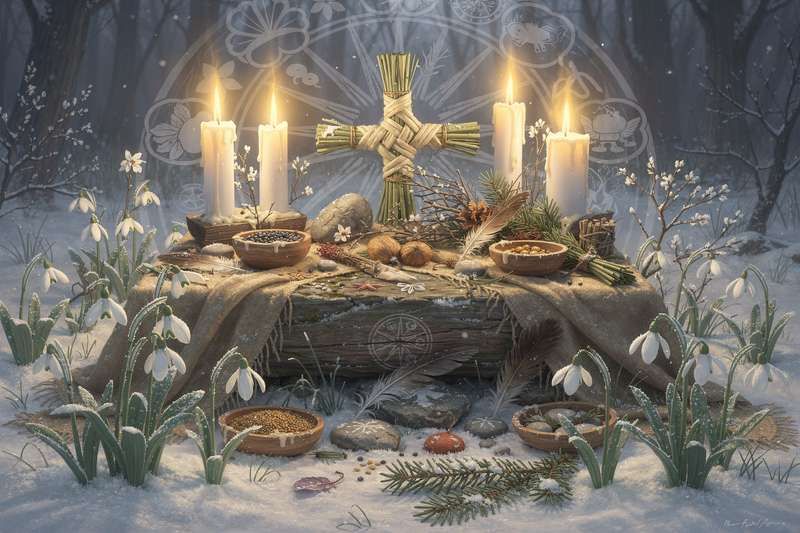
Imbolc rituals mark one of the most quietly magical moments in the witches’ year — that tender, hopeful threshold between the depths of winter and the first breath of spring. Celebrated on February 1st, this ancient Celtic festival (also called Imbolg or Saint Brigid’s Day) carries the energy of seeds stirring underground, animals carrying new life in their wombs, and light beginning its slow, steady return. If you’ve felt a sudden restlessness in late January — an urge to clean, create, and begin again — that is Imbolc calling to you. Whether you follow a Wiccan path, practice kitchen witchcraft, walk a hedge tradition, or simply feel drawn to the Wheel of the Year, this guide will show you exactly how to celebrate Imbolc in a way that feels genuine and meaningful for your practice.
What Is Imbolc? The Meaning Behind the Festival
The word Imbolc is thought to derive from a phrase meaning “in the belly” — a perfect image for a festival that honors what is growing but not yet born. It falls at the midpoint between the Winter Solstice and the Spring Equinox, making it the fourth point on the Celtic Wheel of the Year. In the northern hemisphere, February 1st is technically still winter. Snow may still be on the ground. But beneath the surface, something is waking up.
A common misconception is that Imbolc is simply a fire festival — a party with candles. It’s much more than that. Imbolc is an invitation to emerge from the inner work of the dark months, to look at what you discovered about yourself during the depths of autumn and winter, and to begin intentionally planting the seeds of what you want to grow. It is a festival of threshold — of standing between worlds, between seasons, and between the person you were and the person you are becoming.
Common Ways to Celebrate Imbolc Across Traditions
One of the beautiful things about Imbolc is that it welcomes every kind of witch and practitioner. Here are the most common approaches:
- Wiccan Practice: Wiccan witches often work within a formal ritual circle, calling the quarters and honoring Brigid as the Triple Goddess in her Maiden aspect. Candle lighting and the Bride’s Bed — a small woven basket with a symbolic doll — are traditional elements.
- Kitchen Witchcraft: Kitchen witches bring Imbolc into the hearth through food. Dairy-based dishes, baked bread, and warm soups made with intention become acts of devotion. The kitchen fire itself becomes sacred.
- Eclectic Witchcraft: Eclectic practitioners mix elements freely — perhaps building an altar to Brigid, performing a personal candle ritual, and crafting a Brigid’s cross all in the same afternoon. There are no rules here, only resonance.
- Hedge Witchcraft: Hedge witches may use Imbolc for journeywork, shamanic meditation, or meeting spirit guides at the boundary between winter and spring — a natural liminal point ideal for inner travel.
- Nature-Based Practice: Some practitioners simply go outside, observe the land, look for snowdrops or early buds, and offer thanks. Reverence for the earth is its own complete ritual.
How to Perform Imbolc Rituals: Step by Step
The following steps are designed to be adapted. Take what resonates, leave what doesn’t, and trust your own instincts as you go.
Step 1: Cleanse Your Space
Before any ritual, clear the energy of your space. This is especially fitting at Imbolc, which carries strong associations with purification. Open windows for a few minutes to let stale winter air move out. Burn herbs — rosemary, lavender, or pine are all appropriate — or use sound (a bell, singing bowl, or clapping hands) to shift the energy. As you cleanse, hold the intention of clearing out what no longer serves you from the past dark months.
Step 2: Build Your Imbolc Altar
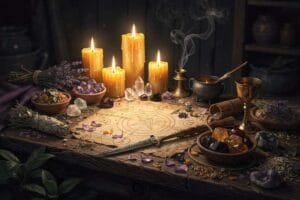
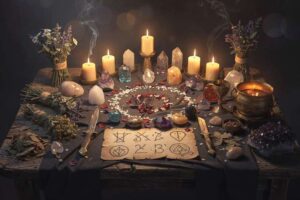
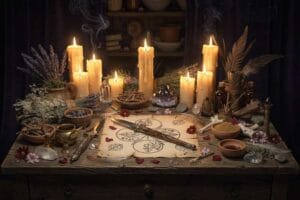
Your altar is a visual prayer — a physical space that holds your intentions and honors the energies of the season. For Imbolc, think: fire, light, white and gold tones, and early spring imagery. Include candles (white, gold, or red for Brigid’s flame), snowdrops or any early seasonal flowers, and a small bowl of water or milk as an offering. If you work with Goddess Brigid, consider adding a statue or image of her, a piece of handmade art or poetry, and a Brigid’s cross if you’ve made one.
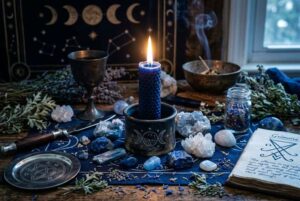
For crystals, reach for stones that carry Imbolc’s warm, awakening energy — citrine for solar light and new beginnings, sunstone for vitality and creativity, red jasper for grounding passion, rose quartz for self-compassion and heart-opening, or clear quartz to amplify your intentions. Place only what genuinely speaks to you. A single candle and a glass of water is a complete altar if it holds your heart.
Step 3: Light the Candles
Candle lighting is the heartbeat of Imbolc. As you strike the match or touch the flame, do so with full awareness. This is not a decorative act — you are calling in the return of light. If you work with Brigid, you might say aloud or silently: “I light this flame in honor of Brigid’s eternal fire. May her light illuminate my path in this new season.” Light as many or as few candles as feels right. Even a single flame on a dark February evening carries tremendous symbolic power.
Step 4: Make an Offering to Brigid
Goddess Brigid presides over healing, creativity, poetry, fertility, and the sacred hearth. She is patron of smithcraft, midwifery, and inspiration. Offerings that honor her might include a small cup of milk or honey, a piece of bread, a coin, a handwritten poem, or a drawing you’ve made. The offering doesn’t need to be elaborate — sincerity matters far more than presentation. Place your offering on your altar and speak your gratitude openly or in your heart.
Step 5: Reflect on Your Shadow Season
Imbolc is the moment you emerge from the cave. Before setting new intentions, take a few quiet minutes to honor the inner work of the past months. Ask yourself: What did the dark season show me about myself? What fears or patterns became clearer? What gifts did I find in the stillness? You might journal on these questions, sit in meditation, or simply hold them in quiet contemplation. This step is not about dwelling — it’s about acknowledging before releasing.
Step 6: Set Your Imbolc Intentions
This is where Imbolc’s energy becomes truly generative. Brigid’s season is not about grand declarations but about quiet, rooted seeds — the ones that will grow steadily through spring and summer. Choose two or three clear intentions. Write them down on paper. Be specific enough to feel them, but open enough to allow for magic. Ask yourself: What do I want to birth in this new season? What area of my life is ready to grow? What have I gained enough clarity on to finally begin?
Once written, hold the paper in your hands and feel the warmth of the candle flame nearby. Breathe your intention into the words. Then fold the paper and place it on your altar, under a crystal, or keep it in a journal dedicated to the year’s journey.
Step 7: Craft a Brigid’s Cross
Making a Brigid’s cross from rushes, reeds, or strips of paper is one of the oldest Imbolc traditions. The cross is a protective symbol traditionally hung above doorways to bless and guard the home for the coming year. You don’t need to be skilled at crafts — the process of weaving it slowly and meditatively is the ritual itself. As you work, focus on what you are inviting into your home and life. When complete, hang it above your front door with intention.
Step 8: Perform a Self-Blessing or Healing Ritual
Brigid is a healer. Imbolc is an ideal time to offer yourself some intentional care. This might be anointing your hands, heart, and forehead with a drop of sacred oil (lavender, frankincense, or rose all work beautifully). As you anoint each point, speak a simple blessing — something like: “May my hands create with purpose. May my heart stay open. May my mind see clearly.” You could also place your healing tools, crystals, or jewelry on the altar and ask Brigid’s energy to bless them.
Step 9: Close with Gratitude
Whenever you feel complete, close your ritual consciously. Thank any deities, spirits, or energies you called in. Snuff (don’t blow out) your candles if you need to leave them, or let them burn safely to completion. Ground yourself by eating something, placing your bare feet on the floor, or going outside briefly. Write a few sentences in your journal about how the ritual felt. This closing act of grounding and recording matters — it anchors your experience in the physical world.
Essential Tools and Supplies for Imbolc
You don’t need to spend a penny to celebrate Imbolc meaningfully, but here are tools that support the practice:
- Candles: White, cream, gold, or red. Taper candles, tea lights, or pillar candles all work.
- Crystals: Citrine, sunstone, red jasper, rose quartz, or clear quartz.
- Herbs and plants: Rosemary (purification), lavender (peace), snowdrops or early spring flowers (hope).
- Offering items: Milk, honey, bread, a coin, or something handmade.
- Journal and pen: For soul-inquiry questions, intention-setting, and recording your experience.
- Brigid’s cross materials: Rushes, reeds, craft paper strips, or pipe cleaners.
- Sacred oil: For anointing — lavender, rose, or frankincense essential oil diluted in a carrier oil.
Ethics and Best Practices
Imbolc belongs to a living Irish and Celtic cultural heritage. As you celebrate, hold that history with respect. The festival was observed by people long before modern witchcraft, and many Irish families still mark Saint Brigid’s Day as a cultural and spiritual occasion today. Learn the history — not just the aesthetic.
If Brigid isn’t your deity and you’re working with different pantheons or no deity at all, Imbolc is still fully yours to celebrate. You don’t need to call on Brigid to honor the season’s energy. Work with what is authentic to your path.
Regarding intention-setting: be thoughtful about what you ask for and how your intentions might affect others. If your Imbolc rituals involve petitions that touch on another person’s life, their consent and wellbeing matters. The “harm none” principle isn’t a rigid rulebook — it’s an ongoing conversation you have with yourself about the impact of your actions.
Common Beginner Mistakes to Avoid
- Skipping the inner work: Imbolc isn’t just a “spring cleaning” occasion. The reflective, shadow-integration aspect is the foundation everything else rests on.
- Setting too many intentions: Two or three intentions, held deeply, are more powerful than a scattered list of twenty wishes. Quality over quantity.
- Copying someone else’s ritual word for word: Rituals work best when they carry your energy and your words. Use templates as inspiration, then make them your own.
- Thinking the altar needs to be elaborate: A candle and a glass of water held with true intention will always outperform a Pinterest-perfect altar set up without presence.
- Forgetting to ground afterward: Ritual opens energy. Closing it with grounding — food, water, time in nature, or simple breath work — is not optional, it’s protective.
- Only celebrating on February 1st: Imbolc energy lingers for days around the date. If February 1st doesn’t work for you, honor the season on the nearest day that does.
How to Build Your Imbolc Practice Over Time
Your first Imbolc ritual doesn’t need to be your best one. Think of it as planting a seed — fitting, given the season. In your first year, perhaps you light a single candle and journal on your intentions. The next year, you add an altar. The year after that, you craft a Brigid’s cross. Over time, your practice deepens not because you added more items but because you brought more of yourself to the ritual.
Keep notes in a dedicated Book of Shadows or seasonal journal. Compare what you intended at Imbolc with what actually grew by Beltane and Summer Solstice. The Wheel of the Year becomes a genuinely powerful practice when you track your inner seasons alongside the outer ones.
Final Thoughts
Imbolc is a gentle but potent festival — one that asks you to trust what is growing in the dark before you can see it yet. Brigid’s flame, whether you honor her as a goddess or as a symbol of creative fire and healing, is an invitation to remember your own light after the long winter. Show up as you are, with whatever you have. The season will meet you there.
Frequently Asked Questions
What date is Imbolc celebrated?
Imbolc is traditionally celebrated on February 1st in the northern hemisphere, marking the midpoint between the Winter Solstice and the Spring Equinox. Some practitioners observe it on February 2nd, which is also Candlemas in the Christian calendar. In the southern hemisphere, the equivalent falls around August 1st.
Who is Goddess Brigid and why is she associated with Imbolc?
Brigid is an Irish Celtic goddess associated with healing, poetry, smithcraft, fertility, and the sacred flame. She is deeply linked to Imbolc because the festival celebrates the return of light and the first signs of spring — themes that mirror her own domains of fire, creativity, and new life. Saint Brigid of Kildare, the Christian figure who shares her name and feast day, is believed by many scholars to have absorbed much of the goddess’s mythology.
Do I have to worship Brigid to celebrate Imbolc?
Not at all. Imbolc is a seasonal festival rooted in the Wheel of the Year, and its themes of purification, new beginnings, and returning light are meaningful regardless of your theological beliefs. Many secular pagans, eclectic witches, and nature-based practitioners celebrate Imbolc without invoking any deity. You can honor the season itself — the land, the light, your own intentions — and that is completely valid.
What is a Brigid’s cross and how do I make one?
A Brigid’s cross is a traditional Irish protective symbol woven from rushes or reeds in a distinctive four-armed pattern. It is traditionally made on Saint Brigid’s Eve (January 31st) and hung above the doorway to bless and protect the home. You can make one using dried rushes, wheat stalks, or even paper strips — many tutorials are available online, and the meditative process of weaving it is itself considered part of the ritual.