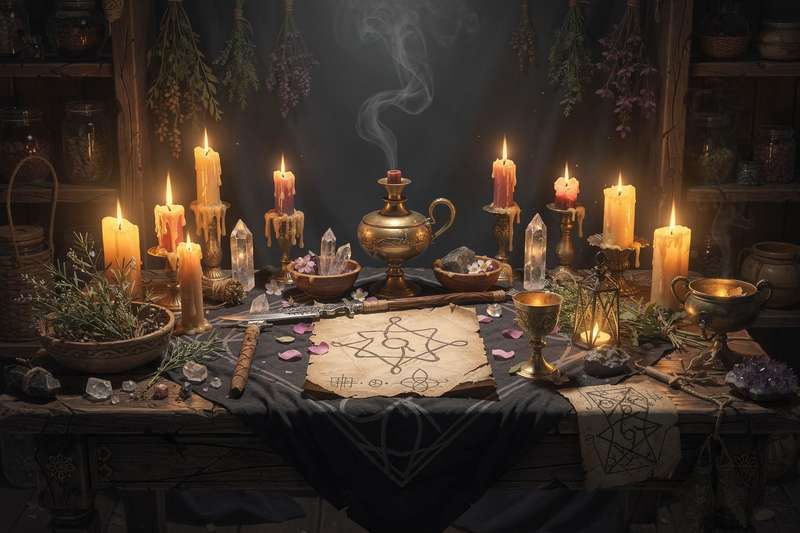
A Book of Shadows is your personal magical companion — a sacred journal where you document spells, rituals, dreams, moon observations, and the unfolding of your spiritual path. Whether you’re drawn to Wiccan traditions, kitchen witchery, or an eclectic practice uniquely your own, creating a grimoire anchors your growth and gives you a trusted place to return when you need clarity or inspiration.
You don’t need years of experience or formal initiation to begin. Your Book of Shadows grows with you, reflecting your questions, experiments, successes, and lessons. It’s not meant to be perfect or Instagram-worthy from day one — it’s meant to be real, honest, and entirely yours. Right now, countless practitioners are opening blank pages for the first time, and you can join them with confidence and curiosity.
What Is a Book of Shadows?
At its core, a Book of Shadows is a living record of your magical practice. It can include everything from detailed spell recipes and crystal correspondences to tarot spreads, herbalism notes, and reflections on your spiritual experiences. Some witches inherit Books of Shadows from mentors or family, while others start fresh, building their grimoire from scratch.
Think of it as part personal diary, part reference guide, and part magical laboratory notebook. There’s no universal template you must follow. Your Book of Shadows might be poetic and visual, filled with pressed flowers and moon phase charts, or it might be straightforward and practical, organized like a cookbook. Both approaches are equally valid. What matters is that it serves your needs and feels authentic to you.
Common Approaches to Keeping a Book of Shadows
There are several paths you can take when structuring your grimoire, and understanding the options helps you choose what resonates:
The Traditional Handwritten Book: A physical journal or leather-bound book where you write by hand. Many witches find the act of writing helps them focus their intent and creates a tangible connection to their practice. It’s portable, private, and doesn’t require technology.
The Digital Grimoire: Using apps like Notion, OneNote, or dedicated grimoire apps lets you search keywords, embed images, and reorganize content easily. Perfect if you type faster than you write or want backup copies. You can password-protect files for privacy.
The Hybrid Method: Some practitioners keep a handwritten journal for rituals and reflections but use digital tools for research notes and correspondence tables. This gives you the best of both worlds — the magic of pen and paper with the convenience of searchable files.
The Loose-Leaf Binder: Three-ring binders with dividers allow you to add, remove, or reorganize pages as your practice evolves. This flexibility appeals to witches who like to refine their work or experiment with different organizational systems over time.
Step-by-Step: Setting Up Your Book of Shadows
Step 1: Choose Your Format and Container
Start by selecting the physical or digital format that genuinely excites you. Visit a bookstore and hold different journals in your hands — does a leather-bound book feel right, or do you prefer a simple composition notebook you can decorate yourself? If going digital, download a few apps and test them out before committing.
Consider your lifestyle. If you travel often or work on your phone, digital might serve you better. If you crave the ritual of sitting down with a beautiful book and a favorite pen, honor that instinct. There’s no wrong answer here — only what works for your rhythm and temperament.
Step 2: Cleanse and Dedicate Your Book
Before you write anything, energetically prepare your Book of Shadows. Hold it in your hands and set a clear intention: “This is a sacred space for my growth and magical work.” You might pass it through incense smoke, place it under moonlight overnight, or hold a clear quartz against the cover while visualizing protective light surrounding it.
If it feels right, write a dedication or opening blessing on the first page. This could be as simple as your name and the date, or a short invocation asking for wisdom and protection. This ritual act transforms an ordinary notebook into a consecrated tool.
Step 3: Create Your Core Sections
Divide your Book of Shadows into sections that reflect the topics you’re most interested in exploring. Use tabs, sticky notes, or a table of contents to make navigation easy. Here are foundational sections most practitioners find useful:
Spells and Rituals: Templates for your workings, including intent, materials, timing, and results. Leave space to record what happened afterward — did the spell manifest? What would you adjust next time?
Correspondences: Tables linking herbs, crystals, colors, moon phases, and elements to specific intentions. For example, you might note that full moon energy supports manifestation or that rosemary corresponds to protection and memory.
Sabbats and Moon Cycles: Observations and rituals tied to the Wheel of the Year or lunar phases. Track how you feel during different times and what practices resonate.
Divination Records: Tarot readings, rune casts, pendulum sessions, or dream journal entries. Over time, you’ll notice patterns in your symbols and intuitive hits.
Personal Reflections: Free-writing space to process emotions, spiritual insights, or questions that arise on your path. This section has no rules — just honest exploration.
Step 4: Start With What You Know
You don’t need to fill every page before your Book of Shadows becomes “valid.” Begin by writing down what you already practice or believe. Do you have a morning meditation routine? Write it down. Did you recently work with amethyst and notice it calmed your mind? Record that experience.
Copy any spells or rituals you’ve found meaningful into your own words, adding personal notes about how you adapted them or what results you observed. This isn’t plagiarism — it’s traditional magical practice to learn from others and then make the work your own through lived experience.
Step 5: Experiment With Layouts and Styles
Your Book of Shadows can be as artistic or minimalist as you like. Some pages might have elaborate borders, pressed herbs taped in, or watercolor washes. Others might be simple bullet points. Give yourself permission to play without judgment.
Try different approaches: one spell written like a recipe card, another as a narrative story, a third as a quick list. See what feels natural. If you make a “mistake,” that’s part of the record too — cross it out gently and note what you learned. Perfection isn’t the goal; authenticity is.
Step 6: Record Your Experiences Consistently
Make it a practice to return to your Book of Shadows regularly. After performing a spell or ritual, spend five minutes writing about it while the energy is still fresh. What did you feel? What sensations arose in your body? Did you notice any immediate signs or synchronicities?
Document both successes and challenges. If a spell didn’t work as expected, that’s valuable data. Maybe your intention wasn’t clear, or the timing was off, or you discovered a better approach. Your grimoire becomes more powerful when it reflects the full arc of your learning, not just the highlight reel.
Step 7: Add Research and Expand Your Knowledge
As you explore new topics — herbalism, chakra work, candle magic, or spirit animal connections — dedicate pages to what you’re learning. Write down correspondences, safety notes, or fascinating tidbits that spark your curiosity.
When you come across a new technique, summarize it in your own words and mark it with “to try” or “tested on [date].” Over months and years, you’ll build a comprehensive reference library tailored precisely to your interests and experiences.
Essential Tools and Supplies for Your Book of Shadows
You don’t need expensive supplies to begin, but having a few trusted tools enhances the experience. A quality pen that doesn’t bleed through pages makes writing a pleasure. If you’re drawn to color, invest in a small set of markers, colored pencils, or washi tape for decoration.
Keep basic altar items nearby when you write: a candle to light for focus, a stick of incense, or a small black tourmaline for grounding. Some witches like to have their tarot deck or a special pen dedicated solely to grimoire work. These ritual objects signal to your subconscious that you’re entering sacred space.
Consider practical additions too: a ruler for drawing straight lines, glue sticks for adding printed images or labels, page protectors for pressed flowers or significant written notes you want to preserve. Your Book of Shadows is a working document, so include whatever makes it functional and beautiful to you.
Ethics and Best Practices for Your Magical Work
As you document your practice, hold yourself to ethical standards that honor free will and respect. The principle of “harm none” guides many witches — consider the potential consequences of your spells, especially those involving other people. Work for healing, protection, and growth rather than manipulation or control.
Always obtain consent before doing magic on behalf of others, even with good intentions. A healing spell for someone who hasn’t asked for help can feel invasive. When in doubt, send general positive energy or focus your magic on yourself and your own path.
Be mindful of cultural appropriation. If a practice comes from a closed tradition (such as specific Indigenous ceremonies or initiatory systems), honor those boundaries. Focus on traditions that welcome you or build an eclectic practice from open-source folk magic, historical grimoires, and your own intuitive exploration. Your Book of Shadows should reflect practices you have the right and knowledge to engage with respectfully.
Common Beginner Mistakes to Avoid
- Waiting for the perfect book or setup: You’ll never feel completely ready. Start with whatever notebook you have on hand. You can always transfer pages later or begin a new volume when it feels right.
- Copying without personalizing: It’s fine to use templates or learn from others, but your Book of Shadows becomes powerful when you add your own observations, feelings, and results. Write in your voice.
- Neglecting mundane details: Record practical information like dates, lunar phases, your emotional state, and the weather. These details help you spot patterns and understand what conditions support your most effective magical work.
- Abandoning it after initial enthusiasm: Many practitioners start strong and then let their Book of Shadows gather dust. Treat it like a friendship — check in regularly, even if just for five minutes. Brief, consistent entries build a richer record than sporadic marathons.
- Comparing your grimoire to others online: Instagram-perfect grimoires are styled for photos. Your working Book of Shadows will have crossed-out lines, coffee stains, and uneven handwriting. That realness is its magic.
- Keeping it too precious to use: If you’re afraid to “mess up” your beautiful book, you won’t use it. Remember that wear and tear are signs of a grimoire being loved and lived with.
How to Build Your Practice Over Time
Your Book of Shadows will evolve as you do. What feels essential in your first year might shift as you explore new paths or deepen existing interests. Allow your grimoire to reflect these changes without judgment.
Every few months, revisit earlier entries. You might add margin notes with new insights, or create an updated version of a spell that reflects your current understanding. Some practitioners start a new Book of Shadows every few years, treating each volume as a chapter in their spiritual biography.
Don’t rush to fill every page. Let your practice unfold organically, and trust that your Book of Shadows will expand naturally through lived experience. The goal isn’t to create a comprehensive magical encyclopedia in six months — it’s to document the unique, winding, deeply personal path of your own becoming.
Final Thoughts
Starting a Book of Shadows is an act of commitment to yourself and your spiritual unfolding. It’s a space where you can be completely honest, wildly experimental, and unapologetically yourself. No one needs to see these pages but you — they exist to serve your growth, capture your wisdom, and remind you how far you’ve traveled.
Open that first page today. Write your name, the date, and one thing you hope to explore or understand through your practice. That simple act begins the magic. Your Book of Shadows is waiting to meet you exactly where you are.
Frequently Asked Questions
What’s the difference between a Book of Shadows and a grimoire?
Traditionally, a Book of Shadows focuses on personal spiritual experiences, rituals, and reflections, while a grimoire is more instructional, containing spell recipes and magical techniques. In modern practice, many witches use the terms interchangeably or combine both approaches in one book.
Can I keep my Book of Shadows completely digital?
Absolutely. Digital grimoires are valid and practical for many practitioners. Use password protection for privacy and consider backing up your files regularly. Some witches find typing allows them to journal more freely and search their entries easily.
What should I write on the very first page?
Consider a simple dedication like your magical name (if you use one), the date, and a short statement of intent such as “This book holds my journey” or “A record of my magical practice.” Some practitioners write a protective blessing or draw a meaningful symbol.
How do I keep my Book of Shadows private?
For physical books, keep them in a private space like a locked drawer or personal altar area. For digital versions, use password protection and encryption. Remember that your grimoire is your sacred space — you’re never obligated to share it with anyone.