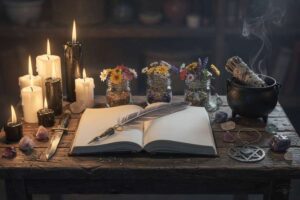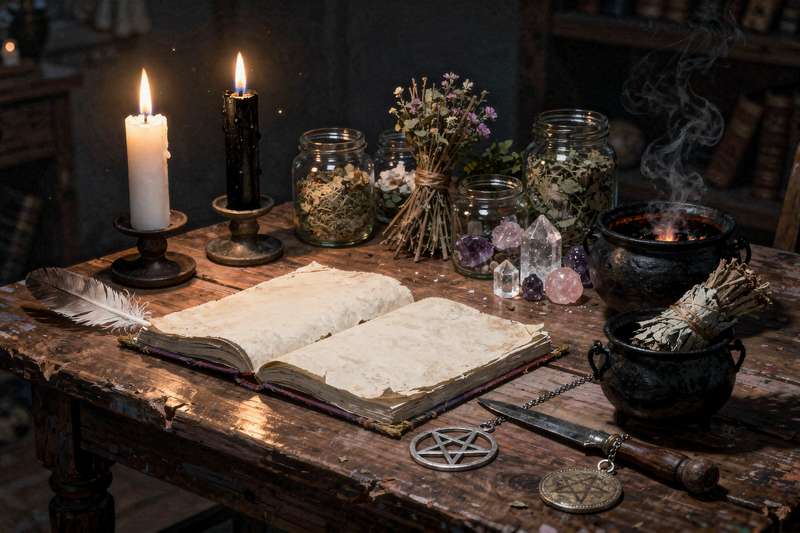
Essential tools of the witch serve as extensions of your personal energy and intention. These physical objects help focus your will, mark sacred space, and create meaningful rituals. Whether you’re drawn to candle magic, crystal work, herbal spellcraft, or divination, understanding which witchcraft tools align with your path makes all the difference. The good news? You don’t need an expensive collection to begin. Many experienced practitioners started with just a handful of items — or even nothing but their own presence and intention.
Building your magical practice is deeply personal. Some witches prefer traditional ceremonial tools steeped in symbolism, while others work exclusively with natural objects found in their own backyard. Your tools will reflect your unique style, whether you identify as a kitchen witch, green witch, eclectic practitioner, or follow a structured tradition like Wicca. What matters most isn’t the price tag or aesthetic perfection — it’s the connection you develop with each item and how you use it to direct your energy.
What Are Witchcraft Tools and Why Do They Matter?
Witchcraft tools are physical objects used to focus, direct, and amplify energy during magical work. They serve as visual and tactile anchors that help you shift into a ritual mindset, mark the boundary between mundane and sacred time, and symbolize the elements or spiritual forces you’re working with. Think of them as companions in your practice rather than sources of power themselves — the true magic comes from within you.
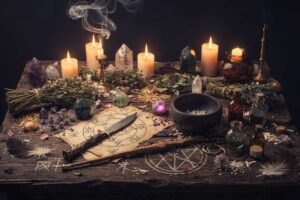
These tools carry both practical and symbolic weight. An athame (ritual knife) might represent the element of fire and your ability to cut away what no longer serves you. A wand channels air energy and helps you direct intention across space. Candles provide light, heat, and a focal point for meditation or spellwork. Each object becomes more powerful as you work with it, imbuing it with your personal energy and intention over time.
It’s important to dispel a common myth: you absolutely do not need every tool to practice witchcraft effectively. Many accomplished witches work with minimal supplies or create their own from scratch. The most essential tool is always your mind, heart, and will. Everything else simply supports your work. Start small, listen to your intuition about what calls to you, and build your collection gradually as your practice deepens.
Common Types of Witchcraft Practices and Their Tools
Different paths within witchcraft often emphasize different tools based on their focus and philosophy. Understanding these approaches helps you identify which tools resonate most with your own interests and magical goals.
Traditional Wiccan practitioners typically work with a full set of ceremonial tools including an athame, wand, chalice, pentacle, and boline (white-handled knife for practical cutting). These correspond to the four elements plus spirit and are arranged on an altar according to directional associations. Wiccan practice emphasizes balance, seasonal celebrations, and working within a cast circle.
Green witches center their practice around plant magic, herbalism, and nature connection. Their essential tools include gardening supplies, mortars and pestles for grinding herbs, drying racks, jars for storage, field guides, and a strong relationship with the land around them. Many green witches create their own oils, tinctures, and herbal blends.
Kitchen witches transform everyday cooking and homemaking into magical practice. Their tools are largely domestic: wooden spoons (often carved with symbols), cast iron pots, recipe journals, herb gardens, and the stove or hearth itself as a sacred space. Food becomes offering, nourishment becomes spell, and the kitchen serves as both workspace and temple.
Hedge witches walk between worlds, focusing on trance work, spirit communication, and crossing boundaries. Their tools often include a staff or walking stick (symbolizing the “hedge” or boundary), drums or rattles for journeying, divination tools like tarot or runes, and items that facilitate altered states of consciousness such as specific herbs or meditation aids.
Eclectic witches draw from multiple traditions, creating highly personalized practices. Their tool collections reflect their unique interests and might combine elements from various paths — crystals from one tradition, sigil work from another, and folk magic practices passed down through family.
How to Choose Your First Witchcraft Tools: A Step-by-Step Guide
Step 1: Identify Your Primary Magical Interests
Before purchasing anything, spend time reflecting on what aspects of witchcraft genuinely excite you. Are you drawn to candle magic and fire work? Do herbs and natural remedies call to you? Does divination fascinate you more than spellcasting? Write down your top three interests. This clarity prevents you from buying tools you’ll never use just because they look witchy or someone else recommended them.
Consider keeping a simple journal for a week or two, noting which magical topics you research, which practices you daydream about, and which elements (earth, air, fire, water) you feel most connected to. Your natural inclinations will guide you toward the right tools for your unique path.
Step 2: Start With Multi-Purpose Basics
Your first purchases should be versatile items that work across many different types of spells and rituals. A white candle serves countless purposes — cleansing, protection, general magic, and representing any color you need in a pinch. A simple journal becomes your Book of Shadows, spell record, and magical diary. A small bowl or cup can hold water, salt, herbs, or offerings.
Consider these foundational items: plain white or natural beeswax candles, a fireproof dish or cauldron, a notebook or blank journal, basic salt (sea salt or Himalayan), matches or a lighter, and a small cloth to designate sacred space. These six items support dozens of different magical workings without requiring significant investment.
Step 3: Source Items Mindfully and Affordably
You don’t need to visit expensive metaphysical shops to build your practice. Thrift stores, nature walks, your own kitchen, and craft stores offer abundant options. A butter knife with a wooden handle can serve as a perfectly functional athame until you find or make something more specialized. A fallen branch becomes a wand. A smooth stone from a meaningful place holds more power than any crystal bought online without connection.
When you do purchase items, consider their origins. Was this crystal ethically mined? Are these herbs sustainably harvested? Does this seller respect the cultures their products come from? Magical tools that honor both Earth and people carry better energy than those obtained through exploitation. Buying secondhand removes you from problematic supply chains while often providing items with interesting histories.
Step 4: Cleanse and Consecrate Each Tool
Before using any tool in magical work, clear away residual energy from previous owners or manufacturing processes. Simple cleansing methods include passing items through incense smoke (rosemary, sage, or palo santo work well), sprinkling them with salt water, leaving them under moonlight overnight, or visualization techniques where you imagine white light burning away unwanted energies.
After cleansing, consecrate each tool by dedicating it to your practice. Hold the item, state your intention for its use, and ask that it serve your highest good in your magical work. Some practitioners prefer elaborate consecration rituals while others simply spend time with each new tool, meditating with it and imbuing it with their personal energy. Trust your instincts about what feels right.
Step 5: Create a Dedicated Storage Space
Your tools deserve respectful storage that keeps them clean, protected, and separated from mundane household items. This doesn’t require an elaborate altar room — a box, drawer, basket, or small shelf works perfectly. Many witches wrap delicate items in cloth, organize herbs in labeled jars, and keep journals in protective covers.
This dedicated space serves multiple purposes: it preserves your tools’ energy, prevents accidental damage, maintains your privacy if you’re not openly practicing, and creates a clear boundary between magical and everyday objects. Even a simple wooden box transforms random items into a collection of sacred tools. As your practice grows, you can expand to a full altar space.
Step 6: Build Relationships With Your Tools Through Regular Use
Tools become truly powerful through consistent use and intention. Don’t leave your athame in a drawer waiting for the perfect ritual — use it regularly, even in simple ways. Light your candles during meditation. Write in your Book of Shadows weekly. Hold your crystals while setting daily intentions. The more you work with each item, the more it becomes attuned to your unique energy signature.
Pay attention to how different tools feel in your hands at different times. You might notice your wand feels particularly energized during certain moon phases, or that specific herbs seem more potent in particular seasons. These observations deepen your understanding of both the tools and your own magical rhythms. Trust develops through experience, not through expensive purchases.
Step 7: Let Your Collection Evolve Naturally
Resist the urge to buy everything at once. Your tool collection should grow organically as your practice develops and your needs become clear. You might start with candles and a journal, then add crystals after six months of work, and only acquire divination tools when you feel genuinely called toward that practice. This paced approach prevents overwhelm and ensures each new item receives proper attention.
Some tools will call to you unexpectedly — a perfect stone you find while hiking, an antique chalice at a yard sale, a deck of cards gifted by a friend. These synchronistic acquisitions often become the most meaningful pieces in your collection. Stay open to these moments while also maintaining clear boundaries about impulse purchases driven by aesthetics rather than genuine magical need.
Essential Altar Components and Sacred Space Tools
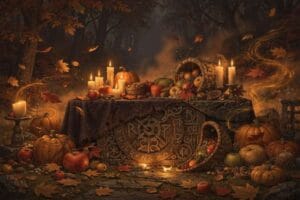
An altar serves as your dedicated workspace for magical practice, a physical representation of your spiritual commitments, and a focal point for meditation and ritual. While elaborate altars appear impressive, you can start with something as simple as a cleared corner of a dresser, a small box that opens flat, or even a tray you bring out when needed.
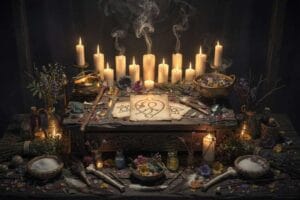
Core altar elements typically include representations of the four elements: a candle or incense burner for fire, a feather or incense for air, a small bowl of water, and a stone or pentacle for earth. Many practitioners add deity statues or images, seasonal decorations, offerings like flowers or food, and whatever tools they use most frequently. Your altar should feel personally meaningful rather than matching someone else’s aesthetic.
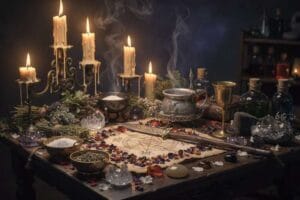
Consider including a cloth to define your sacred space (color can correspond to seasons, intentions, or personal preference), containers for salt and water used in purification, and a central focus point like a large candle, crystal, or symbol that represents your practice. Altar tools work best when they’re accessible and arranged in a way that makes sense for your workflow during rituals. Experiment with layouts until you find what flows naturally.
Ethics and Best Practices for Working With Magical Tools
Ethical magical practice begins with the principle of harm none — your tools should serve positive transformation and growth, never manipulation or harm toward others. This extends to how you acquire tools (avoiding culturally appropriated items or those produced through exploitation), how you use them (respecting free will and consent), and how you dispose of them when they’ve served their purpose (returning natural items to earth, passing reusable items to other practitioners).
Be mindful of closed practices and sacred items from cultures not your own. Smudging with white sage is specific to Indigenous American traditions, and using it without connection to those communities can be appropriative. Seek alternatives like rosemary, mugwort, or garden sage. If you’re drawn to practices from a specific culture, study respectfully, seek teaching from practitioners within that culture, and understand the full context rather than cherry-picking aesthetically pleasing elements.
Store your tools with care and intention. Many practitioners keep their ritual blades wrapped in cloth to contain their energy, store herbs in dark jars to preserve potency, and cover altars when not in use. Don’t allow others to handle your tools casually — these items absorb energy from everyone who touches them. If someone does handle your tools without permission, simply cleanse them again before your next use. Boundaries around your magical space and supplies are healthy and necessary.
Common Beginner Mistakes When Acquiring Tools
- Buying everything at once: New practitioners often spend hundreds of dollars purchasing entire altar setups before understanding their actual needs. This leads to unused items collecting dust and wasted resources. Start with 3-5 essential items and expand gradually as your practice develops and your needs become clear through experience.
- Choosing aesthetics over function: Instagram-worthy crystal collections and elaborate athames look impressive but may not serve your actual practice. A simple wooden spoon you’ve consecrated works better than an ornate athame you’re afraid to touch. Pretty tools that don’t feel right in your hands won’t help your magic succeed.
- Neglecting cleansing and consecration: Using tools straight from the store without clearing previous energies or setting clear intentions diminishes their effectiveness. Every item carries energy from its creation, shipping, and handling. Taking time to cleanse and dedicate each tool specifically to your practice makes an enormous difference in how it performs.
- Copying someone else’s setup exactly: Your practice should reflect your unique path, not replicate another witch’s altar or tool collection. What works beautifully for a ceremonial magician might feel awkward for a kitchen witch. Trust your instincts about what belongs in your practice, even if it differs from traditional recommendations or popular aesthetics.
- Forgetting the most important tool: No physical object matters as much as your own focused will and intention. Many beginners become so focused on acquiring the right tools that they neglect developing their visualization skills, energy work, meditation practice, and ability to raise and direct power. Tools support your work — they don’t do the work for you.
- Dismissing homemade or found items: Some practitioners believe tools must be purchased from specialty shops or consecrated by others to be effective. In truth, items you make yourself or find in nature often carry more personal power because of the time, intention, and connection you’ve invested. A wand you carved from a fallen branch knows your energy intimately.
How to Build Your Practice Over Time
Your magical practice will naturally evolve as you gain experience, discover your strengths, and clarify your spiritual goals. What excites you as a beginner may shift after a year of regular work. Honor this evolution rather than forcing yourself to maintain practices that no longer resonate or using tools that have served their purpose.
Check in with yourself quarterly: What magical work brought the most satisfaction this season? Which tools did you reach for repeatedly versus which ones remained untouched? What new skills do you want to develop? These reflections guide your practice forward authentically. You might realize you’re becoming more herbalist than spellcaster, or that divination speaks to you more than ritual magic. Both directions are valid.
Build slowly and sustainably. A daily five-minute practice with one candle and clear intention creates more growth than elaborate monthly rituals you dread preparing for. Consistency matters more than complexity. As your daily practice strengthens, you’ll naturally feel ready to add new elements, try different tools, or explore unfamiliar techniques. Trust your pace and remember that witchcraft is a lifelong path, not a race to collect the most impressive altar.
Final Thoughts
Building your collection of witchcraft tools is a deeply personal journey that unfolds at your own pace. Start with items that genuinely call to you, honor your budget and space limitations, and remember that the most powerful magic flows from your focused intention rather than expensive purchases. Your practice will evolve naturally as you gain experience, and your tools will accumulate organically as your needs become clear. Trust yourself, start simple, and let your unique magical path reveal itself one tool at a time. The magic has always been within you — these tools simply help you focus and direct what’s already there.
Frequently Asked Questions
Do I need all these tools to practice witchcraft?
No, you don’t need any physical tools to practice witchcraft effectively. The most essential tool is your own intention, focus, and will. Many experienced witches work with minimal supplies or none at all. Start with what calls to you and build gradually.
Can I use kitchen items as magical tools?
Absolutely. Kitchen knives, wooden spoons, bowls, and jars make excellent magical tools when consecrated for that purpose. Many kitchen witches use their everyday cooking implements for both mundane and magical work, simply setting intention when using them ritually.
How do I know if a tool is right for me?
Trust your intuition. When you hold or look at a potential tool, notice your physical and emotional response. Does it feel comfortable? Does it spark excitement or a sense of rightness? The best tools resonate with your energy immediately, even if they’re unconventional choices.
Should I keep my magical tools hidden?
This depends on your living situation and comfort level. If you’re concerned about judgment or interference from others, discrete storage protects both your tools and your peace of mind. However, many practitioners display their altars openly. Choose what feels safest and most authentic for your circumstances.