What Is a Ouija Board?
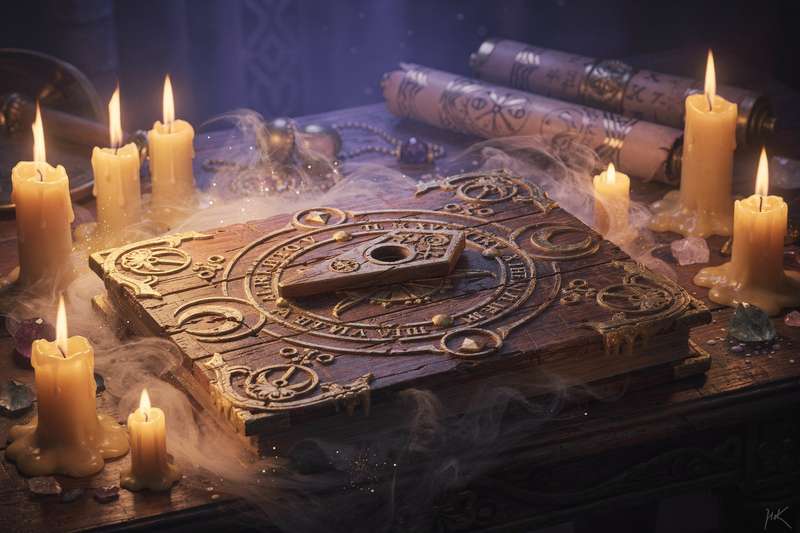
A ouija board is a divination tool designed to communicate with energies beyond our physical world. It consists of a rectangular board printed with the alphabet, numbers 0-9, and words like “yes,” “no,” and “goodbye.” The heart-shaped pointer called a planchette is the board’s active component—it moves across the surface to spell out messages.
You place your fingertips lightly on the planchette alongside one or more participants. As you ask questions, the planchette is believed to be guided by spiritual energy to provide answers. Think of it as a communication device, much like how a telephone connects you to someone across distance. A ouija board theoretically connects you to consciousness beyond the visible realm.
The board itself is neutral—it’s simply wood or cardboard with symbols. What matters is your intention, your energy, and the energy of anyone using it with you. This is why understanding how to use it properly is crucial before you ever touch the planchette.
The History of Ouija Boards
Ouija boards didn’t appear out of nowhere in modern times. The practice of automatic writing—allowing a hand to move seemingly of its own accord to produce written messages—dates back centuries. Historical records show this technique was used as far back as the 1100s in China, India, Greece, and Rome.
In North America, spirit boards became particularly popular following the American Civil War. When communities experience collective grief and massive loss of life, people naturally seek ways to reconnect with those who’ve passed. The ouija board filled that need during a time of profound mourning.
The board as you know it today was created and patented in 1890 by businessman Elijah Bond. Initially, it was marketed as a parlor game for adults—a novelty item for entertainment at social gatherings. That changed dramatically during World War I, when the ouija board became associated with occult practice and genuine spirit communication rather than amusement.
The board’s shift from “game” to “serious tool” reflects a deeper truth: the ouija board’s power lies in how you approach it. Treat it as entertainment, and you may get surface-level responses. Treat it with respect and clear intention, and you open yourself to deeper connection.
How to Use a Ouija Board: Step-by-Step
Prepare Your Space and Intention
Before you touch the planchette, you need to be intentional about what you’re doing. Find a quiet space where you won’t be interrupted. Many people light candles, burn sage or palo santo, or play soft instrumental music to create a focused atmosphere. Your energy matters, so take a few minutes to ground yourself through deep breathing or meditation.
Be clear about your purpose. Are you seeking guidance? Trying to connect with a specific loved one? Looking for clarity about a life decision? Vague intentions attract vague—or worse, unpredictable—responses. The more specific you are about who you want to contact and what you want to know, the clearer your communication will be.
Gather Your Participants
You’ll need at least two people to use a ouija board effectively. Never use one alone. The shared energy of multiple participants strengthens the connection, and having witnesses provides both safety and accountability. Choose people you trust completely—this isn’t the time for skeptics, jokesters, or anyone mentally or emotionally unstable.
Everyone involved should understand they’re participating in something serious. If someone at the table is there to mock the process or test whether it’s “real,” their energy contaminates the entire session. You want believers, or at minimum, respectful seekers.
Place Your Hands on the Planchette
Each participant should place two or three fingertips lightly on the planchette. This isn’t a firm grip—you’re barely touching it. The planchette should move smoothly and easily. If you’re pressing down hard, you’re likely pushing it yourself rather than allowing spiritual guidance to move it.
Some people feel the planchette move immediately; others wait several minutes. Don’t force movement. If nothing happens after 10-15 minutes of focused attention, it’s okay to end the session and try again another time. Forcing connection creates resistance.
Ask Your Questions
Start with simple yes-or-no questions to establish connection. “Is there a spirit present?” or “Are you willing to communicate with us?” Once you’ve established a response pattern, move to more detailed questions. Ask clearly and aloud. Speak as if you’re talking to someone across a table, not whispering into a void.
Allow pauses between questions. Give the planchette time to move and respond. Some messages come quickly; others require the energy to build. Patience is essential. Don’t bombard the board with rapid-fire questions—it’s disrespectful and produces garbled responses.
Close the Session Properly
This step is non-negotiable. When you’re finished communicating, move the planchette slowly to “goodbye.” This is your formal closing statement—you’re politely ending the conversation and severing the energetic connection. Take your hands off the planchette only after it reaches goodbye.
Some practitioners recommend standing up, walking to another room, or even leaving the building to further distance themselves from the energetic residue of the session. You want to be deliberate about returning to normal consciousness and everyday reality.
Ouija Board Safety Rules: What You Must Know
Using a ouija board without safety guidelines is like driving without knowing traffic laws. You might not crash, but the risk is significantly higher. These rules exist for good reason, and they’re born from centuries of experience across cultures.
Never Disrespect the Spirit Realm
Your tone, your questions, and your energy all communicate respect or disrespect. Don’t use mocking language, don’t ask insulting questions, and don’t treat the board as a game once the session begins. The spirits or energies you connect with can sense your attitude. Disrespect invites negative or trickster energy.
Don’t Ask About Death
Never ask when you or anyone else will die. Never ask the board to predict fatal events or accidents. This type of question opens a door to fear-based energy and can attract entities that feed on anxiety. Additionally, the information you receive may not be accurate—spirits can be mistaken or misleading just as people can be.
Understand That Spirits Can Lie
This is perhaps the most important rule to internalize. Not everything a spirit tells you is true. Just as humans have varying degrees of honesty, integrity, and knowledge, so do spirits. Some spirits are deceptive by nature. Some are confused. Some enjoy playing tricks. Be discerning. Cross-reference important information with other divination tools, trusted advisors, or your own intuition.
Watch Your Physical and Mental State
Never use a ouija board when you’re depressed, anxious, sick, or emotionally fragile. People in vulnerable states naturally attract lower-frequency energy. If you’re struggling mentally or physically, wait until you’re in better health. Your energy is your first line of defense against unwanted contact.
Be Mindful of Where You Use It
The energy that comes through during a session can linger in a space afterward. Some spaces naturally hold stronger energies than others. Avoid using the board in rooms with dark histories or places where you feel uncomfortable. Your intuition about a location matters—if a space feels wrong, it probably is.
Never Leave the Planchette Unattended
Always store the planchette separately from the board when you’re not using it. Leaving the planchette on the board is like leaving the door to the spirit realm propped open. Energy can move through unattended, or unwanted entities might decide to communicate without your consent. Keep your tools secure and separate.
End Sessions Immediately If Something Feels Wrong
If the energy shifts, if you feel frightened, if the planchette moves frantically or threatens you, end the session. Move the planchette to goodbye and remove your hands. If you’re too frightened to do this yourself, ask your fellow participant to help. Trust your gut. Your safety always comes first.
What Happens If You Connect With Negative Energy?
It’s possible—though not inevitable—that you’ll connect with energy that isn’t kind or helpful. Lower-frequency entities are attracted to fear, disrespect, or vulnerable emotional states. You might know you’ve connected with something negative if the planchette moves erratically, if responses become threatening or sexually explicit, or if you feel a sudden cold chill or sense of dread.
If this happens, stay calm. Move the planchette to goodbye and end the session. Don’t engage with threats or insults—this only feeds the entity’s energy. Once you’ve closed the session, cleanse your space with sage or palo santo, take a cleansing bath, and ground yourself with meditation or time in nature.
Consider not using the board again until you’ve done more research or worked with an experienced medium to understand what went wrong. Sometimes it’s as simple as your intention being unclear. Other times, it’s about the people at the table or the space itself. Learn from the experience and adjust.
Disposing of a Ouija Board Safely
This is a question many people ask because disposing of a ouija board isn’t like throwing away a board game. Once you’ve used a board, you’ve created an energetic bond with it. That connection needs to be consciously severed before you can safely dispose of it.
The first step is to formally close the board. In your final session, clearly state your intention to part with it. Move the planchette to goodbye and ask the spirits to release their connection to the board. You can say something like, “This is our final session. I’m closing this board and releasing all connections. I ask that all energy attached to this board be released and return to source.”
Once you’ve formally closed it, wrap the board and planchette in white cloth or paper. Some practitioners break the board into seven pieces—a number associated with completion and spiritual cleansing—and sprinkle it with salt or holy water before burying it or disposing of it in running water. Others prefer to burn it, though you should be cautious with this method depending on the board’s material.
Never simply give the board away or throw it in the trash. The energetic imprint remains, and you’re essentially passing your energetic responsibility to someone else. Be respectful of the tool, even as you release it.
Is Using a Ouija Board Right for You?
Before you buy or use a ouija board, ask yourself honestly: Am I mentally and emotionally stable? Do I have clear intentions? Do I respect the spirit realm? Am I willing to take safety seriously? Can I find at least one other person I trust completely?
If you answered yes to all of these, a ouija board can be a powerful tool for spiritual growth and connection. If you have doubts about any of them, consider working with other divination tools first—tarot, pendulums, or oracle cards—until you feel more grounded and confident in your spiritual practice.
The ouija board isn’t inherently dangerous. It’s a neutral tool that responds to the energy and intention you bring to it. Respect it, approach it with care, and it can open meaningful channels of communication. Treat it carelessly or disrespectfully, and you invite complications. The choice—and the responsibility—is entirely yours.
FAQ
Can You Use a Ouija Board Alone?
No, it’s not recommended. Using a ouija board requires at least two people. The shared energy of multiple participants strengthens the connection, and having witnesses provides both safety and accountability. Solo use increases the risk of unconscious manipulation or connecting with less desirable energy.
Is a Ouija Board Dangerous?
A ouija board itself is not inherently dangerous—it’s a tool. Danger comes from misuse: approaching it disrespectfully, using it when emotionally unstable, or not knowing how to properly close a session. If you follow safety guidelines and treat it seriously, you can use one responsibly.
Can a Ouija Board Get Stuck or Refuse to Move?
Yes. If the planchette won’t move or becomes stuck, it usually means the energy isn’t right for that session. One or more participants may be unconsciously blocking the connection, or you may need to cleanse the space and try again another time. Never force the planchette to move.
What Should I Do If the Planchette Spells Out Disturbing Messages?
End the session immediately by moving the planchette to goodbye. Don’t engage with threats or negative content. Once you’ve closed the board, cleanse your space, ground yourself through meditation or time outdoors, and don’t use the board again until you understand what went wrong. Consider consulting with an experienced practitioner.
Can Children Use a Ouija Board?
Children should not use ouija boards. They lack the emotional maturity and grounding to handle unexpected contact or negative energy. Additionally, children’s natural openness can make them vulnerable to attachment or influence. Wait until someone is at least in their late teens before introducing them to this tool.