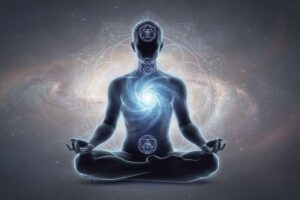
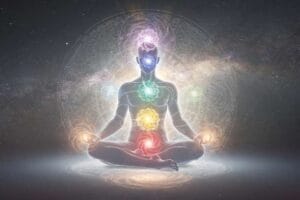
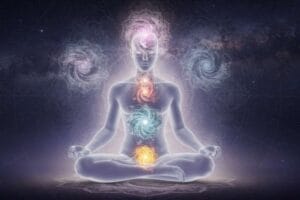
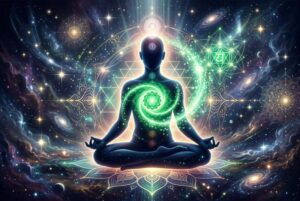
The chakra test (also called a chakra quiz or chakra assessment) is a powerful self-discovery tool that helps you identify which of your seven main energy centers are open, blocked, or imbalanced. In just a few minutes, this insightful questionnaire can reveal where your energy is flowing freely — and where it’s stuck — so you can take meaningful action to restore harmony in your body, mind, and spirit.
If you’ve been feeling off — physically drained, emotionally heavy, or spiritually disconnected — your chakras may be calling for attention. Taking a chakra test is the first step to understanding your unique energetic blueprint and reclaiming your vitality.
What Is the Chakra Test?
A chakra test is a self-assessment quiz designed to evaluate the balance and openness of your seven main chakras — the energy centers running along your spine from the base to the crown of your head. These centers govern everything from your sense of safety and creativity to your ability to love, communicate, and connect with the divine.
The test typically consists of 40 to 60 questions that ask you to reflect on your emotions, physical sensations, behaviors, and beliefs. For each statement — such as “I feel physically safe in my daily life” or “I trust my intuition when making decisions” — you’ll rate how true it feels for you, usually on a scale from “not at all” to “completely.”
Once you’ve completed the quiz, your answers are scored to reveal which chakras are balanced, underactive (blocked or closed), or overactive (too open, causing overwhelm). Most tests provide a visual breakdown — often in the form of a graph or percentage scores — so you can see at a glance where your energy is flowing smoothly and where it needs support.
This isn’t about passing or failing. It’s about honest self-reflection. The chakra quiz is a mirror that reflects your inner world, giving you clarity on the energetic roots of the challenges you face.
Sanskrit Name & Symbolism of the Chakra System
The word “chakra” comes from the Sanskrit word meaning “wheel” or “disk,” symbolizing the spinning vortices of energy that exist within your subtle body. Each of the seven chakras has its own Sanskrit name, symbolic meaning, and associated qualities:
- Muladhara (Root Chakra) — Foundation, survival, grounding
- Svadhisthana (Sacral Chakra) — Creativity, pleasure, emotional flow
- Manipura (Solar Plexus Chakra) — Personal power, confidence, willpower
- Anahata (Heart Chakra) — Love, compassion, connection
- Vishuddha (Throat Chakra) — Communication, truth, self-expression
- Ajna (Third Eye Chakra) — Intuition, insight, inner vision
- Sahasrara (Crown Chakra) — Spiritual connection, enlightenment, unity
Each chakra is represented by a lotus flower with a specific number of petals, a unique color, a sacred sound (bija mantra), and an elemental force. Together, they form a complete map of your consciousness — from the earthly and physical to the ethereal and divine.
Color, Element & Location of the Seven Chakras
When you take a chakra test, you’re assessing all seven energy centers at once. Here’s a quick guide to their colors, elements, and locations:
- Root Chakra (Muladhara) — Red | Earth | Base of spine
- Sacral Chakra (Svadhisthana) — Orange | Water | Lower abdomen, below navel
- Solar Plexus Chakra (Manipura) — Yellow | Fire | Upper abdomen, stomach area
- Heart Chakra (Anahata) — Green or pink | Air | Center of chest
- Throat Chakra (Vishuddha) — Blue | Ether (space) | Throat, neck
- Third Eye Chakra (Ajna) — Indigo | Light | Forehead, between the eyebrows
- Crown Chakra (Sahasrara) — Violet or white | Thought/Consciousness | Top of the head
Each chakra vibrates at its own frequency and corresponds to different organs, emotions, and life themes. The chakra test helps you understand which of these energy centers is out of tune — so you can bring your entire system back into harmony.
What the Chakra Test Governs
The chakra test doesn’t govern energy itself — it reveals the state of your energy. It shows you how open or blocked each chakra is, which directly impacts your physical health, emotional well-being, mental clarity, and spiritual growth.
When your chakras are balanced, you feel grounded, creative, confident, loving, expressive, intuitive, and spiritually connected. When they’re blocked or overactive, you may experience anxiety, creative stagnation, low self-esteem, difficulty trusting others, fear of speaking up, clouded judgment, or spiritual disconnection.
By taking a chakra quiz, you gain a personalized snapshot of your inner landscape. It’s like a wellness check-up for your soul — guiding you toward the practices, stones, affirmations, and lifestyle shifts that will support your unique healing journey.
Signs Your Chakras Are Blocked or Imbalanced
Not sure if you need to take a chakra test? Here are some common signs that one or more of your chakras may be out of balance:
Root Chakra Imbalance
Feeling anxious, unsafe, or insecure; financial instability; lower back pain; digestive issues; disconnection from your body or the physical world.
Sacral Chakra Imbalance
Emotional numbness or overwhelm; creative blocks; difficulty experiencing pleasure or intimacy; guilt or shame around sexuality; reproductive health issues.
Solar Plexus Chakra Imbalance
Low self-esteem; lack of motivation; difficulty making decisions; people-pleasing; digestive problems; feeling powerless or controlled by others.
Heart Chakra Imbalance
Difficulty giving or receiving love; emotional guardedness; loneliness; resentment; heart or lung issues; inability to forgive yourself or others.
Throat Chakra Imbalance
Fear of speaking your truth; difficulty expressing yourself; chronic sore throat; feeling misunderstood; lying or gossiping; trouble listening to others.
Third Eye Chakra Imbalance
Confusion or lack of clarity; distrust of your intuition; overthinking; headaches; trouble visualizing or dreaming; disconnection from inner guidance.
Crown Chakra Imbalance
Spiritual disconnection; feeling lost or without purpose; rigid thinking; depression; lack of inspiration; inability to see the bigger picture.
If you recognize yourself in any of these signs, a chakra test can help you pinpoint exactly which energy center needs your attention — and what you can do about it.
Signs of Overactive Chakras
While blocked chakras are more commonly discussed, overactive chakras can also create imbalance. These occur when too much energy is concentrated in one area, often as a compensatory mechanism when other chakras are closed.
- Overactive Root: Materialism, greed, hoarding, excessive fear, resistance to change
- Overactive Sacral: Addiction to pleasure, emotional drama, obsessive relationships, boundary issues
- Overactive Solar Plexus: Aggression, control issues, perfectionism, ego-driven behavior, dominating others
- Overactive Heart: Codependency, jealousy, giving too much and losing yourself, lack of boundaries
- Overactive Throat: Talking excessively, gossiping, interrupting, using your voice to manipulate or control
- Overactive Third Eye: Obsessive overthinking, disconnection from reality, hallucinations, spiritual bypassing
- Overactive Crown: Spiritual arrogance, detachment from earthly life, inability to ground or take action
A good chakra test will show you both underactive and overactive tendencies, helping you find the middle path of balance.
How to Balance Your Chakras After Taking the Test
Once you’ve discovered which chakras need support, it’s time to take action. Here are powerful, practical ways to balance each energy center:
Root Chakra Healing
Yoga poses: Mountain pose, warrior I, child’s pose, tree pose
Affirmations: “I am safe. I am grounded. I trust life to support me.”
Meditation: Visualize red light at the base of your spine, grounding cords connecting you to the earth
Essential oils: Patchouli, cedarwood, vetiver
Foods: Root vegetables (carrots, beets, potatoes), protein, red foods
Sacral Chakra Healing
Yoga poses: Goddess pose, pigeon pose, hip circles, pelvic tilts
Affirmations: “I embrace pleasure. I allow my creativity to flow. I honor my emotions.”
Meditation: Visualize orange light in your lower belly, like a warm, flowing river
Essential oils: Sweet orange, ylang-ylang, sandalwood
Foods: Orange foods (oranges, mangoes, carrots), healthy fats, water
Solar Plexus Chakra Healing
Yoga poses: Boat pose, warrior III, sun salutations, twists
Affirmations: “I am confident. I trust myself. I claim my power.”
Meditation: Visualize golden yellow light radiating from your core like the sun
Essential oils: Lemon, ginger, peppermint
Foods: Yellow foods (bananas, corn, ginger), whole grains, spices
Heart Chakra Healing
Yoga poses: Camel pose, cobra, bridge pose, heart openers
Affirmations: “I am love. I forgive freely. My heart is open and safe.”
Meditation: Visualize green or pink light expanding from your chest in all directions
Essential oils: Rose, jasmine, bergamot
Foods: Leafy greens, green vegetables, green tea
Throat Chakra Healing
Yoga poses: Shoulder stand, fish pose, lion’s breath, neck rolls
Affirmations: “I speak my truth. My voice matters. I express myself clearly.”
Meditation: Visualize blue light in your throat, humming or chanting to activate it
Essential oils: Eucalyptus, chamomile, peppermint
Foods: Blue foods (blueberries), herbal teas, soups, liquids
Third Eye Chakra Healing
Yoga poses: Child’s pose, forward folds, meditation, alternate nostril breathing
Affirmations: “I trust my intuition. I see clearly. I am open to inner wisdom.”
Meditation: Visualize indigo light at your forehead, focusing on the space between your eyebrows
Essential oils: Frankincense, clary sage, lavender
Foods: Purple foods (grapes, eggplant), omega-3s, dark chocolate
Crown Chakra Healing
Yoga poses: Headstand, savasana, meditation, silent sitting
Affirmations: “I am connected. I am divine. I trust the universe.”
Meditation: Visualize violet or white light pouring down from above, filling your entire being
Essential oils: Lavender, frankincense, lotus
Foods: Fasting, light meals, clean water, purple foods
Healing Crystals for the Chakra System
Crystals are powerful allies in chakra healing. Each chakra resonates with specific stones that amplify, clear, or stabilize its energy. Here’s a quick reference:
- Root Chakra: Red jasper, black tourmaline, hematite, smoky quartz
- Sacral Chakra: Carnelian, orange calcite, moonstone, sunstone
- Solar Plexus Chakra: Citrine, yellow jasper, tiger’s eye, pyrite
- Heart Chakra: Rose quartz, green aventurine, jade, rhodonite
- Throat Chakra: Blue lace agate, aquamarine, sodalite, turquoise
- Third Eye Chakra: Amethyst, lapis lazuli, labradorite, fluorite
- Crown Chakra: Clear quartz, selenite, amethyst, howlite
You can place these stones on the corresponding chakra during meditation, carry them with you, or sleep with them under your pillow to support energetic healing.
Bija Mantra & Sound Healing for the Chakras
Each chakra has a sacred seed sound (bija mantra) that activates and balances its energy. Chanting these sounds — either aloud or silently — can help clear blockages and restore flow:
- Root Chakra: LAM
- Sacral Chakra: VAM
- Solar Plexus Chakra: RAM
- Heart Chakra: YAM
- Throat Chakra: HAM
- Third Eye Chakra: OM (or SHAM)
- Crown Chakra: Silence or OM
Try chanting each mantra for 3–5 minutes while visualizing the corresponding chakra color. You can also listen to sound healing frequencies (like 432 Hz or chakra-specific Hz tones) to recalibrate your energy centers.
Final Thoughts: Your Chakra Test Is Your Map to Wholeness
Taking a chakra test is more than answering questions — it’s an act of self-love, a moment of pause in a busy world to check in with your inner being. Your results are not a diagnosis or a label. They’re a loving invitation to explore the parts of yourself that are calling for attention, healing, and balance.
Whether your root chakra is asking for grounding, your heart is yearning to open, or your third eye is ready to awaken, know this: you have everything you need to restore harmony. The practices, crystals, affirmations, and meditations shared here are tools — but the real healer is you.
Retake the chakra quiz every few months to track your progress. Your energy is not fixed — it shifts with your experiences, emotions, and spiritual growth. As you heal one chakra, others may rise to the surface, ready for their turn in the light.
You are a rainbow of energy, a being of light navigating a human experience. Honor your chakras, listen to their wisdom, and trust that balance is not a destination — it’s a journey you walk one breath, one intention, one healing practice at a time.
Frequently Asked Questions About the Chakra Test
How accurate is a chakra test?
A chakra test is as accurate as you are honest. The results reflect your self-awareness and willingness to see yourself clearly. While no online quiz can replace the insight of a trained energy healer, a well-designed chakra assessment can give you valuable guidance and a starting point for deeper exploration.
Can I have more than one blocked chakra at a time?
Absolutely. In fact, most people have multiple chakras that are out of balance at any given time. The chakra system is interconnected — when one center is blocked, it can affect the others. That’s why holistic healing practices that address all seven chakras are so powerful.
How often should I take a chakra test?
Take a chakra test whenever you feel out of alignment — whether that’s every few weeks, once a season, or whenever major life changes occur. Your chakras are dynamic, not static. Regular check-ins help you stay aware of shifts in your energy and adjust your healing practices accordingly.
What’s the difference between a blocked and an overactive chakra?
A blocked (or underactive) chakra has restricted energy flow, causing deficiency symptoms — like low confidence, poor boundaries, or lack of creativity. An overactive chakra has excessive energy, often compensating for other blocked centers, and can cause overwhelm, control issues, or obsessive behaviors. Balance is the sweet spot between the two.