February celebrating Imbolc is one of the quietest and most powerful moments on the pagan calendar — a time when the earth hasn’t fully woken yet, but something beneath the surface has unmistakably shifted. If you’ve felt drawn to this midwinter sabbat, you’re in good company. Imbolc, the ancient Celtic cross-quarter day observed on February 1st and 2nd, speaks to something deeply human: the longing for returning light after a long, dark season. Whether you practice Wicca, follow an eclectic path, work as a kitchen witch or hedge witch, or simply feel a pull toward the natural rhythms of the year, Imbolc offers one of the most welcoming entry points into seasonal practice. You don’t need years of study or a perfectly stocked altar. You need an open heart, a willingness to notice the season, and a few simple practices to ground yourself at this sacred threshold between winter and spring.
What Is Imbolc? Understanding This Sacred February Festival
Imbolc is one of eight sabbats on the Wheel of the Year — the pagan cycle of seasonal celebrations that tracks the sun’s journey and the rhythms of the land. It falls at the midpoint between the winter solstice and the spring equinox, consistently landing on February 1st and 2nd in the Northern Hemisphere.
The name comes from Old Irish and means “in the belly” — a direct reference to the pregnant ewes of ancient Celtic farming communities, whose milk would begin to flow around this time, signaling that new life was genuinely on its way. This is not yet spring; it is the first quiet certainty that spring is coming. Seeds stir underground. Light lingers a few minutes longer each evening. There is real magic in that collective breath of anticipation.
Imbolc is closely tied to the goddess Brigid, Celtic patroness of healing, poetry, smithcraft, and the sacred flame. February 1st is also St. Brigid’s Day in the Irish Christian calendar — a feast that many scholars view as rooted in the same ancient tradition. The boundary between these two observances has always been beautifully porous, shaped by centuries of living faith on both sides.
Common Imbolc Celebrations: Finding Your Style and Path
No two Imbolc celebrations look exactly alike, and that diversity is one of the sabbat’s real strengths. Here are the most common approaches practitioners bring to this February ritual:
- Wiccan ritual: Cast a circle, invoke Brigid or the God and Goddess, and work candle magic aligned with purification and new beginnings. Formal structure gives this sabbat a ceremonially complete feel for those who prefer it.
- Kitchen witch style: Bring the sacred into daily life through food and hearth. Imbolc calls for dairy-rich cooking — milk, butter, cream — along with seed breads and warming soups prepared with full intention.
- Eclectic practice: A single candle, a journal, a small altar, and an honest intention are all you need for a meaningful celebration. Mix and match freely to build something that genuinely fits your life.
- Secular or spiritually curious: Even without a religious framework, Imbolc offers a powerful ritual pause — a chance to cleanse the home, notice the season turning, and plant intentions for the months ahead.
- Group or coven celebration: Share the sabbat through communal ritual, storytelling, crafting Brigid’s crosses together, or a seasonal feast gathered around fire.
How to Celebrate Imbolc in February: Step-by-Step
Step 1: Cleanse Your Home and Sacred Space
Before any ritual, a deliberate cleansing sets the stage. Open windows briefly — even in winter cold — and sweep out corners and clutter. Burn rosemary, cedar, or frankincense to shift the atmosphere, or use sound: a bell, a singing bowl, or your own voice raised in intention. The physical act of cleaning is itself the ritual at Imbolc. You are consciously making room for what is new.
Step 2: Build an Imbolc Altar
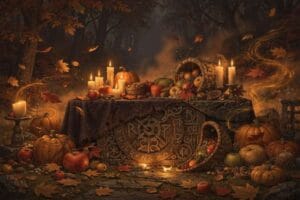
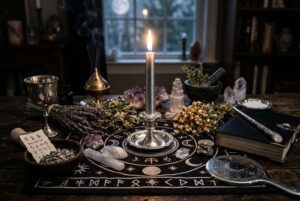
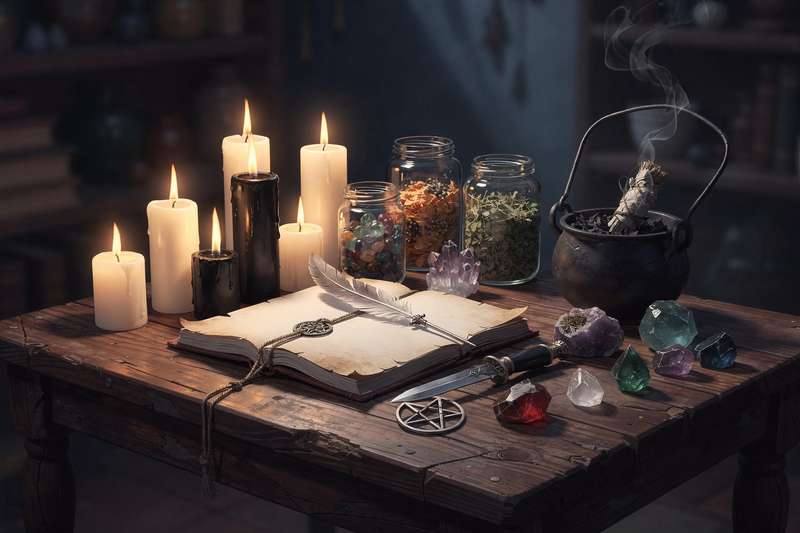
Find a small dedicated surface — a windowsill, a shelf, a corner of a table — and arrange items that speak to the season’s themes: returning light, hope, and fresh beginnings. White or pale blue cloth makes a simple base. Add white, red, or gold candles; a small dish of seeds; snowdrops or white flowers if available; and a glass of milk as a traditional offering to Brigid. Your altar doesn’t need to be large or expensive to carry genuine meaning.
Step 3: Light Candles for the Returning Light
Fire is the heartbeat of Imbolc. Lighting candles — one central flame or one in each room of your home — is among the simplest and most powerful ways to honor this sabbat. Sit quietly with your flame and hold in mind what you want to welcome into your life this season. Some practitioners place a lit candle safely in the window as a symbolic beacon: light is welcome here, and this home is ready for the turning year.
Step 4: Weave a Brigid’s Cross
The Brigid’s Cross is a traditional Irish symbol woven from rushes or straw into a distinctive four-armed design. Making one is a meditative, hands-on practice with centuries of living Irish folk tradition behind it. Clear tutorials are easy to find, and the process itself — slow, repetitive, tactile — is genuinely grounding. Once complete, hang your cross above a doorway or hearth for protection and blessing through the year ahead.
Step 5: Perform the Brat Bríde Ritual
On the evening of January 31st — Brigid’s Eve — hang a piece of natural cloth outside overnight. This is the Brat Bríde, or Brigid’s Cloak. Bring it indoors before sunrise on February 1st. Through the year ahead, this cloth is said to carry protective and healing energy gathered from the sacred eve. Keep it on your altar, in a medicine cabinet, or with you when you need comfort. It is one of the most accessible and historically rooted Imbolc practices available to any practitioner, regardless of path.
Step 6: Set Intentions for the Season Ahead
Imbolc falls at a genuine threshold — past the deepest dark of winter, but not yet spring. Use this liminal energy for honest intention-setting. Sit with your journal and write clearly: What do you want to grow this season? What are you finally ready to begin? What are you choosing to release? You might fold the page and place it on your altar, bury it in a pot of soil as a symbolic planting, or burn it safely to release the intention outward. The writing itself is the most important part of this practice.
Step 7: Prepare a Seasonal Imbolc Meal
Food is ceremony at Imbolc. The sabbat has always been linked to dairy — the return of ewes’ milk after lean winter months. Honor this by cooking with care: oat porridge with cream and honey, a warming soup, seed bread, or a simple cheese board with fresh herbs. If you eat vegan or are dairy-free, oat milk, cashew cream, and seed-rich dishes carry exactly the same seasonal resonance and deserve the same intentional preparation.
Step 8: Take a Purification Bath or Mindful Shower
Water and fire work together beautifully at Imbolc. Draw a warm bath with Epsom salts and a few drops of rosemary or lavender essential oil. As you soak, consciously release what winter has left behind — old heaviness, stagnant energy, anything that no longer fits. A deliberate shower, approached with full attention on cleansing and renewal, becomes an equally genuine purification ritual when held with clear intention. Your body is part of your practice.
Step 9: Go Outside and Witness the Season
Step outside, even briefly, and look carefully at the world around you. In February you might spot a crocus pushing through frozen ground, hear birdsong that is noticeably fuller than it was in January, or notice that evening light lingers a few minutes longer than it did at the solstice. These quiet, real signs are the essence of Imbolc. The celebration is not only on your altar — it is happening in the earth right now, whether you observe it or not. Choosing to witness it is a complete spiritual act.
Essential Imbolc Tools and Supplies
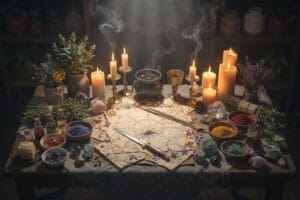
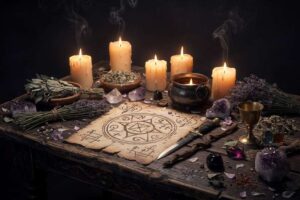
You genuinely need very little to honor Imbolc well. Here is what most practitioners reach for when preparing their February celebrations:
- White, red, or gold candles — for the returning light and Brigid’s sacred flame
- Rosemary, cedar, or frankincense — for cleansing and purification of your space
- A small dish of seeds — symbolic of potential and new growth waiting underground
- Snowdrops or white flowers — seasonal, living altar additions
- Milk or cream — a traditional Brigid offering (oat milk works equally well)
- Rushes or straw — for weaving a Brigid’s Cross
- A piece of natural cloth — for the Brat Bríde ritual
- A journal and pen — for intention-setting and post-ritual reflection
- A fireproof dish or small cauldron — for safely burning written intentions
- Crystals: moonstone, amethyst, or clear quartz all pair naturally with Imbolc’s energy of clarity, intuition, and new beginnings
Ethics and Best Practices for Your Imbolc Rituals
Learn the roots. Imbolc originates in Irish Celtic tradition. Taking time to understand its history — the goddess Brigid, the farming communities that observed it, the living culture of Ireland — makes your practice richer and ensures you bring genuine respect to what you’re working with.
Intention over perfection. A single candle lit with honest focus carries more charge than an elaborate ceremony performed from habit. Sincerity is what makes ritual meaningful, not complexity.
Approach Brigid with respect. If you choose to work with this goddess, honor her as a figure with a real history and living tradition behind her — not simply an archetype to invoke when convenient.
Observe fire safety. Ritual candles need fireproof surfaces, secure holders, and your full attention. Never leave a flame unattended, even briefly.
Go at your own pace. You don’t need to complete every practice in one evening. The sabbat spans Brigid’s Eve through February 2nd — spread your celebration across that time as feels right for your life and energy.
Common Beginner Mistakes When Celebrating Imbolc
- Thinking complexity equals depth: One candle and a genuine intention is a complete Imbolc practice. Elaborate setups are beautiful when they serve you — but they are never required.
- Skipping the internal work: The outer rituals are the container, not the content. The real practice happens inside — in reflection, release, and honest intention-setting.
- Buying everything at once: Start with what you already have at home. Add items slowly, only when they genuinely call to you and your practice has room for them.
- Comparing your practice to social media: Curated Imbolc aesthetics can feel intimidating. Your practice belongs to you and doesn’t need to look photogenic to be deeply real and meaningful.
- Forgetting Brigid’s Eve: The celebration traditionally opens on January 31st. Even a single candle and a quiet moment of stillness that evening honors the full arc of the sabbat.
- Treating it as a one-time event: Imbolc deepens through return. Every year you come back to this threshold, the meaning compounds and the practice becomes more naturally yours.
How to Build Your Imbolc Practice Over Time
Your first Imbolc might be a candle and a journal entry. Your third might include a woven Brigid’s Cross and a seasonal meal shared with someone you trust. Your tenth might anchor an entire rhythmic relationship with the year’s turning that shapes how you move through every season. All of these are real. All of them count.
After each sabbat, take a few minutes to write down what felt alive and what fell flat. These honest notes become the raw material of a practice that is genuinely yours — grown from your own experience and relationship with the land, not borrowed wholesale from someone else’s tradition. Trust the returning. These seasonal rhythms work on you even when you aren’t actively paying attention to them.
Final Thoughts on February Celebrating Imbolc
Every February, Imbolc arrives with quiet certainty: winter is not finished, but light is genuinely, measurably on its way back. Marking this threshold — even with the smallest gesture — places you in relationship with a cycle of renewal older than any tradition currently practicing it. However you choose to honor this sacred February sabbat, the act of noticing is itself sacred. Light a candle. Write in your journal. Step outside and look. The season is already moving, and it is glad you paid attention.
Frequently Asked Questions About Celebrating Imbolc in February
What date is Imbolc celebrated each year?
Imbolc falls on February 1st and 2nd each year in the Northern Hemisphere, with many practitioners beginning their observance on the evening of January 31st — Brigid’s Eve. It marks the midpoint between the winter solstice and the spring equinox, and the dates remain consistent from year to year.
Do you have to be Wiccan to celebrate Imbolc?
Not at all. Imbolc is honored across many paths — Wicca, Celtic paganism, eclectic witchcraft, hedge craft, and kitchen witchery, among others. Even those who identify as spiritual-but-not-religious or simply curious about seasonal living find meaningful ways to observe this February threshold without belonging to any specific tradition.
What is the significance of Brigid at Imbolc?
Brigid is the Celtic goddess associated with healing, poetry, smithcraft, and the sacred flame — themes of creative fire and renewal that align naturally with Imbolc’s energy of new beginnings. Many practitioners honor her through candle rituals, weaving Brigid’s crosses, and offerings of milk or cream. She is also venerated in Irish Christian tradition as St. Brigid of Kildare, whose feast day falls on February 1st.
What are traditional Imbolc foods?
Traditional Imbolc foods center on dairy — milk, butter, cream, and cheese — reflecting the return of ewes’ milk in ancient Celtic farming communities. Seed bread, oat porridge with honey, warming soups, and seasonal herbs are also classic choices. Vegan and dairy-free practitioners honor the same themes beautifully with oat milk, plant-based creams, and seed-rich dishes prepared with full intention.