When you’re standing at a fork in the road — weighing a job offer, contemplating a move, or choosing between two paths that both feel right and wrong at the same time — the Decision Making Tarot Spread becomes your trusted mirror. This five-card tarot spread for decisions doesn’t hand you a definitive answer on a silver platter. Instead, it illuminates the hidden layers of your choice: your true motivations, the values at stake, and the likely outcomes of each path. If you’ve made all the logical pros-and-cons lists but your heart still hesitates, this spread reveals why.
The beauty of this tarot card decision spread lies in its balance. Three cards reflect inward, helping you reconnect with your authentic self. Two cards look outward, offering insight into what each option might bring. Together, they create a complete picture that honors both your inner truth and external reality. You remain in control of your choice — the cards simply shine a light on what you already know but haven’t fully acknowledged.
When to Use This Decision Making Tarot Spread
This spread works best when you’re genuinely torn between two clear options. Maybe you’ve received a job offer in another city, but it means leaving behind a community you love. Perhaps you’re deciding whether to end a relationship or give it another try. The key is that you’ve already done the rational analysis — you know the practical considerations — but something in your gut still feels uncertain.
Use this reading when the decision matters deeply to you and when both paths hold real possibility. It’s particularly powerful when your logical mind says one thing but your intuition whispers another. This isn’t the spread for trivial choices or when you’re simply procrastinating. Save it for moments when you need clarity about the deeper meaning behind your hesitation, when you need to understand which choice aligns with who you truly are and where you’re meant to go.
This five card decision spread also helps when you feel pressured by external expectations. If family, society, or practical concerns are pushing you one direction while your soul tugs another way, these cards remind you what you value most. They help you see past the noise and reconnect with your authentic desires.
How to Lay Out the Decision Making Tarot Spread
Find a quiet space where you won’t be interrupted. Take a few deep breaths and clearly state your two options out loud or in your mind. Be specific: “Option 1 is accepting the job in Seattle. Option 2 is staying in my current position and pursuing freelance work on the side.” Clarity in your question creates clarity in your reading.
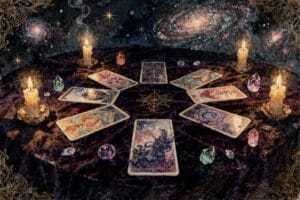
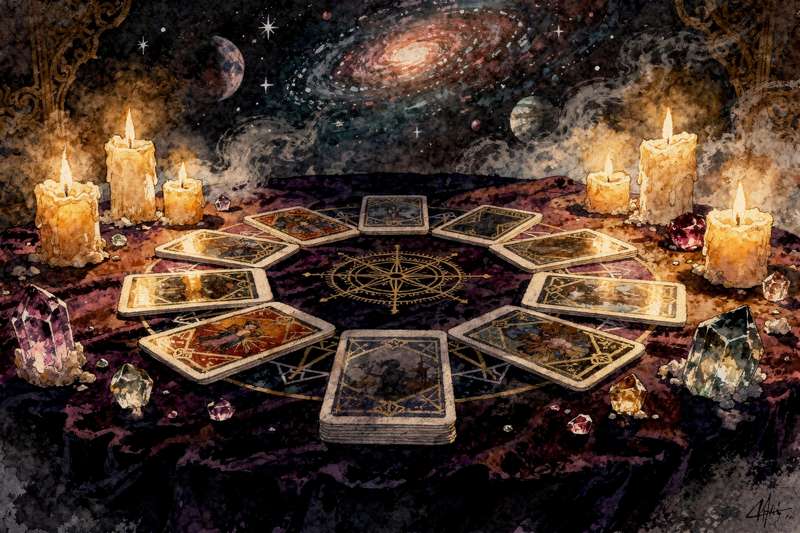
Shuffle your deck while holding both options in your awareness. When you feel ready, draw five cards. Place the first three cards in a vertical line in the center of your reading space — these represent your inner landscape. Card 1 (Your Motivation) goes at the top, Card 2 (Ideal Outcome) in the middle, and Card 3 (Your Values) at the bottom. Then place Card 4 (Option 1 Outcome) to the left of this central column, and Card 5 (Option 2 Outcome) to the right. This creates a clear visual: your authentic self in the center, with both potential paths flanking you.
If you’re new to tarot card decision spreads, consider using only the Major Arcana for this reading. The archetypal energies are easier to interpret and deliver clear messages without getting lost in nuance.
Position-by-Position Breakdown
Position 1: Your Motivation
This card reveals what truly drives you forward each day. What makes you excited to wake up in the morning? What passion or need propels you through challenges? Understanding your motivation is crucial because it shows whether your decision aligns with your life force or works against it.
When The Sun appears here, your motivation is joy, creativity, and authentic self-expression. If the Five of Pentacles shows up, you might be motivated by fear of scarcity or a need for security. The Eight of Wands suggests you’re driven by momentum and progress. Look at this card honestly — sometimes we discover we’re motivated by fear, obligation, or others’ expectations rather than genuine desire.
Pay special attention if this card conflicts with your stated reasons for the decision. If you think you want the promotion for career growth, but the Four of Cups appears, your motivation might actually be about filling an emotional emptiness. That awareness changes everything about how you approach your choice.
Position 2: Ideal Outcome
Here, you get permission to dream without limits. What do you genuinely desire from this situation if all constraints vanished? This card often reveals longings you’ve been too practical to acknowledge. It’s not about what’s realistic — it’s about what your soul truly wants.
The Star in this position shows you’re yearning for hope, healing, and renewal. The Ten of Cups reveals a desire for emotional fulfillment and harmonious relationships. The Ace of Swords suggests you crave mental clarity and truth above all. Sometimes this card surprises you by showing that what you think you want isn’t what you truly desire deep down.
This position also highlights whether either of your options can actually deliver what you’re seeking. If your ideal outcome is The Hermit (solitude and inner wisdom) but both options involve high-pressure social environments, you might need to reconsider the question entirely. Your ideal outcome is your north star — use it to evaluate whether you’re even asking the right question.
Position 3: Your Values
This card grounds you in your principles — the non-negotiable truths that define who you are. Your values are the bedrock of good decisions. When you choose in alignment with them, you feel peace even if the path is difficult. When you violate them, success feels hollow.
Justice here indicates you value fairness, integrity, and truth. The Empress points to valuing nurturing, creativity, and abundance. The Five of Swords might reveal that you’ve been valuing winning or being right, even at the cost of relationships. Be honest about what this card reveals — sometimes we discover we’ve been living according to values we inherited rather than chose.
Compare this card with your two outcome cards. Which option honors these values? Which requires you to compromise them? If the Nine of Pentacles appears (valuing independence and self-sufficiency) and Option 1 requires you to become financially dependent on someone else, you have vital information. A choice that violates your core values will never bring lasting satisfaction, no matter how attractive it looks on paper.
Position 4: Option 1 Likely Outcome
This card shows the probable result if you choose the first path you named. It’s not a guarantee — you maintain free will — but it reveals the energy and circumstances this choice is likely to create. Look at both the card’s traditional meaning and your intuitive response to it.
The Ten of Wands suggests Option 1 leads to burden and overwhelm, though possibly achievement. The Two of Cups indicates partnership and mutual respect. The Tower? Necessary destruction and breakthrough, which might be exactly what you need or absolutely what you want to avoid. Remember that challenging cards aren’t always bad — sometimes we need disruption to grow.
Consider the suit and number. Wands indicate action and passion, Cups point to emotional experiences, Swords suggest mental challenges or clarity, and Pentacles show material and physical results. Court cards can represent people you’ll encounter or aspects of yourself you’ll develop. Major Arcana cards suggest this outcome has significant karmic or spiritual weight — this choice is part of your soul’s larger journey.
Position 5: Option 2 Likely Outcome
Your second path’s probable destination appears here. Apply the same interpretive lens you used for Position 4, but also look at how these two outcome cards relate to each other. Sometimes the “better” choice is obvious. Often, both cards show valuable but different experiences, and you must decide which kind of growth you’re ready for.
If Position 4 showed The Devil (bondage, materialism, or addiction) and Position 5 reveals The Hermit (solitude and soul-searching), you’re choosing between confronting your shadows through external pressure or through conscious withdrawal. Neither is easy; they’re simply different paths to wisdom. The Eight of Pentacles here might indicate steady skill-building and craftsmanship, while the Three of Swords suggests heartbreak and difficult truth.
Look at the emotional tone of both outcome cards. One might feel lighter, more aligned, or more exciting when you gaze at it. Your intuitive response matters as much as the traditional meaning. Also notice which outcome card resonates more strongly with your Motivation, Ideal Outcome, and Values cards. The path that echoes your inner landscape is usually the one that will serve your highest good, even if it’s not the easier choice.
Reading the Cards Together: The Complete Story
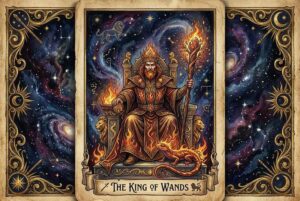
Now step back and view all five cards as a unified narrative. The three center cards form your authentic self — do they tell a coherent story? If your Motivation is The Chariot (determined forward movement), your Ideal Outcome is the Four of Swords (rest and recovery), and your Values are represented by the King of Pentacles (stability and material security), you see someone driven to achieve who secretly longs for peace and values security above all.
Next, compare each outcome card to your central three. Which option honors your motivation? Which delivers something closer to your ideal outcome? Which aligns with your stated values? Sometimes one path wins on all counts — an easy decision. More often, each option serves different aspects of yourself, and you must prioritize what matters most right now in your journey.
Notice the elemental balance too. If your center cards are all Cups (emotion) and Option 1 is the King of Swords (logic and detachment), that path might help you develop mental clarity you lack. But if you’re already drowning in emotional intensity, you might need that grounding. Pay attention to what energy you’re being invited to develop versus what you’re being asked to sacrifice.
Sample Reading Example: The Career Crossroads
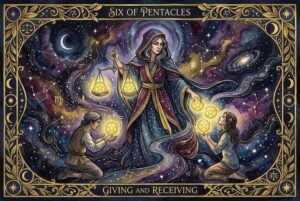
Sarah asks: “Should I accept the high-paying corporate job (Option 1) or pursue my passion for teaching yoga (Option 2)?” She draws: The Star (Motivation), Six of Pentacles (Ideal Outcome), Queen of Cups (Values), Ten of Pentacles (Option 1), and Eight of Cups (Option 2).
The reading reveals Sarah is motivated by hope and healing — she wants to help others feel whole. Her ideal outcome involves giving and receiving in balance, sharing resources generously. She values emotional intelligence and nurturing. The Ten of Pentacles shows Option 1 leads to material abundance and family security. The Eight of Cups suggests Option 2 means walking away from material security to seek deeper meaning.
The tension is clear: her motivation and values align with teaching yoga, but Option 1 offers the financial stability that speaks to her ideal of generosity. The reading doesn’t decide for Sarah — it shows her the real question isn’t about jobs, but about whether she can find a third path that honors both her spiritual calling and her desire to provide. Maybe she keeps the corporate job while building her teaching practice. Maybe she negotiates teaching yoga at corporations. The cards opened new possibilities by revealing her true priorities.
Common Mistakes to Avoid
- Asking the same question repeatedly until you get the “right” answer: If the cards give you guidance you don’t like, sitting with that discomfort is more valuable than reshuffling. Your resistance itself is information.
- Treating outcome cards as absolutes: These show likely results based on current energy, not unchangeable fate. Your actions, attitude, and subsequent choices shape how these energies manifest.
- Ignoring cards that make you uncomfortable: The cards that trigger the strongest reaction — positive or negative — carry the most important messages. Lean into that discomfort.
- Forgetting that both options might be wrong: Sometimes the spread reveals that neither path serves you. The universe might be saying “neither — there’s a third option you haven’t considered.”
- Deciding based solely on which outcome card looks “better”: A challenging outcome card might be exactly what you need for growth. Comfort isn’t always the same as alignment.
Final Thoughts on Decision Making with Tarot
This five-card spread doesn’t rob you of your power by making decisions for you — it amplifies your power by connecting you with your deepest wisdom. The cards are a mirror reflecting what you already know but haven’t fully acknowledged. Trust yourself as you work with this spread. Notice which cards make your body relax and which create tension. Your intuition speaks through these physical responses as much as through intellectual interpretation.
Remember, too, that making a decision consciously — even if it later proves challenging — is better than drifting forward by default. The tarot card decision spread helps you step into your authority as the creator of your life. Use it with an open heart, trust what emerges, and know that you have everything you need within you to choose wisely.
Frequently Asked Questions
Can tarot cards actually tell me what decision to make?
Tarot doesn’t make decisions for you — it reveals the underlying energies, motivations, and likely outcomes so you can make an informed choice aligned with your authentic self. The cards show you what you’re not seeing clearly, but the final decision always remains yours.
What if both outcome cards look negative?
This often signals that you’re asking the wrong question or that both options miss the point. Step back and consider whether there’s a third path you haven’t explored, or whether the decision needs to be reframed entirely. Sometimes “negative” cards also indicate necessary challenges that lead to important growth.
Can I use this spread for more than two options?
Absolutely. Keep the three center cards the same, then add an outcome card for each additional option. With three choices, you’d have six cards total. Just be mindful that too many options can create confusion — sometimes narrowing your choices to the top two creates more clarity.
How long until the outcome cards manifest?
Timing in tarot is notoriously slippery and depends on multiple factors including your actions, external circumstances, and spiritual timing. The outcome cards show the probable destination if you continue on that path with your current energy and circumstances, but they don’t predict exactly when you’ll arrive there.