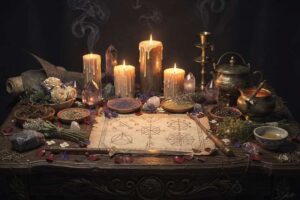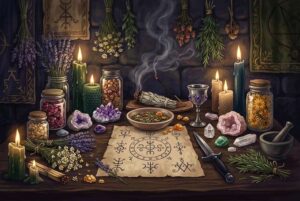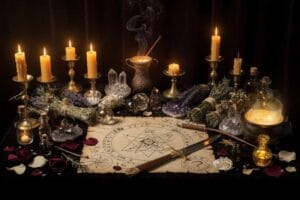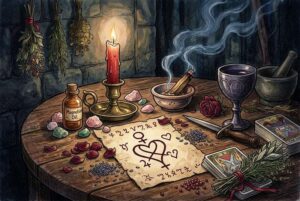
Setting up your first witch altar marks a beautiful milestone in your spiritual journey. Whether you’re drawn to Wicca, kitchen witchcraft, green magic, or an eclectic path, your altar becomes the physical heart of your practice—a sacred workspace where intention meets action. In our modern world, many people are rediscovering the power of creating intentional sacred spaces within their homes, places where they can ground themselves, cast spells, meditate, honor the seasons, and connect with divine energies. Your altar is both deeply personal and infinitely flexible, reflecting who you are right now while growing alongside your practice.
The beauty of altar work is that there’s no single “correct” way to do it. Your altar can sit on a corner of your dresser or fill an entire room. It can be permanent or portable, minimal or abundant, indoor or outdoor. What matters most is that it feels right to you—that it supports your spiritual work and helps you focus your energy and intention.
What Is a Witch Altar?
A witch altar is a dedicated surface—usually a table, shelf, or flat space—where you keep your ritual tools, symbols of your beliefs, and items needed for spellwork, meditation, divination, and ceremony. Think of it as your spiritual workbench, the place where you ground yourself before ritual work and where you physically express your craft.
At its essence, an altar is a focal point for sacred energy. It holds what you value: representations of deities or spirits you work with, elemental symbols, seasonal decorations, and tools like candles, crystals, and incense. When you stand before your altar, you’re stepping into sacred space—a threshold between the everyday world and the realm of magic.
Many spiritual traditions use altars, from Buddhist shrines to Catholic home altars to indigenous medicine bundles. In witchcraft, your altar is uniquely yours. It’s not about following rigid rules or impressing anyone. It’s about creating a space that helps you connect with your own power, the natural world, and whatever divine forces you honor.
One common misconception is that you absolutely must have an altar to practice witchcraft. This simply isn’t true. Some witches work entirely without one, preferring to cast circles outdoors or practice magic on the go. Your altar is a tool—useful and meaningful, but optional. Only create one if it genuinely enhances your practice.
Common Types of Witch Altars
Just as there are many paths within witchcraft, there are many approaches to altar creation. Understanding different styles can help you figure out what resonates with your personal practice.
Wiccan Altars often follow traditional layouts with specific tool placements based on elemental directions. They typically include representations of the Goddess and God, an athame (ritual knife), chalice, pentacle, wand, and candles. Many Wiccans orient their altars to face North, honoring the Earth element, though this isn’t mandatory.
Eclectic Altars blend traditions, tools, and symbols from various paths. If you draw inspiration from multiple sources—Celtic mythology, folk magic, modern energy work, crystal healing—your altar might reflect this beautiful mix. These altars are highly personal and change frequently based on your current focus.
Kitchen Witch Altars often live in or near the kitchen and emphasize hearth magic, cooking, herbs, and home protection. They might include your favorite cooking spices, a mortar and pestle, wooden spoons, seasonal fruits, and symbols of abundance and nourishment.
Green Witch Altars center on nature connection. Expect to see plants, flowers, stones from meaningful places, feathers, acorns, seasonal foliage, and tools for working with herbs and natural magic. These altars often change with the seasons and the local landscape.
Travel or Portable Altars fit into a small box, tin, or bag that you can take anywhere. Perfect for those who travel frequently, live in shared spaces, or prefer to practice outdoors. These compact altars contain miniature versions of your essential tools and can be set up on any flat surface—or even the ground.
Step-by-Step: Setting Up Your Witch Altar
Step 1: Choose Your Location
Your altar can exist anywhere you can create a sense of privacy and peace. Many witches start with their bedroom—using a dresser top, nightstand, or corner shelf. Bedrooms offer natural privacy and are already spaces where you rest and recharge, making them ideal for spiritual work.
Consider a spot where you won’t be frequently interrupted. If you live with family or roommates who might not understand your practice, a more private location protects both your altar and your peace of mind. Some witches successfully place altars in closets, on windowsills, or even create beautiful hidden altars inside decorative boxes or cabinets.
If you’re fortunate enough to have more space, you might dedicate a corner of your living room or create an altar room. Outdoor altars in gardens or on balconies connect you directly with natural energies, though weather and privacy become factors to consider.
Step 2: Select Your Altar Surface
Any flat, stable surface works as an altar base. You don’t need anything fancy or expensive. A small side table, wooden crate, sturdy cardboard box covered with fabric, floating shelf, or even a designated spot on your dresser all serve perfectly well.
The size depends entirely on your space and needs. A beginner altar might be just 12 inches square—enough room for a candle, incense holder, and a few meaningful objects. As your practice grows, you might expand to a larger table that can hold more tools and accommodate elaborate ritual setups.
If you’re creating a portable altar, choose a container that fits your lifestyle: a decorated wooden box, vintage suitcase, large tin, or even a cloth bundle that rolls up. The container itself becomes part of your sacred tools.
Step 3: Cleanse Your Space
Before setting up your altar, energetically cleanse both the physical surface and the surrounding area. This clears away stagnant or unwanted energies and creates a fresh foundation for your sacred space.
Common cleansing methods include burning sage, rosemary, or other cleansing herbs (ensure good ventilation); sprinkling salt water; using sound from bells, singing bowls, or clapping; or visualizing white or golden light washing through the space. Choose whatever method feels right and is safe for your living situation. If you can’t burn anything, sound cleansing or visualization work beautifully.
As you cleanse, set a clear intention: “I clear this space of all energies that don’t serve my highest good. This area is now sacred ground dedicated to my spiritual practice.” Speak aloud or silently, following your intuition.
Step 4: Consider Directional Orientation
Many witches face their altars toward specific directions based on elemental associations or personal preference. North connects with Earth and grounding; East with Air and new beginnings; South with Fire and passion; West with Water and intuition.
The traditional Wiccan approach favors North-facing altars, but this is guidance, not law. You might orient your altar toward sunrise (East) to welcome new energy each day, or toward a window with a beautiful view that inspires you. Some witches align with their personal element or astrological sun sign direction.
Use your phone’s compass app to find directions if you want precision, but don’t stress over exact alignment. The most important factor is that the orientation feels right to you. Trust your intuition above all prescribed rules.
Step 5: Add a Foundation or Altar Cloth
While optional, an altar cloth helps define your sacred space and protects your surface. It also adds beauty and can reflect seasonal changes or specific intentions. Choose fabric in colors that resonate with your current work: white for purity and general use, green for abundance and nature magic, purple for spiritual connection, black for protection and shadow work.
Your altar cloth doesn’t need to be expensive or special-ordered. A pretty scarf, piece of velvet, vintage handkerchief, or fabric remnant all work wonderfully. Some witches use different cloths for different seasons or moon phases, while others keep the same cloth year-round.
If you practice a particularly minimalist path or simply prefer the look of natural wood or stone, leaving your surface bare is completely valid. There are no mandatory elements in altar creation.
Step 6: Place Your Essential Tools
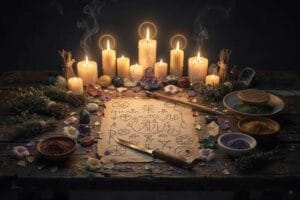
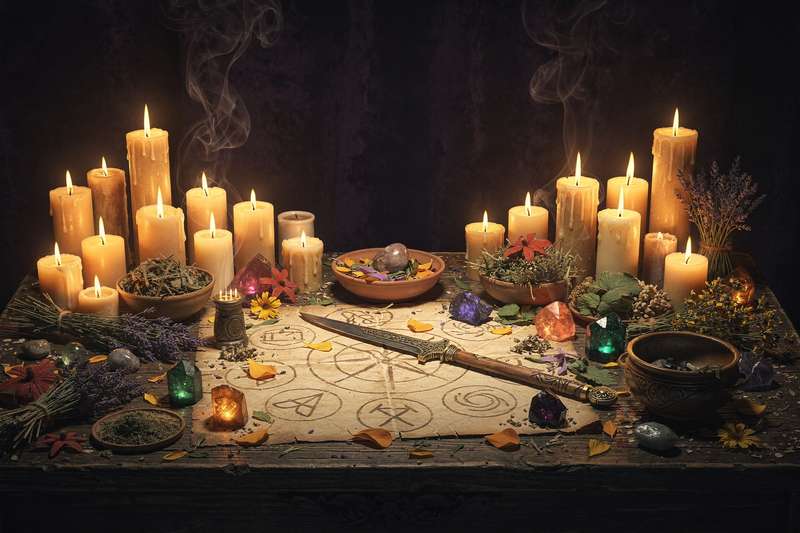
Start with the basics—you can always add more later. At minimum, many witches include a candle (for fire and focus), incense or herbs (for air and purification), a small dish of water, and a dish of salt or stone (for earth). These four items represent the classical elements.
Add any other tools you currently own and use: athame or ritual knife, wand, chalice or cup, pentacle disk, bell, crystals like clear quartz or black tourmaline, tarot or oracle cards, offering bowl, and cauldron or fire-safe dish for burning petitions.
Arrange tools in a way that makes practical sense. Items you reach for frequently should be easily accessible. Some traditions place specific tools in specific directions (athame in the East for Air, wand in the South for Fire, chalice in the West for Water, pentacle in the North for Earth), but many modern witches arrange by intuition and convenience.
Remember: household items work perfectly as you’re starting out. A kitchen knife can serve as an athame, a wine glass as a chalice, a smooth stone as a pentacle, and a chopstick as a wand. The tool’s spiritual purpose matters far more than its price tag.
Step 7: Add Deity Representations and Sacred Objects
If you work with specific deities, goddesses, gods, ancestors, or spirit guides, include representations of them. This might be statues, printed images, symbols (like a crescent moon for lunar deities), natural objects that remind you of them, or simply candles dedicated to their honor.
Place these meaningful items where you can see them easily when you stand before your altar. Many witches position deity representations toward the back center of the altar, creating a focal point. Others prefer left and right placement for Goddess and God respectively.
Your altar might also hold personal sacred objects: inherited jewelry, stones from meaningful places, feathers found on important walks, shells from beloved beaches, photographs of ancestors, or handwritten prayers and intentions. These objects carry your personal history and energy, making your altar uniquely yours.
Step 8: Incorporate Seasonal and Lunar Elements
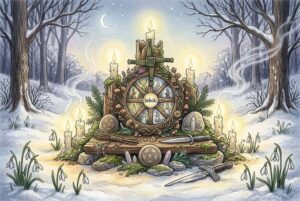
Your altar is a living space that should change throughout the year. Many witches decorate seasonally, adding autumn leaves and pumpkins for Samhain, evergreen boughs and holly for Yule, fresh flowers for Beltane, and dried herbs at Lammas.
Moon phase awareness can also influence your altar. During the new moon, you might add symbols of new beginnings and set intentions. At the full moon, place items representing abundance, completion, and release. Some witches keep a small calendar on their altar or mark moon phases on their altar cloth.
Seasonal shifts connect you with natural cycles and keep your practice fresh and engaged. Don’t feel pressured to completely redecorate for every sabbat—even small touches like changing your candle color or adding a single seasonal flower maintains this connection.
Step 9: Consecrate Your Altar
Once everything is arranged, formally dedicate your altar space. This ceremony doesn’t need to be elaborate—a simple, heartfelt blessing works beautifully. Light a candle, take a few deep breaths, and speak your intention.
You might say something like: “I consecrate this sacred space as my altar. May it serve as a bridge between worlds, a place of power and peace, and a true reflection of my spiritual path. I dedicate this space to [my practice/the Goddess and God/my highest good/whatever resonates with you]. So it is.”
Some witches consecrate with the four elements: passing each altar item through incense smoke (air), candle flame (fire, carefully), drops of water, and a pinch of salt or touch of a stone (earth). Others simply sit quietly in meditation, infusing the space with their intention and energy.
Essential Tools and Supplies for Your Altar
As a beginner, start simple. You truly need very little to create a powerful altar. Candles are perhaps the most universal tool—white candles work for nearly everything, while colored candles can match specific intentions (green for prosperity, pink for love, blue for healing, red for passion and courage).
Incense or dried herbs help shift your consciousness and mark sacred time. Sage, rosemary, lavender, and frankincense are excellent starter scents. If you’re sensitive to smoke, essential oils diffused or dabbed on cotton work wonderfully. Salt—preferably sea salt or Himalayan—represents earth and is used for cleansing and protection.
Crystals naturally find their way onto most altars. Clear quartz amplifies intention, amethyst enhances intuition, rose quartz opens the heart chakra, black tourmaline provides protection, and citrine attracts abundance. Start with one or two stones that genuinely call to you rather than collecting dozens immediately.
A journal or Book of Shadows helps track your magical work, record dreams, note correspondences, and document rituals. This becomes an increasingly valuable tool as your practice deepens. Even a simple spiral notebook serves this purpose perfectly—the content matters more than the cover.
Beyond these basics, add tools as you discover what type of magic you’re drawn to. Tarot readers keep their cards on their altars. Herbalists include a mortar and pestle. Those working with ancestors might add photographs and heirloom objects. Let your altar grow organically with your practice.
Ethics and Best Practices
Approaching altar work with mindful ethics keeps your practice grounded and respectful. The fundamental principle of “harm none” guides most witches. This extends to your altar setup—use ethically sourced materials when possible, avoid endangered plants or animal parts obtained through cruel means, and consider the environmental impact of your choices.
When incorporating elements from specific cultural or indigenous traditions, research thoroughly and practice with deep respect. Some sacred items—like white sage, palo santo, or ceremonial objects from closed practices—may not be appropriate for your altar if you’re not part of those traditions. Alternatives exist that honor your own heritage or are open to all practitioners.
Your intention is everything. An altar set up with clear, positive intention holds far more power than one created just for appearances. Before each working, center yourself and clarify your purpose. Approach your altar with reverence, not because someone told you to, but because it represents your genuine spiritual commitment.
Consent matters in magical work. If you’re doing spellwork that involves other people, carefully consider ethics around free will. Your altar is your personal space, but the magic you work there ripples outward into the world. Practice with awareness and responsibility.
Regular maintenance keeps altar energy fresh. Dust your tools, replace wilted flowers, refresh water offerings, and periodically re-cleanse the space. This practical care is itself a spiritual practice, showing ongoing dedication to your craft.
Common Beginner Mistakes to Avoid
- Trying to copy someone else’s altar exactly: Instagram and Pinterest are wonderful for inspiration, but your altar should reflect your unique practice and personality. What works beautifully for another witch might feel completely wrong for you. Trust your own aesthetic and spiritual instincts.
- Buying everything at once: Resist the urge to purchase every witchy item you see. Accumulate tools slowly as you discover what you actually use. Many beginners spend significant money on items that sit untouched. Let your collection grow organically with your practice.
- Neglecting fire safety: Never leave candles unattended. Keep them away from curtains, papers, and anything flammable. Use stable holders and heat-proof surfaces. Place candles where they won’t be knocked over by pets or children. This practical awareness is essential.
- Placing altars in high-traffic areas: While a kitchen altar might intentionally live where family gathers, most altars benefit from quieter locations. High-traffic spaces make meditation difficult and increase the chance of your sacred items being disturbed or damaged.
- Feeling guilty about imperfection: Your altar doesn’t need to be Pinterest-perfect. A bit of dust, slightly crooked candles, or simple everyday objects are completely fine. The gods care about your intention and heart, not whether everything matches aesthetically.
- Forgetting to actually use your altar: The most beautifully arranged altar means nothing if you never engage with it. Regular use—even just lighting a candle and sitting quietly for five minutes—keeps the energy alive and your connection strong.
Building Your Practice Over Time
Your first altar is just a beginning. As months and years pass, you’ll naturally refine what works for you. You might start with a small bedroom altar and eventually create a dedicated ritual room. Or you might discover that a minimalist portable altar serves you best even after a decade of practice.
Pay attention to what draws you back to your altar and what feels like obligation. If certain tools never get used, remove them. If you constantly wish for specific items, add them. Your altar should evolve with your spiritual growth, reflecting who you’re becoming.
Many witches maintain multiple altars for different purposes—a main working altar, a seasonal altar, an ancestor altar, a meditation altar. Others prefer one central focus. There’s no hierarchy of “serious” practitioners based on altar complexity. What matters is that your sacred space genuinely serves your spiritual life.
Keep learning, but trust yourself first. Read books, join communities, watch videos, but always filter information through your own experience. Your intuition is your best teacher. If something feels right, explore it. If it feels off, leave it aside. Your witch altar is ultimately accountable to no one but you.
Final Thoughts
Setting up your witch altar is an act of claiming spiritual space in your life. It’s a declaration that your practice matters, that you’re creating room for magic, reflection, and connection with forces larger than yourself. Whether your altar is a simple candle on a windowsill or an elaborate table filled with tools, it becomes sacred through your attention and intention.
Start where you are with what you have. Your first altar doesn’t need to be perfect—it needs to be yours. As you stand before it, light candles, cast circles, work spells, and meditate, you’re joining countless generations of witches who have created sacred space in their own ways. Welcome to this beautiful practice.
Frequently Asked Questions
Do I need to spend a lot of money on altar supplies?
Not at all. The most powerful altars often contain simple, meaningful items rather than expensive purchases. Use household objects, natural materials you gather yourself, and handmade tools. A kitchen bowl serves as a chalice, a smooth stone as a pentacle, and found feathers or leaves as natural decorations. The divine cares about your intention, not your budget.
Can I set up an altar if I live with family who don’t support my practice?
Yes, many witches practice discreetly. Create a small altar that looks like regular décor—a pretty arrangement of candles, stones, and plants doesn’t necessarily announce itself as magical. Use a portable altar in a box you can store privately. Some witches even maintain “hidden” altars inside decorative tins or jewelry boxes. Your safety and peace come first.
How often should I cleanse or update my altar?
Cleanse your altar whenever it feels energetically heavy or cluttered—this might be weekly, monthly, or seasonally. Many witches do a thorough cleansing at each sabbat or during new and full moons. Update decorations as seasons change or when you begin new magical work. There’s no rigid schedule; let your intuition guide you.
Which direction should my altar face?
While North is traditional in many Wiccan practices (honoring Earth), your altar can face any direction that resonates with you. Consider East for new beginnings, South for passion and energy, West for intuition and emotional work, or simply orient toward a window you love. The direction that feels right is the right direction for your practice.