Yule witchcraft centers on the winter solstice — the longest night of the year — when darkness reaches its peak and the sun begins its slow return. This solstice moment, falling between December 20-22 each year in the Northern Hemisphere, has been honored for millennia as a turning point of death and rebirth. For modern witches, Yule offers a powerful window for magic focused on renewal, hope, and the promise of brighter days ahead.
Whether you follow Wicca, practice as a solitary eclectic witch, or simply feel drawn to seasonal rhythms, Yule invites you to work with the natural energies of winter’s depths. You’ll find fire magic particularly potent now, along with reflection rituals, candle spells, and celebrations that honor both the darkness and the light it cradles.
This guide will walk you through Yule witchcraft from start to finish — the meaning behind the sabbat, practical rituals you can perform tonight, altar setup, spellwork timing, and ethical considerations for honoring this sacred season with intention and respect.
What Is Yule in Witchcraft?
Yule marks the astronomical winter solstice, the moment when the Northern Hemisphere tilts farthest from the sun. Ancient cultures recognized this as a critical threshold — a night when the sun appears to stand still before beginning its journey back toward warmth and abundance. Many pre-Christian societies lit bonfires to encourage the sun’s return, believing their rituals helped tip the balance from darkness back toward light.
In modern witchcraft, Yule is one of the eight sabbats on the Wheel of the Year. It represents the symbolic rebirth of the Sun God, the triumph of light over shadow, and the promise that even in our darkest moments, transformation is already underway. Unlike some sabbats that celebrate harvest or abundance, Yule asks you to sit with the quiet darkness, honor what has died or ended, and then deliberately kindle new light.
Yule is not the same as Christmas, though many Christmas traditions — evergreen trees, gift-giving, feasting — were adapted from older pagan solstice customs. As a witch, you’re free to blend, separate, or honor both traditions as feels authentic to you.
Common Paths and Styles of Yule Practice
Wiccan Yule: Traditional Wicca celebrates Yule with a ritual acknowledging the Goddess giving birth to the Sun God. Covens may perform group ceremonies with candle lighting, seasonal foods, and symbolic reenactments of the solar rebirth. Solitary Wiccans often create elaborate altars and perform candlelit rites at dawn or midnight.
Norse Heathen Yule: Drawing from Scandinavian traditions, Norse pagans honor the Wild Hunt, Odin, and the spirits of ancestors during Yule. Practices include blót offerings, toasting with mead, burning a Yule log, and honoring the twelve nights between the solstice and the new year as sacred time outside ordinary flow.
Kitchen Witch Yule: Kitchen witches focus on food magic — baking solstice bread, brewing mulled cider with intention, creating feasts as acts of devotion. Every stirred pot becomes a cauldron of transformation; every shared meal, a ritual of gratitude and abundance.
Eclectic Solitary Yule: Many witches create personalized Yule practices by blending elements from multiple traditions. You might light candles for the sun’s return, incorporate crystals and herbs that resonate with you, and design your own solstice rituals based on what the season means in your life right now.
Step-by-Step Yule Witchcraft Ritual
1. Prepare Your Sacred Space
Begin by physically and energetically cleansing the area where you’ll work. Sweep or vacuum thoroughly, then use smoke from cedar, pine, or rosemary to clear stagnant energy. Open a window briefly to let old energy out, even if it’s cold. The physical act of cleaning mirrors the spiritual work of clearing away the old year.
Set your intention aloud: “I prepare this space to honor the solstice and welcome the returning light.” If you work with the elements, call them in your own words. Yule particularly honors fire (the returning sun) and earth (winter’s stillness), so you might place a candle in the south and a bowl of salt or soil in the north.
2. Build Your Yule Altar
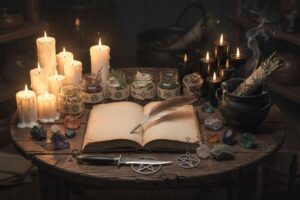
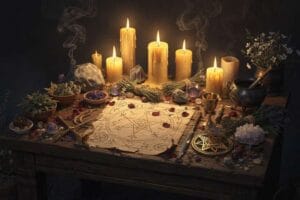
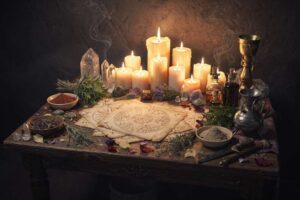
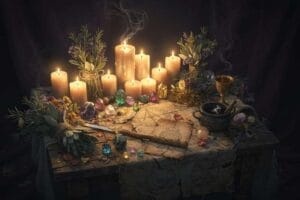
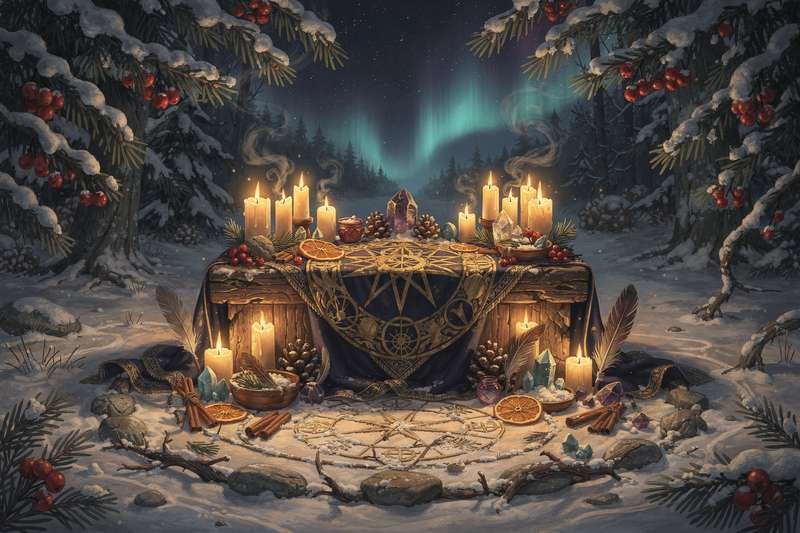
Your altar should reflect both darkness and light. Use a dark cloth (deep green, black, or midnight blue) as your base. Place a central candle — gold, yellow, or white — to represent the newborn sun. Surround it with symbols of winter: evergreen boughs, pinecones, holly, dried orange slices, cinnamon sticks.
Add crystals that support solstice energy: clear quartz for clarity and light, bloodstone for vitality, garnet for passion and renewal, carnelian for the sun’s fire. Include representations of the God and Goddess if you work with deity. A small Yule log (even a decorated branch) makes a powerful centerpiece.
Keep your altar up through the twelve days of Yule (solstice through January 1) if possible, refreshing candles and offerings as needed.
3. Create and Burn a Yule Log Ritual
The Yule log represents the light persisting through darkness. Find a small log or thick branch — oak, ash, birch, or pine work well. Drill three holes along the top to hold candles (gold, red, and green traditionally). Decorate the log with evergreen sprigs, ribbon, dried herbs, and small charms representing what you wish to grow in the coming year.
On the solstice evening, place your log on the altar or hearth. Light the candles one by one, speaking your intentions: “I light the fire of hope. I light the fire of transformation. I light the fire of the returning sun.” Let the candles burn down completely if safe, or for at least an hour while you meditate on what you’re calling in.
Traditionally, a piece of the log is saved and used to light next year’s Yule fire, creating continuity between cycles. If you burn the whole log, save ashes for protection magic throughout the year.
4. Perform a Solstice Sunrise Vigil
The moment of solstice itself (check exact time for your location) and the sunrise following the longest night are potent for magic. If possible, stay awake through the longest night or wake before dawn to greet the sun’s return. This vigil honors the threshold between darkness and light.
Stand or sit facing east as dawn approaches. Bring a journal, a candle, hot tea in a thermos. Reflect on what the past year’s darkness taught you — what needed to end, what you released, where you had to trust without seeing. As the first light appears, speak gratitude: “Welcome back, light. I honor your return. As you grow stronger, so do I.”
Perform a simple candle spell: light a taper from the sunrise (symbolically) and let it burn through breakfast, carrying that new solar energy into your home. This is excellent timing for any magic related to new beginnings, hope, vitality, or illumination.
5. Work with Darkness Before Celebrating Light
Before you celebrate the light’s return, honor the darkness that made it necessary. On solstice eve, sit in complete darkness for at least twenty minutes. No candles, no screens, no artificial light. Let your eyes adjust. Breathe.
Ask yourself: What am I ready to leave in the dark? What ends now? What parts of my life have run their course? Write these in a journal by candlelight afterward, or speak them aloud into the dark. You might burn the paper in your cauldron as an act of release, or bury it in the earth to compost into something new.
This darkness work is essential. The light only matters because you’ve known its absence. Skipping straight to celebration misses half the magic of the solstice.
6. Prepare a Yule Feast as Kitchen Magic
Food is spell work. Plan a solstice meal featuring seasonal ingredients: root vegetables (carrots, potatoes, turnips) that grew in the dark earth; warming spices (cinnamon, nutmeg, ginger, cloves); winter fruits (apples, pomegranates, citrus); hearty grains and breads; mulled wine or spiced cider.
As you cook, stir intention into every pot. Speak blessings over the food: “I infuse this meal with warmth, abundance, and the joy of the returning light.” If eating alone, set a place for the spirits of winter or your ancestors. If sharing with others, have each person name something they’re grateful for and something they hope to kindle in the new solar year.
Save a small portion of the feast as an offering. Leave it outside for winter birds and animals, or at the base of a tree, thanking the earth for sustaining you through the dark season.
7. Cast Spells for Renewal and Manifestation
Yule is prime time for magic focused on new beginnings, goal-setting, hope, illumination, and personal transformation. The returning light supports anything you want to grow or strengthen over the next six months (until summer solstice).
Try this simple Yule manifestation spell: Write your intention for the coming year on a bay leaf. Light a gold candle. Hold the bay leaf over the flame until it catches (carefully — have water nearby), then drop it in a fireproof dish to burn completely. As smoke rises, visualize your intention taking root and growing with the strengthening sun. Scatter the ashes outside or keep them in a charm bag.
Solar magic, fire scrying, and candle work are all amplified now. Any spell using gold or yellow candles, sun symbols, citrus, cinnamon, or frankincense will carry extra power during the Yule season.
Essential Tools and Supplies for Yule Witchcraft
You don’t need expensive supplies to practice meaningful Yule witchcraft. Start with what resonates and build slowly. Essential items include: candles in gold, red, green, and white (for solar energy, vitality, evergreen life, and purity); seasonal herbs like pine, cedar, cinnamon, frankincense, rosemary, and bay; crystals such as clear quartz, garnet, bloodstone, and citrine.
Natural decorations matter more than manufactured ones. Collect pinecones, evergreen branches, holly (if it grows in your area), birch twigs, acorns, and dried orange slices. These connect your practice directly to the season and cost nothing.
For altar setup, you’ll want a cloth in seasonal colors, a central candle holder, small dishes for offerings, a fire-safe container for burning herbs or paper, and representation of deity if you work with Gods and Goddesses. A journal dedicated to sabbat reflections helps you track your growth year over year.
If you’re creating a Yule log, gather a small log or branch, candles that fit in drilled holes, natural decorations, and fireproof base if burning indoors.
Ethics and Best Practices for Yule Magic
Yule witchcraft should honor both the season and your own integrity. Work from a foundation of harm to none — including yourself. Don’t force yourself into elaborate rituals if you’re exhausted; a single candle lit with clear intention holds more power than an empty performance.
Respect the origin of practices you adopt. Norse Yule traditions, Celtic solstice customs, and Wiccan sabbats have specific cultural contexts. Learn the history, understand the meaning, and adapt with respect rather than appropriation. If a practice isn’t from your own heritage and wasn’t shared with you directly, approach it as a student, not an owner.
Be mindful of consent in group settings. Not everyone celebrates Yule, and not all witches work with the same deities or traditions. If sharing space with others, discuss boundaries beforehand. Never pressure someone into ritual participation or assume your path is the only valid one.
Consider environmental ethics too. Use sustainable evergreens (fallen branches rather than cutting living trees), choose beeswax or soy candles over paraffin, and leave offerings that won’t harm wildlife. Your magic should support the earth, not burden it.
Common Beginner Mistakes in Yule Practice
- Rushing past the darkness: Many beginners want to jump straight to celebrating the light without honoring the dark half of the cycle. The solstice teaches that both are necessary. Spend real time in darkness and reflection before lighting your ritual fires.
- Copying rituals without understanding: Reading a Yule ritual script and performing it word-for-word without comprehending the symbolism creates empty magic. Understand why you’re lighting a Yule log or greeting the sunrise before doing it. Adapt rituals to reflect your genuine beliefs.
- Overcomplicating first attempts: Your first Yule doesn’t need a twelve-hour ritual, a hand-carved altar, and ceremonial robes. Start simple: light a candle at sunset, journal about the past year, watch the sunrise. Build complexity as you gain experience.
- Ignoring the twelve days of Yule: The solstice isn’t just one night. The twelve days between the solstice and the new year are traditionally sacred time. Consider daily small rituals — lighting a candle, leaving offerings, pulling a tarot card — to honor the full season.
- Forgetting follow-through: Yule magic sets intentions for the growing light ahead. Don’t cast spells for renewal and then ignore them. Create an action plan to support your magical work with mundane effort throughout the coming months.
- Cultural appropriation: Borrowing closed practices (like specific Indigenous winter ceremonies) or misusing sacred symbols from cultures not your own damages your magic and disrespects living traditions. Research thoroughly and stay in your lane.
How to Build Your Yule Practice Over Time
Your first Yule might be a single candle and a quiet moment of reflection. That’s perfect. Next year, perhaps you add an altar. The year after, you invite a friend to share a solstice meal. Let your practice grow organically, adding layers as you learn what truly resonates.
Keep a Yule journal to track what rituals felt meaningful versus what felt performative. Note how your intentions from one year manifested by the next solstice. Pay attention to which correspondences (herbs, crystals, deities) you naturally reach for versus which you use because a book said to.
Study the folklore and mythology of your own ancestors’ winter traditions. This creates a rooted practice rather than a borrowed one. Over time, you’ll develop a personal Yule tradition that reflects your values, heritage, and magical style.
Consider keeping a piece of each year’s Yule log or ashes to create continuity. Build a collection of handmade ornaments or altar items, each holding memories of past solstices. Your practice should deepen with time, becoming richer and more layered with personal meaning.
Final Thoughts
Yule witchcraft invites you to work with nature’s most dramatic threshold — the moment when darkness peaks and light is reborn. This isn’t about denying winter’s hardship or forcing false cheer. It’s about acknowledging that endings make space for beginnings, that death and birth are woven together, and that your own magic can help tip the balance toward hope.
Start where you are, with what you have. Light a candle. Speak a prayer. Watch the sunrise. The sun will return whether you perform elaborate rituals or not — but your conscious participation in that return changes you. Welcome the light back, both in the sky and in yourself.
Frequently Asked Questions About Yule Witchcraft
What is the difference between Yule and Christmas?
Yule is a pagan sabbat celebrating the winter solstice as a natural astronomical event, focused on the rebirth of the sun and earth’s cycles. Christmas is a Christian holiday commemorating the birth of Jesus Christ. Many Christmas customs (evergreen trees, gift-giving, feasting) were adapted from older pagan Yule traditions when Christianity spread through Europe.
When exactly does Yule occur each year?
Yule falls on the winter solstice, which shifts slightly each year between December 20-22 in the Northern Hemisphere. The exact date and time depend on when the Earth’s axial tilt is farthest from the sun. Check an astronomical calendar or ephemeris for the precise moment in your time zone.
Do I need to be Wiccan to celebrate Yule?
No. While Wicca includes Yule as one of eight sabbats, witches of all paths celebrate the winter solstice. Eclectic witches, Norse heathens, Celtic reconstructionists, kitchen witches, and solitary practitioners all honor this season in their own ways. Adapt traditions to fit your personal practice and beliefs.
What kind of magic is most powerful during Yule?
Yule amplifies magic related to new beginnings, hope, renewal, manifestation, illumination, and personal transformation. Fire magic, solar spells, candle work, and intentions focused on what you want to grow over the next six months are particularly potent. The returning light supports any goal that requires sustained energy and gradual strengthening.