As a lunar witch, you align your spiritual practice with the moon’s natural rhythms to amplify your intentions and deepen your connection to the cycles of nature. Moon magic isn’t about following rigid rules—it’s about observing the lunar phases, noticing how they affect your energy, and learning to work with that flow instead of against it. Whether you’re drawn to manifestation, shadow work, or simply finding more balance in your life, the moon offers a powerful framework that’s accessible to witches of all paths.
The moon has guided spiritual seekers for millennia, but you don’t need years of training to start. If you can look up at the night sky and feel something stir within you, you’re already halfway there. This guide will show you how to recognize the eight primary moon phases, understand what kind of magic suits each one, and build a sustainable lunar practice that grows with you over time.
You’ll learn practical steps you can take tonight—no expensive tools required, no initiation needed. Just you, the moon, and a willingness to pay attention.
What Is Lunar Witchcraft?
Lunar witchcraft is a practice centered on working with the moon’s energy as it waxes and wanes throughout its roughly 29.5-day cycle. Instead of treating magic as something you do randomly whenever inspiration strikes, you time your spells and rituals to match the moon’s current phase. This creates a natural rhythm that supports both inner growth and outward manifestation.
A common misconception is that lunar witches only practice during full moons. In reality, every phase offers unique opportunities. The new moon supports new beginnings and intention-setting. The waxing phases fuel growth and momentum. The full moon brings things to fruition and illuminates what’s been hidden. The waning phases support release, rest, and reflection.
Another myth: you must be Wiccan or follow a specific tradition to practice moon magic. Not true. Lunar witchcraft is adaptable to nearly any path—eclectic, hedge, kitchen, solitary, or ceremonial. It’s a framework, not a dogma, and you shape it to fit your beliefs and lifestyle.
Common Types of Lunar Witches
Lunar witchcraft attracts practitioners from many backgrounds, and your approach will be as unique as you are. Here are a few common styles you might resonate with:
Manifestation-focused lunar witches use the waxing moon phases to call in desires—love, abundance, career opportunities—and the waning phases to clear obstacles and limiting beliefs. Their practice revolves around goal-setting, visualization, and energetic alignment with what they want to create.
Shadow work lunar witches are drawn to the darker phases of the moon—the waning crescent and dark moon—as times for introspection, healing old wounds, and confronting the parts of themselves they’ve been avoiding. They see the moon’s cycle as a mirror for inner transformation.
Divination-focused lunar witches use moon phases to time their tarot readings, scrying sessions, and dreamwork. The full moon, in particular, is seen as a time of heightened intuition and clarity, while the dark moon opens pathways to the subconscious.
Devotional lunar witches work with moon deities—Selene, Hecate, Diana, Artemis, or others—and see their practice as a form of spiritual relationship. Their rituals often include prayers, offerings, and meditations dedicated to these goddesses.
How to Practice Moon Magic: Step-by-Step
Step 1: Learn the Eight Primary Moon Phases
Before you can work with the moon, you need to recognize where she is in her cycle. The lunar month includes eight distinct phases, each lasting approximately 3-4 days (though exact timing varies slightly from cycle to cycle depending on the moon’s orbit):
- New Moon: The moon is dark or barely visible. Energy: new beginnings, planting seeds of intention.
- Waxing Crescent: A thin sliver of light appears. Energy: momentum, taking first steps.
- First Quarter: Half the moon is illuminated. Energy: challenges, course correction, perseverance.
- Waxing Gibbous: More than half full, building toward fullness. Energy: refinement, final preparations.
- Full Moon: The moon is completely illuminated. Energy: culmination, celebration, illumination of hidden truths.
- Waning Gibbous: Just past full, light begins to fade. Energy: gratitude, reflection, sharing wisdom.
- Last Quarter: Half the moon remains lit. Energy: release, letting go, honest self-assessment.
- Waning Crescent: A thin sliver remains before darkness. Energy: rest, surrender, shadow work.
You can track these phases using a lunar calendar app, a physical moon phase calendar, or simply by observing the night sky. Make it a habit to check the moon’s phase at least once a week so you develop an intuitive sense of where you are in the cycle.
Step 2: Set Clear Intentions During the New Moon
The new moon is your monthly reset button. This is when you choose what you want to invite into your life over the next lunar cycle. Sit quietly with a journal and ask yourself: What do I want to create, attract, or experience?
Be specific with your intentions. Instead of “I want to be happier,” write “I intend to notice three moments of joy each day and record them in my journal.” Instead of “I want financial abundance,” try “I intend to save $200 this month and explore one new income stream.”
Frame your intentions in positive, present-focused language. Avoid what you don’t want—focus on what you do want. And align your intentions with your core values, not just surface desires. The new moon rewards authenticity.
Once your intention is clear, you can formalize it through a simple ritual: light a candle, speak your intention aloud three times, and visualize it as already complete. Feel the emotion of having what you desire. Then release attachment to the outcome and trust the cycle to do its work.
Step 3: Build Momentum During the Waxing Moon
As the moon grows from new to full, your job is to take aligned action toward your intentions. The waxing crescent is perfect for small, daily steps—sending that email, researching your goal, clearing physical space for what’s coming. Don’t wait for perfect conditions; just begin.
During the first quarter moon, you may hit resistance or doubt. This is normal. The first quarter asks you to push through obstacles and refine your approach. If something isn’t working, adjust. Cast spells for courage, clarity, or perseverance. Use crystals like carnelian or tiger’s eye to support your determination.
The waxing gibbous phase is your final sprint before the full moon. This is when details matter. Fine-tune your plans, double-check your work, and stay focused. The energy is building rapidly now—ride the wave instead of fighting it.
Step 4: Celebrate and Manifest on the Full Moon
The full moon is the peak of lunar energy, and it’s your time to celebrate what you’ve called in, acknowledge your progress, and perform manifestation rituals that call in abundance, love, or success. This is also when hidden truths come to light—things you’ve been ignoring or avoiding may surface now. Welcome them.
A simple full moon ritual: Go outside (or sit by a window where you can see the moon). Light a white or silver candle. Write down everything you’re grateful for from the past two weeks. Then write down what you want to fully manifest. Speak these statements aloud to the moon, thanking her for her support. You can also charge crystals, tarot decks, or moon water under the full moon’s light.
If emotions run high during the full moon, honor them. Cry if you need to. Dance. Scream into a pillow. The full moon doesn’t just illuminate external goals—it brings internal shadows into view so you can heal them.
Step 5: Reflect and Release During the Waning Moon
After the full moon, the light begins to fade, and the energy shifts from outward action to inward reflection. The waning gibbous phase invites you to look back over the past two weeks and ask: What worked? What didn’t? What do I need to let go of?
This isn’t about self-criticism—it’s about honest assessment. Journal about what patterns showed up, what beliefs were challenged, what habits served you and which ones didn’t. Gratitude is still important here; thank yourself for the effort you put in, regardless of the outcome.
During the last quarter moon, it’s time for deliberate release. Write down what you’re ready to let go of—limiting beliefs, toxic relationships, self-sabotaging behaviors—and burn the paper safely in a fireproof dish. As the smoke rises, visualize these patterns leaving your life for good.
The waning crescent is the quietest phase, best used for rest, shadow work, and deep inner listening. This is not a time to push or produce. Instead, meditate, take baths, sleep more, and let your subconscious speak to you through dreams and subtle insights.
Step 6: Track Your Cycle in a Moon Journal
One of the most powerful practices you can adopt as a lunar witch is keeping a moon journal. Each day (or as often as you can), record the current moon phase, how you’re feeling emotionally and physically, and any synchronicities or insights that arise.
Over time, you’ll notice patterns. Maybe you feel extra creative during waxing moons, or emotionally raw during full moons. Maybe certain intentions manifest more easily when set during specific astrological signs the moon is transiting. (The moon moves through all twelve zodiac signs roughly every 2-3 days, adding another layer of energetic nuance to your practice.)
Your journal becomes a personal grimoire, a record of what works for you. Moon magic isn’t one-size-fits-all, and your own experience is the best teacher.
Step 7: Honor the Dark Moon (Optional but Powerful)
Many lunar witches also recognize a ninth phase: the dark moon, which occurs in the day or two before the new moon when the sky is completely black. This is a liminal, potent time for deep shadow work, banishing harmful influences, and resting before the cycle begins again.
The dark moon isn’t something to fear—it’s a time to honor stillness, endings, and the fertile void from which all new growth emerges. You might choose not to perform active magic during this time, instead using it for meditation, dreamwork, or simply doing nothing at all.
Essential Tools and Supplies
You don’t need a lot of fancy gear to practice moon magic, but a few basics can help you feel more grounded and intentional. Here’s what many lunar witches keep on hand:
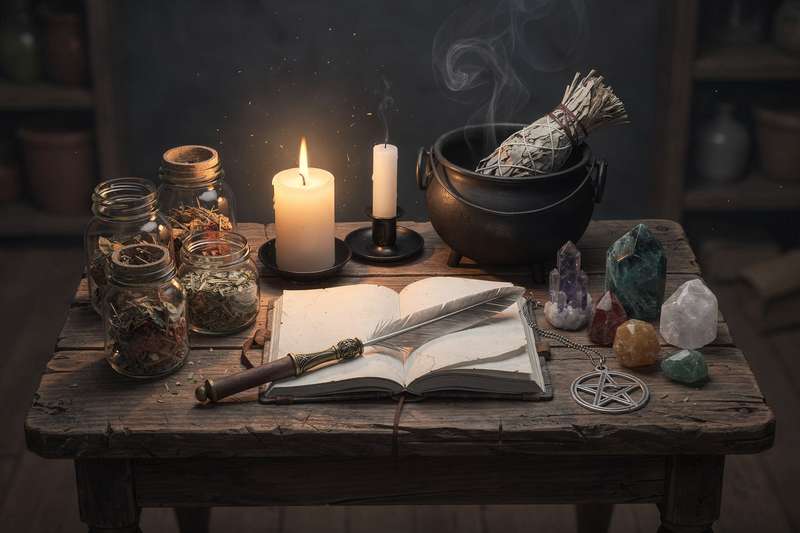
- A journal or grimoire for tracking moon phases, intentions, and reflections.
- Candles in white, silver, or colors that correspond to your intentions (green for abundance, pink for love, black for protection and release).
- Crystals like moonstone, selenite, labradorite, and clear quartz, which resonate strongly with lunar energy.
- A small altar or sacred space where you can place moon-related items, seasonal offerings, or photos of moon deities.
- A fireproof dish for burning intentions or release papers.
- A glass jar for making moon water (water charged under the full moon, used in spells and rituals).
Start simple. You can practice effective moon magic with just a candle, a journal, and your own focused intention. Add tools as you feel called, not because you think you “should” own them.
Ethics and Best Practices
Moon magic, like all witchcraft, works best when rooted in personal responsibility and respect. The principle of “harm none” is a helpful guideline: avoid casting spells that manipulate, control, or harm others. If your intention requires someone else to act against their will, rethink it.
Consent matters in magic. Don’t cast love spells on specific people, healing spells without permission, or any working that overrides another person’s autonomy. Instead, focus on attracting the qualities you desire, or ask permission before doing energetic work on someone’s behalf.
Cultural respect is also essential. If you’re drawn to work with deities, herbs, or practices from cultures outside your own, do your research. Learn the history, understand the context, and approach with humility rather than appropriation.
Finally, remember that magic is not a substitute for real-world action. Moon magic amplifies your efforts, but it doesn’t replace therapy, medical care, job applications, or difficult conversations. Use it as a complement to your practical life, not an escape from it.
Common Beginner Mistakes
- Trying to do too much at once: You don’t need a different ritual for every single moon phase when you’re starting out. Pick one or two phases that resonate most—often new and full moon—and build from there.
- Skipping the waning phases: Many beginners focus only on manifesting and ignore release work. But if you never clear space, there’s nowhere for new energy to land. The waning moon is just as important as the waxing moon.
- Setting vague intentions: “I want to be successful” won’t cut it. The moon responds to clarity. Be specific about what success looks like, feels like, and requires from you.
- Ignoring your own intuition: A book or website might say the full moon is for X and the new moon is for Y, but if your body and intuition are telling you something different, listen. Your personal experience is valid.
- Expecting instant results: Moon magic is cumulative. One ritual won’t change your entire life. Consistent practice over multiple cycles—that’s where transformation happens.
- Burning out from overcommitment: You don’t have to perform elaborate rituals every single phase. Sometimes lighting a candle and stating your intention is enough. Give yourself permission to keep it simple.
How to Build Your Practice Over Time
Start with observation. For your first cycle or two, simply track the moon phases and notice how you feel. Don’t pressure yourself to perform rituals or cast spells—just watch, journal, and learn your own rhythms.
Once you feel comfortable, add one simple practice per cycle. Maybe you light a candle on the new moon and set an intention. Next cycle, add a full moon gratitude ritual. The cycle after that, try a waning moon release.
Over time, your practice will deepen naturally. You’ll develop favorite rituals, discover which tools resonate with you, and notice patterns in how the moon affects your energy, emotions, and manifestations. Trust this slow unfolding. The moon isn’t going anywhere, and neither is your magic.
Final Thoughts
You don’t need to be perfect to be a lunar witch. You just need to be willing to pay attention, show up consistently, and work with the moon’s natural rhythms instead of forcing your own agenda. The moon teaches patience, surrender, and trust—qualities that serve you far beyond the boundaries of any single spell.
Start tonight. Look up at the sky, notice what phase the moon is in, and ask yourself: What does this phase invite me to do? Then take one small, aligned action. That’s moon magic. That’s how you begin.
Frequently Asked Questions
Do I have to perform rituals at the exact moment of the full or new moon?
No. The moon’s energy is accessible for 1-3 days before and after the peak of any phase. If the exact timing falls at 3 a.m. or during your work shift, practice when it’s convenient for you. The moon understands.
Can I practice moon magic if I live in a city and can’t see the moon?
Absolutely. You can track the phases with a lunar calendar app and perform rituals indoors by a window or even without direct visual contact. The moon’s energy affects you whether or not you can see her in the sky.
What’s the difference between the dark moon and the new moon?
The dark moon refers to the 1-2 days when the moon is completely invisible before the new moon appears as a thin crescent. Some witches treat them as separate phases (dark moon for endings, new moon for beginnings), while others combine them. Use whichever distinction feels right for you.
How do I know if my moon magic is working?
Look for both external shifts (opportunities appearing, relationships improving, goals manifesting) and internal ones (feeling more aligned, noticing synchronicities, increased clarity). Moon magic often works subtly, so pay attention to small changes that accumulate over time rather than expecting dramatic overnight results.