You’ve felt the pull. Maybe you’ve always been drawn to nature, or perhaps you’re curious about reclaiming a spiritual practice that honors the earth and your own power. Whatever brought you here, you’re standing at the threshold of something meaningful—and this guide is designed to help you step through it with clarity and confidence.
Witchcraft for beginners isn’t about wands that glow or spells that instantly change reality. Modern witchcraft is a living, breathing practice that blends intention, natural materials, spiritual awareness, and personal power. It’s about understanding the subtle energies around you and learning to work with them intentionally. Whether you’re drawn to kitchen witchcraft, eclectic practice, Wicca, or something entirely your own, this foundation will serve you well.
What Is Witchcraft?
Let’s start by clearing away the fog of Hollywood and pop culture. Witchcraft is the practice of magic—the conscious work of influencing your life and the world around you through intention, ritual, and natural materials. It’s not supernatural in the dramatic sense; rather, it works within and alongside the natural world in ways that conventional science hasn’t fully mapped.
At its core, witchcraft is a practice of respect, intention, and connection. It requires you to develop a genuine relationship with the earth, plants, animals, and the rhythms of nature. Real witches aren’t trying to bend the universe to their will through flashy displays. Instead, they’re cultivating awareness, building energy, and directing intention with purpose and ethics. Witchcraft can be deeply spiritual, a religion in itself (like Wicca), or simply a practical magical craft—the beauty is that it meets you where you are.
One crucial truth: not everyone who practices witchcraft is Wiccan, and not all Wiccans practice witchcraft in the same way. Witchcraft is the practice of magic. Wicca is a nature-based spiritual religion. They overlap for many, but they’re distinct paths, and that distinction matters.
Common Types of Witchcraft Practices
There’s no “one right way” to be a witch. Your practice will evolve based on your values, lifestyle, and spiritual beliefs. Here are some popular paths you might explore:
- Kitchen Witchcraft: This path finds magic in everyday life—cooking, cleaning, gardening, and home-keeping. If you love working with herbs and intention while making dinner, this might be your calling. Kitchen witches often don’t need elaborate tools or altars; their home is their temple.
- Eclectic Witchcraft: Drawing from multiple traditions, books, and personal experience, eclectic witches create a practice that feels authentic to them. This path requires discernment and respect for the traditions you’re borrowing from, but it allows for real creativity and personalization.
- Wicca: A structured, nature-based religion with roots in mid-20th-century Europe, Wicca honors a God and Goddess (or deity pair), follows the wheel of the year through eight sabbats, and adheres to the Wiccan Rede: “An it harm none, do what ye will.” Wiccans often work in covens but may also practice as solitaries.
- Hedge Witchcraft: Traditionally a solitary practice, hedge witches journey between the mundane and spiritual worlds through meditation, astral projection, and trance work. This path often involves deep inner work and shamanic elements.
- Herbal/Green Witchcraft: If plants call to you, this path focuses on herbalism, plant knowledge, and the magical properties of greenery. Green witches often grow their own herbs and deeply understand the healing and magical uses of flora.
How to Start Your Witchcraft Practice: Step-by-Step
Step 1: Get Honest About Your Intentions and Respect
Before you light a single candle, sit with yourself. Why are you drawn to witchcraft? Are you seeking spiritual connection, personal empowerment, healing, or something else? There’s no “wrong” answer, but your honesty matters.
More importantly: do you genuinely respect the earth and natural world? Witchcraft draws its power from nature, and that power won’t serve someone who disrespects it. If environmental issues concern you, if you love being outside, if you feel alive around plants and animals—you’re on the right track. Witchcraft is not a game or entertainment. It’s a serious spiritual practice that requires reverence.
Step 2: Choose Your Path and Do Your Research
You don’t need to commit forever, but having a direction helps. Spend time reading about different traditions. Follow witchy creators on social media, check out books from your library, listen to podcasts. Notice which practices resonate with your soul. Do you feel called to Wicca’s structured framework? Does kitchen witchcraft feel like home? Trust your intuition here.
As you research, be respectful of closed or culturally specific practices. Practices rooted in Indigenous traditions, Hoodoo, or other cultural contexts shouldn’t be appropriated by outsiders. Seek practices that are open to you or learn respectfully within proper mentorship.
Step 3: Create a Sacred Space
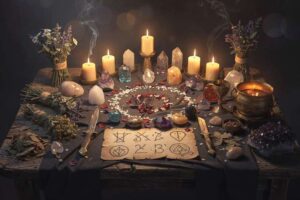
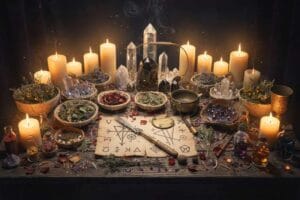
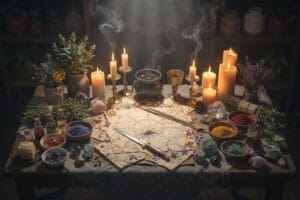
You don’t need a fancy altar or a dedicated room. Your sacred space can be a corner of your bedroom, a shelf, a windowsill, or even a small box you keep hidden. This is your power center—a place where you’ll focus your intention and keep your tools.
Cleanse the space physically first (clean it!) and then energetically. You can do this by opening a window, burning incense or sage, sprinkling salt, or simply stating your intention aloud: “I cleanse this space and dedicate it to my practice.” This signals to yourself and the universe that you’re creating intentional space.
Step 4: Gather Basic Tools and Materials
You don’t need everything at once. Start small. A candle, some salt, and your intention are enough to begin. As your practice grows, you’ll naturally add to your collection. See the “Essential Tools and Supplies” section below for guidance on what to prioritize.
Step 5: Learn to Ground and Raise Your Energy
These are foundational skills for any witch. Grounding connects you to the earth and stabilizes your energy—essential before any magical work. To ground, visualize roots growing from your feet deep into the earth, or imagine yourself as a tree drawing energy up from below.
Raising energy means building magical power through movement, breath, intention, or sound. You might dance, chant, drum, or simply focus your breath and visualize energy building in your body. Practice these until they feel natural. They’re the backbone of spellwork.
Step 6: Start Simple Spells and Rituals
Your first spells should be straightforward. Light a candle with an intention, write down what you’re working toward and burn the paper safely, create a simple herbal tea blend with magical intention, or write a journal entry about what you want to manifest. These gentle practices help you build confidence and attune to your own energy.
A basic spell structure: set your intention clearly, gather materials aligned with that intention, focus your energy while working (ground, raise energy, visualize), and close your work with gratitude. That’s it.
Step 7: Keep a Witchcraft Journal
Document everything. Record the date, moon phase, intention, materials used, what you felt, and the outcome. Over time, you’ll see patterns in what works for you. This journal is deeply personal—it’s your grimoire, your record of growth, and your magical reference guide.
Step 8: Study the Lunar Cycles
The moon is one of the most powerful allies a witch can have. Full moons are times of manifestation, release, and clarity. New moons are for new beginnings and setting intentions. Waxing phases (growing) support work to bring things toward you. Waning phases (shrinking) support release and banishing. Many witches align their spellwork with lunar timing, and this knowledge will deepen your practice immensely.
Step 9: Build a Daily Practice
Magic isn’t only about spells. Daily practice might include meditation, tarot or oracle card draws, tending to plants, mindful movement, or simply checking in with your intuition. These small acts strengthen your connection to your practice and keep you aligned with your intention. Even five minutes a day makes a difference.
Essential Tools and Supplies
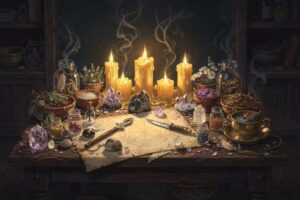
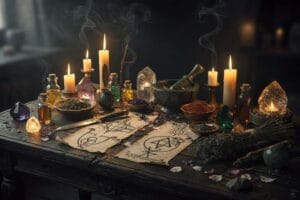
You can practice witchcraft with nothing but your intention and the earth beneath your feet. However, certain tools and materials become helpful companions as you grow. Here’s what to prioritize as a beginner:
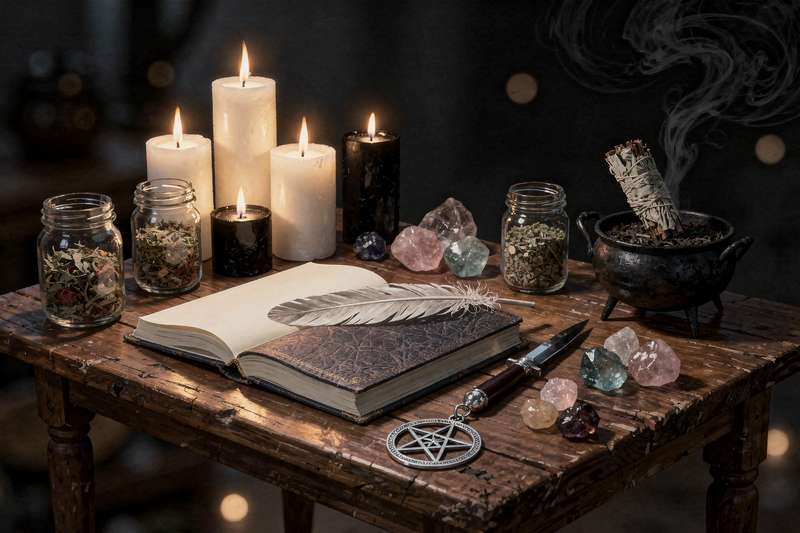
- Candles: Simple white or colored candles are essential. They represent element fire, focus intention, and create sacred space. Start with a small collection in colors that call to you.
- Herbs and Dried Plants: Build a small collection of common witchy herbs: lavender (peace and cleansing), rosemary (protection and clarity), bay leaves (intention-setting), and chamomile (calm). You can forage, grow, or buy these affordably.
- Crystals: Rose quartz (heart opening), clear quartz (amplification), and black tourmaline (grounding and protection) are excellent starting stones. Choose what visually calls to you; intuition matters here.
- Salt: Sea salt or Himalayan salt is used for cleansing, grounding, and protection. It’s inexpensive and incredibly useful.
- Matches or a Lighter: You’ll need to light candles and burn safely. Keep these accessible.
- A Journal: A simple notebook is perfect for recording spells, insights, and observations.
- Tarot or Oracle Cards (Optional): These are tools for divination and intuition-building, not required but deeply helpful for many witches.
As your practice grows, you might add a wand, athame, mortar and pestle, or an actual altar setup. But start small and let your practice guide what you need next.
Ethics and Best Practices
The foundation of ethical witchcraft is the principle of “harm none.” This doesn’t mean you can never work magic that has consequences—sometimes protecting yourself or setting boundaries requires that. But it means acting with integrity, respecting consent, and considering the ripple effects of your work.
Always get consent before doing magical work for another person, even if you think it’s “for their own good.” Respect is paramount. Work with clear intention—vague wishes create vague results. Be honest about what you’re really asking for. And remember the threefold law or the concept of karma: what you send out into the world tends to return to you. This isn’t punishment; it’s energetic balance.
Respect cultural practices that aren’t yours. Approach all traditions with reverence. Avoid appropriation by learning the difference between respectful exchange and taking what doesn’t belong to you. If a practice feels closed to you, honor that boundary and find a path that’s open.
Finally, understand that magic works best alongside practical action. Don’t cast a spell for a job and then never apply. Use magic as amplification and alignment for the work you’re already doing in the world.
Common Beginner Mistakes to Avoid
- Expecting instant, Hollywood-style results: Real magic is subtle and works within natural law. Results unfold over time. Patience and faith are part of the craft.
- Treating witchcraft as entertainment or a game: This practice deserves respect. Coming to it casually or manipulatively will undermine your work.
- Neglecting grounding and protection: Before you raise energy or invite spiritual presences, ground yourself and ask for protection. This keeps you safe.
- Copying spells without understanding them: It’s tempting to follow recipes, but understanding the “why” of each ingredient and step makes your magic so much stronger.
- Ignoring your intuition: Books and teachers are guides, but your gut is a compass. If something doesn’t feel right, trust that.
- Buying expensive tools thinking they’re necessary: The most powerful witch is the one with intention and connection, not credit card debt. Gather what you need naturally over time.
How to Build Your Practice Over Time
Witchcraft is a lifelong journey. There’s no endpoint where you “finish.” Instead, let your practice deepen gradually. Read widely but deeply. Take time to truly understand one area before jumping to the next. Join online communities or find a mentor if possible, but be discerning about where you get guidance.
As seasons change and you grow, your practice will evolve. That’s beautiful and natural. Some witches work best in groups or covens; others are solitary practitioners. Some focus on healing magic; others on manifestation. Your practice is yours alone. Trust the unfolding.
Frequently Asked Questions
Can anyone become a witch?
Yes—but witchcraft requires genuine respect for nature and serious intention. It’s not a game. If you have a deep connection to the earth and a sincere desire to learn, you have what it takes. The practice itself doesn’t discriminate based on gender, age, background, or ability.
Is witchcraft a religion?
Witchcraft can be a spiritual practice, a religion (like Wicca), or simply a magical craft practiced alongside any other faith. It depends on your path. Wicca is a specific nature-based religion; witchcraft is the broader practice of magic.
Do I need to spend a lot of money to start?
Absolutely not. You can begin with candles, salt, and intention—all inexpensive. Build your collection slowly and naturally. Some of the most powerful witches work with found objects and free materials from nature.
What’s the difference between witchcraft and Wicca?
Witchcraft is the practice of magic. Wicca is a structured religion centered on honoring a God and Goddess, following the wheel of the year, and living in harmony with nature. Many Wiccans practice witchcraft, but not all witches are Wiccan.
Final Thoughts
You’re embarking on a path of power, wisdom, and deep connection. Witchcraft for beginners isn’t about becoming someone else—it’s about awakening to who you’ve always been. Trust yourself, honor the earth, and let your practice unfold naturally. Welcome to the craft.