Death Tarot Card Meanings at a Glance
The Death tarot card meanings are among the most misunderstood in the entire deck. When this powerful card appears, many people feel fear—but this is precisely where true wisdom begins. The Death card is not about physical death; it’s about transformation, endings, and the beautiful rebirth that follows. Understanding Death tarot card meanings opens you to one of the most liberating and hopeful messages the cards can offer.
Upright Keywords: Endings, transformation, transition, renewal, letting go, new beginnings, metamorphosis
Reversed Keywords: Resistance to change, stagnation, clinging to the past, fear of transformation, blocked growth
The Imagery & Symbolism of the Death Card
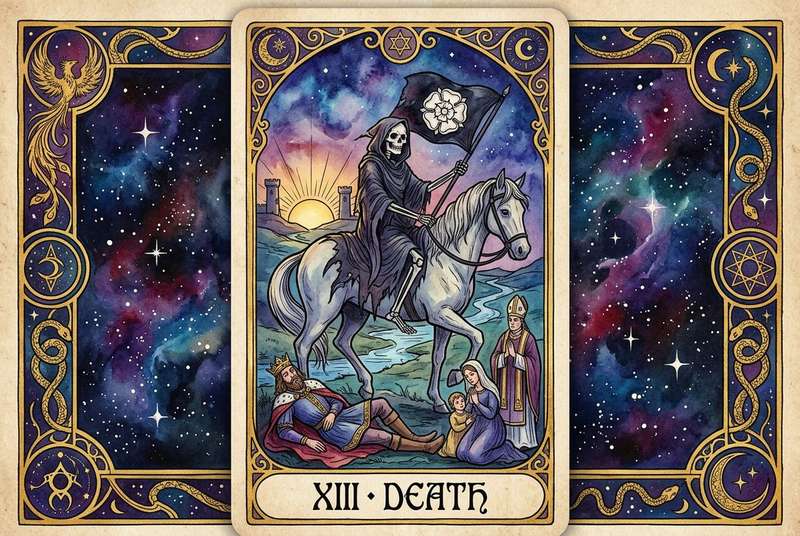
The Death tarot card depicts a skeletal figure dressed in black armor, riding a white horse. This striking image holds profound meaning. The skeleton represents what endures beyond the physical body—the eternal essence of the soul. The black armor symbolizes invincibility; death comes for us all, regardless of our resistance or status. Yet the white horse beneath carries messages of purity, strength, and divine power.
The skeleton carries a black flag bearing a white five-petal rose—a symbol of beauty, purification, and immortality. The number five itself represents change and transformation. Together, these symbols reveal the core truth: Death is not merely an ending. It is the sacred gateway between chapters, where beauty and renewal are always present.
In the card’s background, various figures—including a royal person, a woman, a child, and a bishop—seem to plead with the skeletal messenger. But as the card wisely teaches us: death spares no one. This is not morbid; it’s liberating. When we accept that change is universal and inevitable, we find peace.
The boat on the river echoes mythological journeys to the afterlife, while the sun setting between two towers reminds us of nature’s eternal cycle: each night brings darkness, yet dawn always returns.
Upright Meaning: Embracing Transformation
When the Death card appears upright in your reading, you’re being invited into a profound transformation. After the pause and reflection symbolized by The Hanged Man, Death signals that a major phase of your life is ending—and this is actually wonderful news.
Perhaps you’ve outgrown a relationship, job, belief system, or identity that no longer serves your highest self. The Death card whispers: it’s time to close this door. And yes, letting go can feel challenging. There may be grief, uncertainty, and fear of the unknown. But this card promises that beyond this threshold lies something far more valuable and authentic.
The key to working with upright Death energy is visualization and imagination. Rather than resisting the ending, imagine the beautiful possibilities waiting for you. Picture yourself transformed, renewed, and stepping into alignment with your true purpose. When you embrace this energy consciously, you allow constructive new patterns to emerge naturally.
Resistance prolongs the pain. Acceptance accelerates your evolution. The Death card is ultimately a card of hope—it promises that this necessary ending is the foundation for genuine renewal.
Reversed Meaning: Fear & Resistance to Change
When Death appears reversed, it often reflects your resistance to necessary transformation. You may be clinging to the past—to relationships, jobs, identities, or beliefs—even though your soul is calling you forward. This card reversed asks: What are you afraid to release?
Reversed Death can also indicate that a necessary ending has been delayed or that you’re moving through transformation more slowly than your spirit requires. There may be denial about what needs to change, or you may feel stuck between the old chapter and the new one, unable to fully commit to either.
The gift of reversed Death is clarity. When this card appears, pause and ask yourself honestly: What am I holding onto? What am I resisting? Often, naming the fear transforms it. Once you acknowledge what you’re avoiding, you can move through it with compassion for yourself. Transformation is always possible when you’re ready.
Death in Love & Relationships
The Death card’s meaning in love readings is about relationship transformation and closure. This doesn’t necessarily mean breakup—it can mean profound renewal within a partnership.
For those in relationships, Death often signals a major shift: perhaps moving in together, marriage, having children, or a complete reimagining of how you relate to each other. The old dynamic must die so a new, more authentic one can be born. This can feel destabilizing but ultimately brings couples closer when they’re willing to transform together.
For singles, Death often marks the end of a cycle—perhaps you’ve completed important inner work and are now ready to attract a different quality of love. Or a pattern of attracting unavailable partners is finally releasing, clearing space for genuine connection.
When Death appears reversed in love, it may indicate unresolved feelings keeping you tethered to someone or something that’s no longer serving you. The invitation is to grieve fully, release consciously, and allow yourself to move forward.
Death in Career & Finance
In career readings, the Death card meanings are exciting and forward-moving. A major professional transformation is underway. Perhaps you’re leaving a job that no longer aligns with your values, changing careers entirely, or stepping into a completely different role that better reflects your gifts.
This card can also signal the end of financial patterns—leaving behind debt, unstable income, or scarcity consciousness. You’re moving from one phase of your professional life into another that promises greater fulfillment and authenticity.
When reversed, Death in career suggests you’re resisting a necessary professional change. Maybe you’re staying in a job out of fear or familiarity, even though your soul is elsewhere. The invitation is to courageously release what’s comfortable but unfulfilling, trusting that your next chapter holds something more aligned with your purpose.
Death in Spirituality & Personal Growth
Spiritually, the Death card is one of the most transformative in the entire deck. It represents the death of the ego, the release of false identities, and the emergence of your authentic self. This is the card of spiritual awakening, where old belief systems dissolve and higher truths reveal themselves.
Death invites you into deep inner work: shadow work, meditation, and honest self-examination. As you release outdated patterns and beliefs, you make space for genuine spiritual expansion. This is the alchemical process—taking what seems like ending and transforming it into wisdom and evolution.
The Death Card in a Reading: Context Matters
The position and surrounding cards significantly influence Death’s meaning. In a near position, it suggests immediate transformation. In a distant position, it may indicate a gradual shift. Surrounded by positive cards, Death promises growth and renewal. Surrounded by challenging cards, it may indicate that resistance is prolonging difficulty.
Always remember: the Death card is fundamentally about empowerment. You have agency in how you meet transformation. You can resist and suffer, or you can visualize, accept, and co-create with the change that’s unfolding. The choice—and the power—is always yours.
FAQ
Does the Death tarot card mean physical death?
No, the Death card is not about physical death but rather transformation, endings, and rebirth. It represents a major life phase concluding and a new chapter beginning, which is actually a positive message.
What does the Death card mean in a upright position?
Upright, the Death card signals transformation and the end of a major life phase—whether that’s a relationship, job, or belief system. It invites you to embrace change and the renewal that follows, making it a liberating and hopeful card.
What does the Death card mean reversed?
Reversed, the Death card indicates resistance to change, stagnation, and clinging to the past. It suggests blocked growth and fear of transformation, warning that resisting inevitable change may cause suffering.
What is the symbolism of the white horse in the Death card?
The white horse represents purity, strength, and divine power, carrying the skeletal figure of death. It symbolizes that transformation and change are not dark or fearful but sacred and powerful forces.
Why does the Death card show a skeleton in black armor?
The skeleton represents the eternal essence of the soul that endures beyond the physical body, while the black armor symbolizes the inevitability of death and change—it comes for everyone regardless of status or resistance.