What Is Lughnasadh Sabbat?
Lughnasadh sabbat is one of the eight major festivals on the witches’ Wheel of the Year, and it arrives at the perfect moment when summer’s abundance begins to ripen into harvest. This sacred celebration, also known as Lammas, marks the first harvest festival in the pagan calendar. It’s a time when you pause to acknowledge the gifts of the season, honor the grain that feeds your community, and celebrate the skills and talents you’ve cultivated throughout the year.
The name itself comes from the Celtic god Lugh, a deity of light, craftsmanship, and mastery. On this sabbat, you’re invited to reflect on your own abilities, thank the earth for her generosity, and prepare for the darker half of the year ahead. This is deeply spiritual work wrapped in gratitude and golden grain.
When Is Lughnasadh Sabbat Celebrated?
Lughnasadh sabbat falls on August 1st and 2nd, right at the heart of late summer. In the Northern Hemisphere, this is when the days are still long and warm, yet you can already feel autumn’s whisper approaching. The sun stands at its full strength, yet its descent has begun—a beautiful paradox that lies at the heart of this sabbat’s meaning.
Some witches celebrate on the exact date of August 1st, while others prefer the nearest full moon or a weekend that feels more sustainable for their practice. Honor your own rhythm; the spirits of Lughnasadh understand that modern life requires flexibility.
History & Origins of Lughnasadh Sabbat
Lughnasadh sabbat has roots deep in Celtic tradition, particularly in Ireland, Scotland, and Wales. The ancient Celts celebrated this festival as a time of assembly, games, and communal gathering. It was named after Lugh, the multitalented god of the sun, war, craftsmanship, and magic—a deity who embodied excellence in all things.
The festival traditionally involved fairs, athletic competitions, and the blessing of the first grain harvest. Communities would gather to exchange goods, arrange marriages, and honor their gods with offerings of bread made from the newly harvested grain. In many regions, a figure called the Corn King or John Barleycorn was symbolically sacrificed and reborn, representing the cycle of death and rebirth that sustains all life.
The Christian church later renamed this celebration Lammas (from “Loaf Mass”), absorbing the pagan festival into the church calendar while maintaining many of its original customs and timing.
Spiritual Meaning & Symbolism of Lughnasadh Sabbat
When you celebrate Lughnasadh sabbat, you’re engaging with several profound spiritual themes:
- First Fruits & Gratitude: This is the moment to thank the universe for what has manifested in your life. Every project completed, every relationship deepened, every goal reached—these are your first fruits.
- Sacrifice & Reciprocity: The harvest requires taking from the earth. Lughnasadh reminds you that all gifts come with responsibility. What will you give back?
- Skill & Mastery: Lugh represents the pursuit of excellence. This sabbat asks: what talents have you honed? How will you continue to develop your gifts?
- Community & Sharing: Bread, made from shared grain, symbolizes unity. You’re called to gather, celebrate, and share abundance with others.
- Transition & Preparation: Summer’s peak has passed. Lughnasadh marks the beginning of the descent into autumn and winter, inviting you to prepare mentally and spiritually for change.
Deities & Archetypes of Lughnasadh Sabbat
The primary deity of Lughnasadh sabbat is Lugh, the Celtic god of light, skill, and mastery. He is often depicted as a golden, radiant figure—youthful yet powerful, creative yet disciplined. Lugh teaches you that excellence requires dedication, that every craft deserves your full attention, and that your unique talents are gifts meant to shine.
You may also work with the Grain Mother or Grain Goddess—a feminine presence that embodies the nurturing, fertile earth. She is the one who receives your thanks and the one who will rest as the fields lie fallow through winter.
John Barleycorn is another archetypal figure—the grain deity who is cut down at harvest, dies, and is reborn each spring. Working with this archetype helps you understand the sacred cycle of death and rebirth that sustains all existence.
Rituals for Lughnasadh Sabbat
Here are seven meaningful rituals you can incorporate into your Lughnasadh sabbat celebration:
- Bread Blessing Ritual: Bake bread from scratch (or purchase a fresh loaf) and consecrate it on your altar. As you hold the bread, speak gratitude for the grain, the farmers, the bakers, and the nourishment it provides. Break and share it with loved ones, speaking blessings over each piece.
- First Fruits Offering: Gather fresh produce—berries, corn, tomatoes, or whatever grows in your region. Create an offering on your altar or in nature, thanking the earth for abundance. You might bury the offering to return nutrients to the soil, or leave it for wildlife to share in the feast.
- Craft Dedication Ritual: Spend time on a creative project—painting, writing, music, cooking, or any craft that calls to you. Dedicate this work to Lugh, asking for inspiration and skill. Complete at least one project fully, honoring the energy of completion that Lughnasadh brings.
- Gratitude Meditation: Light a gold or yellow candle and sit in quiet reflection. List everything you’re grateful for—accomplishments, relationships, lessons, gifts. Visualize golden light filling your heart, and speak your thanks aloud to the universe.
- Grain Weaving Ritual: If you can find wheat, rye, or other grain stalks, weave them into a small corn dolly or decoration. As you weave, set intentions for what you’re harvesting in your life right now. Display this in your home as a reminder of abundance.
- Bonfire or Candle Ceremony: Gather around a fire (or light multiple candles) and invite loved ones to speak about their accomplishments and gratitude. Take turns tossing dried herbs, flower petals, or written intentions into the flames as an offering to Lugh and the spirits of the harvest.
- Walking the Land Meditation: Take a mindful walk through nature—a park, forest, or garden. Observe the ripeness of late summer. Notice which plants are flowering, fruiting, or preparing for rest. Collect natural items that call to you, returning them to your altar to honor the season’s gifts.
Altar Setup for Lughnasadh Sabbat
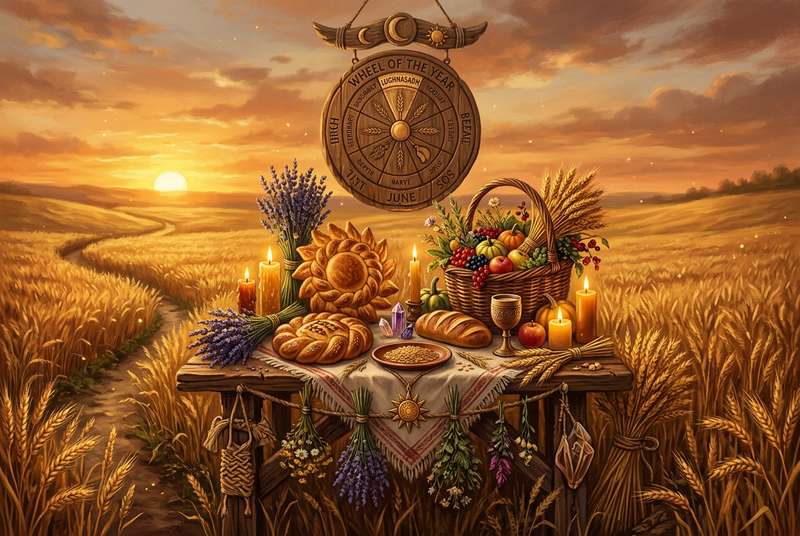
Your Lughnasadh sabbat altar should radiate the golden warmth of summer’s peak. Here’s how to arrange it:
- Centerpiece: A loaf of bread, corn stalks, or a wheat bundle—the physical symbol of the harvest
- Candles: Gold, yellow, or orange candles to represent Lugh’s solar energy and the ripening grain
- Fresh Flowers: Sunflowers, marigolds, or whatever blooms in your region—arranged in abundance
- Seasonal Produce: Berries, corn, tomatoes, squash—arrange colorfully to celebrate the harvest
- Grain & Seeds: Scattered around the altar base—barley, wheat, oats, or sunflower seeds
- Water Element: A bowl of fresh water or wine to honor the earth’s generosity
- Craft Items: Tools, paintbrushes, or symbols of skills you wish to honor
- Stones & Crystals: (See section below for specific recommendations)
Herbs, Crystals & Colors for Lughnasadh Sabbat
Herbs for Lughnasadh sabbat:
- Wheat and grain (obviously!)
- Marigold—honoring the sun and gratitude
- Sunflower—solar energy and radiance
- Chamomile—comfort and calm before change
- Lavender—peace and transition
- Basil—protection and abundance
- Mugwort—enhanced intuition and dreaming
Crystals for Lughnasadh sabbat:
- Citrine: Amplifies abundance, joy, and manifestation
- Amber: Golden warmth, protection, and ancient wisdom
- Carnelian: Vitality, creativity, and courage
- Sunstone: Solar energy, success, and radiance
- Peridot: Abundance, clarity, and emotional healing
- Tiger’s Eye: Grounding, focus, and personal power
Colors for Lughnasadh sabbat:
- Gold: The primary color—representing Lugh’s solar power and the ripening grain
- Yellow: Joy, warmth, and illumination
- Orange: Creativity, enthusiasm, and abundance
- Red/Brown: Grounding, the earth, and the grain’s maturity
- Green: Growing things, renewal, and the final verdant days of summer
Foods Traditional for Lughnasadh Sabbat
Food is at the heart of Lughnasadh sabbat celebration. Here are traditional foods to honor the season:
- Bread: The star of the celebration—sourdough, whole grain, or artisan varieties made with intention
- Corn: Fresh corn on the cob, cornbread, or polenta
- Berries: Blueberries, strawberries, and blackberries—eat them fresh or baked into pies
- Grain-Based Dishes: Barley soup, oat cakes, wheat porridge, or grain salads
- Fresh Vegetables: Tomatoes, zucchini, squash, peppers—celebrate the garden’s peak
- Honey: A symbol of sweetness and the sun’s energy—drizzle it on bread or add to beverages
- Nuts: Walnuts, hazelnuts, and almonds—representing stored energy for the darker months
- Lammas Cakes: Traditional shortbread or oatcakes, often shaped like the sun or wheat sheaves
- Cider or Mead: Fermented beverages that connect you to the season’s transformation
- Herbal Tea: Made with chamomile, mugwort, or lavender—grounding and meditative
Modern Ways to Celebrate Lughnasadh Sabbat
You don’t need elaborate rituals or perfect supplies to honor Lughnasadh sabbat. Here are accessible, modern ways to celebrate:
- Visit a Farmers Market: Choose local, seasonal produce. As you select items, silently thank the farmers and the earth. This is Lughnasadh in action.
- Bake with Intention: Make bread, cookies, or a grain-based dish. Play music that lifts your spirit, and pour gratitude into every action.
- Create a Gratitude Journal: Spend time writing about your first fruits—accomplishments, lessons, gifts received. Read these entries aloud at your altar.
- Host a Harvest Gathering: Invite friends for a meal celebrating seasonal, local food. Share stories of growth and transformation. Community is at the heart of Lughnasadah.
- Take a Nature Walk: Observe the late-summer landscape. Notice what’s ripening, what’s fading, and what’s preparing for rest. This teaches you about natural cycles.
- Donate to Your Community: Give food, time, or resources to local food banks or community organizations. Lughnasadh invites you to share abundance.
- Learn a New Skill: Honor Lugh by dedicating time to mastering something—a musical instrument, a craft, a language. Excellence is the god’s gift.
- Sunrise or Sunset Observation: Watch the sun rise or set on Lughnasadh sabbat, speaking gratitude for its light and warmth. You need nothing but awareness and an open heart.
The beauty of Lughnasadh sabbat is that it asks you to pause, to look at what you’ve manifested, and to prepare for transition with grace. Whether you celebrate alone with a candle and a slice of bread, or gather a circle of witches for elaborate rituals, you’re honoring an ancient rhythm that connects you to the earth, the seasons, and the divine spark within yourself. Trust your instincts, follow what feels sacred to you, and let Lughnasadh guide you toward gratitude, mastery, and meaningful celebration.
FAQ
What is the difference between Lughnasadh and Lammas?
Lughnasadh is the original Celtic pagan festival celebrated on August 1st-2nd, while Lammas is the Christian church’s later renamed version meaning ‘Loaf Mass.’ Both celebrations honor the first harvest, but Lughnasadh emphasizes the god Lugh and ancient Celtic traditions of assembly and communal gathering.
What rituals should I perform during Lughnasadh?
Common Lughnasadh rituals include baking bread from newly harvested grain, making offerings to the earth, reflecting on your personal skills and talents, and gathering with community. Many witches also perform symbolic sacrifice and rebirth ceremonies, honoring the Corn King tradition that represents the cycle of death and renewal.
Why is Lughnasadh called the first harvest festival?
Lughnasadh marks the first major harvest of the year when summer’s abundance ripens into grain and crops ready for gathering. This timing on August 1st-2nd represents the moment when communities traditionally blessed and harvested their first grains, making it the first of three major harvest festivals in the pagan Wheel of the Year.
Who was the god Lugh and why is the festival named after him?
Lugh was a multitalented Celtic deity associated with light, craftsmanship, war, and magic, embodying excellence in all pursuits. The festival is named after him because Lughnasadh invites practitioners to reflect on their own abilities and mastery, honoring Lugh’s principle of cultivating and celebrating personal skills throughout the year.
Can I celebrate Lughnasadh on a different date than August 1st?
Yes, many modern witches celebrate Lughnasadh flexibly based on their schedule, choosing the nearest full moon or a convenient weekend. The spirits of Lughnasadh honor the intention behind the celebration, and adapting the date to fit your modern life while maintaining the festival’s spiritual essence is completely valid.