Understanding the voodoo vs. hoodoo distinction transforms how you approach African diasporic spiritual practices. These two powerful traditions share African roots and often get confused, yet they serve entirely different purposes in a practitioner’s life. Hoodoo offers folk magic tools for everyday concerns—love, protection, prosperity—while Voodoo provides a complete religious framework with deities, priests, and communal worship. If you’ve ever wondered whether you’re called to rootwork or religious devotion, clarity on these differences helps you honor each path authentically.
Both traditions emerged from the resilience of enslaved Africans who preserved sacred knowledge across the Middle Passage. Today, seekers from all backgrounds feel drawn to their wisdom, yet respectful engagement begins with understanding what makes each tradition unique. This guide walks you through their core structures, practices, and spiritual frameworks so you can approach either path—or simply appreciate them—with informed reverence.
What Is Hoodoo? Understanding Folk Magic Traditions
Hoodoo is a folk magic system born in the American South, blending African spiritual techniques with Native American herbalism and European grimoire traditions. You won’t find churches or priests in Hoodoo—this is personal conjure work, passed down through families and individual practitioners who use roots, minerals, candles, and personal items to shift energy and manifest outcomes.
The beauty of Hoodoo lies in its flexibility. There’s no central authority telling you the “right” way to work a love spell or prepare a mojo bag. Your great-grandmother’s recipe for Van Van oil might differ from your neighbor’s, and both work perfectly. Hoodoo honors the spirits of ancestors and natural forces rather than worshipping deities, making it a practice rather than a religion. You can be Christian, Pagan, atheist, or anything else and still work Hoodoo roots.
Common misconceptions paint Hoodoo as “dark magic” or “voodoo dolls”—Hollywood stereotypes that disrespect a rich healing tradition. Real Hoodoo practitioners focus on practical concerns: drawing money, protecting homes, healing relationships, and removing obstacles. The work is earthy, grounded, and deeply connected to the land and plant spirits.
What Is Voodoo? Understanding the Religious Framework
Voodoo (Vodou in Haiti, Voodoo in Louisiana) is a complete religion with structured beliefs, clergy, and a pantheon of spirits called Loa or Lwa. Unlike Hoodoo’s individualized magic, Voodoo requires initiation, community participation, and relationship-building with specific divine forces who each have distinct personalities, preferences, and sacred songs.
When you enter Voodoo practice, you’re joining a spiritual family. Priests (Houngans) and priestesses (Mambos) guide ceremonies that include drumming, dancing, animal offerings, and spirit possession—moments when a Loa descends to speak through a devotee. Each Loa governs different life areas: Erzulie Freda brings love and beauty, Papa Legba opens spiritual gates, Baron Samedi rules the cemetery crossroads.
Voodoo worship happens in communal spaces called hounforts, with elaborate altars, ritual feasts, and seasonal festivals that honor both the Loa and ancestral spirits. The religion syncretized with Catholicism during enslavement, so you’ll often see saints’ images representing Loa on altars. This isn’t cultural confusion—it’s brilliant spiritual resistance that allowed practitioners to worship openly while preserving African traditions beneath a Christian veneer.
Core Differences Between Voodoo and Hoodoo
Religious Structure vs. Magical Practice
The most fundamental difference lies here: Voodoo is a religion with theology, clergy, and communal worship, while Hoodoo is a magical practice focused on practical results. You can work Hoodoo without belonging to any spiritual community or believing in particular deities. Voodoo, however, requires relationship with the Loa, participation in ceremonies, and often formal initiation.
Think of it this way—Hoodoo is like having a toolkit of spiritual techniques you use when needed. Voodoo is like joining a church where you worship regularly, learn from elders, and develop lifelong devotion to specific divine beings. Neither is better; they serve different spiritual needs.
Spirits and Entities Invoked
Hoodoo practitioners primarily call on ancestral spirits—your own passed loved ones or collective ancestor energy—and natural forces tied to crossroads, rivers, and the earth itself. Some workers petition Biblical figures like Moses or Saint Expedite, but there’s no requirement to work with any specific spiritual being.
Voodoo centers entirely on the Loa, a complex pantheon of spirits organized into families (nations) like Rada and Petwo. Each Loa has favorite foods, colors, songs, and dance steps. You can’t simply decide to work with Erzulie one day—you must be introduced properly, often through initiation, and maintain ongoing relationship through offerings and service.
Organization and Authority
Hoodoo has no hierarchy. You don’t need permission to light a candle spell or create a protection jar. Knowledge passes through families, mentors, and personal study, but no priest grants you authority to practice. Your power comes from your skill, ancestral blessing, and spiritual gifts.
Voodoo maintains formal structure with initiated priests and priestesses who’ve undergone years of training. The kanzo initiation process involves days of ritual culminating in sacred ceremonies that mark you as a servant of the Loa. Houngans and Mambos lead communal rites, interpret messages from spirits, and guide devotees through spiritual challenges. This structure preserves traditions and ensures proper ritual protocol.
Geographic Origins and Development
Hoodoo developed specifically in the American South among enslaved Africans who blended their traditional practices with whatever they found in their new environment—Cherokee plant medicine, European folk magic from overseers, and Christian prayer. It’s uniquely American, shaped by cotton fields, bayous, and the specific herbs growing in Southern soil.
Voodoo came directly from West African Vodun traditions, particularly from the Fon and Yoruba peoples, and took strongest root in Haiti and Louisiana where large populations of West Africans preserved their religious structures. Haitian Vodou remains closest to African origins, while Louisiana Voodoo developed unique characteristics through French Catholic influence.
Ritual Components and Materials
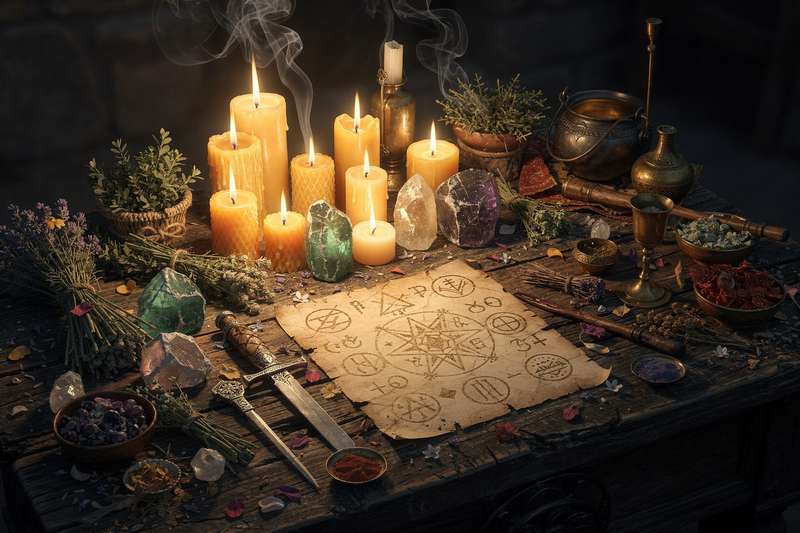
Hoodoo work centers on roots, herbs, minerals, candles, oils, and personal concerns (hair, clothing, photos). You might dress a purple candle with prosperity oil, bury a honey jar to sweeten someone’s disposition, or carry a mojo bag filled with High John root and pyrite. The materials are accessible, earthy, and focused on tangible results.
Voodoo rituals require more elaborate preparation: vèvè drawings (intricate cornmeal symbols unique to each Loa), specific drum rhythms, animal sacrifices according to strict protocols, ritual baths with sacred herbs, and altars laden with the Loa’s favorite foods and drinks. A ceremony for Ogou might require rum, cigars, red fabric, and a machete—offerings that honor his warrior nature.
Key Practices in Hoodoo Tradition
Mojo Bags and Conjure Hands
These personal talismans contain roots, herbs, minerals, and curios chosen for specific intentions. Your love mojo might hold rose petals, damiana, rose quartz, and a lodestone fed with magnetic sand. You keep it secret, “feed” it regularly with oils or whiskey, and carry it close to your body. The bag becomes an extension of your will, drawing your desire toward you through accumulated spiritual charge.
Candle Magic and Lamp Work
Hoodoo candle spells involve dressing candles with condition oils, carving names or intentions into the wax, and burning them with focused prayer. A road opener spell might use an orange candle anointed with Road Opener oil, while a reversal spell could employ a black candle to send negativity back to its source. Some practitioners maintain spirit lamps—oil lamps kept burning for ancestors or specific intentions.
Foot Track Magic and Crossroads Work
Traditional Hoodoo recognizes crossroads as places of spiritual power where worlds meet. You might bury petition papers at a crossroads, leave offerings to petition for skill or talent, or gather crossroads dirt for protection spells. Foot track magic involves gathering someone’s footprint dirt to influence them or break their influence over you—powerful contact magic rooted in sympathetic principles.
Rootwork and Herbal Formulas
The name “rootwork” comes from the central role of roots like High John the Conqueror (strength and success), Devil’s Shoestring (protection and gambling luck), and Angelica (guardian spirit assistance). You create condition oils by steeping herbs in carrier oil, make spiritual baths by boiling roots and praying over the water, and blend powders to sprinkle around property or in shoes.
Key Practices in Voodoo Religion
Serving the Loa Through Altars
Every Voodoo practitioner maintains altars for the Loa they serve. Erzulie’s altar overflows with perfume, jewelry, pink fabrics, and sweet cakes. Ogou’s space displays red cloth, rum, cigars, and iron tools. You refresh offerings regularly, pray at the altar, and request the Loa’s guidance and blessing. These aren’t decorative—they’re living relationships requiring consistent attention.
Ceremonial Possession and Spirit Communication
During Voodoo ceremonies, practitioners enter trance states allowing Loa to “ride” them—possess their bodies to dance, speak, and interact with the community. This isn’t frightening to devotees; it’s deeply sacred. The mounted person (chwal, or horse) has no memory of possession, but the community receives blessings, warnings, and healing directly from the Loa’s presence.
Vèvè Drawing and Ritual Invocation
Before summoning a Loa, the priest or priestess draws their unique vèvè on the ground using cornmeal, ash, or brick dust. These intricate symbols serve as spiritual signatures and doorways. Papa Legba’s vèvè must be drawn first at every ceremony since he opens the gates between worlds. Each line and curve carries meaning, passed down through generations of initiated priests.
Festival Celebrations and Communal Rites
Voodoo follows a ceremonial calendar with festivals honoring different Loa and ancestors. The Fèt Gede in November honors death spirits with visits to cemeteries, elaborate offerings, and all-night dancing. Rara celebrations following Lent involve street processions with music and ritual. These aren’t optional—communal participation strengthens the spiritual fabric binding practitioners to each other and the Loa.
How to Respectfully Learn About Each Tradition
Approaching Hoodoo Practice
Hoodoo traditionally belongs to African American Southern culture, though the practice has always absorbed influences from whoever lived in proximity. If you’re drawn to Hoodoo, begin by studying its history honestly—this magic was born from survival, resistance, and resourcefulness under brutal oppression. Don’t cherry-pick techniques while ignoring that context.
Start with accessible books by respected practitioners, learn about the materia magica (roots, herbs, minerals used), and begin simple workings focused on real needs in your life. You don’t need initiation, but you do need respect. If you’re not African American, acknowledge you’re borrowing from someone else’s ancestral tradition and approach it with humility rather than entitlement.
Approaching Voodoo Religion
Voodoo isn’t something you learn from books alone—this is an initiatory religion requiring proper training from recognized clergy. If you feel genuinely called to Voodoo, research carefully to find legitimate Houngans or Mambos who can assess whether this path suits you. Be prepared for years of study, service, and financial investment in ceremonies and initiations.
Never attempt to “work with” the Loa casually after reading a few articles. These are powerful spiritual forces demanding proper protocol, offerings, and relationship. Disrespectful approach can bring serious consequences. Instead, attend public ceremonies if possible, read accounts by initiated practitioners, and understand that Voodoo chooses you as much as you choose it—the Loa call whom they will.
Understanding Cultural Context
Both traditions emerged from the African diaspora’s spiritual genius under slavery’s horrors. When you study these practices, you’re touching sacred ground watered with ancestors’ tears and resilience. Read histories of the slave trade, the Haitian Revolution, and African American Southern life. Understand that Hollywood’s portrayal—zombies, evil dolls, scary “witch doctors”—is racist propaganda that demonized Black spiritual power.
If you benefit from these traditions, find ways to give back to the communities that preserved them. Support Black-owned spiritual shops, amplify Black practitioners’ voices, and challenge appropriation when you see it. Spiritual practice divorced from justice isn’t complete.
Common Misconceptions to Unlearn
Both Hoodoo and Voodoo suffer from centuries of cultural stereotyping. Here’s what you need to know:
- “Voodoo dolls” aren’t really Voodoo: The poppet or doll used in sympathetic magic appears in European folk magic traditions worldwide. Voodoo religion doesn’t center on doll magic—that’s a Hollywood invention used to make African spiritual practices seem sinister and primitive.
- Neither practice is inherently “dark” or “evil”: Like any spiritual system, both can be used for harmful or helpful purposes depending on the practitioner’s intent. The magic itself is neutral—a tool responding to will and need. Most work focuses on healing, protection, and prosperity, not curses.
- Hoodoo isn’t “Voodoo without the religion”: While they share African roots, Hoodoo developed its own distinct identity, techniques, and purposes. It’s not a watered-down version of Voodoo—it’s a completely different practice that happens to overlap in some historical sources and occasional techniques.
- You don’t summon demons or make devil pacts: Christian colonizers labeled African spirits as demons to justify suppressing these practices. The crossroads figure in Hoodoo folklore isn’t Satan—it’s a spiritual guardian of liminal spaces. The Loa aren’t demons—they’re divine forces deserving reverence.
- These aren’t “ancient unchanged” practices: Both traditions continue evolving. Modern practitioners incorporate new materials, adapt to urban environments, and reinterpret practices for contemporary needs while maintaining core principles. Living traditions grow and change—that’s spiritual health, not corruption.
- Not all practitioners are initiates or professionals: In Hoodoo especially, everyday people work roots for their families without claiming titles like “rootworker” or charging for services. You don’t need credentials to light a candle for your sick child or bury a protection jar at your doorstep.
Choosing Your Personal Path Forward
You might feel drawn to one tradition, both, or neither—all responses are valid. Some practitioners work Hoodoo techniques while maintaining Voodoo religious devotion. Others focus exclusively on rootwork without religious framework. Still others simply want to understand these traditions without practicing them personally.
If Hoodoo calls you, start small: learn about condition oils, experiment with candle magic, create a simple ancestor altar. Build your knowledge through books by practitioners like Catherine Yronwode, Katrina Rasbold, and Stephanie Rose Bird. Join online communities where experienced workers share techniques and answer questions. Your practice grows through doing, not just reading.
If Voodoo stirs your spirit, approach slowly and respectfully. Read accounts by initiated practitioners, learn about the Loa and their stories, attend public ceremonies if available in your area. If the call persists, seek out legitimate clergy for guidance. Be prepared for serious commitment—this isn’t casual spirituality but lifelong devotion.
Remember that respecting these traditions doesn’t require practicing them. You can honor their wisdom, challenge stereotypes, support practitioners, and learn from their teachings without claiming them as your own. Sometimes the most respectful response to sacred traditions is admiration from a mindful distance.
Final Thoughts
Understanding the voodoo vs. hoodoo distinction opens doors to appreciating two profound spiritual traditions born from resilience, wisdom, and sacred resistance. Hoodoo offers practical magic for everyday needs, while Voodoo provides complete religious devotion to powerful divine forces. Both deserve respect far beyond Hollywood stereotypes.
Whether you choose to practice, study respectfully from outside, or simply challenge misconceptions when you encounter them, you now carry clearer understanding of these rich traditions. Let that knowledge inform how you speak about them, how you approach them, and how you honor the ancestors who preserved them through centuries of oppression. Their spiritual genius continues blessing seekers who approach with open hearts and respectful hands.
Frequently Asked Questions
Can you practice both Hoodoo and Voodoo together?
Yes, many practitioners combine both, especially in Louisiana where the traditions historically intertwined. Voodoo practitioners often use Hoodoo techniques for practical magic between religious ceremonies. However, this requires deep knowledge of both systems—combining them carelessly disrespects their distinct purposes and protocols.
Do you have to be Black to practice Hoodoo or Voodoo?
Hoodoo and Voodoo emerged from African diasporic communities and carry cultural weight beyond just spiritual techniques. While practitioners of other backgrounds exist, especially in historically mixed communities, approaching these traditions requires acknowledging their cultural origins, studying their history honestly, and avoiding appropriation. The Loa call whom they choose regardless of ancestry, but casual dabbling disrespects the ancestors who preserved these practices through unimaginable hardship.
Are Hoodoo and Voodoo compatible with other spiritual paths?
Hoodoo easily combines with various religious beliefs since it’s magical practice rather than religion—many practitioners are Christian, others are Pagan or eclectic. Voodoo as a complete religion requires more careful consideration, though practitioners often honor Catholic saints alongside the Loa. Mixing Voodoo with other religions depends on the specific traditions and your relationship with the Loa and your spiritual guides.
What’s the difference between Haitian Vodou and Louisiana Voodoo?
Haitian Vodou maintains closer connections to West African Vodun traditions with less Catholic syncretism and stronger ceremonial structure. Louisiana Voodoo developed unique characteristics through French Catholic influence, geographical isolation, and blending with Hoodoo practices. Both honor the Loa but with different ritual emphases and cultural flavors shaped by their distinct historical experiences.