New Year’s Day carries a charge that even the most skeptical people can feel. The calendar flipping to January 1st is more than a social convention — it is a genuine threshold moment, a collective pause between what was and what could be. For witches, pagans, and spiritually curious folks of every path, this threshold is raw material for real magic. The energy of new beginnings, release, and renewal is already moving through the world; a thoughtful ritual simply helps you step into that current with intention rather than drift through it by accident. Whether you are a seasoned practitioner or someone lighting their first candle with a wish in their heart, New Year’s Day offers one of the most accessible entry points into meaningful spiritual practice. This guide walks you through everything you need — from the core concept to a full step-by-step ritual sequence you can complete on the day itself.
What Is New Year’s Day Magic?
New Year’s Day magic is the practice of using the symbolic and energetic weight of the year’s first day to set intentions, release the past, and consciously shape the months ahead. It is not a single tradition — it draws from folk magic, Wicca, hedge witchcraft, kitchen witchery, and dozens of global cultural practices that all share the same instinct: the start of a new cycle is the most fertile time to plant seeds.
A common myth is that you need elaborate tools, a coven, or years of experience to make New Year’s magic meaningful. You do not. The most essential ingredient is clarity of intention — knowing what you want to release, what you want to call in, and why it matters to you. Everything else is supportive scaffolding. Another misconception is that if you miss midnight on December 31st, the window closes. In truth, January 1st from sunrise to sunset (and even the first few days of the month) remains energetically charged for threshold work.
Types of New Year’s Day Spiritual Practice
There is no single correct way to mark this day magically. Here are the main styles practitioners tend to gravitate toward, each equally valid.
- Candle Magic: One of the most accessible forms of New Year’s practice. You carve intentions into a candle, anoint it with an oil aligned to your goal, and burn it while holding your focus steady. The flame becomes a living symbol of what you are calling forward.
- Burning Rituals: Writing what you want to release on paper and burning it safely in a fireproof dish is a near-universal folk practice with roots in dozens of cultures. The act of watching the paper turn to ash creates a genuine psychological and energetic shift.
- Kitchen Witchery: Preparing a meal with intentional ingredients — lentils for prosperity, greens for growth, round foods to symbolize coins and fullness — is a form of edible spellwork with deep cultural roots across the globe.
- Altar and Devotional Work: Setting up a simple altar dedicated to the year ahead, with objects that represent your intentions, gives you a physical anchor to return to whenever your resolve wavers throughout the year.
- Journaling and Reflection Magic: For those whose practice is quieter and more internal, structured journaling — reviewing the year past with honesty and writing the year ahead with vision — is a complete magical act in itself.
- Cleansing Rituals: Space clearing (using smoke, sound, or salt water), cleansing baths, and energetic sweeping are foundational practices to clear residual energy before setting anything new in place.
Your New Year’s Day Ritual: Step by Step
What follows is a complete, sequential ritual you can work through on January 1st. Each step builds on the one before, so work through them in order for the strongest effect. The full ritual can take anywhere from 45 minutes to a few hours — move at whatever pace feels right for you.
Step 1 — Cleanse Your Space
Before you can pour anything new in, clear out what is stale. Open windows if weather allows, and move through your home from back to front using smoke from dried herbs such as rosemary, mugwort, or cedar, or use a bell, singing bowl, or simply clapping your hands in corners where energy stagnates. As you move, say aloud or in your mind: “The old year’s energy is released. This space is clear and ready.”
If a full house cleanse feels like too much, cleanse just the room where you will work. Intention matters more than square footage.
Step 2 — Take a Cleansing Bath or Shower
Your body is part of the ritual space. A salt bath — with sea salt, a few drops of rosemary or lavender essential oil, and optionally a handful of dried herbs tied in a cloth — dissolves energetic residue you are carrying from the year behind you. As you soak, consciously visualize the water drawing out whatever you are ready to leave behind: grief, habits, stagnation, relationships that have run their course.
If a bath is not possible, a shower works equally well. Hold salt in your palms, breathe over it with intent, then let the water wash it down the drain as you mentally name what you are releasing.
Step 3 — Reflect and Release in Writing
Sit quietly with two sheets of paper. On the first, write everything from the past year you are genuinely ready to let go — patterns, fears, situations, ways of being that no longer serve you. Be honest and specific. This is not a performance; no one else will read it.
On the second sheet, write what you are keeping and what you are grateful for — growth, lessons, people, moments of grace. This distinction matters: the release ritual that follows is not about rejecting your entire past year, only the parts that have finished their purpose.
Step 4 — Burn the Release Paper
Take the first sheet — your release list — and burn it in a fireproof cauldron, cast iron dish, or metal bowl. Work safely: do this near a sink or outdoors, and never leave a flame unattended. As the paper burns, breathe slowly and let yourself feel the finality of it. You might say: “I release what no longer serves me. It is complete. I am free to move forward.”
Keep the gratitude paper. Fold it and place it on your altar, in your journal, or somewhere you will find it later in the year.
Step 5 — Set Your Intentions
Now that you have cleared the old, create the new. Take a fresh page and write your intentions for the year ahead — not vague wishes, but specific, felt statements of what you are choosing. Phrase them in the present tense as much as possible: “I am building a practice that sustains me,” rather than “I hope to maybe someday practice more.”
Aim for three to five core intentions rather than a list of twenty. Depth of focus beats breadth of ambition in magical work, especially at the start of a year when energy is still tender and forming.
Step 6 — Candle Magic for the Year Ahead
Select a candle whose color resonates with your primary intention: white for clarity and new beginnings, green for growth and abundance, gold for success, red for passion and vitality, blue for peace and communication. With a pin, toothpick, or athame, carve a single word or symbol into the wax that anchors your main intention.
Anoint the candle by rubbing oil (olive oil works perfectly if you have no ritual oils) from the center outward toward both ends — this motion is traditionally associated with drawing energy toward you. Light the candle, hold your hands near the flame, and speak your intention aloud with as much conviction as you can gather. Sit with it for at least five minutes before moving on.
Step 7 — Charge an Object as Your Year Anchor
Choose one small object to serve as a physical anchor for your intentions throughout the year: a crystal, a coin, a ring, a stone from your garden. Hold it in both hands near the candle flame and speak your intentions over it once more. Carry this object with you, place it on your altar, or keep it somewhere you will see it regularly. Whenever your focus wavers in the months ahead, touching this object reconnects you to the clarity you felt today.
Good crystals for this purpose include citrine for abundance and optimism, black tourmaline for protection and grounding, or clear quartz as an all-purpose amplifier of intention.
Step 8 — Close With Gratitude
Before you end the ritual, take a moment to close the energetic space you have created. Thank whatever forces you work with — deities, ancestors, your own higher self, the universe, or simply the turning of the year itself. Extinguish your candle intentionally (use a snuffer or your fingers, not breath, which is traditionally considered to scatter the energy) and say: “This ritual is complete. The work continues.”
Ground yourself afterward by eating something, drinking water, walking barefoot if possible, or holding a heavy stone. Ritual can leave you feeling slightly floaty; grounding brings you back into your body and into the practical world where the real work of the year will happen.
Essential Tools and Supplies
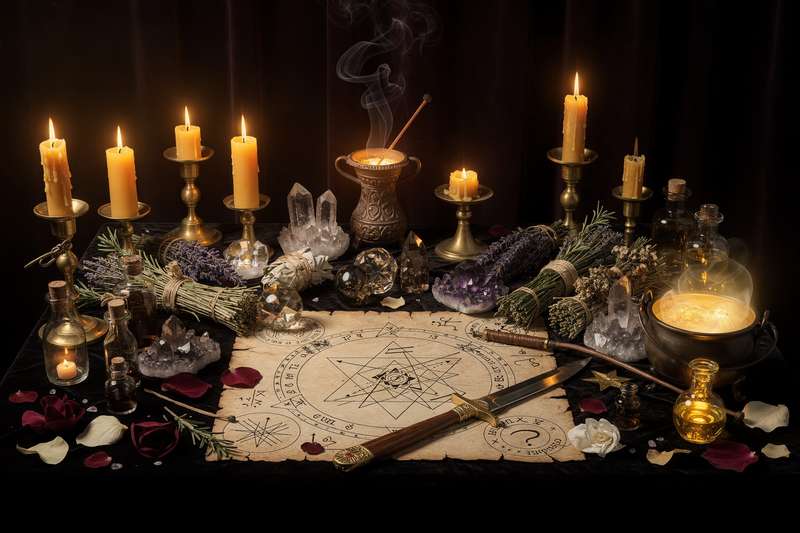
You do not need to purchase anything special to practice New Year’s Day magic. That said, these items are genuinely useful and worth gathering if you plan to develop a regular practice:
- Candles: White or unscented work for everything; color adds extra resonance.
- A fireproof dish or small cauldron: Essential for safe burning work.
- Sea salt or Himalayan salt: For cleansing baths, protective circles, and consecrating tools.
- A journal dedicated to your practice: Irreplaceable for tracking intentions and results over time.
- Dried herbs: Rosemary (purification, memory), cinnamon (prosperity, warmth), bay leaf (wishes), and lavender (peace) cover most New Year’s workings.
- Crystals: Clear quartz, citrine, and black tourmaline are a solid starting trio.
- A pen you use only for magical writing: A small but powerful act of dedication.
Ethics and Best Practices
Magical practice, whatever path you follow, tends to rest on a foundational principle: intention shapes outcome, and actions carry consequences. Before you work any ritual, ask yourself whether what you are seeking genuinely benefits you without requiring harm — to others, to yourself, or to anyone who has not given their consent to be included in your workings.
New Year’s intentions are overwhelmingly self-directed, which makes this one of the most ethically uncomplicated forms of practice. Still, be mindful about spells or rituals that attempt to bind another person’s choices, override someone else’s free will, or claim cultural practices as your own without proper understanding of their origins. Adapting global traditions with respect is very different from appropriating them without context. When in doubt, choose a simpler practice rooted in your own authentic instinct rather than borrowing something you do not fully understand.
Common Beginner Mistakes
- Trying to do everything at once: Cramming twelve rituals into one evening scatters your energy and dilutes the impact of each one. A single ritual done with full presence outperforms a dozen done distractedly.
- Skipping the cleansing step: Setting intentions in an uncleansed space is like planting seeds in soil full of weeds. The release and clearing work matters as much as the intention-setting.
- Writing vague intentions: “I want things to be better” gives the universe nothing to work with. Specific, felt, present-tense statements carry real energetic weight.
- Forgetting to ground afterward: Ritual raises energy; grounding returns you safely to ordinary awareness. Never skip this step, especially if you are new to the practice.
- Treating January 1st as the only window: The first week of January remains energetically potent. If you miss the day itself, the practice is still valid and worthwhile on January 2nd, 3rd, or beyond.
- Expecting instant results: Magic works with the natural flow of time. Your intentions for the year ahead will unfold across the year — watch for signs over weeks and months, not hours.
How to Build Your Practice Over Time
A single New Year’s Day ritual is a beautiful start, but it becomes far more powerful when it anchors a year-round practice. After January 1st, revisit your intentions at each new moon — one focused, simple check-in per month keeps your energy aligned with what you set in motion. The full moon that follows is a natural moment to release anything that has accumulated.
Beyond lunar rhythms, consider marking the other threshold days of the year — the solstices and equinoxes — with their own simple rituals. Each one carries its own quality of energy that complements the broad intention you set at New Year’s. Over time, you will find that your practice grows organically from your own experience, needs, and instincts. That organic growth is the practice becoming truly yours.
Final Thoughts
New Year’s Day magic is not about performing perfection. It is about showing up for yourself at a moment when the whole world is already oriented toward new beginnings, and choosing to make that orientation conscious. The candle, the burned paper, the written intention — these are not the magic itself. You are. The ritual is simply the frame that helps you see clearly what you already know you want, and commit to it with your whole heart.
Frequently Asked Questions
Do I have to stay up until midnight to do a New Year’s ritual?
No — midnight is a culturally significant threshold, but energetically, the entire day of January 1st carries the same quality of new-beginning energy. Many practitioners find that a morning ritual done with a clear head is more powerful than a midnight ceremony done while exhausted. Work at the time that allows you to be most present and intentional.
Can I do New Year’s Day magic if I follow a different spiritual tradition?
Absolutely. New Year’s Day magic is not tied to any single tradition. Practitioners from Wiccan, eclectic, hedge, kitchen witch, and folk magic backgrounds all observe this threshold in their own way. The practices described here are adaptable to any spiritual framework — take what fits your path and build from there.
What should I do with leftover candle wax from my New Year’s ritual?
If your candle burned completely, that is traditionally considered a sign that your intention was well-received. If wax remains, you can keep it on your altar until it naturally degrades, bury it in soil, or dispose of it respectfully away from your home. Avoid throwing ritual items in your household trash if that feels discordant to you.
Is it bad luck to skip New Year’s rituals?
Not at all. No spiritual practice should ever feel obligatory or fear-based. If you miss January 1st, or if a particular ritual does not resonate with you, nothing harmful follows. Magic works best when it comes from genuine desire and positive intention, not from anxiety about consequences.