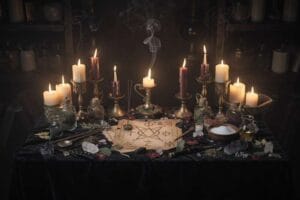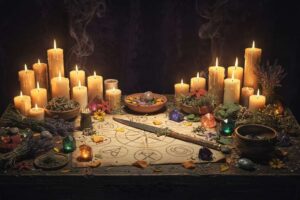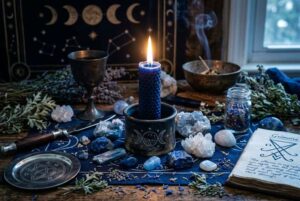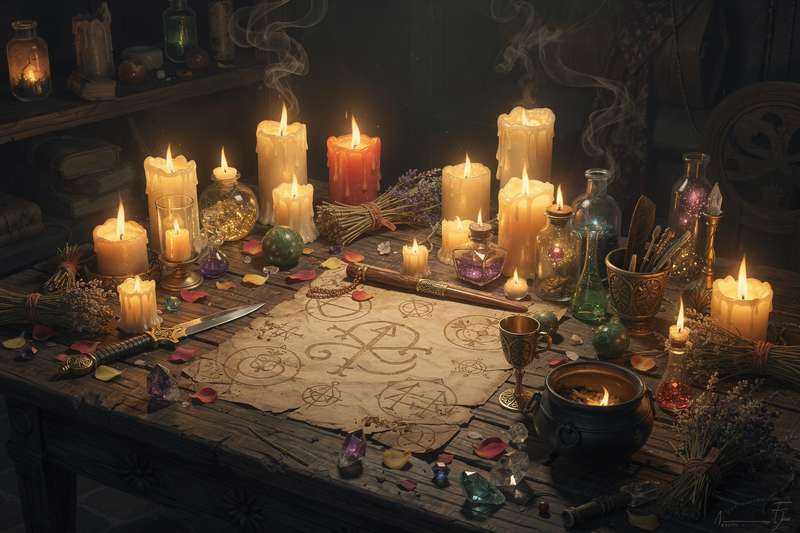
New Years Eve rituals are one of the most powerful tools in any witch’s or spiritual seeker’s toolkit — marking the threshold between the dying year and the one waiting to be born. Whether you call it a New Year’s Eve spell, an end-of-year ceremony, or simply a meaningful practice to close the chapter, the principle is the same: you show up with intention, and something shifts. This night holds a quality most other dates on the calendar don’t. It’s one of the rare moments when collective human consciousness pauses together, breathing out what was and breathing in what could be. That shared energy is real, and you can work with it. Whether you’ve been practicing for years or you’re lighting your first candle tonight, this guide walks you through everything you need — what these rituals are, the types available, a full step-by-step ceremony, and the ethics that keep your practice grounded and meaningful.
What Are New Year’s Eve Rituals?
New Year’s Eve rituals are intentional practices performed at the close of the calendar year to release what has been and actively invite in what you wish for. They exist at the intersection of magic, psychology, and cultural tradition — and you’ll find versions of them in virtually every society on earth, from the wave-jumping ceremonies of Brazil to the ancient Scottish custom of First-Footing, where the first guest to cross your threshold after midnight is believed to set the tone for your entire year.
A common misconception is that rituals must be elaborate, expensive, or tied to a formal tradition. They’re not. A ritual is simply any action performed with focused awareness and clear intention. Lighting a candle and speaking your wishes aloud is a ritual. So is writing your fears on a piece of paper and burning it safely. What lifts these acts above the ordinary is the presence and meaning you bring to them — and nothing else.
Common Types of New Year’s Eve Magical Practices
No two practitioners celebrate this night the same way — and that’s exactly how it should be. Here are the most widely practiced types of New Year’s Eve ritual work:
- Release Rituals: These focus on letting go of what no longer serves you — old habits, relationships that have run their course, grief, or limiting beliefs. The burning bowl ceremony, where you write down what you’re releasing and burn the paper safely in a fireproof bowl, is one of the most cathartic practices available to any practitioner.
- Intention-Setting Rituals: Rather than relying on willpower-based resolutions, intention-setting rituals anchor your goals in symbolic action. Carving words into a candle, writing intentions on bay leaves, or creating a charged vision board are all popular forms.
- Cleansing Rituals: Space clearing, smoke cleansing, ritual baths, and salt lines help remove stagnant energy from your home and aura before the new year arrives. Many practitioners perform these in the hours leading up to midnight.
- Abundance and Prosperity Magic: From keeping coins in every room to charging a green or gold candle with financial intentions, prosperity work on New Year’s Eve taps into the potent fresh-start energy this night naturally carries.
- Gratitude and Memory Practices: Memory jars, gratitude lists, and ancestor candles honor the year that was — including its difficult moments — before stepping consciously forward into what’s next.
Your Step-by-Step New Year’s Eve Ritual
The following ceremony can be adapted to your own path, space, and available materials. You don’t need everything listed here — use what you have and what genuinely resonates with you.
Step 1: Cleanse Your Space
Before any ceremony, clear the energy of your home. You can use smoke from dried rosemary, cedar, or mugwort — white sage is traditional but sacred to specific Indigenous communities, so many practitioners choose alternatives out of respect. Sound cleansing works equally well: bells, a singing bowl, or simply clapping your hands sharply through the corners of each room. Move through your space deliberately, working toward the area where you’ll hold your ritual.
Step 2: Set Up a Simple Altar
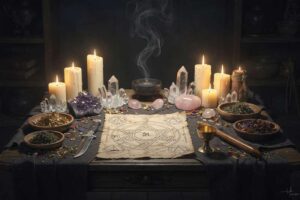
Your altar doesn’t need to be elaborate. A small table, a windowsill, or even a tray on the floor works perfectly. Place on it a white or gold candle for new beginnings, a crystal such as clear quartz or citrine, and two pieces of paper — one for what you’re releasing, one for what you’re calling in. A small bowl of salt, a few dried herbs, or any object that feels meaningful to you and the year ahead rounds it out nicely.
Step 3: Ground and Center Yourself
Before you begin working, ground your energy. Sit quietly, place your feet flat on the floor, and breathe slowly for two to three minutes. Imagine any scattered, anxious, or heavy energy draining down through your body and into the earth beneath you. Magic made from panic or desperation rarely lands cleanly — so this step matters even when it feels basic. The calmer and more present you are, the more effective your work becomes.
Step 4: Perform the Release Ceremony
Take your first piece of paper and write down everything from the past year you are ready to release. Be specific: “I release my fear of failure” or “I release the resentment I’ve been carrying” rather than vague generalities. When you’re ready, fold the paper away from you — a traditional gesture of sending something out — and burn it safely in a fireproof bowl. As the paper burns, say aloud or inwardly: “What was mine to carry, I now release. May this year close in peace.”
Step 5: Set Your Intentions
On your second piece of paper, write your intentions for the coming year in present-tense, affirmative language — as if they are already unfolding: “I am healthy and energized. I am financially secure. I welcome deep, joyful connection.” If you have bay leaves, write one key word or phrase per leaf and burn them. Bay has a long history in folk magic as a wish-carrier, and the quick, bright flash of its burn is said to send your intentions swiftly into motion.
Step 6: Anoint and Light Your Candle
Dress your candle with a few drops of oil — plain olive oil works perfectly if you have nothing more specific. Draw the oil from the center outward toward the wick when calling something in, or from center to base when releasing. Think clearly about what you want the new year to hold as you work. Light the candle and allow it to burn for at least 30 minutes while you sit, journal, or meditate nearby. A larger pillar candle can be relit each evening through the first week of January until it burns completely down.
Step 7: Mark the Midnight Moment
At midnight, step outside if you safely can — even for 30 seconds. Take a slow breath of night air, feel the shift, and speak a simple declaration: “The old year ends. The new year begins. I am ready.” If going outside isn’t an option, open a window briefly instead. Return inside with the conscious intention of welcoming what’s new.
Step 8: Close the Ritual and Ground
Thank any energies, deities, ancestors, or elements you work with. Extinguish your candle safely. Then ground yourself thoroughly — eat something nourishing, drink a glass of water, and journal a few lines about how the ritual felt, what emotions arose, and any impressions you received. This aftercare step is the one beginners most commonly skip, but it’s what anchors your intentions in physical reality rather than leaving them hovering in the energetic field.
Essential Tools for New Year’s Eve Ritual Work
You don’t need a fully stocked apothecary to perform meaningful New Year’s Eve ceremony. Here’s a practical, beginner-friendly toolkit:
- Candles: White for purity and new beginnings, gold or yellow for abundance and optimism, black for protection and banishing the old. Any candle you already own works — color is a guide, not a rule.
- Herbs: Rosemary for memory and space clearing, bay leaves for wishes and manifestation, cinnamon for warmth and abundance, lavender for peace as you step into the new year.
- Crystals: Clear quartz amplifies any intention; citrine draws prosperity and positive energy; black tourmaline grounds and protects; selenite passively cleanses the space around it throughout the evening.
- A fireproof bowl or dish: For safely burning paper during your release ceremony. Keep a lid or damp cloth nearby to smother flames if needed, and always work near a window.
- A journal and pen: For reflection, recording intentions, and noting any dreams or feelings that arise in the days following your ritual.
- Salt: For purifying your space and drawing protective boundaries around your working area.
Always work with what you already own before purchasing anything new. The magic lives in your intention — not the price of your tools.
Ethics and Best Practices for New Year Rituals
Approaching this work with care makes it both more effective and more meaningful. A few principles worth holding close:
- Harm None: The foundational ethic of most Wiccan and pagan paths centers this principle clearly. Avoid using ritual to manipulate others, override someone’s free will, or direct harm toward a specific person. Spells for general abundance and joy are very different from working magic at an individual without their knowledge or consent.
- Cultural Respect: White sage smudging carries deep sacred meaning within specific Indigenous traditions. Rosemary, cedar, mugwort, and frankincense offer similar energy-clearing properties and are widely available without the same cultural weight.
- Ground Your Intent in Action: Ritual aligns your energy and attention — it doesn’t replace real-world effort. Setting an intention for better health works most powerfully alongside genuine daily choices.
- Consent Matters: If you’re working a ritual on behalf of another person, ask them first. Their autonomy is sacred, even when your intentions toward them are entirely loving.
Common Beginner Mistakes in New Year’s Eve Rituals
Even simple ceremonies can lose their power when a few key things get skipped. Watch out for these:
- Skipping the grounding step. Performing magic while anxious, rushed, or emotionally scattered weakens your intent considerably. Even two minutes of conscious breathing changes the quality of everything that follows.
- Copying rituals without adapting them. A ceremony that moves someone else deeply may feel hollow to you. Borrow ideas freely, but adapt them until the words and actions feel genuinely yours.
- Burning materials indoors without safety prep. Always use a fire-safe bowl, keep a lid nearby to smother unexpected flames, and crack a window. Safety and magic are not opposites.
- Using vague intentions. “I want good things” gives the universe nothing to work with. Name exactly what you want to call in — specificity is an act of clarity and respect for the work.
- Forgetting to close the ritual. Leaving an energetically open ceremony is like leaving your front door wide open all night. Always ground, offer thanks, and formally close your working.
- Judging your own experience. If you don’t feel a dramatic surge of energy, that doesn’t mean nothing happened. Trust quieter impressions and let the ritual do its slower work in the weeks ahead.
How to Build Your New Year Ritual Practice Over Time
One New Year’s Eve ritual is a beginning. A practice built over years becomes something genuinely powerful and entirely your own.
Consider keeping a ritual journal, recording what you did each year, how it felt, and what came to pass in the months that followed. Over time, you’ll notice patterns — which rituals feel most alive, which intentions tend to manifest, and where your practice wants to grow next. Start simply: one candle, one intention, one moment of stillness at midnight. By year three or four, you may find you’ve built a full ceremony drawing from Wicca, folk magic, kitchen witchcraft, or wherever your path naturally leads. Let it grow on its own timeline. There’s no deadline, no finish line, and no wrong way to mark the turning of the year with sacred intention.
Final Thoughts
New Year’s Eve is one of those rare nights when the world holds its breath together. Whatever tradition you come from — or whether you’re building something entirely your own — this threshold moment is yours to work with. You don’t need permission, perfect tools, or a full coven. You need presence, honest intention, and the willingness to show up for yourself at the close of one chapter and the opening of the next. That alone is powerful magic.
Frequently Asked Questions About New Year’s Eve Rituals
What is the best New Year’s Eve ritual for beginners?
The most accessible starting point is a simple release-and-intention ceremony: write what you’re ready to let go of on one piece of paper and burn it safely, then write your intentions for the new year on a second piece and place it on your altar or in your journal. Light a white candle while you do this. It takes less than 30 minutes and requires nothing elaborate — just your honest focus and the willingness to be specific about what you want.
Can I perform New Year’s Eve rituals alone?
Absolutely — and many practitioners find solo ritual work more powerful than group ceremonies because the energy stays tightly focused on your own intentions with no distractions. Every step in this guide works perfectly for a single person working alone. Some of the most meaningful spiritual work happens in solitude, and New Year’s Eve is a particularly potent night for personal ceremony.
What crystals are best for New Year’s Eve rituals?
Clear quartz is the most versatile choice — it amplifies whatever intention you set and pairs well with any working. Citrine draws abundance, optimism, and fresh energy into the new year. Black tourmaline offers grounding and protection as you release the old. Selenite cleanses your space and tools passively and can sit on your altar throughout the entire evening.
Do I need to perform my ritual at exactly midnight?
Not at all. Midnight is symbolically powerful, but the entire evening of December 31st carries the energy of transition. You can perform your main ceremony at 9pm, mark the midnight moment with a single breath and a spoken intention, and do candle or journaling work the following morning. A calm, focused ritual performed early is far more effective than a rushed one at 11:59.