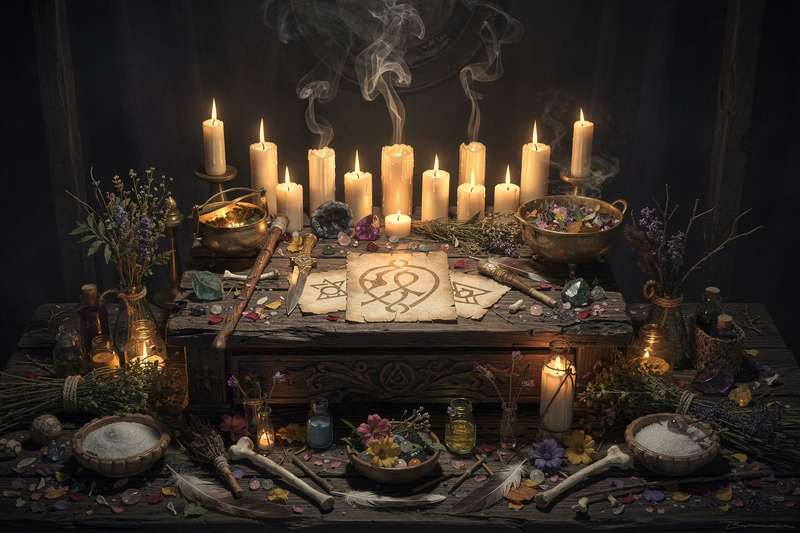
The magical properties of colors in witchcraft have guided practitioners for centuries. Long before modern psychology confirmed that color affects mood and perception, witches, healers, and spiritual workers were already using color symbolism and chromatic energy to amplify intention and direct spellwork. Whether you call yourself Wiccan, eclectic, kitchen witch, hedge witch, or simply someone curious about magic, understanding color correspondences gives you an immediate, practical tool you can weave into everyday life — no elaborate setup required.
Color magic is one of those beautiful entry points into the craft that feels both intuitive and ancient at the same time. You likely already choose what to wear based on how you want to feel. You light candles in certain shades for ambience. Color magic takes those instincts and makes them intentional. This guide walks you through everything you need to know to start working with color in your practice today.
What Is Color Magic in Witchcraft?
Color magic is the intentional use of color’s symbolic and vibrational qualities to support spellwork, ritual, and manifestation. Each color carries a unique energetic frequency — a kind of signature that resonates with specific intentions, emotions, and natural forces. When you align the colors in your ritual space, on your altar, or in your spellwork with your desired outcome, you essentially speak a visual language that your subconscious and the universe both understand.
A common myth is that color magic requires expensive tools or elaborate rituals. It doesn’t. You can practice it with a colored pen, a piece of fabric, a flower from your garden, or simply the clothes you put on in the morning. Another myth is that there is one fixed meaning for every color. In reality, associations shift across cultures and personal experience. The correspondences below are widely used starting points — treat them as a foundation, not a rulebook. Your own intuition always takes precedence.
Common Ways Witches Work With Color Magic
Color magic is refreshingly flexible. Here are the most popular forms it takes across different witchcraft traditions:
Candle Magic
Choosing the right candle color is one of the fastest ways to align your spell with your intention. A green candle for abundance, red for passion, white for purification — the color you burn acts as a constant visual anchor for your focused will throughout the ritual.
Altar Decoration and Sacred Space
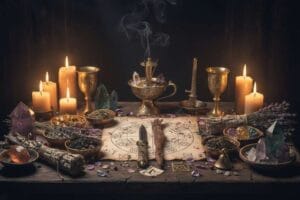
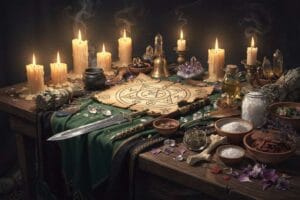
Layering your altar with colored cloths, gemstones, dried flowers, and symbolic objects in harmonious hues creates an energetic environment that supports your workings before you even begin. Think of it as setting the stage so your magic walks out ready to perform.
Glamour Magic and Daily Dress
Glamour magic uses appearance as a magical act. Wearing certain colors, choosing jewelry in specific hues, or even applying colored makeup with intention is a legitimate and powerful form of color magic that requires nothing but awareness.
Crystal and Plant Magic
Crystals and botanicals bring color magic into three dimensions. A red garnet and a green aventurine carry very different energies even though both are stones. The same logic applies to flowers — a red rose and a white rose placed on an altar send completely different magical signals.
Sigil and Written Magic
The ink color you use when writing intentions, sigils, or affirmations matters. Scribing a protection sigil in black ink, or writing a love petition in pink, subtly reinforces your intent at every glance.
Color Correspondences: A Practical Step-by-Step Reference
Below are the core color correspondences used across many witchcraft traditions. For each color, you’ll find its magical associations plus a concrete way to apply it today.
Step 1 — Red: Passion, Courage, and Vital Energy
Red is the color of blood, fire, and fierce aliveness. It carries the energy of passion, courage, physical strength, and intense emotion. In spellwork, red is called upon for love magic, protection, willpower, and anything requiring a burst of bold energy.
Try it today: Place a red candle on your altar alongside a piece of red jasper or garnet when you need the courage to take action on something you’ve been postponing. Speak your intention aloud as you light the flame.
Step 2 — Orange: Attraction, Joy, and Motivation
Orange bridges the fiery intensity of red with the optimism of yellow. It governs attraction, enthusiasm, encouragement, and the ability to adapt to sudden change. It’s an excellent color for spells aimed at drawing opportunities, boosting creativity, or lifting a low mood.
Try it today: Carry a piece of citrine or carnelian in your pocket and wear something orange — even just a scarf or socks — when you have a day that calls for magnetic, motivated energy.
Step 3 — Yellow: Intellect, Communication, and Clarity
Yellow is solar energy made visible. It supports mental clarity, communication, confidence, study, and divination. When you need to speak your truth, pass an exam, or cut through confusion, yellow is your ally.
Try it today: Light a yellow candle at your desk when studying or writing. Place a piece of citrine or yellow jasper nearby and set the intention that your mind is clear, focused, and receptive.
Step 4 — Green: Growth, Abundance, and Healing
Green is the color of the living earth — growth, renewal, fertility, prosperity, and physical healing all fall under its domain. It is among the most commonly used colors in money spells and wellness rituals.
Try it today: For a simple prosperity working, place a green candle, a piece of aventurine or green moss agate, and a fresh green fern or plant clipping on your altar. Focus on the feeling of abundance already present in your life as you light the candle.
Step 5 — Blue: Peace, Healing, and Psychic Awareness
Blue carries calm, patience, truth, and wisdom. It is deeply connected to healing — both physical and emotional — and to the development of psychic sensitivity and spiritual understanding. Shades of blue also support restful sleep and peaceful communication.
Try it today: Place a blue candle and a piece of lapis lazuli or blue lace agate near your bed to encourage peaceful dreams and intuitive clarity. Blue delphiniums or dried lavender add a botanical layer to this working.
Step 6 — Purple and Violet: Spirituality, Psychic Power, and Wisdom
Purple sits at the intersection of the physical (red) and the spiritual (blue), making it a natural color for spirit work, divination, psychic development, and deepening your meditation practice. Violet leans slightly more toward idealism and devotion.
Try it today: Burn a purple candle during your next meditation or tarot reading. Holding amethyst or lepidolite in your non-dominant hand while you work can deepen your receptivity to insight.
Step 7 — White: Purification, Protection, and Spiritual Truth
White contains all colors and therefore holds immense versatility. It is the go-to color for purification, clarity, peace, and protection. Many practitioners use white candles as a stand-in for any other color when the specific shade isn’t available.
Try it today: Burn a white candle at the start of any ritual to cleanse your space and set a clean energetic foundation. Pair it with clear quartz or selenite to amplify the purifying effect.
Step 8 — Black: Banishing, Grounding, and Transformation
Black is not an ominous color in witchcraft — it is one of the most protective and clarifying colors you can work with. It governs the banishing of negativity, energetic protection, grounding, and deep transformation. Black absorbs what no longer serves you.
Try it today: Place black tourmaline or obsidian near your front door to create a protective energetic threshold. A black candle burned with clear intention during a releasing ritual helps you let go of what is holding you back.
Step 9 — Pink, Gold, Silver, Brown, and Grey
Don’t overlook the subtler shades. Pink governs romance, affection, self-love, and nurturing — it’s distinct from red’s intensity, softer and more heart-centered. Gold carries the energy of success, ambition, inner strength, and financial fortune. Silver aligns with the moon, psychic ability, memory, and spiritual development. Brown supports grounding, home, animal companions, and practical material matters. Grey is invaluable for complex situations, neutrality, and binding negative influences without causing harm.
Essential Tools and Supplies for Color Magic
The good news: you likely already have most of what you need.
- Candles: A set of basic colored chime or pillar candles is a worthwhile investment. Start with red, orange, yellow, green, blue, purple, white, and black.
- Crystals: Build your collection slowly. Rose quartz, clear quartz, amethyst, black tourmaline, and citrine cover a wide range of intentions.
- Colored cloth or altar runners: Swapping the cloth beneath your altar tools is one of the easiest ways to shift the energy of your space for different working types.
- Flowers and botanicals: Fresh or dried flowers in corresponding colors add organic, living energy to your spells.
- A magical journal: Record which colors you use, your intentions, and what shifts you notice. Patterns will emerge over time that are uniquely yours.
- Colored pens or inks: For written spells, sigils, and affirmations.
Ethics and Best Practices in Color Magic
Color magic, like all witchcraft, works best when your intentions are clear, honest, and grounded in self-awareness. A few principles worth holding:
- Intention is everything. The color is a tool; you are the practitioner. A green candle won’t conjure prosperity if you’re casting in a fog of doubt or fear. Get clear on what you truly want before you begin.
- Respect cultural context. Some color associations carry deep cultural or religious significance beyond their general metaphysical use. Approach these with curiosity and respect rather than appropriation.
- Consent matters. When spellwork involves other people — particularly love or binding spells — consider whether your working respects their free will. Many practitioners focus love magic on drawing compatible energy rather than targeting a specific person.
- Your associations are valid. If white feels protective to you while black feels peaceful, trust that. Build a personal correspondences list alongside any traditional guide.
Common Beginner Mistakes to Avoid
- Treating color correspondences as absolute laws. They are starting points. Rigid rule-following can disconnect you from your own intuition, which is your most powerful magical tool.
- Overcomplicating your first spells. A single candle of the right color, a clear intention, and focused attention is a complete spell. You don’t need seventeen ingredients on your first try.
- Ignoring personal associations. If a certain color consistently makes you feel anxious or sad, that emotional charge will show up in your magic regardless of its traditional meaning. Note it and work with it.
- Skipping grounding and cleansing. Before any color magic work, take a moment to ground yourself and cleanse your space. Color magic amplifies whatever energy is already present — including scattered or stressed energy.
- Buying everything at once. A full set of candles in every color is lovely, but unnecessary. Start with white (versatile for any intent) and add colors as specific needs arise.
- Forgetting to record your work. Not writing down what you did, what colors you used, and what happened afterward is the fastest way to lose valuable personal data about what works for you.
How to Build Your Color Magic Practice Over Time
Color magic grows richer the longer you work with it. Start simply: pick one color this week and bring it consciously into your day. Wear it, place a flower of that hue on your windowsill, light a candle of that color during your morning quiet time. Notice how you feel. Notice what shifts.
Over months, you’ll develop a personal color language — one that blends traditional correspondences with your own lived experience and intuitive knowing. That personal layer is what makes your magic distinctly yours. No book or website can give it to you; only consistent, curious practice can build it. Trust the process, keep your journal close, and let the colors teach you as much as you study them.
Final Thoughts
Working with the magical properties of colors in witchcraft is one of the most accessible, joyful, and immediately impactful skills you can develop. It costs very little, requires no special training, and deepens your connection to your own intention and intuition with every use. Whether you are lighting your first colored candle tonight or refining a practice you’ve held for years, the chromatic world of magic is endlessly rich — and it’s waiting for you to step fully into it.
Frequently Asked Questions
What is the most powerful color in witchcraft?
No single color is universally the most powerful — it depends entirely on your intention. White is often considered the most versatile because it encompasses all colors and can stand in for any other in a pinch. In practice, the most powerful color is the one that resonates most strongly with your specific goal and your personal energetic relationship to it.
Can I use color magic without candles?
Absolutely. Color magic can be practiced through the clothes you wear, the flowers or crystals you place on an altar, the color of ink you write with, the food you eat, or even the color of the mug you choose for your morning tea ritual. Candles are popular because flame adds an extra energetic charge, but they are not required.
What does black mean in witchcraft — is it negative?
Black is not a negative color in witchcraft. It is strongly associated with protection, banishing harmful energies, grounding, and deep transformation. Many experienced practitioners consider black candles and black crystals like obsidian or black tourmaline among their most reliable tools for energetic protection and release work.
Do color correspondences change between witchcraft traditions?
Yes, and that is entirely normal. Wiccan, folk, ceremonial, and cultural traditions each have their own color lore, and individual practitioners develop personal associations over time. The correspondences widely shared online and in books are useful starting frameworks, but you are always encouraged to follow your own intuition and adjust based on what genuinely resonates with you.