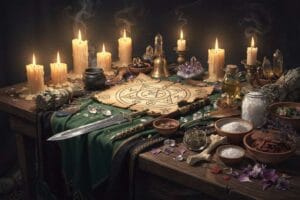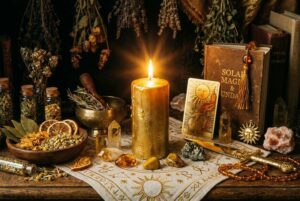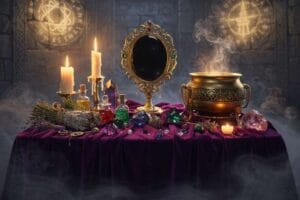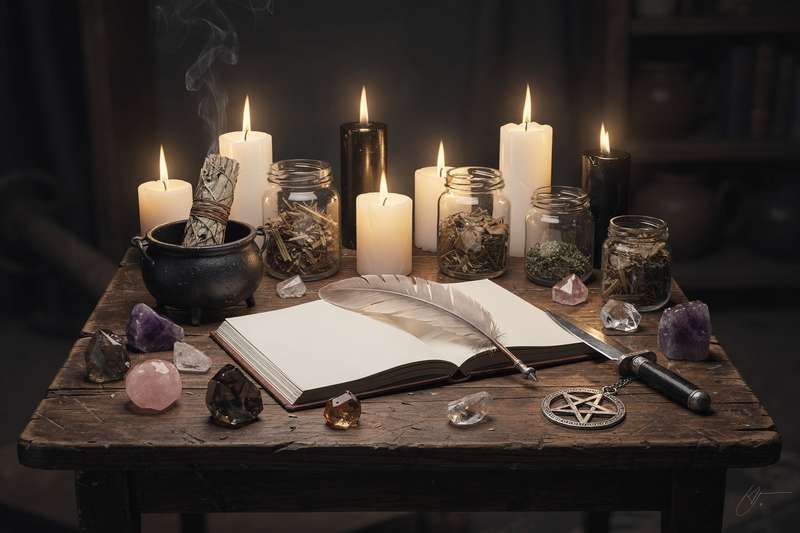
Crystals for witches serve as powerful tools for focusing intention, amplifying energy, and creating tangible connections to your magical work. Whether you’re drawn to the glittering depths of amethyst or the smooth comfort of rose quartz, working with stones offers a practical way to anchor your practice in something you can see, touch, and carry with you. Right now, more people than ever are discovering that crystal magic doesn’t require expensive collections or mystical expertise—just clarity about what you actually need and how to use it.
You don’t need fifty crystals to practice effective witchcraft. You need a handful of versatile stones, a basic understanding of how they support your intentions, and the confidence to trust your own intuition over marketing hype. This guide walks you through building a practical crystal collection that serves real magical work, not Instagram aesthetics.
What Is Crystal Magic in Witchcraft?
Crystal magic is the practice of working with stones and minerals as focal points for intention, energy work, and ritual. In witchcraft, crystals act as tools that help you concentrate your will, represent specific energies or goals, and create physical anchors for spells and manifestations.
Here’s what crystal magic is not: it’s not about rocks possessing supernatural powers that work whether you believe in them or not. The magic happens through the combination of your focused intention, the psychological associations you hold about the stone, and the symbolic meaning you assign to it. A rose quartz doesn’t emit “love vibrations” on a measurable frequency—but when you hold that smooth pink stone and consciously direct your thoughts toward self-compassion, you create a powerful ritual anchor.
Many beginners worry they’re “doing it wrong” if they don’t feel immediate energy from crystals. The truth? Crystal work is a skill that develops over time. Some witches feel tangible sensations; others work purely through symbolic association and intention. Both approaches are valid, and both produce real results in your practice.
Common Approaches to Crystal Work in Witchcraft
Different witchcraft traditions incorporate crystals in varying ways. Understanding these approaches helps you figure out what resonates with your personal practice.
Energy-Based Crystal Work: This approach treats crystals as having distinct energetic signatures or vibrations. Practitioners select stones based on their metaphysical properties, cleanse them regularly, and work with crystal grids to direct energy flow. This is popular in eclectic witchcraft and New Age-influenced practices.
Symbolic Crystal Magic: Here, crystals function as symbolic representations of your intentions. A citrine in your wallet symbolizes abundance; black tourmaline at your door symbolizes protection. The magic operates through association and ritual reinforcement rather than inherent stone energy. This approach is common in folk magic traditions.
Psychological Anchoring: This practical approach recognizes that crystals work primarily through focused attention and psychological priming. Carrying a specific stone becomes a physical reminder of your intention, creating behavioral changes that manifest your goals. Many secular and psychological witches prefer this framework.
Intuitive Crystal Selection: Some witches choose stones based purely on attraction rather than prescribed meanings. If you’re drawn to a particular crystal, you work with it and discover its purpose through direct experience. This approach is common among solitary and hedge witches.
Most experienced practitioners blend these approaches, using whatever framework serves their immediate magical goal. You don’t have to commit to one philosophy—your practice can be flexible and pragmatic.
How to Choose Your First Crystals: Step-by-Step
Step 1: Identify Your Actual Magical Needs
Before buying a single stone, get clear on what you’re actually practicing. Are you focusing on protection work? Self-love and healing? Divination and intuition development? Money and career magic? Don’t build a collection based on what looks pretty—build it based on the spells and rituals you’re actually doing or want to do in the next three months.
Write down your top three magical priorities right now. If “grounding and protection” is your main need, you’ll choose differently than someone focused on “creativity and inspiration.” This prevents the expensive mistake of buying crystals you’ll never use because they don’t serve your actual practice.
Step 2: Start With Three Versatile Foundation Stones
Every beginner witch benefits from three specific crystals that cover the widest range of magical work: clear quartz (universal amplifier and substitute for any stone), black obsidian or smoky quartz (protection and grounding), and rose quartz (emotional healing and self-love). These three stones cost $10-25 total and handle about 80% of beginner spell work.
Clear quartz amplifies whatever intention you set and can substitute for any crystal you don’t own. Black obsidian creates energetic boundaries and shields. Rose quartz supports the self-care and emotional foundation that every effective magical practice requires. With just these three, you can cast protection spells, create spell jars, charge sigils, support meditation practice, and work on self-development—which covers most beginner witchcraft.
Step 3: Add Stones for Your Specific Intentions
Once you have your foundation three, add crystals that directly support your personal magical focus. If you’re doing money magic, add citrine or green aventurine. For intuition and divination work, add amethyst or moonstone. For courage and motivation, add carnelian. For mental clarity and focus, add fluorite.
Buy one stone at a time as you need it for specific spells or ongoing work. This approach keeps costs low and ensures every crystal in your collection actually serves your practice. You’re building a toolkit, not an Instagram display.
Step 4: Learn Each Stone Through Direct Experience
When you bring a new crystal home, spend time with it before using it in spells. Sit quietly holding the stone for 5-10 minutes. Notice its weight, texture, temperature, and any thoughts or feelings that arise. Sleep with it under your pillow for a few nights. Carry it in your pocket for a week. Pay attention to any patterns or changes in your mood, dreams, or circumstances.
This personal relationship with each stone matters more than memorizing correspondence lists from books. Your direct experience tells you how a crystal wants to work with you, which may differ from traditional associations. Trust what you observe and feel.
Step 5: Cleanse and Charge Your Crystals
Most witches cleanse new crystals before first use and periodically afterward. Cleansing removes any energetic residue from previous handling; charging sets your intention into the stone. Simple cleansing methods include: running under cool water (not for soft stones like selenite), leaving in moonlight overnight, passing through incense smoke, or placing on selenite for a few hours.
To charge a crystal, hold it in your hands and clearly state your intention: “I charge this amethyst to support my intuition and enhance my divination practice.” Visualize your intention flowing into the stone. Some witches leave crystals in sunlight or moonlight after charging, though this step is optional. The key is conscious intention—the method matters less than your focus.
Step 6: Integrate Crystals Into Your Daily Practice
Crystals work best with consistent use, not sitting on a shelf. Place protection stones near your front door or in your car. Keep a clear quartz on your altar during spell work. Carry a small tumbled stone related to your current intention in your pocket or bra. Create a simple crystal grid on your workspace. Add appropriate stones to spell jars, mojo bags, or ritual baths.
The more you interact with your crystals in the context of your actual magical work, the stronger the psychological and symbolic associations become. Your brain learns that “picking up this citrine” means “focusing on abundance,” which primes your thoughts and behaviors toward manifesting financial goals. That’s practical magic.
Step 7: Track What Actually Works for You
Keep notes in your grimoire or Book of Shadows about your crystal work. When you use a stone in a spell, note which crystal, the intention, and the eventual outcome. After a few months, patterns emerge showing which stones genuinely enhance your practice and which ones don’t do much for you personally.
This empirical approach—testing and tracking—builds a crystal practice based on real results rather than theory. You might discover that carnelian gives you amazing focus while citrine does nothing, even though both are recommended for similar purposes. Your personal experience always trumps correspondence lists.
Essential Tools and Supplies for Crystal Work
Beyond the crystals themselves, you need very little to begin working with stones in your witchcraft practice. A small dish or box to store your crystals keeps them organized and prevents damage. A piece of selenite or a small bowl of salt works for cleansing. A soft cloth protects stones during transport.
If you work with crystal grids, you’ll eventually want a printed or drawn grid template and a clear quartz point for activating the grid. For spell work, small drawstring pouches let you create crystal mojo bags. A simple journal for tracking your crystal experiences helps you learn what works. None of these items cost more than a few dollars, and many are optional—you can work effectively with just the stones themselves.
Avoid buying specialized “crystal cleansing sprays,” expensive charging plates, or elaborate storage systems until you’ve been practicing for at least six months. Most of these items are unnecessary luxuries marketed to beginners. Your hands, intention, and basic household items (water, salt, moonlight) handle everything you actually need.
Ethics and Best Practices
When purchasing crystals, consider sourcing and sustainability. Many crystals are mined in conditions that harm workers or environments. Buy from vendors who can answer questions about their supply chains, or purchase second-hand stones from estate sales and thrift stores. Smaller, tumbled stones typically have less environmental impact than large raw specimens.
In your practice, respect the principle that magic should not override consent or free will. Don’t use crystals in spells intended to manipulate specific people’s feelings or choices. “I want John to love me” crosses ethical boundaries; “I want to attract a compatible partner” does not. Crystal magic amplifies your intention—make sure that intention is something you’d be comfortable announcing publicly.
Be mindful of cultural appropriation in crystal work. Some traditions have specific, sacred uses for certain stones that shouldn’t be borrowed without proper training and permission. When in doubt, stick to your own cultural or spiritual framework rather than adopting practices from closed traditions.
Finally, remember that crystals support your practice—they don’t replace practical action. If you’re doing money magic with citrine, you still need to apply for jobs, negotiate raises, or develop income streams. Magic opens doors; you still have to walk through them.
Common Beginner Mistakes
- Buying too many crystals at once: New witches often spend hundreds of dollars building elaborate collections before they know how to use any of them. Start with three to five stones maximum, learn them thoroughly, then expand slowly as specific needs arise.
- Neglecting cleansing and charging: Crystals used in magical work pick up energetic residue and lose their charge over time. If you never cleanse your stones or reset their intentions, they become less effective tools. Develop a simple monthly cleansing routine.
- Prioritizing aesthetics over function: Large, expensive crystal clusters look beautiful but often serve no practical magical purpose for beginners. Small tumbled stones in your pocket during a job interview do more actual work than a $200 amethyst cathedral on your shelf.
- Ignoring personal resonance: If a crystal is “supposed” to work for your intention but you feel no connection to it, choose a different stone. Your personal attraction and intuitive response matter more than correspondence lists. Magic requires your authentic engagement.
- Forgetting the mundane alongside the magical: Carrying a prosperity stone while ignoring your budget, avoiding job applications, or making impulsive purchases won’t manifest abundance. Crystal work enhances practical action—it doesn’t replace it.
- Storing crystals carelessly: Tossing all your stones together in a box causes scratching and damage. Harder stones (like quartz) scratch softer ones (like selenite). Use separate pouches or compartments, and keep fragile crystals on stable surfaces away from edges.
How to Build Your Practice Over Time
Your relationship with crystals should deepen gradually as your witchcraft practice develops. In your first few months, focus on learning three to five stones intimately—how they feel, how they respond to different intentions, how they integrate into your specific spells. This foundation serves you better than superficial knowledge of thirty crystals.
After six months to a year, you’ll naturally discover which types of magic you practice most. If protection work dominates your practice, expand your collection with black tourmaline, obsidian, and hematite. If you’re drawn to healing and emotional work, explore rhodonite, lepidolite, and malachite. Let your actual magical practice guide your purchases, not trend lists or aesthetic appeal.
As you gain experience, you might explore more advanced techniques like crystal elixirs (use the indirect method—never ingest crystal-infused water without verifying the stone is non-toxic), complex grids, or crystal scrying. But these advanced methods build on the fundamentals: clear intention, consistent practice, and genuine relationship with your stones. Master the basics first. Everything else follows naturally.
Final Thoughts
Working with crystals in your witchcraft practice is ultimately about creating tangible tools that help you focus your will and manifest your intentions. You don’t need expensive collections or rare specimens—you need a few good stones that resonate with you, clear understanding of your magical goals, and consistent practice. Start small, trust your intuition, and let your collection grow organically alongside your developing craft. The most powerful crystal in your practice will always be the one you actually use.
Frequently Asked Questions
Do I need to believe crystals have energy for them to work in spells?
No. Crystals work effectively as symbolic focal points and psychological anchors even if you view them as purely material objects. The combination of your focused intention, ritual context, and the physical act of working with stones creates real magical effects regardless of your beliefs about stone energy.
How often should I cleanse my witchcraft crystals?
Cleanse crystals after purchasing them, after intensive spell work, and monthly if you use them regularly. If a stone feels energetically “heavy” or stops resonating with you, that’s another sign it needs cleansing. Trust your intuition—there’s no rigid schedule that applies to everyone’s practice.
Can I use the same crystal for multiple different intentions?
Yes, especially versatile stones like clear quartz. Cleanse the crystal between different uses and reset your intention each time. Some witches prefer dedicating specific stones to specific ongoing work (like a citrine that’s always for money magic), while others use stones flexibly. Both approaches work—choose what feels right for your practice.
What’s the difference between tumbled and raw crystals for witchcraft?
Tumbled stones are polished smooth and better for carrying, while raw crystals maintain their natural form and are often preferred for grids or altar work. Magically, both are equally effective—the choice is about practical use and personal preference. Tumbled stones are more durable and affordable for beginners.