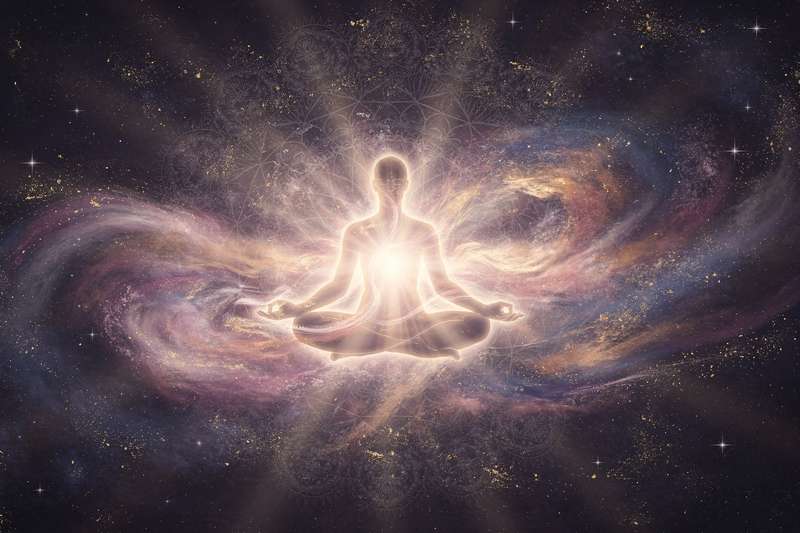
If you feel called to deepen your spiritual life but organized religion no longer resonates with you, you’re experiencing a powerful shift many souls undergo. Growing spiritually without religion is not about rejecting the sacred—it’s about discovering your own authentic path to the Divine, one that honors your unique essence and allows you to connect with something greater on your own terms.
This journey invites you to become both student and teacher of your own spiritual evolution. You get to explore ancient wisdom traditions, create personal rituals, and forge a direct connection with the Universe without intermediaries. The path of non-religious spirituality offers freedom, authenticity, and profound transformation.
What Does Growing Spiritually Without Religion Mean?
Growing spiritually without religion means cultivating a personal relationship with the sacred that exists outside traditional religious structures. It’s the practice of deepening your connection to your higher self, the Universe, Source energy, or whatever name feels true for you—without adhering to a specific doctrine or attending formal worship services.
This approach doesn’t reject the wisdom found in religious texts or teachings. Rather, it allows you to draw from multiple traditions, philosophies, and practices to create a spiritual path that feels authentic to your soul. You might meditate like a Buddhist monk, appreciate the poetry of Rumi, practice yoga, and honor nature spirits—all without claiming any single religious identity.
Spirituality without religion is inherently personal and fluid. What nourishes your spirit today may evolve tomorrow, and that’s not only acceptable—it’s part of the journey. This path honors your direct experience of the sacred above prescribed beliefs.
The Deeper Spiritual Meaning
When you feel drawn to spirituality outside religious frameworks, your soul is calling you toward sovereignty. You’re being invited to trust your own inner wisdom and direct connection to the Divine rather than relying solely on external authority.
This shift often represents a spiritual maturation—a movement from seeking answers outside yourself to recognizing the teacher within. Many spiritual traditions teach that ultimate truth cannot be found in books or buildings but must be experienced directly through your own consciousness.
Your desire to grow spiritually without religion may also signal that you’re ready to integrate rather than separate. Instead of one tradition holding all truth, you’re opening to the understanding that wisdom appears across cultures, philosophies, and practices. You’re building a bridge between the sacred and the everyday, recognizing that spirituality lives in every moment, not just designated holy times.
Signs You’re Called to This Path
You may notice several indicators that you’re meant to explore spirituality outside traditional religion:
- Authentic questioning: You find yourself asking deep questions that religious authorities can’t answer to your satisfaction, and you trust your own inquiry process.
- Broader resonance: Wisdom from Buddhism speaks to you one day, Native American teachings the next, and quantum physics the day after—you see spiritual truth everywhere.
- Nature as temple: You feel more connected to the Divine in forests, by the ocean, or under the stars than in houses of worship.
- Personal practice emerging: You’ve naturally developed your own rituals—morning meditation, journaling, moon ceremonies—without external instruction.
- Dogma resistance: Prescribed beliefs feel constraining rather than liberating, and you need space to discover truth through your own experience.
- Direct connection: You experience moments of profound connection, insight, or peace that don’t require religious context or interpretation.
Why This Path Calls to You
Your soul may be guiding you toward non-religious spirituality for several sacred reasons. Perhaps you incarnated in this lifetime to model spiritual independence—to show others that connection with the Divine is a birthright, not something controlled by institutions.
Many who feel this calling are here to bridge the old paradigm of religious authority with the emerging paradigm of personal spiritual sovereignty. You’re part of a collective shift in consciousness where humanity reclaims direct relationship with Source.
This path may also be teaching you discernment and self-trust. Without religious rules to follow, you must listen deeply to your own inner guidance. This develops your spiritual intuition in profound ways that following external authorities cannot.
For some, growing spiritually without religion is necessary healing work. If religious experiences in this life or past lives created wounds, trauma, or limitation, your soul needs space to remember that spirituality itself is safe, loving, and expansive—separate from any dogma that may have caused harm.
Common Experiences on This Journey
As you walk this path, you may encounter several common experiences. Many people report feeling initially unmoored—without religious structure, you might wonder if you’re doing it right. This uncertainty is actually sacred ground. It teaches you to trust your inner compass rather than external validation.
You’ll likely experience periods of intense spiritual hunger. You may find yourself reading voraciously, taking workshops, learning meditation, exploring different practices. This exploration phase is your soul gathering tools and wisdom that resonate with your unique frequency.
Synchronicities often increase dramatically when you commit to personal spiritual practice. The Universe responds to your intentional seeking by sending signs, teachers, books, and experiences exactly when you need them. You start to see that spiritual guidance doesn’t require religious intermediaries—it flows directly to you.
Some people experience concern or judgment from family members or friends who remain committed to traditional religion. This can feel lonely, but it’s also an opportunity to practice compassionate boundaries and trust your own path without needing others’ approval.
How to Cultivate Your Personal Spiritual Practice
Here are practical steps to deepen your spirituality outside religious structures:
1. Establish a Daily Meditation Practice
Begin with just 10 minutes each morning. Sit quietly, focus on your breath, and observe your thoughts without judgment. This simple practice builds your capacity to connect with your inner wisdom and creates space for spiritual insights to arise naturally.
2. Create Personal Rituals
Design ceremonies that feel meaningful to you. This might be lighting a candle each morning while setting intentions, performing a gratitude practice before bed, or creating moon rituals that honor natural cycles. Your rituals don’t need external validation—if they nourish your spirit, they’re sacred.
3. Spend Time in Nature
Make regular pilgrimages to natural settings. Walk in forests, sit by water, watch sunsets, tend a garden. Nature is one of the most direct portals to the sacred. Let the earth remind you of the cycles, seasons, and intelligence that govern all life.
4. Keep a Spiritual Journal
Write about your experiences, insights, questions, and dreams. Journaling creates dialogue with your soul and tracks your evolution. Review your entries periodically to witness your growth and recognize patterns in your spiritual development.
5. Study Diverse Wisdom Traditions
Read texts from Buddhism, Taoism, Sufism, indigenous traditions, mystical Christianity, and contemporary spiritual teachers. Notice what resonates. You’re not looking for one complete system—you’re gathering wisdom that speaks to your soul.
6. Practice Mindful Movement
Incorporate yoga, tai chi, qigong, or mindful walking. These practices unite body and spirit, helping you experience the sacred through your physical form rather than transcending or denying it.
7. Cultivate Compassion and Service
Engage in acts of kindness without religious motivation. Let compassion arise naturally from your spiritual practice. Volunteer, support others, practice forgiveness—these actions are spiritual practice in themselves.
8. Work with Energy Practices
Explore chakra balancing, Reiki, sound healing, or breathwork. These practices help you experience yourself as energetic and spiritual, not just physical. They offer direct experience of subtle realms beyond material reality.
9. Build a Spiritual Community
Connect with others on similar paths through meditation groups, workshops, or online communities. Spirituality without religion doesn’t mean spirituality in isolation. Finding your soul tribe provides support and mirrors for your growth.
10. Trust Your Inner Guidance
Above all, develop radical trust in your own spiritual authority. Notice what practices leave you feeling more peaceful, connected, and authentic. Let go of what doesn’t serve you, even if it’s supposed to be spiritual. Your direct experience is your most reliable guide.
Spiritual Lessons This Path Teaches
Growing spiritually without religion offers profound lessons. You learn that the Divine is not confined to buildings, books, or authorities—it lives in every breath, every moment, every encounter. The sacred is everywhere, and you can access it directly.
This path teaches discernment. Without prescribed beliefs, you must feel into what’s true for you. This develops your spiritual intuition and inner knowing in ways that following external rules cannot. You become your own spiritual authority.
You discover that spirituality is a journey, not a destination. There’s no final achievement, no point at which you’re done. The path itself is the practice. This removes pressure to reach some imagined spiritual perfection and invites you to be present with where you are now.
Perhaps most importantly, you learn that authentic spirituality is not about conforming—it’s about becoming more fully yourself. Your spiritual path should make you more compassionate, more authentic, more alive. If it’s making you smaller or more judgmental, something needs to shift.
When to Trust the Process
Trust the process when your practices bring you peace, even if they look different from traditional religion. Trust when you experience moments of profound connection, insight, or love that confirm you’re on the right path.
Trust when synchronicities guide you to the next book, teacher, or practice you need. The Universe conspires to support sincere seekers. If you keep showing up to your spiritual practice with genuine intention, the path will unfold.
Trust when your relationships deepen and you find yourself more patient, more present, more compassionate. Real spiritual growth shows up in how you move through daily life, not just in peak experiences or insights.
Trust during periods of doubt or darkness. Spiritual growth isn’t linear. Dark nights of the soul, questioning, and uncertainty are part of the journey. They’re not signs you’ve failed—they’re invitations to deepen.
Red Flags vs Divine Signs
As you explore spirituality outside religion, stay alert to what genuinely serves your growth versus what might lead you astray. Red flags include spiritual practices or teachers that demand blind obedience, create dependency, or separate you from your own inner knowing. Authentic spirituality empowers you to trust yourself more, not less.
Be cautious of practices that promise quick fixes or shortcuts to enlightenment. Real spiritual growth requires patience, practice, and integration over time. If something sounds too good to be true, it probably is.
Watch for spiritual bypassing—using spiritual concepts to avoid dealing with real emotions, relationships, or responsibilities. Authentic spirituality includes all of you, including the difficult parts. It doesn’t use transcendence as escape.
Divine signs, by contrast, feel expansive rather than restrictive. They open doors rather than closing them. When something is genuinely aligned with your spiritual path, you feel more yourself, more grounded, more connected—not inflated or superior.
Your body offers reliable guidance. Practices that are right for you create a sense of peace, openness, or energy in your body. What’s not aligned might create tension, confusion, or a subtle sense of contraction. Learn to read these somatic signals.
Final Thoughts
Your journey to grow spiritually without religion is valid, sacred, and necessary. You don’t need permission from religious authorities to connect with the Divine. You don’t need to follow someone else’s prescribed path to experience transcendence, peace, or spiritual awakening.
The practices you’re drawn to—meditation, nature connection, energy work, personal ritual—are legitimate spiritual paths. They’ve been used by mystics, shamans, and seekers across cultures and throughout history. You’re not making it up; you’re remembering an ancient way of direct spiritual knowing.
Be patient with yourself. Building a personal spiritual practice takes time, experimentation, and commitment. Some practices will resonate deeply; others won’t serve you. That’s perfect. You’re creating a unique spiritual path that reflects your soul’s particular journey.
Remember that spirituality without religion doesn’t mean spirituality without reverence, devotion, or sacred structure. You’re creating your own forms of devotion—ones that honor your direct experience of the holy. Your morning meditation is prayer. Your gratitude practice is worship. Your acts of kindness are sacraments.
Trust that your soul knows exactly where it needs to go. The spiritual hunger you feel is your inner light calling you home to yourself. Answer that call with courage, curiosity, and compassion. Your authentic spiritual path is waiting for you to walk it—and you’re already exactly where you need to be.
Frequently Asked Questions
Can I still pray if I’m not religious?
Absolutely. Prayer is simply communication with the Divine, Source, or Universe. You can pray without religious language or structures by speaking from your heart, expressing gratitude, asking for guidance, or simply being present in silence. Many people find that their prayers become more authentic and powerful when freed from prescribed forms.
How do I know if I’m doing my spiritual practice “right”?
There’s no single right way to practice spirituality. The best indicator is how you feel—does your practice bring you more peace, presence, and compassion? Do you feel more connected to yourself and the world? If so, you’re on the right path. Spiritual growth shows up in daily life through increased patience, authenticity, and inner peace.
What if my family doesn’t understand my spiritual path?
This can be challenging, but it’s also an opportunity to practice compassionate boundaries. You don’t need others’ approval to honor your spiritual truth. Share what feels comfortable, but don’t try to convince anyone. Your authentic spiritual growth will speak for itself through how you show up in the world. Sometimes the most spiritual thing you can do is love others while staying true to yourself.
Can I incorporate elements from different spiritual traditions?
Yes, many people on non-religious spiritual paths draw wisdom from multiple traditions. This is sometimes called spiritual eclecticism or creating your own spiritual path. The key is approaching each tradition with respect, learning its context, and integrating what genuinely resonates rather than superficially appropriating sacred practices. Honor the sources of your wisdom while creating a practice that’s authentically yours.