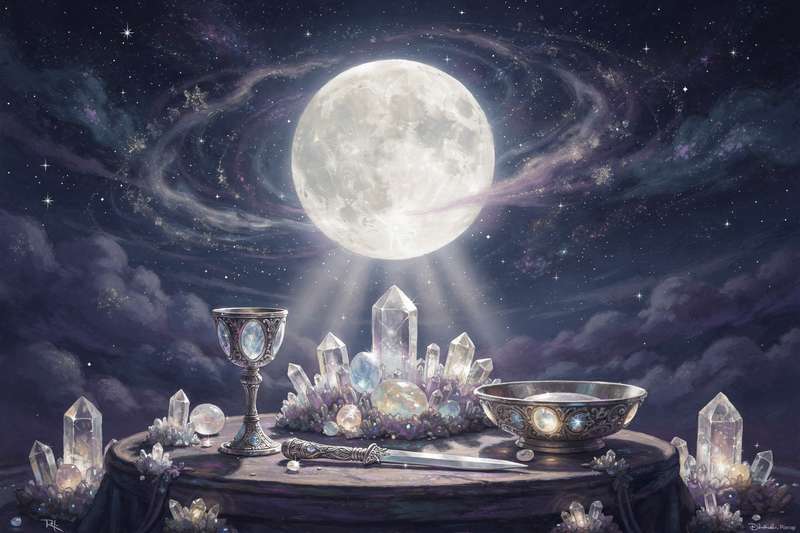
What Are Moon Transits in Astrology?
Moon transits are the moment-to-moment movements of the Moon through the zodiac as it forms angles — conjunctions, sextiles, squares, trines, and oppositions — to the planets in your natal chart. Because the Moon is the fastest-moving body in astrology, changing signs roughly every two and a half days and completing its full zodiac cycle in approximately 29.5 days, its transits are brief, vivid, and deeply personal. Unlike the slow, structural shifts caused by Saturn or Pluto, Moon transits are the daily emotional weather of your inner world — subtle but immediate, and absolutely trackable.
Every few hours, the Moon shifts its relationship to another natal planet, coloring your mood, altering your instincts, and opening — or closing — small windows of opportunity. When the Moon touches your natal Sun, you feel personally seen. When it squares your Mars, frustration surges. When it trines your Venus, love flows easily. Learning to read these patterns is one of the most practical and rewarding skills in all of predictive astrology.
Moon Transits and Their Position in the Lunar Cycle
The lunar cycle itself provides the backdrop against which all Moon transits play out. The Moon moves through eight recognizable phases — from New Moon through Waxing Crescent, First Quarter, Waxing Gibbous, Full Moon, Waning Gibbous, Last Quarter, and Balsamic Moon — before returning to dark and beginning again. Within each of these phases, the Moon is simultaneously forming aspects to every planet in your chart, layering the broad emotional tone of the phase with highly specific personal triggers.
The New Moon, when the Moon conjoins the Sun, marks what astrologers call your personal new beginning — a moment when your needs and wants align and new undertakings carry extra power. The Full Moon (Moon opposite Sun) brings tension between instinct and action to the surface, often revealing what you have been quietly building — or quietly avoiding. Between these poles, every transit the Moon makes to your natal planets acts as a smaller story within the larger monthly arc.
Because the Moon never goes retrograde — unlike Mercury, Venus, or Saturn — its motion is always direct and forward. There is no reversal, no review period. Each transit arrives, peaks, and passes, often within hours. This is why Moon transits reward attentiveness. Miss the window and the energy moves on; catch it consciously and you can ride a very real current.
Spiritual Meaning of Moon Transits
Spiritually, the Moon represents the soul’s emotional body — its instincts, memories, inherited patterns, and its hunger for belonging. When the Moon transits a natal planet, it is essentially shining a light on that planet’s themes through the lens of feeling rather than thought. You do not analyse the transit so much as experience it.
Moon conjunct Neptune, for instance, opens a door between your conscious mind and the deeper waters of the subconscious — perfect for prayer, meditation, dreamwork, and creative inspiration, but treacherous for contracts or hard decisions. Moon trine Pluto, by contrast, gives you emotional courage and the instinct to clear what no longer serves, making it ideal for releasing old habits or beginning transformative inner work.
From a spiritual perspective, the Moon’s transits are invitations. Each contact with a natal planet asks you a question: How are you feeling about this area of life right now? The square aspects press the question with urgency. The trines and sextiles offer answers with ease. The oppositions hold a mirror up. Whether you receive the transit as friction or grace often depends on your willingness to be honest with yourself in the moment it arrives.
“Honor your feelings, reach into your well, and pull out the feelings that support your larger goals.” — Cafe Astrology on Moon conjunct Moon
Energy and Vibration of Moon Transits
Not all Moon transits carry the same charge. Astrologers group them by aspect type, and each type has a distinct energetic signature:
- Conjunctions — intensify and merge. The Moon fuses with the natal planet’s energy, amplifying its themes in a raw, unfiltered way.
- Sextiles — open doors. These are cooperative, flowing contacts that offer mild boosts of clarity, warmth, or opportunity without demanding action.
- Squares — create productive friction. They surface what is out of alignment and push you toward resolution, often through a moment of irritation or honest self-examination.
- Trines — flow and ease. The most comfortable aspect, trines allow your emotions and the planet’s gifts to move together without resistance.
- Oppositions — ask for balance. They pull two parts of your chart in opposite directions, revealing the tension between competing needs — inner versus outer, personal versus public, past versus present.
Moon transits to personal planets — Sun, Moon, Mercury, Venus, Mars — tend to feel the most immediate, the most skin-close. Transits to outer planets — Saturn, Uranus, Neptune, Pluto — often carry a weightier or more otherworldly quality, as if a larger force is briefly making contact with your everyday emotional life.
Best Intentions to Set Under Moon Transits
Because Moon transits shift quickly, setting intentions that are tightly aligned with the current lunar aspect maximizes their impact. Here are the most potent windows and what to focus on within each:
- Moon conjunct or trine Sun — Set intentions around personal identity, confidence, and fresh starts. Your inner world and outer expression are in harmony.
- Moon conjunct or trine Venus — Ideal for love, beauty, creativity, financial attraction, and nurturing existing relationships.
- Moon conjunct or trine Jupiter — Expand. This is your brief monthly pocket of luck, optimism, and abundant thinking. Dream bigger than usual.
- Moon conjunct or trine Mercury — Excellent for clear communication, important conversations, studying, writing, and public speaking.
- Moon sextile or trine Saturn — Set intentions around discipline, long-term plans, and practical goals. What you commit to now tends to hold.
- Moon conjunct or trine Pluto — Perfect for inner transformation, releasing old patterns, and setting intentions around deep personal change.
- Moon conjunct or trine Neptune — Spiritual intentions, creative visions, prayer, and dreamwork carry extra power in this window.
Rituals for Moon Transits
Working intentionally with Moon transits does not require elaborate ceremony — what matters most is timing and awareness. These rituals are designed to be simple, repeatable, and deeply effective.
- Daily Moon Sign Check-In — Each morning, note which sign the Moon is in and which natal planets it is approaching. Set a small, emotionally honest intention for the day based on that energy. Moon in Aries calls for bold action; Moon in Pisces invites rest and reflection.
- Transit Journaling — When the Moon aspects a natal planet, pause for five minutes and write freely about whatever you are feeling. This practice builds emotional intelligence over time and helps you recognize your own transit patterns.
- Candlelight Meditation for Moon Conjunctions — When the Moon conjoins a natal planet, light a candle in the color associated with that planet (gold for the Sun, green for Venus, red for Mars, blue for Jupiter) and meditate for ten minutes on the themes that planet governs in your life.
- Cleansing Ritual for Moon Square or Opposition Transits — During tense aspects, cleanse your space and your energy field with smoke, sound, or salt water. This does not banish the transit’s lesson — it helps you receive it with more clarity and less reactivity.
- Gratitude Practice Under Moon Trine Venus or Moon Trine Jupiter — Write three specific, emotionally resonant things you are grateful for. These transits amplify positive emotional magnetism, and gratitude acts as an amplifier of what you want to attract.
- Dream Incubation Under Moon Conjunct or Sextile Neptune — Before sleep, write a single question you want guidance on. Place it under your pillow with a piece of amethyst or selenite. Upon waking, record any dreams or impressions immediately.
- Release Ceremony Under Moon Opposite Pluto or Moon Square Pluto — Write what you are ready to let go of on a piece of paper. Read it aloud, acknowledge its place in your story, then safely burn or tear it and release the remnants to the earth. These transits support deep emotional clearing.
Crystals and Tools for Moon Transits
Certain crystals resonate with the Moon’s energy and can be used as anchors during specific transits:
- Moonstone — The quintessential lunar crystal. Use it during any Moon transit to amplify intuition and emotional clarity, especially during Moon conjunct Neptune or Moon trine Neptune.
- Selenite — Cleansing and high-vibrational. Ideal for clearing stagnant emotional energy during square and opposition transits.
- Labradorite — Strengthens psychic perception and emotional resilience. Particularly potent during Moon conjunct Uranus or Moon trine Pluto transits, when sudden insight or transformation is possible.
- Rose Quartz — Softens emotional reactivity and opens the heart. Reach for this stone during Moon square Venus or Moon opposition Venus transits to ease social friction.
- Black Tourmaline — Grounding and protective. Use during Moon square Saturn or Moon conjunct Pluto transits when emotional intensity is high and you need anchoring.
Other useful tools include an ephemeris or transit-tracking app (so you always know where the Moon sits), a dedicated journal, and a simple altar space where you can acknowledge the Moon’s daily movement with intention.
Tarot Spread for Moon Transits
This three-card spread is designed to be used at the start of any significant Moon transit — especially a conjunction or opposition to a natal planet:
- Card One — What the Moon is illuminating: The core emotional theme or pattern being activated by this transit.
- Card Two — What the natal planet needs: How the planet being aspected wants to express itself during this energy window.
- Card Three — Your invitation: The action, awareness, or surrender this transit is asking of you in the next few hours or days.
Pull the cards before journaling, and let the imagery deepen whatever you are already sensing in your emotional body. The High Priestess often appears during Moon-Neptune contacts; The Tower during Moon-Uranus squares; The Star during Moon-Jupiter trines. Notice the patterns over many lunar cycles and you will develop an intimate language between your inner world and the cards.
Manifesting With Moon Transits
Manifestation works best when your emotional state is coherent — when what you feel, think, and act on are all pointing in the same direction. Moon transits offer brief but reliable windows when this coherence is naturally available to you.
The Moon conjunct Sun transit — your personal New Moon — is perhaps the most powerful monthly manifestation moment. Your needs and wants are aligned, confidence rises without effort, and what you put into motion tends to gain traction. Set your intentions here with specificity and feeling.
Moon trine Jupiter is another golden window. Optimism is genuine, the instinct toward expansion is clean, and any intention seeded under this influence carries an undercurrent of abundance. Keep it practical, not excessive — Jupiter can encourage overreach, so pair your vision with gratitude for what you already have.
During challenging transits — Moon square Saturn, Moon opposition Pluto — manifestation is not blocked so much as redirected inward. These are the moments when manifesting means clearing resistance, not adding desire. What you release during these windows creates the space for what you want to arrive during the easier ones.
Journal Prompts for Moon Transits
Use these prompts as the Moon moves through different aspects in your chart. You do not need to use them all — choose whichever feels most alive for the transit you are currently experiencing.
- What emotion keeps surfacing today, and what natal planet might it be connected to?
- Where in my life do I feel most in flow right now — and what transit might be supporting that ease?
- What tension am I carrying that a current square or opposition transit might be asking me to examine?
- If the Moon’s current aspect to my natal chart were a message, what would it be asking me to do, feel, or release?
- What new beginning is calling to me right now, and how can I align my emotional state with that seed?
- What habitual emotional reaction have I noticed during this transit that I would like to transform over time?
- How did I feel when the Moon was in this same position last month? What has changed — or stayed the same?
Frequently Asked Questions About Moon Transits
How long do Moon transits last?
Most Moon transits to natal planets are felt for just a few hours — sometimes as little as two to four hours around the exact aspect. The Moon’s transit through an entire house, however, lasts roughly two to three days, giving that house’s themes a longer period of emotional emphasis each month.
Are Moon transits as important as outer planet transits?
Moon transits are brief and personal rather than structurally life-changing. Outer planet transits — especially Saturn, Uranus, Neptune, and Pluto — shape major life chapters over months or years. Moon transits are the daily emotional texture within those larger stories. They matter most for timing decisions, planning events, and tuning into your own emotional rhythms.
Does the Moon ever go retrograde?
No — the Moon never goes retrograde. Unlike Mercury, Venus, Mars, and the outer planets, the Moon’s motion through the zodiac is always direct and forward. This makes it unique among the major astrological bodies and means that its transits always move cleanly from sign to sign without reversal or review periods.
How can I track Moon transits in my own chart?
You can use an astrology app or an online ephemeris to see where the Moon is each day and which of your natal planets it is aspecting. Over time, keeping a transit journal — noting the Moon’s sign and major aspects alongside how you actually feel — is one of the most effective ways to personalise the interpretations and recognise your own recurring patterns.