Beginner tarot spreads are the bridge between a brand-new deck sitting on your shelf and a genuine, flowing practice that actually tells you something useful. If you’ve ever pulled a card and stared at it blankly wondering what on earth it means for your life right now, you’re not alone — and the answer is almost always structure. The right spread gives each card a job to do, a clear question to answer, and a specific place in a larger story. Whether you’re working with a classic Rider-Waite-Smith deck or any other 78-card deck that caught your eye, these easy tarot layouts will help you build confidence, sharpen your intuition, and start receiving genuine guidance from the very first reading.
When to Use These Beginner Tarot Layouts
The spreads covered here — from a single daily card to a five-position love or career layout — are designed for moments when you want clarity without complexity. You don’t need years of experience to use them effectively. What you do need is a genuine question, an open mind, and a few quiet minutes to sit with the cards.
These simple tarot spreads work beautifully for:
- Daily check-ins — pulling one card each morning to understand the energy of the day ahead.
- Decision-making moments — when you’re weighing two paths and need an outside perspective.
- Emotional processing — when something happened and you want to understand it from multiple angles.
- Relationship questions — exploring the dynamics, obstacles, and potential of a connection.
- Career and finances — getting a broader view of where you are and what’s influencing your situation.
The guiding principle is this: ask a question you genuinely care about, use a spread that matches the complexity of that question, and trust what comes up.
How to Lay Out Your Tarot Spread
Before you draw a single card, ground yourself in the moment. Sit comfortably, take a few slow breaths, and hold your question clearly in your mind. You might even say it aloud. Then shuffle your deck in whatever way feels natural — some people prefer a traditional riffle shuffle, others prefer the slower process of cutting and restacking. There’s no wrong method.
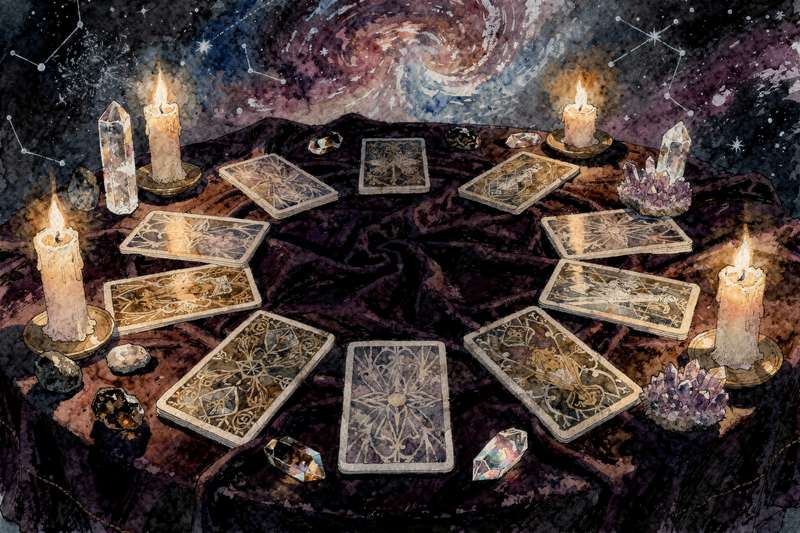
When you feel ready, stop shuffling and draw cards one at a time, placing them face down in the numbered positions of your chosen spread. Once all cards are placed, turn them over left to right (or position 1 through the last position), reading each one before moving to the next. This sequential approach keeps you present with each card rather than getting overwhelmed by the full picture at once.
Keep a tarot journal nearby. Even a few written notes per reading dramatically accelerates how quickly patterns and meanings become second nature.
Position-by-Position Breakdown of Every Beginner Spread
The One-Card Daily Pull
The single-card spread is the most powerful starting point in all of tarot — not because it’s simple, but because it forces you to extract real meaning from one image. Every day, this one card becomes your lens. It might confirm something you already sense, or it might challenge you to look at your day from an entirely new angle.
Ask: “What energy is present for me today?” or “What do I most need to be aware of right now?” Draw one card and sit with it. Notice the colors, the figures, the symbols. What’s the mood of the card? Does it feel like a warning, an invitation, or a reassurance? Write down your first impression before you check any guidebook — your gut response is data.
Over time, a daily one-card practice teaches you the 78 cards through lived experience rather than memorization. You’ll remember the Ten of Swords not as a definition but as the morning you pulled it before a difficult conversation at work.
Three-Card Spread — Position 1: The Past
The three-card spread is the workhorse of beginner tarot, and the Past-Present-Future layout is the most universally useful version. Position 1, placed on the left, represents the past — the events, energies, and patterns that have led directly to your current situation.
When reading this position, look for cards that explain the why of where you are today. A card like the Five of Cups here might indicate a past loss or disappointment that’s still casting a shadow. The Ace of Pentacles might point to a seed of potential that was planted and is now growing into something real.
Don’t get stuck in regret when reading the Past position. Its purpose isn’t to dwell — it’s to help you understand the roots so you can tend to the present with more wisdom.
Three-Card Spread — Position 2: The Present
The center card in a three-card spread holds the heart of the reading. This is your current reality — the energies actively at play in your life right now, the crossroads you’re standing at, and the emotional or practical truth of your situation today.
This card often feels the most immediate and sometimes the most uncomfortable, because it reflects what actually is rather than what was or what might be. If you pull the Tower here, it’s an invitation to acknowledge upheaval honestly rather than avoid it. If you pull the Star, it’s confirmation that hope and healing are genuinely present, even if they feel fragile.
Pay special attention to how the Present card relates to the Past card. Do they form a logical progression? Does the energy shift dramatically? That relationship between positions 1 and 2 is where the story of your reading begins.
Three-Card Spread — Position 3: The Future
The card on the right represents the most likely outcome or energy ahead — not a fixed prophecy, but the probable direction things are heading given your current path. Think of it as a weather forecast rather than a verdict.
If the Future card feels uncomfortable, remember that tarot’s job is to inform your choices, not to lock you into a particular destiny. A difficult card here is an opportunity to make different decisions now. A positive card confirms you’re moving in a direction worth continuing.
When interpreting the Future position, always consider it in the context of the full three-card story. The Justice card as a future outcome reads very differently after a past of Five of Swords (conflict and manipulation) versus a past of Six of Cups (nostalgia and old connections).
Alternative Three-Card Spread: Situation, Obstacle, Advice
This variation is especially useful when you’re facing a specific challenge and need practical guidance rather than a timeline. Position 1 describes the core situation — the factual or emotional landscape you’re working within. Position 2 names the obstacle — the block, fear, or blind spot that’s making things harder. Position 3 offers advice — the action, mindset, or quality to cultivate.
The Obstacle card is often the most revealing, because it surfaces things we’d rather not see. Treat it with curiosity instead of resistance. A card like the Eight of Swords in this position doesn’t mean you’re trapped — it means the trap is largely mental and self-imposed, which is actually very empowering information.
Five-Card Spread — Love and Relationships
Once you’re comfortable with three-card spreads, a five-card layout opens up more nuance. For love and relationship questions, a solid five-card layout looks like this:
- You — your energy, feelings, and approach to this relationship right now.
- The Other Person — their energy, feelings, or perspective (as the cards reflect it).
- The Dynamic Between You — what’s happening in the space where you two meet.
- The Challenge — what’s creating friction or blocks.
- The Potential — where this connection can go if both people show up fully.
Reading positions 1 and 2 side by side is particularly illuminating. Do the cards feel complementary or in tension? Do they suggest two people in similar emotional places, or people at very different stages?
Yes/No Tarot Spread
Yes/No spreads are the simplest method for a direct binary question, and they work best when your question genuinely has a yes-or-no answer (not all questions do). For a single-card yes/no pull, upright cards generally suggest yes, reversed cards generally suggest no or not yet — though you’ll want to establish your own system and stick to it consistently.
For a three-card yes/no spread, draw three cards and read the overall energetic majority. Two upright and one reversed leans yes. Two reversed and one upright leans no. All three aligned in one direction gives you a clearer signal. Pay attention to the specific cards too — the Wheel of Fortune upright points to a resounding yes; the Moon reversed often suggests confusion or hidden information that means the answer isn’t clear yet.
Reading the Cards Together as a Whole Story
Individual card meanings are only half the work. The real insight comes from how the cards speak to one another across positions. Look for patterns in the suits — a spread dominated by Cups speaks to emotional terrain; Swords point to mental conflict or clarity; Wands suggest action and passion; Pentacles ground things in the material world.
Notice if Major Arcana cards cluster in certain positions. A Major Arcana card in the Advice position carries more weight than a Minor Arcana card there — the universe is offering a deeper teaching, not just a practical tip.
Ask yourself: if these cards were frames of a short film, what would the story be? What’s the emotional arc from position 1 to the final position? That narrative instinct — more than any memorized meaning — is what makes readings feel alive and genuinely useful.
Sample Reading Example
Imagine you ask: “What do I need to know about a new friendship I’m developing?” You draw a Past-Present-Future three-card spread and receive:
- Past: Six of Cups — warmth, nostalgia, a sense of innocent openness
- Present: Two of Cups — genuine mutual connection, early-stage emotional resonance
- Future: Three of Pentacles — collaboration, shared projects, building something together
The story here is encouraging. The Six of Cups suggests this connection touches something wholesome and authentic in you — perhaps it reminds you of bonds you valued in the past. The Two of Cups confirms that the reciprocity you feel is real. And the Three of Pentacles as a future card points toward this friendship growing into something collaborative and grounded. The guidance is clear: invest in this connection with intention, because it has real staying power.
Common Mistakes to Avoid
- Asking the same question multiple times in one session. If you don’t like the first answer, pulling more cards rarely helps — it usually creates more confusion. Trust the initial draw.
- Ignoring your gut reaction. Before you look anything up, notice how the card makes you feel. That first flash of intuition is almost always worth recording.
- Over-relying on reversals too soon. Many beginners do better reading all cards upright first. Add reversals once you feel solid with the core meanings.
- Treating every reading as a prophecy. Tarot shows probable energies and patterns, not fixed futures. Stay curious and empowered, not fatalistic.
- Skipping the journaling. The fastest way to truly learn tarot is to write down what you drew and revisit those notes after the situation has unfolded. The patterns you notice over time will astonish you.
Final Thoughts
Every experienced tarot reader started exactly where you are — holding a deck that felt unfamiliar, wondering if they were doing it right. The truth is, there is no perfect technique, only a deepening relationship with the cards built through regular, curious practice. Start with one card a day. Graduate to three. Let the spreads guide you into conversation with your own intuition. The wisdom you’re looking for is already within you — the cards just help you hear it more clearly.
Frequently Asked Questions About Beginner Tarot Spreads
What is the best tarot spread for absolute beginners?
The single daily card pull is genuinely the best starting point — it’s low-pressure, fast, and teaches you the 78 cards through real-life context rather than rote memorization. Once that feels natural, the three-card Past-Present-Future spread is the ideal next step, offering more depth without overwhelming complexity.
Do I need to memorize all 78 tarot card meanings before I can do a spread?
Not at all. Most experienced readers will tell you that memorization is far less important than developing your intuitive relationship with the imagery. Start pulling cards, record your impressions, check a guidebook afterward, and let the meanings build organically over time. The cards teach themselves through consistent use.
Can I use any tarot deck for beginner spreads?
Yes, though the Rider-Waite-Smith deck (first published in 1909) is widely recommended for beginners because its illustrated pip cards make intuitive reading easier — every card, including the numbered Minor Arcana, features a full scene rather than just symbols. That visual storytelling makes interpretation far more accessible when you’re starting out.
How often should I do a tarot reading as a beginner?
A daily one-card pull is an ideal rhythm — it keeps the practice consistent without burning you out. For deeper three- or five-card spreads, once or twice a week on specific questions works well. Avoid reading on the same question more than once in a short period, as it tends to muddy rather than clarify the guidance you receive.