Your birth chart calculator is the most powerful tool you’ll find for understanding your astrological DNA. This natal chart reveals your Sun sign, Moon sign, Rising sign, and every planetary placement at the exact moment you took your first breath. Think of it as your soul’s fingerprint—a cosmic map that shows who you are, what you came here to learn, and how you naturally move through the world.
Unlike generic horoscopes that only look at your Sun sign, a complete birth chart calculator considers the positions of all planets, your Ascendant, house placements, and the aspects connecting them. This creates a richly detailed portrait of your personality, relationships, career path, and inner world.
What Is a Birth Chart?
A birth chart—also called a natal chart—is a snapshot of the sky at the precise moment and location of your birth. It maps the positions of the Sun, Moon, and planets across the twelve zodiac signs and twelve astrological houses. Each placement tells part of your story.
Your Sun sign represents your core identity and life force. Your Moon sign governs your emotional nature and inner world. Your Rising sign (Ascendant) shapes how others perceive you and how you approach new situations. Beyond these, Venus describes how you love, Mars shows how you take action, Mercury reveals how you communicate, and the outer planets—Jupiter, Saturn, Uranus, Neptune, and Pluto—map your growth, challenges, and generational themes.
The houses add another layer, dividing your chart into twelve life areas: self-identity, finances, communication, home, creativity, health, partnerships, transformation, philosophy, career, community, and spirituality. Where planets land in these houses shows which life areas receive the most cosmic energy and attention.
The Components of Your Natal Chart
- Planets: The actors in your story—what energies you express
- Signs: The costumes the planets wear—how those energies express themselves
- Houses: The stages where the action happens—which life areas are affected
- Aspects: The conversations between planets—harmonious or challenging angles that shape your inner dynamics
How to Calculate Your Birth Chart
Calculating your birth chart requires three essential pieces of information: your birth date, exact birth time, and birth location. The date determines your Sun sign and gives approximate positions for slower-moving planets. The time is crucial—it sets your Rising sign and house system, which shift approximately every two hours. Your birthplace allows the calculator to adjust for geographic coordinates and time zone differences.
Most modern birth chart calculators use the Placidus house system, though other systems like Whole Sign or Equal House are also valid. The calculation converts your local birth time to Universal Time, then uses astronomical data (called an ephemeris) to determine where each planet was positioned in the zodiac at that moment.
What If You Don’t Know Your Birth Time?
If your birth time is unknown, you can still generate a meaningful chart. Enter noon as your birth time to get accurate planetary sign placements. You won’t have access to your Rising sign or house positions, but you’ll still discover your Sun, Moon, Mercury, Venus, Mars, Jupiter, Saturn, and outer planet signs. The Moon moves approximately one degree every two hours, so on some days it may have changed signs—in those cases, you’ll see a range of possibilities.
For the most accurate reading, check your birth certificate, hospital records, or ask family members who were present at your birth. Even an approximate time window (morning, afternoon, evening) can narrow down possibilities.
Understanding Your Birth Chart Results
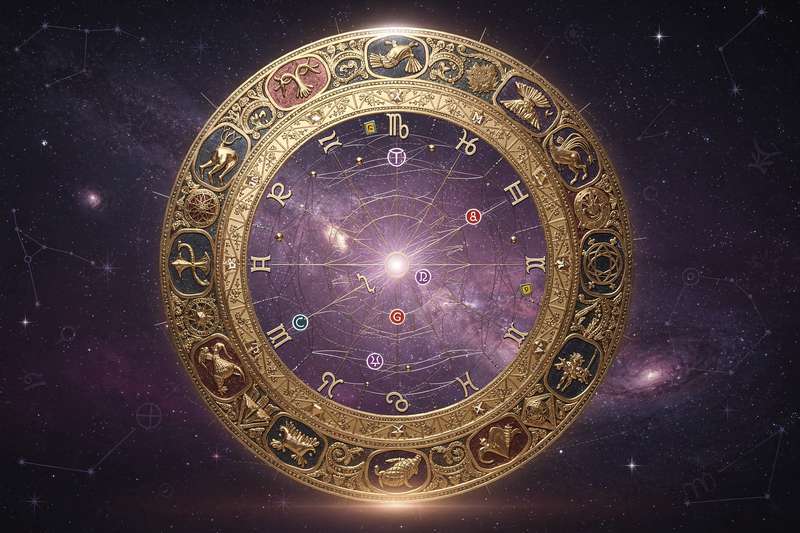
Once you’ve calculated your natal chart, you’ll see a circular diagram divided into twelve sections (the houses) with symbols representing planets and zodiac signs. This can feel overwhelming at first, but focus on these core elements to begin your interpretation.
Your Big Three
Start with your Sun, Moon, and Rising signs—astrologers call these your “Big Three.” Your Sun sign shows your fundamental character and what energizes you. Your Moon sign reveals your emotional needs, instincts, and how you process feelings. Your Rising sign describes your outward persona, physical appearance, and approach to life.
For example, a person with Sun in Virgo, Moon in Pisces, and Gemini Rising might have a practical, service-oriented core (Virgo Sun), a deeply intuitive and compassionate emotional world (Pisces Moon), and come across as curious, talkative, and adaptable to others (Gemini Rising). These three layers work together, sometimes harmoniously and sometimes in tension.
Personal Planets: Your Day-to-Day Experience
Mercury, Venus, and Mars are called the personal planets because they move quickly and describe your everyday behavior. Mercury in your chart shows how you think, learn, and communicate. Venus describes what and how you love, your aesthetic preferences, and what brings you pleasure. Mars reveals how you assert yourself, take action, and handle conflict.
These planets are usually found close to your Sun sign, but not always. You might be a Cancer Sun with Mercury in Gemini, giving you the emotional depth of Cancer but the quick, versatile communication style of Gemini.
Social and Outer Planets: Your Growth Edge
Jupiter and Saturn are the social planets, bridging personal and collective themes. Jupiter shows where you expand, seek meaning, and experience good fortune. Saturn points to where you face lessons, responsibilities, and mature over time.
Uranus, Neptune, and Pluto move so slowly that entire generations share the same placements. These outer planets describe collective shifts, but their house positions in your chart show where you personally experience revolution (Uranus), spiritual longing (Neptune), and deep transformation (Pluto).
How Your Birth Chart Affects Your Life
Your natal chart isn’t a fixed destiny—it’s a map of potentials, showing both gifts and growing edges. The planetary placements describe energies you were born with, but how you express them evolves throughout your life.
In Relationships
Your Venus sign and house describe what you value in love and how you express affection. Your Mars sign shows how you pursue what you desire and handle passion. The 7th house (the house of partnership) reveals what you seek in committed relationships. If you have Venus in Taurus in the 7th house, you crave stability, sensuality, and loyalty in partnerships. Venus in Aquarius in the 11th house might prioritize friendship, freedom, and shared ideals with a partner.
In Career and Purpose
Look to your Midheaven (the cusp of the 10th house) for clues about your public role and career path. Your 6th house describes your daily work style and health routines. The sign and planets in these houses offer guidance. A 10th house Capricorn suggests leadership and ambition in traditional fields, while a 10th house Pisces might point toward creative, healing, or spiritual work.
In Personal Growth
Challenging aspects between planets—like squares and oppositions—aren’t bad luck. They’re growth invitations. A Moon-Saturn square might mean you learned emotional restraint early in life, but as you mature, you discover how to balance responsibility with vulnerability. A Mars-Uranus conjunction gives you electric energy and innovative courage, but you may need to learn patience and follow-through.
How to Work With Your Birth Chart
Once you understand your natal placements, you can consciously work with these energies rather than feeling at their mercy.
Journal With Your Chart
Choose one placement each week to explore. If you’re looking at your Moon in Scorpio, write about: When do I feel most emotionally safe? What do I do when I’m hurt? How do I process intense feelings? This turns abstract astrology into lived self-awareness.
Track Transits
As planets continue moving through the sky, they form aspects to your natal planets. These transits activate different parts of your chart at different times. When Jupiter crosses your Sun, you may feel more confident and ready for expansion. When Saturn squares your Venus, you might reassess your relationships and values. Learning about transits helps you understand the energetic weather you’re navigating.
Honor Your Design
If you have a lot of water signs, you’re naturally empathic and need emotional depth—don’t force yourself into overly logical environments. If you have strong fire energy, you thrive on action and creativity—sitting still will feel suffocating. Your chart shows you how you’re wired, and there’s power in accepting that rather than trying to be someone you’re not.
Consult a Professional Astrologer
While birth chart calculators provide accurate data and basic interpretations, a skilled astrologer can weave the threads together into a coherent story. They’ll see patterns, themes, and subtleties that automated reports miss. Consider a reading when you’re facing major life transitions or want deeper insight into your chart’s complexity.
Common Misconceptions About Birth Charts
- “It’s just my Sun sign” — Your Sun is important, but it’s only one piece. Your Moon and Rising signs are equally significant, and every planet contributes to the full picture.
- “My chart determines my fate” — Astrology describes potentials and tendencies, not fixed outcomes. You have free will in how you express every placement.
- “Challenging aspects are bad” — Squares, oppositions, and hard aspects create tension, but that tension fuels growth. Many successful people have intense charts.
- “I need to know everything at once” — Your birth chart is a lifelong study. Start with your Big Three, then gradually explore houses, aspects, and transits. There’s no rush.
- “Astrology isn’t real because it doesn’t predict lottery numbers” — Astrology isn’t about prediction in the fortune-telling sense. It’s a symbolic language for understanding psychological patterns, timing, and growth cycles.
- “If I don’t resonate with my Sun sign, astrology is wrong” — You might strongly identify with your Moon or Rising sign instead, or have multiple planets in a different sign. Read your whole chart before dismissing it.
Final Thoughts
Your birth chart calculator opens a doorway to profound self-knowledge. It validates parts of yourself you may have been told to hide or change. It shows you that your sensitivities, your intensity, your need for freedom or structure—all of it has cosmic roots and purpose.
As you work with your natal chart over the years, you’ll notice how the same placements show up differently at different life stages. A Mars in Aries that felt reckless in your twenties becomes courageous leadership in your forties. A Saturn in the 4th house that felt like family burden transforms into the strength to build your own foundation.
Your birth chart is both mirror and map. It reflects who you are and illuminates where you’re going. Use it with curiosity, compassion, and an open heart. The stars don’t control you—they accompany you, whispering ancient wisdom about your soul’s journey.
Frequently Asked Questions
Do I need my exact birth time for an accurate birth chart?
Your birth time determines your Rising sign and house placements, which are essential for a complete chart. Without it, you’ll still get accurate planetary signs, but you’ll miss key information about your life path and outward personality. If you don’t know your time, check official records or use a noon chart as an approximation.
Can my birth chart change over time?
Your natal chart itself never changes—it’s fixed at your moment of birth. However, as planets continue moving (called transits), they interact with your birth chart in new ways, activating different themes throughout your life. Your understanding and expression of your chart’s energies also evolve as you mature.
What’s the difference between a birth chart and a horoscope?
A birth chart is a personalized map based on your exact birth data, showing all planetary placements and aspects unique to you. A horoscope is a generalized forecast for everyone born under a particular Sun sign. Birth charts are far more specific and accurate for individual guidance.
Why do some birth chart calculators give different results?
Most differences come from the house system used (Placidus, Whole Sign, Koch, etc.) or slight variations in time zone data for historical births. The planetary positions themselves should be nearly identical across reputable calculators. If you see major discrepancies, double-check your birth data entry.