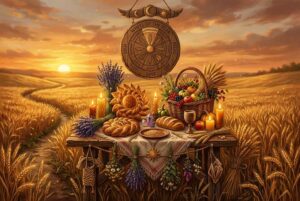
Mabon autumn equinox — the pagan fall harvest festival sacred to witches, Wiccans, and earth-based practitioners across many paths — arrives each year during that fleeting moment when day and night hold perfectly equal length. This is the second harvest: the season of ripened apples, falling leaves, and honest gratitude. For a single breath the world sits in balance, then tips toward the long, quiet nights of winter.
Apples are woven into Mabon’s heart. Orchards burst with fruit at exactly this time of year, and the apple has carried sacred meaning across centuries — wisdom, magic, and a hidden pentagram revealed by any knife and a little curiosity. Whether you practice Wicca, walk a hedge witch path, identify as a kitchen witch, or simply feel called by the rhythm of the turning seasons, Mabon welcomes you exactly as you are. No initiation required.
What Is the Mabon Autumn Equinox?
Mabon (pronounced MAY-bon) is one of eight sabbats on the Wheel of the Year — the cycle of seasonal celebrations observed in Wicca and many broader pagan traditions. Falling around September 21–23 in the Northern Hemisphere, or around March 20–22 in the Southern Hemisphere, it marks the Autumn Equinox: the second of three harvest festivals, sitting between Lughnasadh in early August and Samhain at the end of October.
The name was popularized in modern paganism during the 1970s, drawn from Mabon ap Modron, a divine child figure in Welsh mythology. Some practitioners prefer “Harvest Home,” regional folk names, or simply “Autumn Equinox” — all are equally valid. What matters is the meaning: balance, gratitude, and honoring what the earth has given. This sabbat belongs to no single tradition and requires no special knowledge to begin celebrating.
Common Ways to Celebrate Mabon: The Pagan Fall Harvest Festival
Mabon is one of the most flexible sabbats on the Wheel of the Year. Its core themes — harvest, gratitude, and balance — translate naturally across many practice styles. Here is how different practitioners honor the season:
Kitchen Witch Celebrations
For kitchen witches, Mabon lives in the stove and the table. Baking spiced apple pies, simmering mulled cider, pressing herbal vinegars, or cooking a full harvest meal are all acts of intentional magic. The power is in the making — and in the feeding of others.
Formal Wiccan Sabbat Rites
Many Wiccan practitioners observe Mabon with a structured ritual: casting a circle, calling the quarters, lighting candles in gold and deep red, and honoring the sun’s descent. These rites work beautifully alone or in a coven, and can be as brief or as elaborate as you wish.
Eclectic and Secular Spiritual Practice
No specific tradition required. A gratitude journal, a walk through an autumn orchard, or a simple home altar with pinecones and apple slices are all meaningful ways to mark the equinox and connect with something larger than your daily routine.
Nature-Based and Hedge Witch Practice
Spending time outdoors, sitting with old trees, or simply observing how the light is changing — these quiet, embodied practices carry as much spiritual weight as any formal ceremony. The land itself becomes the altar.
Group and Community Celebrations
Circles and covens often share a harvest feast, exchange handmade seasonal gifts, or gather outdoors to honor the equinox together. Even a dinner where every guest brings something they have grown or cooked carries authentic Mabon energy.
How to Celebrate Mabon: Pagan Fall Apple Picking Rituals Step by Step
Step 1: Set Your Intention Before the Equinox
Before any physical celebration, spend time in quiet reflection or journaling. Ask yourself honestly: What have I harvested this year — not only in material terms, but emotionally, spiritually, and in my relationships? What am I genuinely grateful for, and what is ready to be released? Writing your answers down makes your intention concrete and ties every activity that follows into one coherent thread rather than a collection of pretty gestures.
Step 2: Visit an Orchard for Pagan Fall Apple Picking
Apple picking is one of the most embodied ways to celebrate Mabon. Seek out a local orchard, ideally one growing heritage or heirloom varieties. Walk the rows slowly and treat it as a moving meditation — notice the weight of each apple in your hand, the sweet-sour scent of fermentation rising from fallen fruit below, and the sound of leaves shifting overhead. Some practitioners offer a quiet thank-you to each tree before harvesting and set one apple aside as an earth offering: buried at the tree’s roots or placed on the home altar.
Step 3: Reveal the Apple’s Sacred Pentagram
Slice one of your harvest apples crosswise — through its equator rather than pole to pole. Inside, you will find a five-pointed star formed by the seed chambers: a natural pentagram. This is why the apple has been considered sacred across so many earth-based traditions. The five points represent the four classical elements plus spirit, unified in a single fruit. Use the cut face for apple-print artwork, dry the seeds for charm bags, or simply place the halved apple on your altar as an offering.
Step 4: Build Your Mabon Harvest Altar
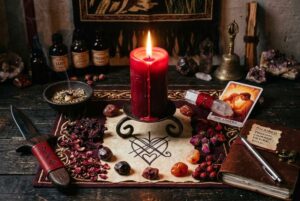
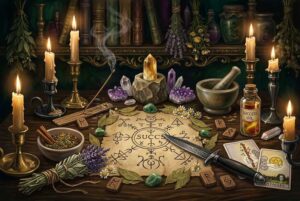
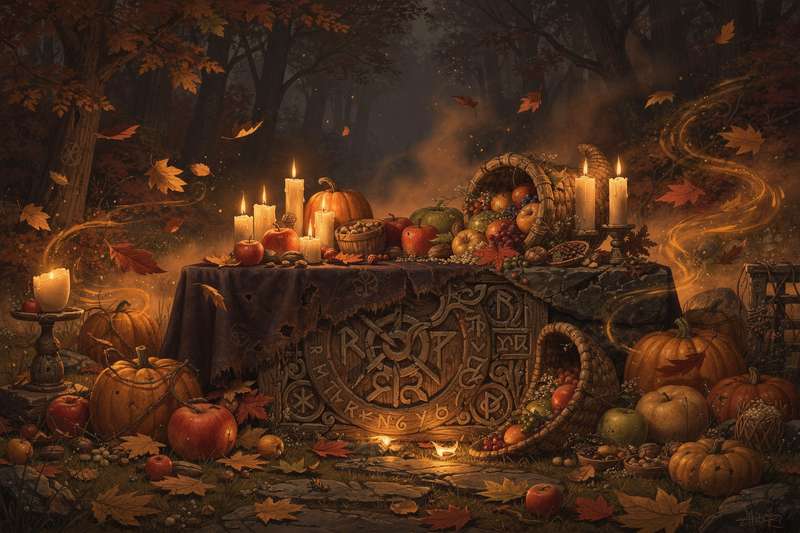
Choose any flat surface and gather what speaks to autumn’s energy. Traditional Mabon colors include gold, burnt orange, burgundy, and earthy brown. Consider arranging: candles in these shades, whole and sliced apples, acorns or pinecones, a citrine or carnelian crystal, cinnamon sticks, dried sage, and your handwritten gratitude list. Your altar does not need to be large or expensive — a windowsill with three items and one lit candle is genuinely sufficient.
Step 5: Perform a Mabon Gratitude Ritual
Light your altar candles and settle into stillness for a few slow breaths. Read your gratitude list aloud or silently. For each item — each person, achievement, or hard-won lesson — offer a sincere thank-you. Genuine feeling matters far more than scripted words. For a simple magical touch, write each blessing on a small piece of paper and safely burn it over a fireproof dish, consciously releasing each one as it transforms. This honors both the light you are celebrating and the dark you are preparing to meet.
Step 6: Cook or Craft with Your Harvest Apples
Transforming raw harvest into something nourishing or beautiful is one of the most grounding Mabon practices. Consider spiced apple butter, baked cinnamon apples, or an apple and rosemary flatbread. If crafting suits you better, try apple pomander balls studded with cloves, apple-slice garlands strung to dry slowly, or the cut apple face pressed in ink as a seasonal stamp. Every act of making is an act of honoring the harvest — and the labor that went into growing it.
Step 7: Release What No Longer Serves You
As the sun sets on the equinox, acknowledge what is ready to fall away — just as the trees are beginning to let their leaves go. Write down a belief, habit, or pattern that has weighed on you through the year, then bury the paper in the earth, burn it safely, or scatter it in running water. This deliberate act of releasing signals to your whole self that a chapter is complete, and it creates space for the rest, depth, and inner renewal the darker months ahead will offer.
Essential Tools and Supplies for Mabon Rituals
You do not need a fully stocked apothecary to celebrate Mabon meaningfully. These basics serve most practitioners well, whatever their path:
- Candles: Gold, orange, dark red, or earthy brown. Scented with apple, cinnamon, or clove if you like atmosphere — unscented is equally powerful.
- Crystals: Citrine for abundance and solar warmth, carnelian for vitality, clear quartz as a general amplifier, and labradorite if you are working with the thinning veil as autumn deepens toward Samhain.
- Herbs and spices: Cinnamon, clove, rosemary, sage, and apple in any form — fresh, dried, or pressed — are all seasonally aligned.
- A journal: For intention setting, gratitude lists, and release work. One of the most underrated magical tools any practitioner can own.
- Seasonal produce: Apples, squash, grapes, pomegranates, and dried corn are traditional Mabon offerings and altar items.
- A fireproof dish: Essential for any candle or burning work during ritual.
Most of these are available at a grocery store or farmers market. You already have more than enough to begin.
Ethics and Best Practices for Mabon Celebrations
A few principles hold across most pagan and witchcraft paths, and they serve Mabon beautifully:
Do no harm. Center your rituals on your own growth, gratitude, and release rather than attempting to influence others without their knowledge or consent. Mabon practices are naturally self-directed, which makes this principle easy to uphold.
Work with clear intention. Settle your mind before beginning any ritual. Clarity of purpose produces clearer results — internal and external alike.
Respect cultural context. Mabon as practiced today draws on Celtic, Norse, Germanic, and broader folk European traditions. If you feel drawn to specific mythologies, engage with their actual history rather than a surface impression.
Be sustainable outdoors. When foraging or harvesting in nature, take only what you need. Leave offerings that are biodegradable and ecologically appropriate for your local land.
Honor your own path. Your practice belongs to you. The only real requirement for Mabon is genuine presence and sincere engagement with the turning season.
Common Beginner Mistakes When Celebrating Mabon
- Focusing only on the aesthetic: A beautiful altar is meaningless without the inner work of gratitude and reflection behind it. The styling is the container; your intention is the substance.
- Waiting until you have enough supplies: One apple, one candle, and five minutes of sincere attention make a complete Mabon practice. Start with exactly what you have today.
- Skipping the release ritual: Mabon is as much about what you let go as what you celebrate. The release practice is the other half of the harvest — missing it leaves the cycle incomplete.
- Ignoring the Southern Hemisphere calendar: If you live south of the equator, your Autumn Equinox falls around March 20–22, not September. Always follow the actual seasons in your land.
- Expecting dramatic results immediately: Spiritual practice works gradually and often in unexpected ways. The shifts tend to be subtle and cumulative rather than instant.
- Treating the mundane as separate from the sacred: Actual cooking, actual apple picking, actual time outdoors — these are not preparation for spiritual practice. They are the spiritual practice.
How to Build Your Mabon Practice Over Time
Your first Mabon does not need to be complete or polished. Begin with one practice this year — perhaps just the apple picking and a short gratitude list. Next year, add a simple altar. The year after, try a full candle ritual or make something new from your harvest. The Wheel of the Year returns every twelve months, offering a recurring invitation to go one layer deeper each time around.
Keeping a seasonal journal — sometimes called a Book of Shadows or a nature diary — is one of the most valuable investments you can make in your long-term practice. Record what you did, how you felt, what the land looked and smelled like, and what intention you carried. After three or four Mabons, you will have something genuinely personal: a record of your own spiritual harvest, season by season, in your own handwriting.
Final Thoughts on Mabon Autumn Equinox and Pagan Fall Apple Picking
Mabon is one of the most accessible entry points into seasonal spiritual practice — warm, sensory, and grounded in things as simple as fruit on a tree and a candle on a table. It asks little of you in terms of tools or expertise, and gives a great deal in return: honest stillness in a busy season, genuine gratitude given real attention, and the quiet empowerment of living in conscious rhythm with the earth’s turning. The apple’s hidden star has been waiting for you in every orchard, every autumn, all along.
Frequently Asked Questions About Mabon
What is Mabon and when does it occur?
Mabon is the pagan name for the Autumn Equinox sabbat, one of eight seasonal celebrations on the Wheel of the Year. In the Northern Hemisphere it falls around September 21–23; in the Southern Hemisphere, around March 20–22. It marks the midpoint of the harvest season and the moment when day and night are equal in length.
What is the spiritual meaning of apples at Mabon?
Apples reach peak harvest exactly at the Autumn Equinox, making them the natural symbol of Mabon’s abundance. Slicing one crosswise reveals a five-pointed star — a pentagram — formed by the seed chambers, connecting the apple to earth-based magic across Celtic, Norse, and folk traditions. The apple symbolizes wisdom, immortality, and the threshold between the everyday world and the otherworld.
How do you make a Mabon altar?
A simple Mabon altar uses autumn-colored candles (gold, orange, deep red), seasonal produce like apples and squash, grounding crystals such as citrine or carnelian, and warming herbs like cinnamon and sage. There is no fixed rule — your altar should reflect what this season personally means to you, and a single windowsill arrangement counts fully.
Can I celebrate Mabon if I am not Wiccan?
Absolutely. While Mabon appears on the Wiccan Wheel of the Year, seasonal harvest celebrations exist across countless cultures and spiritual paths. Eclectic practitioners, kitchen witches, hedge witches, and those with no specific label all honor the Autumn Equinox in their own ways. No initiation, tradition, or particular belief system is required to mark the turning of the seasons.