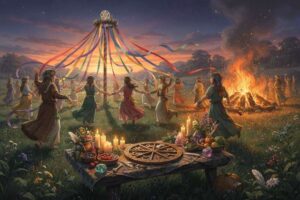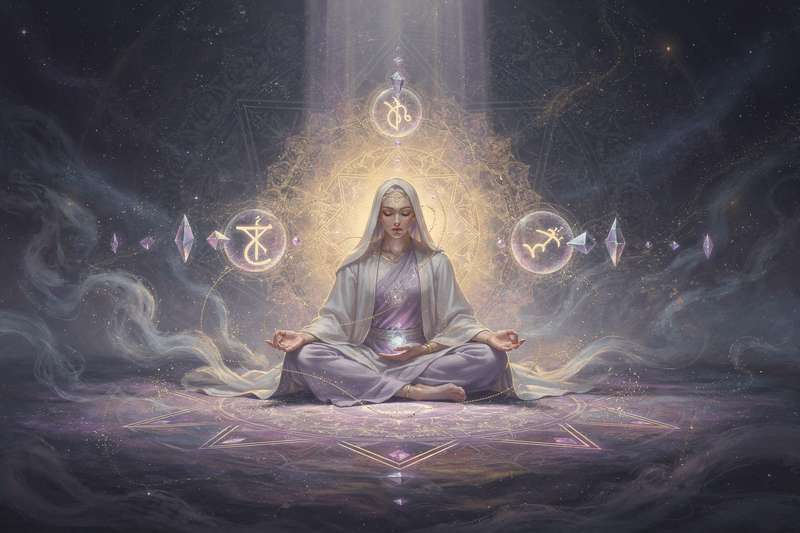
Norse witchcraft is one of the most powerful and enduring magical traditions in human history. Rooted in the pre-Christian beliefs of Scandinavia and the Germanic north, this ancient system of magic — encompassing seiðr, galdr, and runic practice — was woven into the everyday lives of the Viking Age people. It wasn’t reserved for shadowy corners or secret covens. It was how warriors sought protection before battle, how healers called upon the gods, and how shamanic practitioners glimpsed the shape of things to come. Today, Norse witchcraft is experiencing a genuine revival, drawing modern seekers back to its raw, elemental power.
Whether you feel called by the runes, drawn to the shamanic world of the völva, or simply curious about what magic looked like before the church reshaped Northern Europe, this guide opens the door for you.
What Is Norse Witchcraft? The Three Core Branches of Norse Magic
Norse witchcraft isn’t a single practice — it’s more like a living forest with several distinct paths running through it. The three primary forms of magic practiced in the Norse world each carry their own character, tools, and spiritual purpose.
Galdr: The Magic of Sacred Sound
Galdr (pronounced roughly “gal-dr”) is the art of magical incantation. The word itself comes from Old Norse and means to crow, yell, or chant — and that physicality is important. This wasn’t silent prayer. Galdr was voiced, vibrated, and sung with intention.
Chants and spoken invocations were composed in a poetic form called Galdralag — a meter specifically associated with magical speech. The subjects ranged widely: love spells, healing charms, curses aimed at enemies, protection for livestock, blessings for a newborn. What makes galdr particularly valuable historically is that many of these incantations were written down and preserved, giving modern scholars and practitioners a genuine window into how the Norse people understood magic as a spoken, living force.
If you’ve ever felt the power of a mantra or a repeated affirmation, you already have a sense of how galdr works. The difference is that galdr is rooted in a cosmology of Norse gods, spirit allies, and sacred sound as a force that shapes reality.
Seiðr: The Shamanic Heart of Norse Witchcraft
Seiðr (pronounced “say-thr”) is the most mysterious and spiritually potent of the three branches. Unlike galdr, very little was written down about it — which may be because its power was considered too sacred, or too dangerous, to commit to paper.
What we do know paints a vivid picture. Seiðr was a ritualistic, shamanic practice conducted by specialists called völvas — female seers who traveled between villages, often at the invitation of chieftains or kings. A völva would arrive with her staff, her drums and rattles, and her songs. She would enter a trance state, contact the spirits of the Norse gods and the ancestors, and then deliver insight and guidance to those who sought her.
Think of a völva as part oracle, part spirit-worker, part community healer. She sat at the threshold between worlds — between Midgard, the human realm, and the other eight realms of the great World Tree, Yggdrasil. Her role was to bring back wisdom from those unseen places and share it with the living.
Even Odin himself was said to practice seiðr — and in Norse culture, this was considered a mark of his extraordinary spiritual hunger. He sought every form of power available, regardless of convention.
Runic Magic: Symbols That Hold the World Together
The runes are perhaps the most recognizable element of Norse witchcraft, and for good reason. They are far more than an alphabet. In Norse cosmology, the runes are the hidden forces underlying all of existence — patterns of power that hold the universe in place.
The Elder Futhark, the oldest known runic system, consists of 24 symbols, each associated with a specific energy, deity, or natural force. Warriors carved them onto swords and shields to invoke victory. Healers inscribed them on wooden staves to draw down protective or restorative energy. Runes were also carved onto stones, personal objects, and even ships — anywhere that the power of the cosmos needed to be called in.
The mythological origin of the runes is one of the most striking in any spiritual tradition. According to the Hávamál in the Poetic Edda, Odin sacrificed himself to himself — hanging from the branches of Yggdrasil, pierced by his own spear, for nine days and nine nights. At the end of this ordeal, the runes revealed themselves to him. He paid with his eye at the Well of Mimir for cosmic wisdom, and he paid with his suffering for runic knowledge. This is not casual magic. It speaks to a tradition that understood power as something earned through genuine sacrifice and dedication.
Norse Witchcraft and the Gods: Odin, Freyja, and the Divine Teachers
In Norse witchcraft, the gods are not distant, abstract figures — they are active participants in the magical world. Two figures stand out as the great divine patrons of Norse magical practice.
Odin: Archetype of the Seeker
Odin is, above all, the god of wisdom, magic, and sacred knowledge. His relentless pursuit of deeper understanding drove him to extreme sacrifices. He is the archetypal witch-shaman: a wanderer between worlds, a master of runes and seiðr, a figure who understood that true power requires genuine risk and transformation.
Working with Odin as a patron deity in Norse witchcraft means embracing that same spirit of honest seeking. He is not a comfortable god. He asks you to look at hard truths, to give up what no longer serves, and to keep walking even when the path is unclear.
Freyja: Goddess of Seiðr and Sovereignty
Freyja, one of the Vanir gods, is considered the original teacher of seiðr — she brought this practice to Odin and the Æsir. She is a goddess of love, desire, war, and deep magic. Her völva lineage makes her the divine matron of shamanic witchcraft, and working with her energy connects you to the earth, to your own power, and to the cyclical wisdom of the natural world.
Freyja rides a chariot pulled by cats, wears a cloak of falcon feathers that allows shapeshifting, and chooses half of those who fall in battle to dwell in her hall, Fólkvangr. She is neither purely gentle nor purely fierce — she holds the full spectrum, which is exactly what true magical work requires.
How to Begin Practicing Norse Witchcraft Today
Modern Norse witchcraft — practiced under names like Asatru, Heathenry, or sometimes Norse Wicca — is a living, growing tradition. It was largely suppressed when Christianity spread through Scandinavia, but it was never fully extinguished. Iceland legally recognized Norse Paganism as a religion in the 1970s, and today communities of Heathens and Norse witches exist worldwide.
Here’s how you can begin building your own authentic practice:
- Start with the runes. Learn the Elder Futhark — not just the names, but the stories, the energies, and the myths behind each symbol. Draw a rune each morning as a daily divination practice and sit with its meaning throughout your day.
- Study the Eddas. The Poetic Edda and the Prose Edda are the primary surviving texts of Norse mythology and cosmology. Reading them gives you the foundational framework that all Norse magical practice rests on.
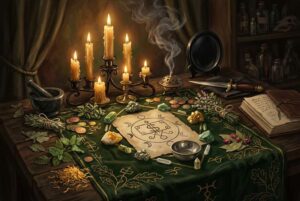
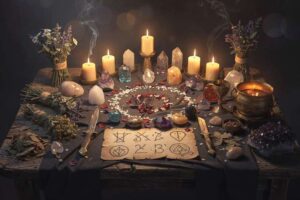
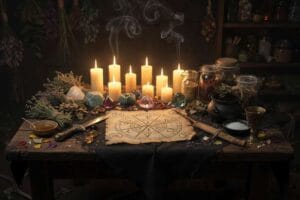
- Build an altar. Create a sacred space dedicated to one or more Norse deities. Fresh water, candles, natural objects, and runic symbols are traditional offerings. Regularity matters more than grandeur.
- Explore galdr. Begin chanting or toning the names of the runes aloud. Feel the vibration in your chest and throat. This is how Norse witches have worked for centuries — through voice as a living magical instrument.
- Connect with the land. Norse paganism is deeply rooted in the natural world. Spend time outdoors, at trees, rivers, stones. The old Norse people understood that the sacred was woven into every living thing.
- Find community. Heathen and Asatru communities exist both online and in many cities. Shared blót (ritual feast) and sumbel (ceremonial toasting) are traditional communal practices that strengthen the bond between practitioners and their gods.
Common Misconceptions About Norse Witchcraft
- It’s only for people of Scandinavian descent. Norse paganism is a spiritual path, not an ethnicity. Anyone genuinely called to this tradition can practice it with respect and integrity.
- It’s the same as Wicca. While there is overlap in the modern pagan community, Norse witchcraft has its own distinct cosmology, pantheon, and ritual forms that differ significantly from Wiccan practice.
- The runes are just fortune-telling tools. Runes are a complete magical system for understanding and working with cosmic forces — divination is only one application among many.
- Seiðr is only for women. Historically, it was primarily practiced by women, but male practitioners — including Odin — did engage with it. Modern Heathenry generally welcomes practitioners of all genders.
- Norse magic is dark or dangerous. Like any magical tradition, it asks for respect, intention, and ethical awareness — but it is not inherently destructive. It is a path oriented toward wisdom, connection, and strength.
- It’s a new age invention. While modern Heathenry is a revival, it is rooted in genuinely ancient sources — archaeological finds, sagas, Eddic poetry, and runestones that date back over a thousand years.
Final Thoughts
Norse witchcraft is a path that rewards sincerity above all else. It asks you to study, to sit with difficulty, to show up for your practice even when it doesn’t feel glamorous. In return, it offers something rare: a complete spiritual framework that honors the earth, the gods, the ancestors, and the full complexity of human life.
Whether you feel drawn to the runes’ quiet power, the trance journeys of the seiðr tradition, or the voiced fire of galdr, you are stepping into a lineage that has survived millennia. The völvas are long gone, but the runes are still here. The World Tree still stands. And the call to magic, to wisdom, to genuine connection with something larger than yourself — that is as alive now as it ever was.
Take one step today. Pick up a rune. Speak a name into the wind. Begin.
Frequently Asked Questions About Norse Witchcraft
What is the difference between Norse witchcraft and Wicca?
Norse witchcraft is rooted in the pre-Christian traditions of Scandinavia and the Germanic north, with its own gods, cosmology, and ritual forms — including seiðr, galdr, and runic magic. Wicca is a modern religion developed in the mid-20th century that draws from various Western esoteric traditions. The two share some surface similarities (altar work, natural cycles, deity veneration) but are distinct paths with different mythologies and practices.
What are the runes used for in Norse witchcraft?
Runes serve multiple purposes in Norse witchcraft: divination, casting spells, protection, healing, and invoking the power of specific deities or natural forces. Each of the 24 Elder Futhark runes carries a distinct energy and mythological association. They can be carved onto physical objects, drawn as symbols in ritual, or chanted aloud as part of galdr practice.
Who was a völva in Norse tradition?
A völva was a female shamanic seer and ritual practitioner in the Norse world. She traveled between communities, often at the request of chieftains or kings, to perform seiðr — a form of trance-based ritual magic used for divination and spirit contact. The völva carried a staff as her primary ritual tool and was both respected and treated with a degree of social wariness due to the power she wielded.
Is Norse paganism still practiced today?
Yes — Norse paganism, known today as Heathenry or Asatru, is a growing modern religious movement. Iceland legally recognized it as a religion in the 1970s, and active communities exist across Europe, North America, and beyond. Modern practitioners work with the same core elements — runes, Norse deities, seasonal festivals, and the Eddic texts — while adapting the tradition to contemporary life.