A wand in witchcraft is one of those tools that feels almost instinctively right the moment you hold one. Whether you are brand new to the craft or have been practicing for years, a wand serves as a focused extension of your own energy — a conductor that helps you direct intention, channel power, and bring your inner world into alignment with your spellwork. Unlike the dramatic wands you have seen in fantasy films, a real witch’s wand is a quiet, intimate object with a deeply personal quality. It does not perform magic on its own. Instead, it amplifies what you already carry within you. More and more people across Wiccan, eclectic, hedge, and kitchen witch paths are rediscovering this ancient tool — and for good reason. It is simple, versatile, and surprisingly easy to begin working with, even if you are just starting out.
What Is a Wand in Witchcraft?
At its core, a witch’s wand is a ritual tool used to focus and project energy during spellwork, meditation, and ceremony. Think of it as a physical pointer for your intention — a way of sending your will outward in a clear, directed stream rather than letting it scatter.
One common misconception is that wands are exclusively a Wiccan tool. In reality, wands appear across many magical traditions worldwide, from ceremonial high magic to folk practices and shamanic healing. Another myth is that a wand must be ornate or expensive to be effective. The truth is that a plain stick you found on a forest walk can be every bit as powerful as a hand-carved, crystal-tipped masterpiece — what matters most is the connection you have with it and the intention you bring to it.
In elemental systems, different practitioners assign the wand to different elements. Some connect it to air because a wand moves through the air and directs energy. Others link it to fire because of its association with will and transformation. Neither interpretation is wrong — your path, your practice, your choice.
Common Types of Wands Used in Witchcraft
Wands come in a wide range of materials, and each brings its own energetic signature to your practice. Here is a look at the most common types:
Wooden Wands
Wood is by far the most traditional wand material. Each type of wood carries its own symbolic and energetic qualities. Oak is associated with strength, protection, and longevity. Willow, beech, and maple are beloved for love and abundance work. Birch and pine lend themselves to cleansing and grounding. If you are unsure where to start, a simple dry twig from a tree you feel drawn to is a perfectly valid — and beautifully personal — choice.
Metal Wands
Metal wands are sleek, durable, and often engraved with symbols or Celtic knotwork. Copper is a popular choice because of its natural ability to conduct energy and its long association with love and abundance. Silver resonates strongly with moon magic and psychic work, while gold aligns with solar energy, beauty, and attraction. Steel and brass are practical choices for protection and communication work respectively.
Crystal-Tipped or Crystal Wands
Many witches combine a wooden or metal shaft with a crystal at the tip — or use a solid crystal wand carved from a single stone. Clear quartz is the most versatile option, amplifying any kind of intention. Amethyst adds intuitive and psychic depth. Rose quartz softens the energy toward love and compassion. Black obsidian or onyx grounds the energy and adds protective strength.
Combination and Handcrafted Wands
Some of the most powerful wands are assembled by the witch themselves — a wooden base wrapped in copper wire, adorned with a small crystal, and perhaps wound with herbs or ribbon. These layered tools carry your personal energy from the moment of creation, which makes them uniquely attuned to you.
How to Choose and Make Your Witch’s Wand: Step by Step
Whether you plan to make your wand from scratch or purchase one and personalize it, the following steps will help you find or create a wand that truly feels like yours.
Step 1: Set Your Intention First
Before you touch a single piece of wood or browse a single shop, spend a few quiet minutes thinking about what you want your wand to do for you. Is it a general-purpose tool for all your spellwork? Is it specifically for love magic, protection, divination, or moon rituals? Your intention will guide every choice that follows — from material to crystal to length.
Step 2: Choose Your Material Based on Your Practice
Look at the types of spells and rituals you perform most often, then match a material to that energy. If your work centres on healing and protection, consider oak, steel, or black tourmaline. For love and relationships, willow, copper, or rose quartz make beautiful allies. For psychic development and intuition, silver or amethyst are natural fits. If you truly cannot decide, clear quartz or a simple piece of oak covers almost every base.
Step 3: Source Your Wood Ethically (If Making a Wooden Wand)
If you want to harvest a branch yourself, go for a mindful walk in a natural space. Look for fallen branches first — wood that has been offered freely by the tree carries a beautiful energy. If you find nothing suitable on the ground and feel called to harvest a living branch, pause and ask the tree for permission. You will know the answer through your own intuition. Cut as gently as possible, and leave an offering in return — water, a small crystal, or even a heartfelt word of thanks. The relationship between a witch and the natural world matters deeply.
Once you have your branch, strip the bark if you wish, sand it smooth, and allow it to dry fully if it is green wood. A wand that is roughly the length of your forearm — from elbow to fingertip — tends to feel naturally balanced, though there is no fixed rule.
Step 4: Shape and Decorate Your Wand
Carving, sanding, and decorating your wand is not just aesthetic — it is a ritual in itself. Each stroke of sandpaper or pass of a carving tool is an opportunity to pour your intention into the object. You might carve symbols, runes, or sigils that reflect your purpose. You can wrap the handle with leather cord, copper wire, or hemp twine for both grip and beauty. If you are attaching a crystal, secure it at the tip using wire wrapping or a strong adhesive, visualising your intention as you work.
Step 5: Cleanse Your Wand Before First Use
Before you work with your new wand, clear it of any energies it may have picked up during gathering, crafting, or shipping. You can pass it through incense smoke (sage, palo santo, or frankincense work beautifully), place it under moonlight overnight, bury it briefly in earth, or hold it under cool running water — whichever method aligns with your practice. The goal is a clean energetic slate.
Step 6: Consecrate and Charge Your Wand
Consecration is the act of formally dedicating your wand to its purpose. Hold it in both hands, close your eyes, and speak aloud — or simply feel — your intention for this tool. You might call on your deity, your guides, or simply the elements. Visualise a bright light flowing from your hands into the wand, filling it with your personal energy. Some witches do this on a full moon for extra amplification, but any moment of genuine focused attention will do.
Step 7: Practice Using Your Wand in Ritual
Start simply. Use your wand to draw a circle of energy around your workspace before a ritual. Point it toward a candle as you state your intention. Trace symbols in the air above your altar. Use it to stir energy in a bowl of charged water. The more you work with it, the more attuned to your energy it will become. There is no wrong way to practice — experiment and notice what feels right for you.
Step 8: Store and Care for Your Wand
A wand deserves to be treated with respect. When not in use, wrap it in a natural fabric — silk, cotton, or velvet are popular choices — and keep it on your altar or in a dedicated drawer. Avoid leaving it in direct sunlight for long periods if it has crystals that may fade. Cleanse it regularly, especially after intense spellwork, and re-charge it under the moon whenever you feel its energy has grown dull.
Essential Tools and Supplies to Pair With Your Wand
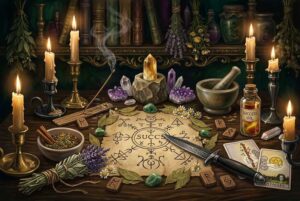
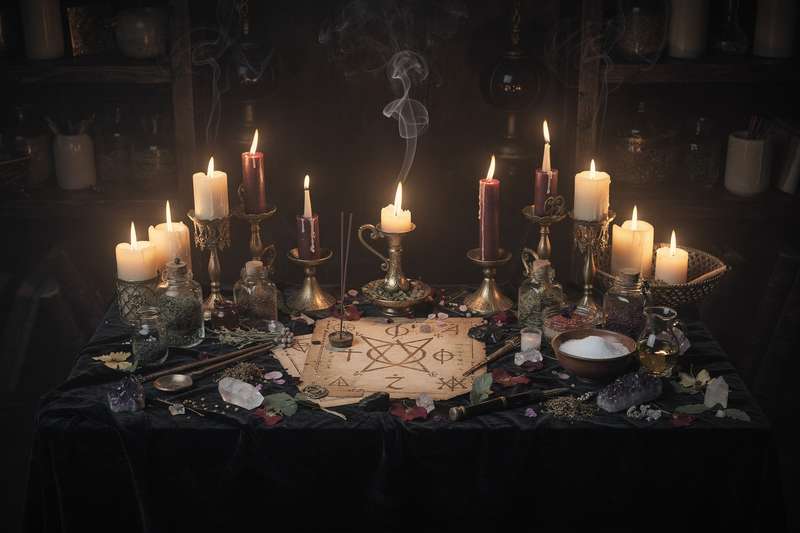
Your wand does not work in isolation — it is most effective when you have a few supporting tools around it. A simple altar cloth grounds your space and defines your working area. Candles in colours that match your intention (red for passion, white for clarity, green for abundance) provide elemental fire energy. Incense or herbs help cleanse both the space and the wand itself. A journal or Book of Shadows allows you to record your intentions and track what works. Crystals placed nearby — or incorporated into the wand itself — amplify specific energies. You do not need all of these things to get started. A single candle, your wand, and a clear intention are genuinely enough for meaningful practice.
Ethics and Best Practices in Wand Work
Like all magical work, wand use comes with a layer of ethical responsibility. The widely respected principle of “harm none” is a good north star — before any working, ask yourself whether your spell could negatively impact another person’s free will or wellbeing. This applies especially to love spells directed at specific individuals, which many practitioners choose to reframe as spells for attracting love in general rather than compelling a particular person.
Intent matters enormously. A wand used in anger or desperation will reflect that energy back. Ground yourself, breathe, and come to your practice from a place of clarity and genuine purpose. Also be mindful of cultural appropriation — if a practice belongs to a specific closed tradition you are not initiated into, find ways to honour that boundary and draw from your own heritage or from openly shared traditions instead.
Common Beginner Mistakes When Working With a Wand
- Skipping the cleansing step: Using a new wand without cleansing it first means you are working with whatever energies it already carries — not necessarily yours.
- Choosing a wand based only on looks: A beautiful wand that does not resonate with you energetically will feel dead in your hands. Always prioritise feel over appearance.
- Expecting the wand to do the work: A wand amplifies your intention — it does not create it. If your focus is scattered, the result will be too.
- Forgetting to charge it regularly: Like a crystal or any ritual tool, a wand’s energy needs refreshing over time, especially after heavy use.
- Being too rigid about “correct” use: There is no single right way to hold or use a wand. Trust your instincts and let your practice evolve naturally.
- Comparing your wand to others’: Social media is full of stunning, elaborate wands. Resist the urge to feel your simple stick is somehow less valid — often the humblest tools carry the deepest magic.
How to Build Your Wand Practice Over Time
The relationship between a witch and their wand deepens with time and use. In the early stages, simply holding your wand during meditation or journaling helps attune it to your energy field. As you grow more confident, incorporate it into more complex spells and seasonal rituals. Over months and years, you may find yourself drawn to make or acquire a second wand with a different energetic purpose — one for protection work, another for healing, for example. There is no rush. Magic is not a race. Each small, intentional step you take builds a practice that is uniquely and authentically yours.
Final Thoughts
A wand in witchcraft is more than a symbol — it is a living extension of your will and intention. Whether yours is a twig plucked from a forest floor, a copper rod wound with rose quartz, or a hand-carved piece of oak, what truly matters is the energy you bring to it. Start where you are, with what you have, and let the relationship grow from there. The magic has always been in you — your wand simply helps you point it in the right direction.
Frequently Asked Questions
Do I need a wand to practice witchcraft?
No — a wand is a tool, not a requirement. Many witches practice effectively without one, using their hands, a finger, or other tools like a staff or athame to direct energy. A wand is simply one option that many practitioners find helpful for focusing intention.
What is the best wood for a witch’s wand?
There is no single “best” wood — the right choice depends on your intentions and personal connection. Oak is popular for strength and protection, willow for emotional and love work, and birch for new beginnings and cleansing. The wood you feel most drawn to is almost always the right one for you.
Can I buy a wand instead of making one?
Absolutely. Purchasing a wand is completely valid, and many witches source theirs from skilled artisans. The key is to cleanse and consecrate any bought wand thoroughly before use, so that it becomes attuned to your energy rather than carrying residual energy from its making or shipping process.
How do I know if my wand is working?
You may feel warmth, tingling, or a subtle pulse of energy in your hand when using your wand during focused intent work. Over time, you will likely notice that rituals feel more focused and that your spellwork produces clearer results. Trust your own felt sense — it is a reliable guide.