What Is the Chakra System? An Ancient Map of Your Inner Life
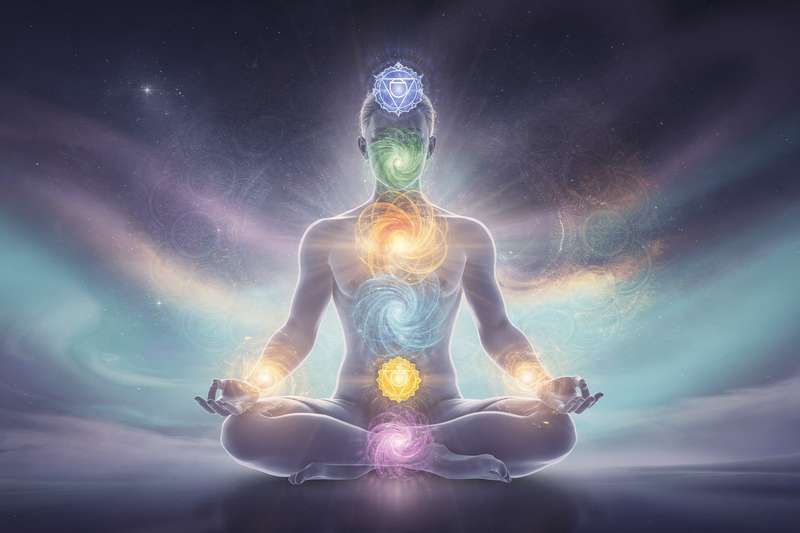
The chakra system is one of humanity’s oldest frameworks for understanding the connection between your body, emotions, and spiritual vitality. The word chakra comes from Sanskrit and literally means “wheel” or “disk” — describing the spinning nature of these seven main energy centers arranged vertically along your spine. Each chakra governs a distinct range of physical functions, emotional patterns, and spiritual qualities, forming a complete inner map from your most primal survival instincts all the way to your connection with universal consciousness. When your chakras are balanced, life force energy — called prana in yogic tradition — flows freely through your body. When one or more become blocked or overactive, the effects ripple out as physical symptoms, emotional turbulence, and a sense that something in your life simply isn’t working.
The earliest references to the chakra system appear in the Vedas, ancient Indian texts dating from roughly 1500 to 500 BCE. Over centuries, tantric Hindu and Buddhist traditions refined and expanded these teachings. The seven-chakra model most recognized today was codified in the sixteenth-century Sanskrit text Sat-Cakra-Nirupana by Purnananda Swami. The rainbow color associations and psychological meanings many people now associate with each chakra are largely a modern Western synthesis — which doesn’t make them less useful, but does remind us that this is a living tradition, not a fixed relic. It has been shaped by seekers across centuries, and it continues to evolve.
Sanskrit Names, Symbols & the Seven Chakras Explained
Each chakra carries a Sanskrit name, a symbolic lotus flower, a seed sound, an element, and a color. Here is the complete map, from the foundation of your being to the highest reaches of spiritual awareness.
1. Root Chakra — Muladhara
- Location: Base of the spine, between the anus and genitals
- Color: Red
- Element: Earth
- Bija Mantra: Lam
- Symbol: A four-petaled lotus with a downward-facing triangle and square
- Associated Glands: Adrenal glands, kidneys
Muladhara is your energetic foundation. It governs survival, safety, physical security, and your sense of belonging in the world. When it is balanced, you feel stable, grounded, and confident in meeting your basic needs. When it is blocked, fear, financial anxiety, and chronic lower back pain are common signals.
2. Sacral Chakra — Svadhisthana
- Location: Lower abdomen, about four fingers below the navel
- Color: Orange
- Element: Water
- Bija Mantra: Vam
- Symbol: A six-petaled lotus with circles and a crescent moon
- Associated Glands: Reproductive organs, bladder
Svadhisthana is the seat of creativity, pleasure, emotional flow, and sexuality. A healthy sacral chakra means you experience joy, creative inspiration, and emotional intimacy freely. Blockages often show up as creative stagnation, guilt around pleasure, or difficulty in relationships.
3. Solar Plexus Chakra — Manipura
- Location: Upper abdomen, between the navel and the bottom of the rib cage
- Color: Yellow
- Element: Fire
- Bija Mantra: Ram
- Symbol: A ten-petaled lotus with a downward-pointing triangle representing inner fire
- Associated Glands: Pancreas, liver, stomach
Manipura is your personal power center — the seat of self-esteem, willpower, and the courage to act. A balanced solar plexus feels like quiet, steady confidence. Imbalance swings between controlling behavior and paralyzing self-doubt, and may manifest physically as digestive disorders or blood sugar irregularities.
4. Heart Chakra — Anahata
- Location: Center of the chest
- Color: Green
- Element: Air
- Bija Mantra: Yam
- Symbol: Two intersecting triangles forming a yantra within a twelve-petaled lotus
- Associated Glands: Thymus gland, heart, lungs
Anahata is the bridge between the three lower chakras — rooted in physical and personal experience — and the three upper chakras, which are oriented toward the transpersonal and spiritual. It governs love, compassion, forgiveness, and the capacity to give and receive freely. When the heart chakra is closed, grief lingers, intimacy feels risky, and boundaries either collapse or harden into walls.
5. Throat Chakra — Vishuddha
- Location: Base of the throat, coinciding with the thyroid gland
- Color: Blue
- Element: Ether (Space)
- Bija Mantra: Ham
- Symbol: A sixteen-petaled lotus with an inverted triangle holding a circle within
- Associated Glands: Thyroid, parathyroid, vocal cords
Vishuddha governs authentic expression — not just the words you speak, but every form through which you communicate your truth. A balanced throat chakra lets you speak clearly, listen deeply, and express yourself with confidence. Blockages may surface as a chronic fear of speaking up, thyroid dysfunction, jaw tension, or the opposite pattern: talking compulsively without saying anything that really matters.
6. Third Eye Chakra — Ajna
- Location: Between the eyebrows
- Color: Indigo
- Element: Light
- Bija Mantra: Om
- Symbol: An inverted triangle within a circle between two lotus petals
- Associated Glands: Pituitary gland, brain, eyes
Ajna is the seat of intuition, inner vision, and perception beyond the surface of things. When it is balanced, you trust your inner knowing, hold a wide perspective, and cut through confusion with clarity. Imbalances appear as rigid thinking, persistent headaches, difficulty concentrating, or an inability to distinguish genuine insight from wishful thinking.
7. Crown Chakra — Sahasrara
- Location: Top of the head
- Color: Violet or White
- Element: Cosmic energy / consciousness
- Bija Mantra: Aum
- Symbol: A ring of a thousand lotus petals surrounding an inverted triangle
- Associated Glands: Pineal gland, central nervous system
Sahasrara represents the point of connection between your individual self and universal consciousness. A balanced crown brings a quality of inner stillness and purpose that isn’t easily disturbed by external events. Long-term practitioners often describe it as the difference between having peace and being peaceful. A closed crown chakra may feel like spiritual emptiness, chronic exhaustion, or a longing for meaning that nothing seems to fill.
“The chakras ask nothing of you except willingness to listen to what your body already knows.”
Colors, Elements & Locations: The Complete Chakra Reference Table
The following table gives you a quick-reference view of the full seven-chakra system. Each column represents a layer of the chakra’s identity — its physical anchor, its energetic quality, and the seed sound used to work with it in practice.
| Chakra | Sanskrit | Location | Color | Element | Bija Mantra |
|---|---|---|---|---|---|
| Root | Muladhara | Base of spine | Red | Earth | Lam |
| Sacral | Svadhisthana | Lower abdomen | Orange | Water | Vam |
| Solar Plexus | Manipura | Upper abdomen | Yellow | Fire | Ram |
| Heart | Anahata | Center of chest | Green | Air | Yam |
| Throat | Vishuddha | Throat | Blue | Ether | Ham |
| Third Eye | Ajna | Between eyebrows | Indigo | Light | Om |
| Crown | Sahasrara | Top of head | Violet/White | Cosmic energy | Aum |
Note on the Third Eye and Crown mantras: Om and Aum represent the same sacred syllable in different transliterations from Sanskrit. In traditional texts, Om is the bija mantra assigned to Ajna (Third Eye), while Aum — emphasizing the full three-part pronunciation A-U-M — is assigned to Sahasrara (Crown). They are the same sound expressed at different levels of awareness; the distinction is one of focus and tradition, not contradiction.
Signs Your Chakras Are Blocked or Imbalanced
Traditional practitioners describe chakra imbalance as either hypoactive (sluggish, underactive — too little energy flowing) or hyperactive (overactive — too much energy flooding that center). Both states disrupt the whole system, because the chakras function as an interdependent chain. A blocked sacral chakra, for instance, can suppress the emotional openness the heart chakra needs to function well.
The signs tend to cluster in three registers:
- Physical: Chronic tension or pain in the body area associated with a specific chakra — persistent lower back pain, digestive trouble, recurring sore throat, headaches
- Emotional: Recurring emotional patterns that feel disproportionate to their triggers — anxiety without a clear cause, grief that doesn’t resolve, shame that surfaces unexpectedly
- Behavioral: Habits that compensate for the imbalance — people-pleasing when the heart is closed, controlling behavior when the solar plexus is overactive, silence when the throat needs expression
A practical self-assessment: keep a journal for two to three weeks, noting where in your body you consistently feel tension, where your energy reliably drops, and where your emotional reactions feel bigger than the situation warrants. These patterns, not dramatic symptoms, are usually the first clear signal.
Blocked Chakra Symptoms at a Glance
- Root: Fear, financial anxiety, lower back pain, fatigue, feeling unmoored
- Sacral: Creative blocks, emotional numbness, hip pain, reproductive issues
- Solar Plexus: Low confidence, digestive disorders, indecisiveness, control issues
- Heart: Difficulty trusting, loneliness, upper back tension, shallow breathing
- Throat: Fear of speaking, thyroid dysfunction, jaw tension, compulsive talking
- Third Eye: Mental fog, headaches, disrupted sleep, poor judgment
- Crown: Spiritual disconnection, chronic exhaustion, sensitivity to light or sound, meaninglessness
How to Balance the Chakra System: Practical Techniques That Actually Work
Balancing your chakras is not a one-time event — it is an ongoing practice of listening and responding. The good news is that you don’t need elaborate equipment or years of training to begin. Small, consistent practices create steady change over time.
Meditation and Visualization
Sit comfortably and bring your awareness to each chakra in sequence, starting at the root and moving upward. At each center, visualize its associated color as a clear, steady light. Notice any areas that feel dim, tight, or absent — and simply hold your attention there with curiosity rather than judgment. Even five minutes of this practice daily builds a real sensitivity to your own energy body.
Breathwork (Pranayama)
Alternate nostril breathing (nadi shodhana) balances the two main energy channels running alongside the central channel and is particularly useful for the heart and upper chakras. Skull-shining breath (kapalabhati) generates heat and stimulates the lower centers, especially the solar plexus. Simple deep belly breathing directs prana downward, supporting the root and sacral chakras.
Yoga Poses for Each Chakra
- Root: Mountain Pose (Tadasana), Warrior I (Virabhadrasana I), Tree Pose (Vrikshasana)
- Sacral: Bound Angle Pose (Baddha Konasana), Goddess Pose (Utkata Konasana), Crow Pose (Kakasana)
- Solar Plexus: Boat Pose (Navasana), Bow Pose (Dhanurasana), Classical Cobra (Bhujangasana)
- Heart: Camel Pose (Ustrasana), Bridge Pose (Setu Bandhasana), Fish Pose (Matsyasana)
- Throat: Shoulderstand (Sarvangasana), Plough Pose (Halasana), Lion’s Breath
- Third Eye: Child’s Pose (Balasana), Headstand (Shirshasana), seated meditation with focus at the brow
- Crown: Corpse Pose (Savasana), Lotus Pose (Padmasana), Headstand (Shirshasana) for advanced practitioners
Affirmations for Each Chakra
- Root: “I am safe. I am grounded. I belong here.”
- Sacral: “I embrace pleasure, creativity, and emotional flow.”
- Solar Plexus: “I trust myself. I act with confidence and clarity.”
- Heart: “I give and receive love freely and without fear.”
- Throat: “I speak my truth with courage and kindness.”
- Third Eye: “I trust my inner knowing. I see clearly.”
- Crown: “I am connected to something larger than myself. I am at peace.”
Diet and Lifestyle Practices
- Root: Walk barefoot on grass or earth; eat root vegetables like beets, carrots, and sweet potatoes
- Sacral: Creative movement — dance, art, or any activity that brings you genuine pleasure
- Solar Plexus: Set small achievable goals daily; eat warming foods like bananas, turmeric, and oats
- Heart: Daily gratitude journaling; spend time with people who make you feel safe and loved
- Throat: Herbal teas, warm lemon water; practice singing or mindful, intentional speech
- Third Eye: Reduce screen time; journal your dreams and intuitive impressions
- Crown: Spend time in silence; practice breath awareness; eat lightly and mindfully
Essential Oils for Chakra Support
- Root: Vetiver, cedarwood, patchouli
- Sacral: Ylang ylang, sweet orange, sandalwood
- Solar Plexus: Lemon, ginger, bergamot
- Heart: Rose, geranium, jasmine
- Throat: Eucalyptus, peppermint, chamomile
- Third Eye: Clary sage, frankincense, lavender
- Crown: Frankincense, myrrh, lotus
Healing Crystals for the Chakra System
Crystals work with the chakra system through color correspondence and their own vibrational properties. The simplest approach is to place a stone on the chakra location during meditation, or carry it with you throughout the day as a physical anchor for your intention.
- Root — Red Jasper, Black Tourmaline: Grounding and protective, these stones support physical stability and a sense of security
- Sacral — Carnelian: Stimulates creativity, emotional warmth, and vitality
- Solar Plexus — Citrine, Tiger’s Eye: Citrine carries the clarity and optimism of sunlight; Tiger’s Eye builds confident action
- Heart — Rose Quartz, Green Aventurine: Rose quartz is the classic stone of self-love and compassion; aventurine supports emotional healing
- Throat — Blue Lace Agate, Aquamarine: Both support calm, clear communication and authentic expression
- Third Eye — Lapis Lazuli, Sodalite: These deep-blue stones stimulate intuition and mental clarity
- Crown — Amethyst, Clear Quartz: Amethyst supports spiritual awareness; clear quartz amplifies the energy of all the chakras
Bija Mantra and Sound Healing for All Seven Chakras
Sound is one of the most direct ways to work with the chakra system. Each chakra responds to a specific seed mantra — called a bija mantra in Sanskrit — which, when chanted aloud, creates vibrations that practitioners experience as a felt shift in the body. You don’t need a trained singing voice. The intention and the physical vibration of chanting are what matter.
The seven bija mantras, from root to crown, are: Lam, Vam, Ram, Yam, Ham, Om, Aum. To practice, sit comfortably, bring your attention to the chakra’s location, and chant the mantra aloud — or internally if you prefer — for several minutes. Notice what shifts.
Beyond personal chanting, sound healing tools that support chakra work include:
- Singing bowls: Each bowl is tuned to a specific frequency and can be played during meditation or at the end of a yoga session
- Tuning forks: Struck and held near a chakra point, they deliver precise vibrational input directly to the body
- Binaural beats and solfeggio frequencies: Listened to through headphones, these audio tracks are used to attune specific energy centers — for example, 396 Hz for the root and 528 Hz for the solar plexus
- Ujjayi pranayama: The audible breath produced at the back of the throat directly stimulates the throat chakra area and is accessible even for beginners
The Chakra System and Other Healing Traditions
One of the most compelling things about the chakra system is how widely its core principle — that the human body contains distinct centers of vital energy — appears across cultures that had no contact with one another. Taoist medicine describes three dantian: lower (below the navel, storing generative essence), middle (heart, holding vital energy), and upper (between the brows, housing spirit). Celtic tradition offers the Three Cauldrons of Poesy — belly, chest, and head — each of which can be full, tilted, or empty depending on how fully that center’s potential is being expressed. Shamanic traditions across many cultures work with a three-worlds body map that aligns naturally with the lower, middle, and upper chakra zones.
In the Western esoteric tradition, the Kabbalah Tree of Life maps ten divine attributes — the sephirot — onto a structure strikingly similar to the chakra column. Malkuth (Kingdom) at the base corresponds to Muladhara’s grounding function; Tiferet (Beauty) at the center mirrors the Heart Chakra’s role as the balancing point of the whole system; Keter (Crown) at the summit parallels Sahasrara’s connection to pure consciousness. Both systems even describe an ascending serpentine energy — kundalini in yogic tradition, the Path of the Serpent in Kabbalah — rising from root to crown as the central movement of spiritual awakening.
These parallels don’t collapse different traditions into one. Each carries its own wisdom and cultural context. But the convergence points to something genuine about human experience: the body knows itself as a layered field of energy, and healers across the world have independently found ways to honor that knowledge.
Final Thoughts: Your Chakra System as a Living Practice
Understanding the chakra system gives you a practical, honest map for your inner life. It explains why chronic tension in a specific part of your body might connect to an emotional pattern you’ve been carrying for years. It offers concrete tools — yoga, breathwork, sound, meditation, crystals, affirmations — for addressing imbalances at the root rather than only managing symptoms at the surface.
The most important thing to know is this: working with your chakras is not about fixing yourself. It is about restoring a flow that was interrupted — by stress, by old experiences, by patterns you inherited or absorbed from the world around you. That restoration happens gradually, through consistent attention and honest self-observation rather than dramatic breakthroughs.
Start small. Choose one chakra that resonates with something you’re experiencing right now. Spend a week with it — sitting quietly, using its affirmation, noticing how that part of your body feels as you move through your days. You’ll develop an intuitive familiarity with your own energy system that no book can fully give you. That direct inner knowing is precisely what the chakra system was always designed to cultivate.
Frequently Asked Questions
What is the chakra system and where does it come from?
The chakra system is a framework of seven main energy centers arranged along the spine, originating in ancient Indian Vedic texts from roughly 1500–500 BCE. Each chakra governs a specific range of physical, emotional, and spiritual functions. The seven-chakra model most widely used today was codified in the sixteenth-century Sanskrit text Sat-Cakra-Nirupana, with modern color associations and psychological meanings added primarily in the nineteenth and twentieth centuries.
How do I know if a chakra is blocked?
Blocked or imbalanced chakras typically signal themselves through three channels: chronic physical tension or pain in the body area associated with that chakra, recurring emotional patterns that feel disproportionate to their triggers, and compensating behaviors like people-pleasing, compulsive silence, or overcontrolling. Keeping a simple body-awareness journal for two to three weeks — noting where tension, low energy, and emotional reactivity consistently appear — often reveals a clearer picture than any single moment of self-reflection.
What is the difference between the Om mantra of the Third Eye and the Aum mantra of the Crown?
Om and Aum are two transliterations of the same sacred Sanskrit syllable. In the traditional system, Om is assigned as the bija mantra for Ajna (Third Eye Chakra), while Aum — emphasizing the full three-part phonetic pronunciation A-U-M — is the bija mantra for Sahasrara (Crown Chakra). The distinction reflects depth of practice and level of awareness, not a contradiction: the same sound is worked with at two different points in the energetic body.
Can I balance multiple chakras at once, or should I focus on one at a time?
Both approaches are valid depending on your situation. A sequential daily meditation moving from root to crown is an excellent whole-system practice. If you’re experiencing a strong imbalance in one area — persistent anxiety pointing to the root, a creative block pointing to the sacral — focused work on that single chakra for a week or two often produces noticeable results faster. Most experienced practitioners do both: regular whole-system check-ins, with deeper attention given to whatever center is calling most loudly.