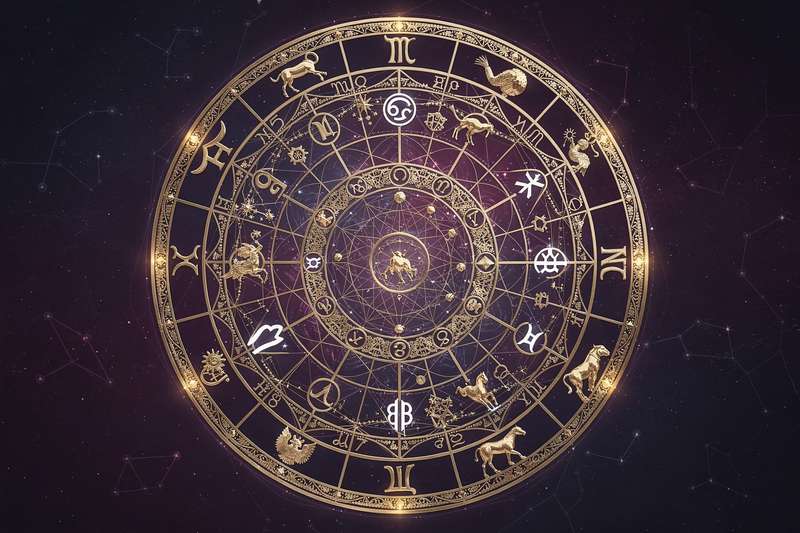
Your natal chart is astrology’s most intimate portrait of you. It captures the sky at the exact moment you took your first breath—a cosmic snapshot that reveals your personality, your soul’s purpose, and the energies that shape your life. Think of your birth chart as a celestial map, with each planet, sign, and house offering clues about who you are, how you love, and what you came here to do. If you’ve ever wondered why you react the way you do, why certain patterns repeat, or where your gifts truly lie, your astrological chart holds the answers.
Unlike sun sign horoscopes that focus on one piece of the puzzle, a full natal chart reveals the complete you. It shows where your Moon was when you were born (your emotional core), where Venus landed (how you love), where Mars positioned itself (your drive and passion), and so much more. Every degree matters. Every placement tells a story. And once you learn to read this map, you gain access to a level of self-understanding that can transform how you move through the world.
In this guide, you’ll discover what a natal chart is, how it’s calculated, what each component means, and how to begin interpreting your own cosmic blueprint. Whether you’re brand new to astrology or ready to go deeper, this is your invitation to see yourself through the stars.
What Is a Natal Chart?
A natal chart—also called a birth chart—is a precise map of where every planet, the Sun, and the Moon were positioned in the zodiac at the moment you were born. It’s calculated using three essential pieces of information: your birth date, birth time, and birth location. These details allow astrologers to determine not just which signs the planets were in, but also which houses they occupied and what geometric relationships (aspects) they formed with each other.
Your chart is circular, divided into 12 houses, with the zodiac wheel wrapped around it. Each planet represents a different part of your psyche—your will, your emotions, your communication style, your desires. Each zodiac sign colors how that planet expresses itself. And each house represents a specific area of life, from identity and home to career and spirituality.
The result? A multi-layered blueprint that’s entirely unique to you. Even twins born minutes apart can have different rising signs or house placements, which shift the entire chart’s tone and focus. Your natal chart is as individual as your fingerprint—no one else will ever have the exact same cosmic signature.
The Three Pillars of Your Chart
While a full chart includes ten celestial bodies and countless details, three placements form the foundation of your astrological identity:
- Sun Sign: Your core identity, ego, and life force—the “you” you’re learning to become.
- Moon Sign: Your emotional world, instincts, and inner child—the “you” you are in private.
- Rising Sign (Ascendant): Your outer personality, first impressions, and life approach—the “you” the world sees first.
These three work together to paint a vivid picture. You might be a fiery Aries Sun with a sensitive Cancer Moon and a diplomatic Libra Rising—each layer adding depth, contradiction, and richness to who you are.
How a Natal Chart Is Calculated
Creating an accurate natal chart requires precision. Astrology is a time-sensitive art, and even a difference of four minutes can change your rising sign or shift planets between houses. Here’s what goes into the calculation:
Your Birth Date determines which sign each planet occupied on that day. Planets move through the zodiac at different speeds—the Moon changes signs every 2-3 days, while Pluto can stay in one sign for up to 20 years. Your birthdate locks in these placements.
Your Birth Time is crucial for determining your Ascendant (rising sign) and the precise house positions of every planet. The Ascendant shifts approximately every two hours, so knowing whether you were born at 6:00 AM or 6:00 PM makes all the difference. If you don’t know your exact time, you can still generate a chart using noon as an estimate, but your house placements and rising sign will be approximate.
Your Birth Location ensures the chart is calculated from the correct geographic coordinates. Astrology uses the sky as seen from your specific vantage point on Earth, so being born in New York versus Los Angeles shifts the angles and house cusps slightly, even at the same time.
Most modern natal chart calculators handle the complex math instantly—converting your local birth time to Universal Time, accounting for time zones and daylight saving rules, and plotting planetary positions using astronomical data called an ephemeris. The result is a wheel-shaped diagram filled with symbols, degrees, and lines that tell your story.
What If You Don’t Know Your Birth Time?
If your birth time is unknown, don’t worry—you can still gain valuable insights. A chart set for 12:00 noon on your birth date will show you all planetary sign placements and the aspects between them. What you’ll miss are the house positions and your rising sign, which are time-sensitive. Many people start with a noon chart and later obtain their birth certificate or hospital records to refine it. Even without houses, knowing your Sun, Moon, Venus, Mars, and Mercury signs offers profound self-awareness.
The Key Components of a Natal Chart
Your birth chart is made up of three interlocking systems: planets, signs, and houses. Each one answers a different question about your life.
The Planets: What
Planets represent different facets of your psyche and life experience. Each one governs specific themes:
- Sun: Core identity, vitality, ego, conscious will
- Moon: Emotions, instincts, subconscious, needs
- Mercury: Communication, thinking style, learning
- Venus: Love, beauty, values, attraction
- Mars: Drive, passion, anger, action
- Jupiter: Growth, expansion, luck, beliefs
- Saturn: Structure, discipline, lessons, responsibility
- Uranus: Innovation, rebellion, sudden change
- Neptune: Dreams, intuition, spirituality, illusion
- Pluto: Transformation, power, death and rebirth
The planets are the “what”—the psychological functions and life forces at play within you.
The Signs: How
The 12 zodiac signs describe how each planet’s energy expresses itself. A planet in Aries acts boldly and impulsively. The same planet in Capricorn becomes strategic and cautious. Signs are the flavor, the style, the costume each planet wears.
For example, if your Mars is in Gemini, your drive and passion express through words, ideas, and variety. If your Mars is in Scorpio, that same drive becomes intense, focused, and deeply emotional. The sign modifies the planet’s expression.
The Houses: Where
The 12 houses represent different areas of life where planetary energies manifest. Each house governs specific themes:
- 1st House: Self, appearance, first impressions
- 2nd House: Money, possessions, values
- 3rd House: Communication, siblings, learning
- 4th House: Home, family, roots
- 5th House: Creativity, romance, pleasure
- 6th House: Health, work, daily routines
- 7th House: Partnerships, marriage, others
- 8th House: Transformation, intimacy, shared resources
- 9th House: Travel, philosophy, higher learning
- 10th House: Career, reputation, public life
- 11th House: Friendships, community, hopes
- 12th House: Spirituality, solitude, the subconscious
If your Venus is in the 7th house, love and partnership are central life themes. If it’s in the 10th, you may find love through your career or public work. Houses show where the planetary story unfolds.
How Your Natal Chart Affects Your Life
Your natal chart doesn’t control you—it describes you. It reveals your natural tendencies, your gifts, your challenges, and the lessons your soul came here to learn. Some people resonate instantly with their chart; others need time to see how the pieces fit. Here’s how it shows up in real life:
Personality and Self-Expression
Your Sun, Moon, and Rising form your core personality structure. You might feel the push-pull between your fiery Sun and your watery Moon, or notice how your Rising sign helps you navigate social situations even when your Sun prefers solitude. Understanding these layers helps you stop judging yourself for internal contradictions and start embracing your full complexity.
Relationships and Connection
Venus and Mars reveal how you give and receive love, what turns you on, and what you need to feel fulfilled in relationships. Your 7th house shows what you seek in a partner. Your Moon sign shows what makes you feel emotionally safe. When you understand your own chart and your partner’s, you can communicate with more compassion and less judgment.
Career and Purpose
Your 10th house, Midheaven, and the placements of Saturn and Jupiter all speak to your vocational path and life purpose. Some charts point to leadership roles; others to healing, teaching, or creative work. Your chart won’t tell you exactly what job to take, but it will show you the themes and qualities that bring you fulfillment.
Strengths and Challenges
Planetary aspects—the angles planets make to each other—reveal where you flow easily and where you face friction. A harmonious trine between your Sun and Jupiter might give you natural optimism and luck. A tense square between your Moon and Saturn might mean you had to work harder to feel emotionally secure. Both are gifts. Challenges in your chart are not flaws—they’re growth edges, the places where your soul chose to evolve.
How to Work With Your Natal Chart
Once you have your chart in hand, the real work begins: learning to read it, integrate it, and use it as a tool for growth. Here’s how to start:
Get Your Chart
Use a reputable online calculator to generate your natal chart. Enter your birth date, exact birth time (if known), and birth city. Print it or save a screenshot so you can reference it as you learn.
Start With the Big Three
Before you try to decode every symbol, focus on your Sun, Moon, and Rising. Read about each one separately. Journal about how they show up in your life. Notice where they agree and where they clash. This alone will give you profound insight.
Explore One Planet at a Time
Choose one planet—say, Venus—and study its sign, house, and major aspects. How do you love? What do you value? Where in your life does beauty or harmony matter most? Spend a week or a month living with that awareness before moving to the next planet.
Track Transits
As planets move through the sky today, they form new aspects to your natal planets. These transits activate different parts of your chart and explain why certain months feel easier or harder than others. Learning to track transits turns astrology from a static snapshot into a living, breathing guide.
Work With an Astrologer
A professional natal chart reading can fast-track your understanding. A skilled astrologer will help you see patterns you might miss, answer your specific questions, and offer guidance tailored to your unique chart. Think of it as having a cosmic translator who speaks your chart’s language fluently.
Use Your Chart for Shadow Work
Your chart shows not just your strengths but also your wounds, fears, and unconscious patterns. The 12th house, Chiron placement, and hard aspects between planets can reveal where you carry pain or limiting beliefs. Approaching these placements with curiosity rather than judgment opens the door to deep healing.
Common Misconceptions About Natal Charts
- Your chart is not your fate. Astrology describes energies and tendencies, not fixed outcomes. You always have free will in how you express your chart.
- Challenging aspects are not bad. Squares, oppositions, and tense placements create friction—but friction builds strength, creativity, and character. Easy charts can lack drive.
- You’re not “just” your Sun sign. Your Sun is one planet among ten. To reduce yourself to a single sign is to miss the richness of your whole chart.
- Houses don’t work the same in every system. Some astrologers use Placidus houses, others use Whole Sign or Equal House. Each system has value; explore what resonates.
- Astrology isn’t a belief system—it’s a language. You don’t have to “believe in” astrology for it to offer insight, just like you don’t have to believe in poetry to be moved by it.
- Your chart doesn’t expire. While transits activate different themes at different times, your natal chart remains the foundation of who you are throughout your entire life.
Final Thoughts
Your natal chart is an invitation to know yourself at the deepest level—to see the patterns that shape you, honor the contradictions that make you whole, and step into the fullness of who you came here to be. It’s not a rigid script but a flexible map, one that grows with you as you evolve. The more you work with your chart, the more you’ll notice synchronicities, recognize your cycles, and trust your inner rhythms. You are not random. You are not a mistake. You are a cosmos—complex, beautiful, and intentional. Your birth chart is proof of that. So pull up your chart, take a deep breath, and begin the most rewarding journey you’ll ever take: the journey home to yourself.
Frequently Asked Questions
What is a natal chart and how is it different from my horoscope?
A natal chart is a personalized map of the planets at your exact birth moment, based on your birth date, time, and location. A horoscope is a general forecast based only on your Sun sign. Your natal chart is far more detailed and specific to you.
Can I read my natal chart without knowing my birth time?
Yes, but with limitations. Without a birth time, you can still see all planetary sign placements and aspects, which reveal personality, communication style, love language, and more. You’ll miss your Rising sign and house positions, which add important context about life areas and outer persona.
How often should I look at my natal chart?
Your natal chart never changes—it’s your cosmic blueprint for life. You can return to it whenever you need clarity, are facing a major decision, or want to understand a recurring pattern. Many people revisit their chart during big transits or life transitions to see what’s being activated.
Do I need to be spiritual to use astrology?
Not at all. Astrology is a symbolic language and psychological tool that works regardless of your beliefs. Some people approach it spiritually, others psychologically, and others purely as self-reflection. Use it in whatever way feels authentic to you.