Understanding the Square Aspect in Your Birth Chart
When you look at your birth chart, you’re holding a cosmic map of your potential—and your challenges. Among the aspects you’ll find there, the square stands out as one of the most misunderstood. Many people see a square aspect and immediately feel a sense of dread, as though the universe has marked that part of their chart as broken or problematic. But here’s what I want you to know: a square aspect in astrology isn’t a flaw. It’s an invitation.
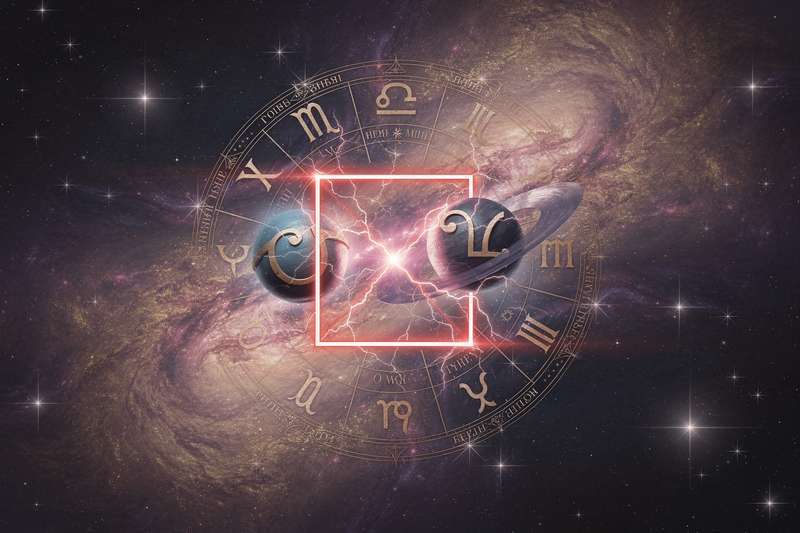
A square aspect occurs when two planets are roughly 90 degrees apart in your natal chart. This geometric relationship creates friction—but friction, if you understand it correctly, is exactly what polishes you into your most authentic, capable self. You’re not meant to have a life without challenge. You’re meant to rise to meet it.
What a Square Aspect Really Means
In astrology, every aspect tells a story about how different parts of your psyche communicate with each other. A square is a conversation with static. The two planets involved aren’t working smoothly together; they’re working at cross-purposes. This creates internal tension, external obstacles, and yes—genuine discomfort.
But here’s the crucial part: that discomfort is productive. When you experience a square aspect in your chart, you’re being pushed to integrate two very different energies. You can’t ignore one or the other. You have to find a way to make them work together, and in doing so, you develop resilience, creativity, and wisdom that people without that aspect might never cultivate.
Think of it this way. A musician with perfect natural talent might play beautifully but never develop discipline. The musician who struggles, who has to fight for every technique, becomes a master. You are that second musician when you have squares in your chart.
How Square Aspects Show Up in Your Life
The experience of a square aspect varies depending on which planets and houses are involved, but you’ll generally recognize these patterns:
- Inner conflict: You feel pulled in two different directions. Part of you wants something; another part wants something else entirely. This isn’t weakness—it’s complexity.
- External obstacles: Circumstances seem to work against you in specific life areas. You meet resistance where you expected smoothness. This friction, though frustrating, teaches you how to navigate real-world challenges.
- Motivation through difficulty: You accomplish things precisely because they don’t come naturally. You develop strength in areas where you’ve had to work hardest.
- Creative problem-solving: Because the easy path isn’t available to you, you become ingenious. You find solutions others might never think to try.
- Authenticity: You can’t coast on charm or luck. You have to be genuinely yourself, and that authenticity becomes your superpower.
Square Aspects: Tension as Your Teacher
You need to understand something fundamental about how growth actually works. Growth doesn’t happen in comfort. It happens in the space between what you are and what you’re becoming—and that space feels like friction.
When you have a square aspect between, say, your Sun and Saturn, you’re being taught lessons about discipline, responsibility, and sustainable achievement. Yes, it’s harder for you than it is for someone without this aspect. That’s not a punishment. That’s a gift. By the time you reach your Saturn return or your fifties, you’ll have built something real, something earned, something that lasts.
A square between Venus and Mars might mean your romantic life doesn’t flow effortlessly. But it also means you won’t settle for shallow connection. You’ll learn what real desire actually is. You’ll develop the courage to ask for what you need and the integrity to respect others’ boundaries.
The square isn’t asking you to fix yourself. It’s asking you to become yourself more fully.
The 90-Degree Rule: Understanding Square Orbs
Astrologers typically consider an aspect a square if the planets are within about 8 degrees of the perfect 90-degree angle, depending on which planets are involved. Some aspects are considered tighter or looser based on the significance of the planets involved. Inner planets like Mercury and Venus usually have smaller orbs, while outer planets can have larger ones.
What matters is whether the aspect is within orb—that is, close enough to be considered active in your chart. If it’s within orb, you definitely feel it. If it’s a few degrees off, you might feel it more subtly, like hearing music from the next room.
Common Square Aspects and What They Teach You
Sun Square Saturn: You learn that authentic self-expression requires discipline. You can’t just be yourself; you have to earn the right to be yourself by showing up, showing integrity, and building something real.
Moon Square Mercury: Your emotions and your thoughts speak different languages. You feel things you can’t easily articulate. But you learn to bridge that gap, becoming someone who can translate feelings into words and help others do the same.
Venus Square Mars: Love and desire are complicated for you. But you learn what true attraction actually is—not just spark, but genuine, grounded partnership.
Mercury Square Neptune: Clear communication doesn’t come naturally. But you develop the ability to see through delusion in others and to protect yourself from wishful thinking.
Mars Square Jupiter: Your ambitions meet obstacles, but you learn the difference between recklessness and true courage. You develop strategic thinking.
Working With Square Aspects: A Practical Approach
Having a square aspect doesn’t mean you’re powerless. In fact, you have more agency over this aspect than you might have over a flowing trine. Here’s how to work with it consciously:
- Acknowledge the tension: Stop pretending the square doesn’t exist or that you should be able to ignore it. Name it. Look at which parts of your psyche or life are in conflict.
- Stop choosing sides: Your impulse will be to favor one planet over the other. Resist that. The wisdom lies in integration, not in victory for one side.
- Channel the energy into something productive: Squares create enormous energy. Athletes, artists, activists—people who make things happen—often have prominent squares. Use that drive.
- Seek balance, not perfection: You’re not trying to make the square disappear. You’re trying to make it functional, like a tightrope walker who uses tension to stay balanced.
- Give it time: Maturity helps. Squares feel sharper in your twenties and thirties. By your forties and beyond, you’ve usually integrated them enough that they feel less like problems and more like character traits.
Square Aspects in Relationships and Synastry
When you look at two people’s charts together (called synastry), square aspects between their planets can indicate friction in the relationship. A square between one person’s Mars and another’s Saturn might mean they approach action differently, or that one person feels restricted by the other.
But here’s what’s important: synastry squares don’t doom a relationship. They create the conditions for growth. Some of the most lasting, meaningful relationships involve people whose charts square off against each other. The friction keeps you both awake, keeps you evolving, keeps you from becoming complacent.
Transiting Squares: When Tension Visits
You might also experience square aspects through transits—when a planet currently moving through the sky makes a 90-degree angle to a planet in your natal chart. During these periods, you’ll feel the square aspect’s influence more acutely in your daily life.
A transit square usually lasts a few weeks to a few months, depending on the planets involved. During this time, you might feel more restless, more challenged, or more motivated than usual. This is temporary, but it’s valuable. Each transit square teaches you something about how to work with that particular planetary energy.
The Gift Hidden in the Friction
Before you close this article, I want to return to something essential: the square aspect in astrology is not your enemy. It’s not even neutral. It’s your collaborator in becoming who you’re meant to be.
You live in a culture that values ease, that markets comfort, that suggests your life should flow smoothly. But you know better. You know that the parts of your life where you’ve struggled the most are the parts where you’ve grown the most. Your square aspects are pointing you toward exactly that kind of growth.
The tension you feel isn’t a sign that something’s wrong with you. It’s a sign that something’s asking to be born through you. Your job isn’t to eliminate the square. It’s to stop resisting it and start dancing with it.
That’s where your real power lives.
FAQ About Square Aspects in Astrology
Are square aspects bad in astrology?
No. Square aspects create internal and external tension, but tension is what drives growth and achievement. Many highly successful and accomplished people have prominent squares in their charts. Rather than being “bad,” squares are challenging—and challenges develop character.
What’s the difference between a square aspect and other aspects?
Every aspect describes how two planets relate to each other. Trines (120 degrees) and sextiles (60 degrees) are harmonious and flow easily. Squares (90 degrees) and oppositions (180 degrees) are dynamic and require effort. Conjunctions (0 degrees) merge energies completely. Squares specifically create productive friction without the compromise that oppositions sometimes demand.
How long do transiting square aspects last?
A transiting square typically lasts a few weeks to a couple of months, depending on whether the planets involved are fast-moving (like Mercury or Venus) or slow-moving (like Saturn or Pluto). Faster planets create shorter transits; slower planets create longer influences. You’ll feel the aspect most strongly when it’s exact, with influence a few degrees before and after.
Can square aspects in synastry relationships be overcome?
Yes. Synastry squares indicate areas where two people approach things differently, which can create friction. But friction creates opportunities for understanding, compromise, and growth. Many strong, lasting relationships feature synastry squares because they keep both partners engaged and evolving.
What should I do if I have many square aspects in my birth chart?
Having multiple squares indicates that your life path involves significant growth through challenge. Rather than feeling discouraged, view this as evidence that you have tremendous capacity for resilience, creativity, and achievement. You’re built for becoming, not for remaining the same. Focus on integrating different parts of yourself rather than trying to eliminate the friction.