If you’ve felt a pull toward magic—a sense that there’s power in whispered intentions, moonlit nights, and the herbs growing in your kitchen—you’re not imagining things. Spells for beginners are simpler than you think, and they don’t require years of study or rare ingredients. Whether you’re drawn to candle magic, kitchen witchcraft, or working with crystals, your first spells can be cast with items you already own and intentions you already carry. Magic isn’t about perfection; it’s about connection—to yourself, to nature, and to the energy that flows through everything. This guide will walk you through the fundamentals of casting your first spells, from setting intentions to choosing tools, so you can start practicing with confidence today.
What Are Spells and How Do They Work?
A spell is a focused intention combined with symbolic action. When you light a candle while concentrating on a goal, brew tea with purpose, or carry a crystal to shift your energy, you’re performing spell work. Spells work by aligning your conscious will with the subtle energies around you—what some call the universe, others call spirit, and still others understand as the subconscious mind’s power to influence reality.
Contrary to popular myths, spells aren’t about controlling others or bending the laws of physics. They’re psychological and spiritual tools that help you clarify what you want, raise the energy needed to pursue it, and open yourself to opportunities. Think of a spell as a prayer with props—a ritual that engages your whole being in the act of transformation. The candle, the herb, the words you speak: these are anchors for your focus, making abstract desires tangible and actionable.
Common Types of Spells for New Practitioners
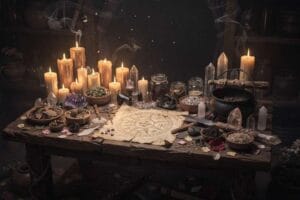
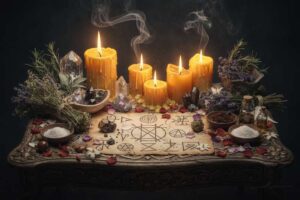
As you begin your practice, you’ll encounter several categories of spell work. Candle magic is one of the most accessible forms—you choose a candle color that matches your intention (green for prosperity, pink for love, white for protection), then focus your will as the flame burns. Kitchen witchcraft involves infusing meals, teas, and baked goods with intention, turning everyday cooking into sacred practice. Crystal spells use stones like rose quartz for love or citrine for abundance, often carried on your person or placed on an altar to radiate their energy.
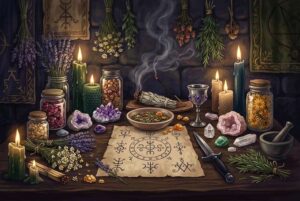
Herbal magic works with plants—lavender for peace, rosemary for protection, basil for prosperity—either burned, steeped, or scattered. Jar spells layer ingredients in a container to manifest a specific outcome, sealed and shaken periodically to activate the magic. Bath rituals combine salt, herbs, and intention to cleanse your energy field. No single type is “better” than another; the best spell for you is the one that resonates with your intuition and fits your lifestyle.
How to Cast Your First Spell: A Step-by-Step Guide
Step 1: Clarify Your Intention
Before you light a single candle, get crystal clear on what you want. Vague intentions produce vague results. Instead of “I want things to get better,” try “I want to feel confident in my job interview on Friday” or “I want to attract a loving, honest romantic partner.” Write your intention down in present tense, as if it’s already happening: “I am calm and confident” or “Love flows easily into my life.”
Your intention is the engine of the spell. Everything else—the candles, the crystals, the words—serves to focus and amplify this core desire. Spend a few quiet moments feeling into what you truly want, not what you think you should want. The more authentic your intention, the more power your spell will carry.
Step 2: Choose Your Spell Type and Gather Supplies
Based on your intention, select a spell format that feels right. For emotional healing, a bath ritual with salt and lavender might call to you. For career success, a candle spell with citrine and written affirmations could work. For protection, consider a jar spell with salt, rosemary, and black tourmaline. You don’t need specialty stores—raid your kitchen for herbs, use birthday candles, and substitute freely. A clear quartz can stand in for any crystal; olive oil works as anointing oil; tap water is just as sacred as spring water when blessed with intention.
Step 3: Cleanse Your Space and Center Yourself
Before casting, clear any stagnant energy from your workspace. Open a window, light incense or sage, sprinkle salt water, or simply visualize white light sweeping through the room. Then ground yourself: take three deep breaths, place your hands on your heart, and feel your connection to the earth beneath you. Some practitioners call in the elements (earth, air, fire, water) or protective spirits; others simply state aloud, “I am protected and my intentions are clear.”
This step shifts you from ordinary awareness into ritual mindset. You’re signaling to yourself and the universe that what follows is sacred work, worthy of attention and respect.
Step 4: Cast Your Circle (Optional but Recommended)
Many witches cast a circle to create sacred space, though it’s not mandatory for beginners. To cast a simple circle, stand in the center of your workspace and visualize a sphere of protective light forming around you. Walk clockwise in a circle (physically or in your mind) while saying, “I cast this circle to hold and amplify my magic. Within this space, I am safe and my will is strong.” The circle acts as a container for energy, keeping distractions out and power in.
Step 5: Perform the Spell
Now execute your chosen spell. If you’re doing candle magic, anoint the candle with oil (rubbing from wick to base for drawing things in, base to wick for banishing), carve symbols or words into the wax if desired, and light it while stating your intention aloud. Hold your focus on the flame and visualize your desire as already real—see yourself in that new job, feel the warmth of a healed relationship, sense the protective shield around your home.
If you’re brewing an intention tea, stir clockwise while chanting your goal. If you’re charging a crystal, hold it in both hands and pour your intention into the stone, imagining it glowing with purpose. Speak your intention aloud at least three times. Words have power; voicing your desire makes it more concrete. Let yourself feel the emotions you’ll experience when your goal manifests—joy, relief, confidence, peace.
Step 6: Raise and Release Energy
Energy raising is how you send your intention out into the universe. You might chant, hum, drum, dance, or simply breathe rhythmically while visualizing your goal. Build the energy to a peak—you’ll feel a tingling, a warmth, or a sense of fullness—then release it all at once. Some witches clap, others blow out the candle, some simply say, “So mote it be” or “And so it is.” This release is crucial: you’re letting go of the outcome, trusting that the universe will handle the details.
Step 7: Close Your Circle and Ground
Thank any energies, elements, or spirits you called upon. Walk counterclockwise to close your circle, visualizing the sphere of light dissolving back into the earth. Then ground yourself by eating something (bread, chocolate, fruit), pressing your palms to the floor, or washing your hands in cold water. Grounding prevents the spacey, unmoored feeling that can follow intense ritual work. It returns you to your body and the present moment.
Step 8: Act in Alignment with Your Intention
Magic works best when paired with mundane action. If you cast a spell for a new job, also update your resume and apply to positions. If you worked a love spell, put yourself in social situations where you might meet someone. Spells open doors, but you have to walk through them. Pay attention to synchronicities, sudden opportunities, and intuitive nudges in the days following your spell—these are signs your magic is working.
Essential Tools and Supplies for Beginner Spells
You don’t need a fully stocked witchcraft shop to start casting spells. A white candle can substitute for any color; a smooth stone from your yard can be your first crystal; salt, pepper, cinnamon, and basil from your spice rack are powerful herbs. A journal serves as your grimoire (spell book) where you record what you did and what happened. A small dish or plate becomes your altar. If you want to invest gradually, prioritize a few candles in key colors (white, black, red, green, pink), clear quartz and rose quartz, dried lavender and rosemary, and a fireproof dish for burning herbs or paper. Sea salt, olive oil, and a favorite mug for tea spells round out the basics. Remember: the most important tool is your focused intention, and that costs nothing.
Ethics and Best Practices in Spell Work
The golden rule of ethical magic is “harm none”—including yourself. Avoid spells that manipulate another person’s free will, such as trying to force someone to love you or suffer consequences. Instead, focus on yourself: “I attract a partner who loves me freely” rather than “Make Alex fall in love with me.” Consider the ripple effects of your magic. A prosperity spell is fine; hexing a coworker to get their job has consequences. Many practitioners follow the Law of Threefold Return, believing that what you send out comes back to you amplified.
Always respect closed spiritual practices. If you’re not part of a specific culture or tradition (like Hoodoo, Brujería, or certain Native American practices), don’t borrow their sacred rituals or spirits. Stick to open, eclectic witchcraft paths or research traditions that welcome outsiders. When in doubt, ask yourself: “Is this mine to use?” Consent matters in magic, too. Don’t cast spells on others without their knowledge unless it’s pure healing or protection, and even then, tread carefully.
Common Beginner Mistakes to Avoid
- Expecting instant results: Magic often works subtly and over time. Give your spells at least a lunar cycle (28 days) to manifest. Sometimes the universe delivers in unexpected ways—stay open.
- Skipping the grounding step: Failing to ground after a spell can leave you feeling anxious, disconnected, or drained. Always close your practice properly.
- Ignoring intuition: If a spell feels wrong or forced, don’t do it. Your gut is a reliable guide. Magic should feel empowering, not uncomfortable.
- Copying spells without understanding them: It’s fine to use published spells as templates, but personalize them. Understand why each ingredient is included and what it represents. Cookie-cutter spells work less effectively than those you adapt to your needs.
- Forgetting to record your work: Without notes, you won’t know which spells worked or why. A simple grimoire entry with date, intention, ingredients, and results helps you refine your practice.
- Neglecting the mundane: Magic complements real-world action; it doesn’t replace it. Cast your spell, then take practical steps toward your goal.
How to Build Your Practice Over Time
Start small and build slowly. Master one or two spell types before expanding your repertoire. Practice grounding and visualization daily, even outside of formal spells—these skills are foundational. Celebrate the small successes: the parking spot that appeared, the phone call that came at the right time, the sudden clarity about a problem. These are your magic at work. Read widely, but don’t get lost in theory; experience teaches more than books. Join online communities or local groups to share experiences and learn from others. Track the moon phases and notice how your energy shifts with them—you’ll naturally discover your most powerful times to cast. Most importantly, trust yourself. Your intuition is your most reliable magical tool, and it gets stronger with use.
nn
Final Thoughts
Your first spell doesn’t need to be perfect. Magic is learned through doing, not endless reading. Light that candle. Stir that tea. Hold that crystal and speak your truth aloud. You have everything you need to begin right now—your intention, your voice, and your willingness to engage with the mystery. As you practice, you’ll develop your own style, discover which techniques resonate most strongly, and build a relationship with the energies around you. Welcome to the path. Your magic is already awake; these first spells are simply the beginning of remembering what you’ve always known.
FAQ: Your Spell-Casting Questions Answered
Can anyone learn to cast spells?
Yes. Spell-casting is a skill, not an inborn gift. If you can focus your mind, set an intention, and follow simple steps, you can cast effective spells. No special lineage, psychic ability, or initiation is required—just curiosity, patience, and practice.
Do I need to follow a specific religion to practice magic?
No. Many witches are secular, atheist, or eclectic, blending practices from multiple traditions. Some are Wiccan, some are Christian witches, others work with pagan deities or animist beliefs. Magic is a practice, not a religion, though many people integrate it into their spiritual path.
How long does it take for a spell to work?
Results vary. Some spells manifest within days; others take weeks or months. Quick, simple intentions (like attracting a parking space) often work faster than complex goals (like career change). If nothing happens after a full moon cycle, revisit your intention and consider whether you’re taking aligned action in the physical world.
What if my spell doesn’t work?
First, check your intention—was it clear and specific? Second, did you raise enough energy and truly believe in the outcome? Third, are you taking real-world steps to support your goal? Sometimes “failed” spells are actually working in ways you don’t recognize yet, or the universe has a better plan. Treat it as a learning experience, adjust your approach, and try again.
nn