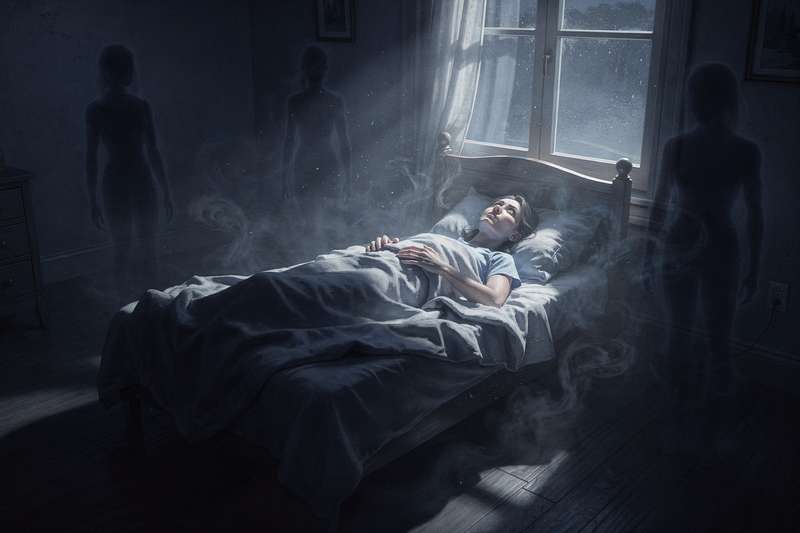
Sleep paralysis is one of those experiences that sits at the strange intersection of body, mind, and spirit. If you’ve ever woken up unable to move, felt an invisible weight pressing on your chest, or sensed a dark presence in your room—you’re not alone. Around 50% of people experience sleep paralysis at some point in their lives, yet it remains one of the most misunderstood and frightening phenomena we can encounter during the night.
For centuries, different cultures have interpreted these moments through wildly different lenses. Some see a medical glitch in the sleep-wake cycle. Others interpret it as a spiritual encounter—a brush with another dimension, a message from the unseen world, or an initiation into deeper states of consciousness. The truth is, sleep paralysis spiritual meaning has fascinated mystics, researchers, and everyday people alike because it feels real, visceral, and deeply personal.
This guide walks you through what sleep paralysis actually is, why it happens, what it might mean spiritually, and most importantly—how to navigate it with grace and understanding.
What Is Sleep Paralysis?
Sleep paralysis is the temporary inability to move or speak that occurs when you’re transitioning between sleep and wakefulness. You might be drifting off to sleep, or you might be waking up—and suddenly, your mind is alert while your body remains locked.
The experience typically lasts from a few seconds to a couple of minutes, though it can feel like an eternity in the moment. During this state, some people report:
- Complete muscle paralysis (you cannot move your limbs or body)
- Difficulty speaking or making sounds
- A sense of pressure or weight on the chest
- Vivid, often frightening hallucinations
- The sensation of a presence in the room
- Feelings of terror or dread
Medical researchers call sleep paralysis that happens as you’re falling asleep hypnagogic sleep paralysis, while paralysis that occurs upon waking is called hypnopompic sleep paralysis. Both are variations of the same phenomenon.
From a spiritual perspective, some traditions view sleep paralysis as a gateway state—a moment when the veil between the physical and non-physical worlds grows thin. Whether you see it through the lens of neuroscience, spirituality, or both, the experience is undeniably real and valid.
The Science Behind Sleep Paralysis Causes
To understand sleep paralysis causes, we need to look at how your brain manages movement during different sleep stages.
During REM (Rapid Eye Movement) sleep—the stage where most vivid dreaming occurs—your brain essentially paralyzes your voluntary muscles. This is a protective mechanism. Without it, you’d act out your dreams, potentially hurling yourself out a window or punching your sleeping partner. Your brain waves during REM resemble waking patterns, but your muscles stay still.
Sleep paralysis happens when there’s a mismatch between your mental and physical states. Your mind wakes up while your muscles are still locked in REM atonia (the medical term for REM-stage paralysis). You’re conscious, aware, and often confused—but your body hasn’t received the signal to move yet.
Several factors can increase your risk of experiencing sleep paralysis:
- Sleep deprivation—when you’re exhausted, REM rebound can intensify these episodes
- Irregular sleep schedules—jet lag and shift work disrupt normal sleep cycles
- Stress and anxiety—heightened emotional states make transitions choppy
- Sleeping on your back—this position seems to trigger episodes more frequently
- Narcolepsy and other sleep disorders—conditions that fragment sleep stages
- Certain medications—some psychiatric medications can alter REM patterns
Importantly, sleep paralysis is not dangerous to your physical health. It cannot harm your body. Your brain is working exactly as designed—it’s just temporarily out of sync.
Spiritual Meaning Across Cultures and Traditions
While Western medicine frames sleep paralysis as a neurological blip, cultures around the world have woven it into spiritual and mythological narratives for thousands of years.
The Demon Visitor Archetype
Many cultures speak of sleep paralysis demon encounters. In medieval European folklore, these beings were called incubi (male) and succubi (female)—entities said to visit sleepers at night, sometimes with sexual overtones. In Cambodian traditions, the experience is attributed to a vengeful spirit. In Japanese culture, the kanashibari describes being bound by supernatural forces. The consistency of these accounts across unrelated cultures is striking, suggesting that sleep paralysis taps into something archetypal in the human experience.
From a psychological and spiritual perspective, the “demon” might not be an external entity at all. Some modern spiritual teachers interpret sleep paralysis demons as shadow aspects of ourselves—repressed fears, denied sexuality, or unprocessed trauma manifesting in a vulnerable state.
The Initiation Threshold
In shamanic and mystery traditions, sleep paralysis is sometimes viewed as a gateway or initiatory experience. The paralysis represents the dissolution of ego and control. The fear represents the death of the small self. Those who move through this threshold consciously can access lucid dreaming, astral projection, and expanded states of awareness. The experience becomes not a curse, but an invitation to deeper inner work.
Messages from the Subconscious
Spiritual dreamwork traditions suggest that sleep paralysis carries meaning. The content of your hallucinations, the feeling of presence, and the emotional tone all communicate something about your waking life. Are you feeling trapped or powerless? Are you avoiding difficult truths? Is your intuition trying to break through your conscious resistance?
Rather than dismissing the spiritual dimension, many modern practitioners honor both the neuroscience and the inner symbolism—understanding that the brain mechanism doesn’t negate the psychological or spiritual significance.
How to Cope: Practical Steps to Navigate Sleep Paralysis
Whether you experience sleep paralysis occasionally or frequently, these strategies can help you move through episodes with less fear and more understanding.
Step 1: Recognize What’s Happening in the Moment
The first time sleep paralysis strikes, it often feels like a genuine emergency—your heart races, panic floods your system. The fear itself intensifies the experience. In future episodes, remind yourself: “This is sleep paralysis. My brain is awake, my body is still in sleep mode. This is temporary and harmless.” Simply naming the experience can dramatically reduce the fear response. You’re not dying, you’re not being attacked—you’re experiencing a known neurological state.
Step 2: Manage Your Breathing
During sleep paralysis, your breathing often feels shallow or restricted—another REM hangover. You can’t move your limbs, but you can usually control your breath. Focus on slow, deliberate breathing: inhale through your nose for a count of 4, hold for 4, exhale for 4. This calms your nervous system, reminds you that you’re alive and safe, and often signals your brain to wake up fully.
Step 3: Try the “Wiggle Technique”
Rather than struggling to move your entire body at once, try moving the smallest possible part: your fingers, your toes, or your eyelids. These tiny movements often cascade into full wakefulness. Start with one finger, then another, gradually expanding until your brain recognizes the signal and releases the paralysis. The gentle approach works better than frantic thrashing.
Step 4: Reframe the Hallucinations Spiritually
Many people report seeing dark shapes, feeling a presence, or experiencing vivid sensations during sleep paralysis. Rather than accepting these as external threats, some practitioners find it helpful to reframe them as manifestations of their own consciousness. Ask yourself: What is this experience showing me about my inner world? What part of myself is seeking attention? You might mentally communicate with the presence: “I see you. I’m not afraid. What do you want me to know?” This shifts you from victim to explorer.
Step 5: Practice Progressive Muscle Relaxation Before Sleep
Tension and stress increase sleep paralysis frequency. Before bed, spend 10 minutes consciously relaxing each muscle group from your toes to your head. Notice which areas hold tension. This practice serves two purposes: it reduces the stress that triggers episodes, and it trains your body awareness so you fall asleep more smoothly, with fewer jarring transitions.
Step 6: Establish a Consistent Sleep Schedule
Irregular sleep is one of the strongest predictors of sleep paralysis. Your brain thrives on rhythm. Try going to bed and waking at the same time every day, even on weekends. A consistent schedule reduces REM fragmentation and makes transitions between sleep stages smoother. When your sleep architecture stabilizes, episodes often decrease significantly.
Step 7: Address Underlying Stress and Trauma
Research shows a strong correlation between sleep paralysis and anxiety, PTSD, and unprocessed emotional stress. If your episodes are frequent or severe, consider working with a therapist, particularly one trained in trauma-informed care or somatic therapy. Sometimes a few sessions of trauma processing can dramatically reduce or eliminate sleep paralysis entirely. The experience itself may be telling you it’s time to address what’s weighing on your heart.
Step 8: Avoid Sleeping on Your Back (Temporarily)
If you’re prone to episodes, try sleeping on your side for a while. Back-sleeping seems to increase sleep paralysis frequency. This simple postural change helps many people experience complete relief.
Step 9: Explore Lucid Dreaming Gradually
Once you’ve made peace with the experience, some practitioners use sleep paralysis as a springboard for lucid dreaming. Rather than waiting for episodes to happen randomly, you can intentionally practice recognizing the threshold state and using it as a doorway into conscious dreaming. This requires patience and practice, but it transforms sleep paralysis from something that happens to you into a skill you can develop. Recommended resources include dream journals, reality checks throughout the day, and meditation before sleep.
Common Misconceptions About Sleep Paralysis
- “Sleep paralysis means I’m mentally ill.” False. Sleep paralysis is a normal neurological event that occurs in healthy people. While it’s more frequent in those with anxiety or PTSD, it’s not a sign of psychosis or mental illness. Millions of well-adjusted people experience it.
- “It’s dangerous and can damage my brain.” False. Sleep paralysis cannot harm your physical health or brain function. The experience feels frightening, but your body remains completely safe.
- “If I see a demon during sleep paralysis, it’s actually there.” Nuanced. The hallucination is real—your brain is genuinely producing it. But it’s generated internally, not an external entity attacking you. That said, some spiritual traditions hold that consciousness can extend beyond the physical body, so the experience may have meaning beyond neurology alone.
- “Sleep paralysis only happens if you’re stressed.” Partially true. Stress is a common trigger, but sleep deprivation, irregular sleep, sleeping position, and narcolepsy can also cause episodes. Some people experience it without any obvious stressor.
- “Once it happens, it will keep happening forever.” False. Many people experience sleep paralysis once or twice in their lifetime and never again. Others have clusters of episodes and then years of peace. Addressing sleep quality and stress can end episodes entirely.
Risks and When to Seek Professional Help
Sleep paralysis itself is not medically dangerous, but certain situations warrant professional attention.
Consult a sleep specialist if:
- Episodes occur multiple times per week or multiple times per night
- You suspect an underlying sleep disorder like narcolepsy
- You’re taking medications that might trigger episodes
- Sleep paralysis follows a period of significant trauma or PTSD symptoms
- The fear is severe enough to affect your willingness to sleep
Consider working with a trauma therapist if: Your episodes seem connected to anxiety, PTSD, or unprocessed emotional material. Processing these underlying issues often resolves sleep paralysis without any pharmaceutical intervention.
Important note for vulnerable groups: People with a history of abuse, especially sexual abuse, may find sleep paralysis particularly triggering because of its immobilizing nature. If this applies to you, working with a trauma-informed therapist before attempting to “explore” the experience is wise. Your safety and healing come first.
Final Thoughts
Sleep paralysis sits at the threshold between science and spirit, neurology and symbolism. You don’t have to choose between understanding the mechanism and honoring the mystery. Your brain is doing exactly what it evolved to do—and your soul, perhaps, is using that moment to communicate something important. Whether you see it as a neurological blip or a spiritual threshold, the path forward is the same: breathe, stay calm, and trust that you will wake. You always do.
FAQ
What exactly is sleep paralysis?
Sleep paralysis is a temporary inability to move or speak that occurs during the transition between sleep and wakefulness. Your mind wakes up while your body remains locked in REM sleep paralysis. Episodes typically last from seconds to a few minutes and are not dangerous, though they feel frightening in the moment.
Is sleep paralysis related to demons or supernatural entities?
Sleep paralysis produces vivid hallucinations—seeing dark shapes, feeling a presence, or sensing a demonic being. These are internally generated by your brain, not external entities, though they feel completely real. Many cultures have interpreted these experiences spiritually, and some spiritual traditions view them as gateway states to expanded consciousness rather than malevolent attacks.
What are the main causes of sleep paralysis?
Common causes include sleep deprivation, irregular sleep schedules, stress and anxiety, sleeping on your back, narcolepsy, and certain medications. Essentially, anything that fragments or disrupts your normal sleep-wake cycle can trigger episodes.
How can I stop sleep paralysis from happening?
Maintain a consistent sleep schedule, manage stress, avoid sleeping on your back, get adequate sleep, and address any underlying anxiety or trauma. If episodes persist despite lifestyle changes, consult a sleep specialist to rule out narcolepsy or other sleep disorders.