Welcome to your tarot journey. If you’ve felt drawn to tarot for beginners but weren’t sure where to start, you’re in the right place. Many people believe that reading tarot requires years of study or natural psychic gifts—but that’s simply not true. With patience, practice, and the right foundation, anyone can learn how to read tarot cards and unlock their profound wisdom. This guide walks you through everything you need to know to begin your practice today.
Getting Started: Understanding What You Need
Before you even touch a card, it helps to know what you’re working with. A tarot deck is not mysterious or intimidating—it’s simply a tool for reflection and insight. Every deck contains 78 cards, beautifully illustrated and organized in a way that tells a complete story of human experience.
The most important first step is choosing your first tarot deck. Forget the old superstition that someone else must buy it for you—that’s a sure way to end up with a deck that doesn’t resonate with your energy. Instead, browse online or visit a local metaphysical shop. Look at the artwork, feel the energy of different decks, and trust your intuition. The deck that calls to you is the right one. For beginners, the Rider-Waite-Smith deck or modern variations like the Classic Tarot are excellent choices because the imagery is clear and beginner-friendly.
You’ll also want to gather a few simple items: a quiet space where you can practice, a journal for recording your readings and insights, and optionally a tarot guidebook or reference card. That’s truly all you need to begin.
How to Read Tarot: The Essential Structure
Understanding the anatomy of a tarot deck is the foundation of learning how to read tarot cards. Let’s break it down so it becomes crystal clear.
Step 1: Learn the Two Sections of Your Deck
Your 78 tarot cards are divided into two main groups: the Major Arcana and the Minor Arcana. Think of the Major Arcana as the big, life-changing moments—the destiny moments, the major lessons, the things beyond our immediate control. These 22 cards (numbered 0–21) have titles like The Fool, The Magician, The High Priestess, and The World. They represent archetypal themes everyone experiences.
The Minor Arcana consists of 56 cards that represent everyday life—the situations you navigate, the choices you make, the people you meet. These are divided into four suits, each linked to a different element and life area. Once you understand this basic split, the cards become far less overwhelming.
Step 2: Familiarize Yourself with the Four Suits
Each Minor Arcana suit rules a specific area of life and carries its own energy:
- Cups (Water element): Emotions, love, relationships, and the heart. Cups cards speak to your inner emotional world and connections with others.
- Wands (Fire element): Creativity, passion, work, and inspiration. These cards represent your drive, ambition, and creative spark.
- Swords (Air element): Thoughts, logic, conflict, and communication. Swords cards often reveal mental challenges and clarity you need to find.
- Pentacles (Earth element): Material world, physical resources, money, and practical matters. Pentacles ground your reading in the real, tangible world.
When you draw a card, knowing which suit it belongs to gives you an immediate context. This alone helps you read tarot with much more confidence.
Step 3: Study the Court Cards
Within each suit are four Court Cards: Page, Knight, Queen, and King. Beginners often find these confusing, but they’re actually quite intuitive once you understand their roles. Pages represent students, messages, and new information. Knights embody youthful energy, action, and forward movement. Queens carry nurturing, receptive, mature feminine energy. Kings represent mastery, authority, and established mature masculine energy.
Court Cards can represent actual people in your life, or they can represent qualities and energies you’re being called to develop or express. As you practice, you’ll naturally develop a feel for when they’re pointing to a person versus a personality trait.
Step 4: Begin Memorizing the Major Arcana
Start learning the Major Arcana cards because they appear frequently and carry the most transformative energy. You don’t need to memorize everything at once—focus on a few at a time. Here are some foundational ones to begin with:
- The Fool (0): A fresh start, the beginning of a journey, unlimited potential.
- The Magician (I): Developing your skills, manifesting your will, tapping into your power.
- The High Priestess (II): Trusting your intuition, the need to go inward, listening to your inner voice.
- The Empress (III): Creativity, nurturing, abundance, and pleasure.
- The Emperor (IV): Stability, authority, leadership, and structure.
- The Lovers (VI): Romance, partnerships, meaningful choices, and alignment with your values.
- The Chariot (VII): Triumph, finding direction, and forward momentum.
- Strength (VIII): Inner power, resilience, and the ability to handle challenges with grace.
- The Hermit (IX): Introspection, seeking wisdom, and turning inward.
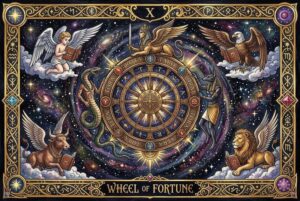
- Wheel of Fortune (X): Change, cycles, luck, and karmic turning points.
- The Tower (XVI): Sudden disruption, necessary destruction, and transformation through chaos.
- The Star (XVII): Hope, inspiration, clarity, and positive direction ahead.
- The Sun (XIX): Joy, success, vitality, and everything working in your favor.
- The World (XXI): Completion, achievement, and the successful closing of a cycle.
Each card tells a story. Spend time with the images, meditate on them, and let their meanings settle into your consciousness naturally. You’re not forcing memorization—you’re building familiarity.
Step 5: Start with Simple One-Card Spreads
Now that you understand the deck’s structure, it’s time to practice drawing cards. Begin with the simplest spread possible: one card. Each morning or evening, shuffle your deck mindfully (think about a question or just hold an open energy), and draw a single card. This is called a “Card of the Day” practice, and it’s one of the most effective ways for beginners to build confidence.
Ask yourself: What does this card show me? What area of life might it speak to? What’s the main message? Write your interpretation in your journal. As the day unfolds, notice how the card’s energy appears in your life. This real-time feedback trains your intuition and deepens your understanding far better than any textbook ever could.
Step 6: Progress to Three-Card Spreads
Once you’re comfortable with single cards, try a three-card spread. This is the workhorse of tarot readings and endlessly versatile. You can use it to explore past-present-future, mind-body-spirit, situation-action-outcome, or any other three-part question. Shuffle, ask your question clearly, and draw three cards. Interpret them as a narrative. How do they connect? What story do they tell together? This teaches you to see how cards interact and influence each other—a crucial skill in tarot reading.
Step 7: Keep a Tarot Journal
This step is non-negotiable if you want to truly learn how to read tarot. Every time you do a reading, write it down. Record the cards you drew, the position they were in, what you intuited, what you looked up in your guidebook, and later, what actually happened. Over time, your journal becomes a personalized tarot dictionary. You’ll notice patterns in how certain cards appear for you, how your intuition speaks, and which interpretations resonate most deeply. This is how you move from following a guidebook to reading with genuine insight.
Step 8: Trust Your Intuition Over the Book
Here’s a secret that experienced readers know: the guidebook is a starting point, not the final word. When you draw a card, pause before reaching for your book. What does the image make you feel? What story does the artwork tell? What’s your gut saying? Write that down first. Then check the guidebook meaning. Often you’ll find your intuitive hit aligns beautifully with traditional meanings—this builds your confidence that you can trust yourself.
As you progress, you’ll increasingly rely on your own intuitive hits rather than memorized meanings. The deck becomes a mirror for your subconscious wisdom, not a fortune-telling machine.
Step 9: Practice Reading for Others (When Ready)
Once you’ve spent a few weeks doing daily draws and three-card spreads for yourself, offer to read for a friend or family member. This shifts something in your energy—reading for others requires you to tap into their energy, not just your own. Start simple, be honest about being new, and let them know you’re practicing. Most people are thrilled to be part of your learning journey. Their feedback and the realness of reading for another person will deepen your skills faster than solo practice alone.
Common Beginner Mistakes to Avoid
- Trying to memorize everything at once: You don’t need to know all 78 cards perfectly before you start reading. Begin with 10–15 cards you love, build from there, and let the rest come naturally over time.
- Treating tarot as fortune-telling: Tarot isn’t about predicting a fixed future—it’s about reflection, guidance, and understanding the energies at play. This mindset shift makes readings far more accurate and empowering.
- Ignoring reversed cards: When a card appears upside down, it doesn’t mean “bad.” Reversed cards often show blocked energy, the opposite meaning, or an internalized quality. Some beginners skip them entirely—don’t. They add valuable nuance.
- Never journaling your readings: Without a record, you miss the feedback loop that teaches you the most. Journaling transforms casual card-pulling into genuine skill-building.
- Comparing your readings to others’: Every reader’s intuition is unique. Your style of reading will be different from any other reader’s—and that’s perfect. Trust your own voice instead of trying to copy someone else’s approach.
Tips for Building Your Tarot Practice
Building a consistent tarot practice is what transforms you from a curious beginner to a confident reader. Here are practical ways to deepen your connection:
Create a daily card ritual. Choose a specific time each day—morning coffee, before bed, or during lunch—to draw your card of the day. Consistency builds muscle memory and intuitive strength. Over weeks and months, you’ll notice your interpretations become quicker, deeper, and more nuanced.
Meditate with individual cards. Pick one card and spend 5–10 minutes sitting quietly with its image. Notice colors, symbols, expressions, and feelings that arise. What is this card trying to teach you? Meditation opens a deeper channel to the card’s wisdom than intellectual study alone.
Use tarot flashcard games. Shuffle your deck and rapidly turn over cards, giving one-word or one-phrase interpretations for each. Speed forces you to trust your intuition rather than overthinking. Do this daily—it’s like tarot calisthenics.
Join a tarot study circle or community. Learning alongside others accelerates your growth. Whether online or in person, discussing readings, sharing interpretations, and seeing how other readers approach the cards enriches your own perspective.
Explore different spreads slowly. Once three-card spreads feel natural, try a five-card spread, then a seven-card spread, then something more complex like the Celtic Cross. But take your time. Mastering one spread is better than dabbling in ten.
Read about tarot history and symbolism. The more you understand the roots of tarot and the archetypal symbols embedded in the cards, the richer your readings become. Books, podcasts, and courses add layers of meaning that deepen your intuitive hits.
Frequently Asked Questions
Do I need to be psychic to read tarot?
Not at all. Tarot reading is a skill anyone can develop through practice and intention. You’re not channeling unknown forces—you’re using the cards as a mirror to access your own intuition and subconscious wisdom, which everyone possesses.
What if I get a “bad” card like The Tower or Death?
Challenging cards aren’t “bad”—they’re messages about transformation, change, and growth. The Tower, for example, often signals necessary disruption that clears the way for something new. Death represents endings that make space for beginnings. Context matters, and these cards are often blessings in disguise.
Should my first tarot deck be a gift, or can I buy it myself?
You should absolutely buy your own deck. The old superstition that a deck must be gifted is outdated and often leaves you waiting or with a deck that doesn’t resonate with you. Choose the deck that speaks to your soul—that connection is what matters.
How long does it take to become good at tarot?
Most people feel confident with basic readings within 4–8 weeks of daily practice. However, tarot is a lifelong journey of deepening. After years of reading, you’ll still discover new layers in the cards. Focus on consistent practice rather than a finish line.
Can I read tarot for myself, or should I only read for others?
Reading for yourself is perfectly valid and actually essential for learning. Self-readings build your intuition and relationship with the cards. That said, reading for others offers different energy and feedback. Ideally, you’ll do both.
Final Thoughts
Learning how to read tarot is one of the most rewarding spiritual practices you can develop. You’re not trying to predict the future—you’re opening a dialogue with your own deepest wisdom. Every card you draw is an invitation to pause, reflect, and understand yourself and your life more clearly. Begin gently, practice consistently, and trust the process. Your first card is waiting for you.