What Is Imbolc Sabbat?
Imbolc Sabbat is one of the eight sacred festivals on the Wheel of the Year—a pivotal moment when you pause to honor the first whispers of spring emerging from winter’s deep slumber. This ancient Celtic festival invites you to awaken your own inner fire, just as the earth begins to stir beneath the frost. The Imbolc Sabbat represents purification, inspiration, and the profound promise of renewal that winter always holds within its quiet darkness.
As a modern practitioner, you’ll find that Imbolc Sabbat carries a tender, hopeful energy. It’s not the explosive vitality of Beltane or Midsummer, but rather the delicate, determined push of snowdrops breaking through frozen ground—a reminder that transformation is already underway, even when the world still appears asleep.
When Is Imbolc Sabbat Celebrated?
Imbolc Sabbat falls on February 1st and 2nd each year, marking the astronomical midpoint between the Winter Solstice and the Spring Equinox. This timing is no accident. On this sacred threshold, you’re invited to stand between seasons, honoring what has passed while calling forward what is yet to come.
In the Northern Hemisphere, February 1-2 often still feels deeply winter, yet farmers and shepherds of old understood that Imbolc Sabbat was the true beginning of the agricultural year. Ewes began to lactate, preparing to give birth to lambs. The word “Imbolc” itself comes from the Old Irish “i mbolc,” meaning “in the belly,” referring to the pregnancies of livestock—life quickening within, preparing to burst forth.
History & Origins of Imbolc Sabbat
Imbolc Sabbat has roots deep in ancient Celtic and Gaelic traditions, where it was celebrated as a festival of great spiritual and practical importance. Your ancestors recognized this time as the beginning of the Celtic year’s light half, a moment of genuine magic when the veil between worlds grew thin and the goddess’s power manifested in new life.
In pre-Christian Ireland, Imbolc Sabbat was associated with the feast of Saint Brigid, a Christian saint who embodied the qualities of the pagan goddess Brigid. This sacred syncretism allowed the festival to survive and transform, eventually becoming known as Candlemas in Christian tradition. Today, as a practitioner of the old ways, you can honor both the pagan Brigid and the historical saint, celebrating the continuity of wisdom across centuries.
Spiritual Meaning & Symbolism of Imbolc Sabbat
When you honor Imbolc Sabbat, you’re engaging with profound spiritual symbolism. This festival invites you to embrace purification—not harsh judgment, but the gentle cleansing of intention and energy. Just as the earth sheds winter and prepares new ground, you’re called to release what no longer serves you and make space for fresh inspiration and creative possibility.
The symbolism of light is central to Imbolc Sabbat. Candles kindle, fires burn bright, and you’re reminded that even in the darkest season, illumination persists. This light represents hope, inspiration, and the divine spark that dwells within you. Brigid, the triple goddess of this festival, carries a flame that never dies—and when you light candles during Imbolc rituals, you’re literally connecting with that eternal sacred fire.
Imbolc Sabbat also celebrates the theme of awakening—not just of nature, but of your own potential. This is the time to nurture the seeds of your intentions, to begin planning your year ahead, and to ignite the passion projects and creative endeavors that have been gestating in your mind through the quiet winter months.
Deities & Archetypes of Imbolc Sabbat
The goddess Brigid is the sovereign deity of Imbolc Sabbat, and her presence permeates this festival. Brigid is a triple goddess—Maiden, Mother, and Crone—though at Imbolc, her Maiden aspect shines most brightly. She is the goddess of sacred fire, healing, poetry, smithcraft, and inspiration. When you invoke Brigid during Imbolc rituals, you’re calling upon the divine spark of creativity that burns within all things.
In her Maiden form, Brigid embodies youth, purity, and the fearless beginning of something new. She represents the artist, the healer, and the prophet—all aspects of yourself that Imbolc Sabbat asks you to awaken. Her sacred flame purifies and illuminates, burning away what is stale and igniting what is vital and true.
You might also honor the Green Man or masculine aspect of spring’s awakening, or work with the archetype of the Divine Child—that spark of potential and innocent promise that Imbolc Sabbat celebrates. Whatever deities call to your heart, Imbolc Sabbat invites you to align with energies of renewal, inspiration, and the courage to begin anew.
Rituals for Imbolc Sabbat
Imbolc Sabbat rituals are intimate, introspective, and deeply empowering. Here are seven concrete rituals you can weave into your celebration:
- Brigid’s Flame Meditation: Light a white or red candle and gaze into its flame. Visualize Brigid’s sacred fire burning away winter’s heaviness, clearing your mind and heart. Invite her inspiration to flow through you. Spend at least 10-15 minutes in this meditative state, allowing visions and creative insights to arise.
- Purification Cleansing Ritual: Create a cleansing spray using saltwater, rose water, or herbal infusions. Walk through your home, your altar space, and your own aura while setting the intention to release winter’s stagnation. Open windows to let fresh air circulate, symbolizing the entry of spring’s energy.
- Brigid’s Cross Weaving: Craft a traditional Brigid’s Cross from rushes, straw, or paper strips. As you weave, hold the intention that this cross will protect your home and invite Brigid’s blessings throughout the year. Hang it above your doorway or on your altar.
- Intention Setting Ceremony: Write down 3-5 intentions for the coming spring and summer on parchment paper. Read them aloud by candlelight, then safely burn them in your cauldron or fireproof dish. As the smoke rises, visualize these intentions manifesting in the physical world.
- Brigid’s Bed Ritual: Create a small bed or nest from straw, leaves, and flowers on your altar. Place a doll or figurine representing Brigid within it. This ancient practice invites the goddess’s presence and blessing into your home. You may leave offerings of milk, honey, or bread beside the bed.
- Poetry & Creativity Circle: Gather with other practitioners to write poetry, create art, or share inspired words. Brigid is the muse of poets and artists—engaging in creative expression during Imbolc Sabbat directly honors her and channels her energy through you.
- Candle Blessing Ritual: Prepare multiple candles (white, red, or gold) with herbs and essential oils. Dedicate each candle to a different aspect of your life—health, creativity, love, abundance—and light them throughout the festival season, allowing them to burn safely as ongoing prayers for blessings.
Altar Setup for Imbolc Sabbat
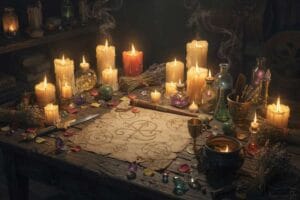
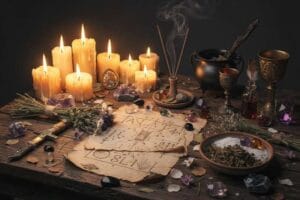
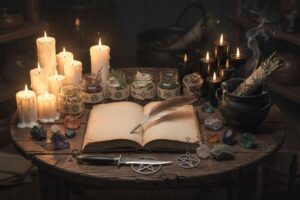
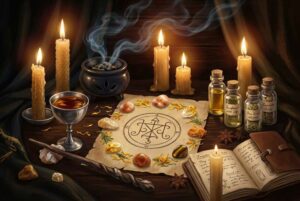
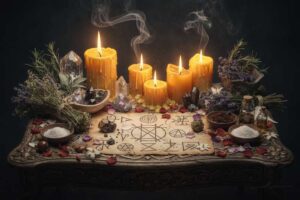
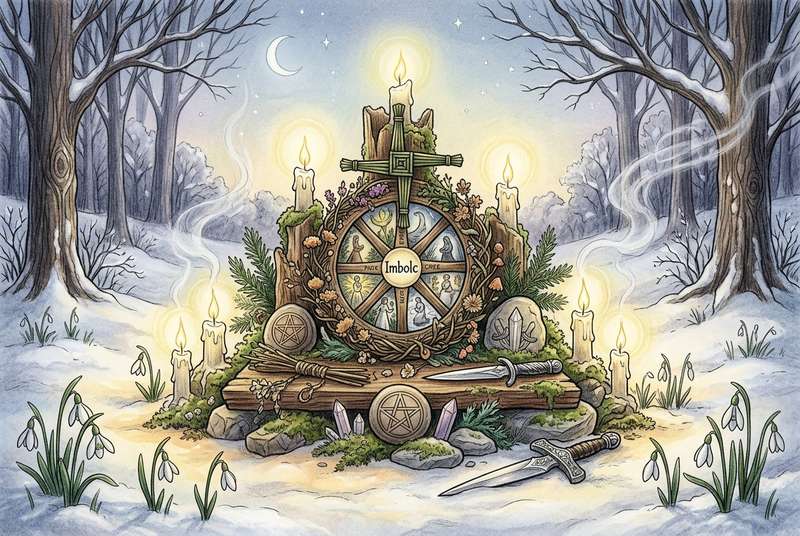
Your Imbolc Sabbat altar should feel like a beacon of light and hope. Begin with a clean, white cloth as your base—purity and fresh begins are essential to this festival. Place multiple candles at the center: white for purification, red for Brigid’s sacred flame, and gold for the returning sun.
Include representations of Brigid: a statue, image, or symbolic object like a sword or flame. Add fresh flowers if available—snowdrops, crocuses, and other early bloomers honor the season’s stirring. Place a small bowl of milk or cream as an offering to the goddess, and keep bread or oatcakes nearby for libation.
Incorporate elements of fire (candles), water (a chalice of spring water or milk), earth (salt, stones, soil), and air (incense or feathers). A Brigid’s Cross woven by your hand makes a powerful altar focal point. You might also include a small dish of honey, a symbol of sweetness and inspiration, or a mirror to reflect light and represent the return of the sun.
Herbs, Crystals & Colors for Imbolc Sabbat
When you’re gathering materials for your Imbolc Sabbat celebration, select herbs that embody purification, inspiration, and fire energy. Rosemary for clarity and remembrance, sage for cleansing, frankincense for spiritual elevation, and bay leaves for victory and protection all serve beautifully. Brigid’s flower—the dandelion—is sacred, as is lavender for peace and calm renewal.
Crystals that resonate with Imbolc Sabbat energy include carnelian for creative fire, clear quartz for clarity and amplification, ruby for passion and courage, and amethyst for spiritual insight. Black tourmaline offers grounding protection as you step into new beginnings, while citrine attracts abundance and joy.
Colors to honor during Imbolc Sabbat include white for purification and new beginnings, red for the sacred flame and Brigid’s fire, gold for the awakening sun, and green for the earth’s stirring. Wear these colors, decorate your altar with them, and surround yourself with their vibrant energy as you celebrate.
Foods Traditional for Imbolc Sabbat
Imbolc Sabbat foods should feel warming, nourishing, and connected to the earth’s slow awakening. Traditionally, this festival honored dairy—milk, cream, cheese, and butter—reflecting the time when livestock began to produce again. Oatmeal and oat-based foods honor Brigid and the earth’s slow return to fertility.
Prepare lamb or other spring meats if you’re so inclined, or celebrate with vegetarian dishes featuring root vegetables, leeks, and onions that have sustained you through winter. Honey and honeycakes are sacred at Imbolc Sabbat, sweetening your celebration and honoring the bees that pollinate Brigid’s flowers. Herbal teas infused with rosemary, lavender, or nettle warm the belly and support purification.
Bread, especially oatcakes or barley loaves, connects you to grain and grain goddesses. Create a feast that feels like the first promise of spring—lighter than winter’s heavy fare, but still grounding and sustaining. Share food with friends, leave offerings for the earth, and consume mindfully, knowing that you’re eating in harmony with the season’s energies.
Modern Ways to Celebrate Imbolc Sabbat
As a modern practitioner, you have beautiful, creative ways to honor Imbolc Sabbat that fit your contemporary life. If you can’t gather with a coven, create a solo ritual that speaks to your heart—light candles, journal about your intentions, and speak aloud the goals you’re calling into being.
Consider starting a creative project on Imbolc Sabbat. Begin that novel, start that art practice, enroll in that course you’ve been considering. Brigid’s energy of inspiration makes this an auspicious time to kindle new endeavors. Clean your home thoroughly as a symbolic purification, donate items you no longer need, and refresh your space with flowers and light.
Share your Imbolc Sabbat celebration on social media, connecting with the global witchcraft community. Take a walk in nature and look for early signs of spring—the first shoots, returning birds, warmer air. Practice fire scrying with candles, journaling by candlelight, or writing poetry inspired by Brigid’s muse.
Host an Imbolc dinner party with friends, sharing a meal and conversation about intentions and dreams. Create an online ritual circle with practitioners across the world, honoring Imbolc Sabbat in unity with the global witchcraft community. Whatever form your celebration takes, let it be authentic, heartfelt, and aligned with your unique spiritual path.
Closing Blessings for Your Imbolc Sabbat Journey
As you step into your Imbolc Sabbat celebration, know that you’re participating in an ancient, sacred rhythm that connects you to countless practitioners across centuries. You’re honoring the earth’s cycles, the goddess Brigid’s eternal flame, and the divine potential that lives within your own heart.
Imbolc Sabbat reminds you that even in winter’s depth, spring is already becoming. Your dreams are quickening. Your creative projects are awakening. Your authentic self is preparing to emerge, renewed and radiant. Trust in the turning of the wheel, tend your inner flame, and step boldly into the light that is already, always, burning for you.
FAQ
What does Imbolc mean and where does the name come from?
Imbolc comes from the Old Irish ‘i mbolc,’ meaning ‘in the belly,’ referring to the pregnancies of livestock during this season. The name reflects the ancient agricultural understanding that this festival marked when ewes began to lactate and prepare to give birth to lambs.
When is Imbolc celebrated each year?
Imbolc is celebrated on February 1st and 2nd, marking the astronomical midpoint between the Winter Solstice and the Spring Equinox. This timing represents a sacred threshold between seasons, honoring what has passed while calling forward what is yet to come.
How is Imbolc related to Saint Brigid and Candlemas?
Imbolc was historically associated with the feast of Saint Brigid, a Christian saint who embodied the qualities of the pagan goddess Brigid. This sacred syncretism allowed the ancient festival to survive and transform, eventually becoming known as Candlemas in Christian tradition.
What is the spiritual meaning of Imbolc Sabbat?
Imbolc represents purification, inspiration, and renewal—the first whispers of spring emerging from winter’s darkness. It symbolizes the delicate but determined push of transformation already underway, even when the world still appears asleep.
Is Imbolc part of the Wheel of the Year?
Yes, Imbolc is one of eight sacred festivals on the Wheel of the Year, serving as a pivotal moment to honor the beginning of the Celtic year’s light half. It invites practitioners to awaken their inner fire as the earth begins to stir beneath the frost.