Morning ritual tarot spreads are one of the most grounding daily practices you can build into your routine. Instead of reaching for your phone the moment you wake up and flooding your mind with notifications, imagine beginning each morning with a quiet moment, a shuffled deck, and a question that actually matters to you. A daily tarot spread anchors your awareness before the world has a chance to pull you in every direction. Whether you are brand new to tarot or have been reading cards for years, these morning layouts are designed to help you check in with yourself, set intentions, and move through your day with clarity and purpose.
When to Use a Morning Ritual Tarot Spread
The single best time to sit with a morning tarot spread is before you have fully merged with the demands of the day — ideally before you check messages, scroll through feeds, or speak to anyone else. This window of quiet, when your subconscious is still close to the surface, is when tarot tends to speak most clearly.
These spreads suit a wide range of intentions. Use them when you feel emotionally foggy and need to locate your center. Use them when you are motivated and want to focus your energy purposefully. Use them on ordinary Tuesday mornings when nothing feels especially significant — because that quiet consistency is where real self-awareness grows.
The questions you can explore include: What do I need to know today? What am I carrying emotionally? What deserves my attention? You do not need a crisis or a crossroads to pull a daily card. The ritual itself is the point.
How to Lay Out the Morning Ritual Tarot Spread
Before you pull any cards, take three slow, deliberate breaths. Hold your deck close to your chest for a moment. Some readers like to silently call on their higher self, spirit guides, or ancestors at this point — whoever feels like a trustworthy presence to you. Then shuffle the cards with your question or intention in mind.
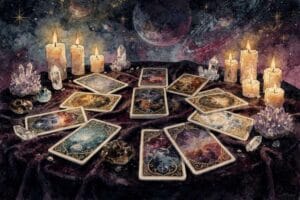
When the shuffling feels complete, draw your cards one at a time and place them face-down in their positions before turning them over together. This builds a sense of anticipation and keeps you from interpreting each card in isolation before you have seen the whole picture. You can lay the cards in a simple left-to-right row, or arrange them however feels natural. What matters most is consistency so that each position retains its meaning as you read.
Keep a journal nearby. Write down each card, your first impressions, and any images or feelings that arise immediately. You can return to those notes at the end of the day to see how the reading played out.
Position-by-Position Breakdown
Position 1: Daily Energy (The One-Card Check-In)
This single-card position is the foundation of any morning tarot practice, and it stands alone as a complete spread in its own right. The question here is simple: What is the energy of today? This card reflects what is moving through you — consciously or beneath the surface — and gives you a lens through which to experience the hours ahead.
When you turn this card over, notice your very first reaction before you reach for a book or a meaning list. That gut response is often the most accurate message. A bright, active card like the Ace of Wands might signal a day for bold action; a quieter card like the Four of Swords might suggest you need rest and patience more than hustle.
Over time, tracking your daily card creates an intimate, personal vocabulary with your deck. You will begin to notice patterns — certain cards appearing during certain emotional seasons, or recurring themes that point to something your inner self is persistently trying to show you.
Position 2: What I Am Thinking (Mind)
This position surfaces the mental chatter running in the background of your awareness. It is the rational, analytical layer — the stories you are telling yourself about your life, your circumstances, your worth. Drawing a card here is like holding up a mirror to your thought patterns before the day has had a chance to reinforce them further.
Court cards often show up here to represent a particular mindset you have adopted — perhaps the cautious vigilance of the King of Swords, or the daydreaming idealism of the Page of Cups. Major Arcana cards in this position often indicate that the mental pattern runs deep, touching on a significant life theme rather than just a passing worry.
Ask yourself: Is this thought pattern serving me today? Is it accurate, or is it a habit? The card does not judge — it simply illuminates.
Position 3: What I Am Feeling (Heart)
If the Mind position is about the story you are telling, this position is about the emotional truth underneath that story. Feelings and thoughts are not always aligned, and this card helps you notice the gap — or the harmony — between them.
Water-element cards from the Cups suit often feel especially at home here, but any card can appear, and each brings its own flavor of emotional truth. The Five of Pentacles in a feeling position might reveal an underlying anxiety about security. The Star might uncover quiet, deep-seated hope that has been waiting for your attention.
Sit with this card for a little longer than feels comfortable. Emotional honesty first thing in the morning is a practice, not an instant skill. Journaling your feelings without filtering them is the most powerful thing you can do with this position.
Position 4: What I Am Experiencing (Present Reality)
This card acts as a snapshot of your lived situation right now — the practical, tangible circumstances that are shaping your days. Unlike the mind and heart positions, which are internal, this one faces outward toward what is actually happening in your life.
Earth-element Pentacle cards often speak clearly in this position, but so do action-oriented Wands when life is particularly busy or fire-filled. Look at this card in context with positions 2 and 3. Sometimes you will find that what you are thinking and feeling aligns beautifully with what you are experiencing. Other times, there will be a striking dissonance — which is itself a valuable insight.
Position 5: What I Truly Desire (Manifestation Spread — Card 1)
This position opens the three-card manifestation sequence, which is best used on mornings when you feel called to actively co-create your day rather than simply receive it. The question here goes deeper than what do I want? — it asks what you truly, authentically desire beneath the surface-level goals.
Do not be surprised if the card that appears here catches you off guard. The Eight of Cups might reveal a desire to let something go that you have been pretending to hold onto. The Ten of Pentacles might point to a longing for stability and legacy that your busy mind has been too distracted to acknowledge. Trust what comes.
Position 6: How I Can Manifest It (Manifestation Spread — Card 2)
Once you have identified your true desire in position 5, this card gives you practical and energetic guidance on how to move toward it today. Notice the word today — this is not a grand life plan, but a single, actionable step or attitude shift you can make in the next twenty-four hours.
Active cards like the Chariot or the Knight of Wands here suggest that direct, bold movement is favored. More reflective cards like the High Priestess or the Hermit might counsel inner work, stillness, or research over outward action. The deck meets you exactly where you are.
Position 7: What Resources Are Available to Me (Manifestation Spread — Card 3)
This final card in the manifestation sequence is one of the most encouraging positions in any morning spread. It asks you to recognize what you already have — the strengths, relationships, skills, and energies that are genuinely accessible to you right now, not someday when conditions are perfect.
People often overlook their own resources when they are focused on what they lack. A card like the Nine of Pentacles here reminds you of your self-sufficiency. The Three of Cups points to the people around you who are ready to help. The Ace of Swords places a sharp, clear mind at your disposal. Whatever appears, receive it as a gift you already possess.
Reading the Cards Together
Individual card meanings are starting points, not destinations. The real depth of any tarot spread lives in the conversation between positions.
When you have laid all your cards, step back and look at the spread as a whole before analyzing any single card in detail. Notice the overall feel: Is the spread predominantly Major Arcana, pointing to significant life themes at work? Are there many cards from one suit, suggesting the dominance of a particular element — fire’s action, water’s emotion, air’s thought, earth’s practicality?
Look for contrasts and connections. A fiery desire card followed by a still, receptive resources card might be telling you to want boldly but move gently. Two cards sharing imagery — both featuring water, both showing a single figure alone — may amplify a theme of solitude that deserves your attention today. This kind of holistic reading, where the spread becomes a living story rather than a list of meanings, is where tarot truly comes into its own.
Sample Reading Example
Imagine you sit down on a Wednesday morning feeling vaguely restless but unable to name why. You draw three cards for the self-awareness spread:
- Position 2 (Mind): The Eight of Swords — You realize your thoughts have been trapping you in a story of powerlessness, mentally rehearsing everything that could go wrong.
- Position 3 (Heart): The Three of Cups — Emotionally, there is genuine joy available to you; you are craving connection and celebration, not isolation.
- Position 4 (Experience): The Two of Pentacles — Your current reality involves a balancing act, juggling multiple responsibilities with limited breathing room.
Put together, the spread tells a clear story: your mind is creating a sense of entrapment that your heart does not agree with. The practical reality is demanding but not hopeless. The guidance? Reach out to a friend today. Let yourself laugh. The juggling act is temporary, and the joy you crave is closer than your anxious thoughts are telling you.
Common Mistakes to Avoid
- Skipping the breath and shuffle: Rushing straight from sleep into pulling cards without any centering ritual tends to produce readings that feel disconnected. Even sixty seconds of stillness makes a difference.
- Over-interpreting every card negatively: A challenging card in a morning spread is not a warning that your day will be terrible — it is an invitation to bring awareness to something that needs your attention.
- Changing spreads every single day: Variety is wonderful, but practicing the same spread consistently for a week or two lets you track genuine patterns and deepen your relationship with the positions.
- Ignoring your gut response: Your first impression of a card, before you look anything up, is often the most precise message for you personally. Do not talk yourself out of it.
- Forgetting to journal: Memory is selective. Writing down your cards and impressions each morning creates a record that reveals patterns over weeks and months — patterns that a single reading can never show you.
Final Thoughts
Morning ritual tarot spreads are not about predicting your day — they are about meeting yourself honestly before the world gets loud. Even a single daily card pulled with real attention and intention will shift the quality of your mornings over time. Start simple, stay consistent, and trust that the cards you pull are exactly the ones you need. Your deck is always ready. The question is whether you are ready to listen.
Frequently Asked Questions
How many cards should a beginner pull in a morning tarot spread?
Starting with a single daily card is ideal for beginners. One card, approached with genuine curiosity and journaled consistently, builds far more intuitive skill than a complex ten-card spread pulled without focus. Once you feel confident with one card, naturally expand to three.
Do I need to use reversed tarot cards in a morning spread?
Using reversals is entirely a personal choice. Many readers find that upright-only morning spreads feel cleaner and more encouraging as a daily ritual, while others value the nuanced shadow perspective that reversed cards add. Try both approaches for a week each and notice which feels more useful to you.
What is the best tarot deck for a daily morning practice?
The best deck for daily pulls is one whose imagery speaks to you naturally without requiring heavy reference. The classic Rider-Waite-Smith deck is widely recommended for morning practice because its illustrated pip cards carry immediate narrative meaning. That said, any deck you feel genuinely drawn to will work well.
Can I do a morning tarot spread without a specific question?
Absolutely. Open-ended pulls — where you simply ask “what do I need to know today?” — are some of the most revealing readings. An open question invites your subconscious and intuition to surface what your conscious mind might not yet know it needs to address.