
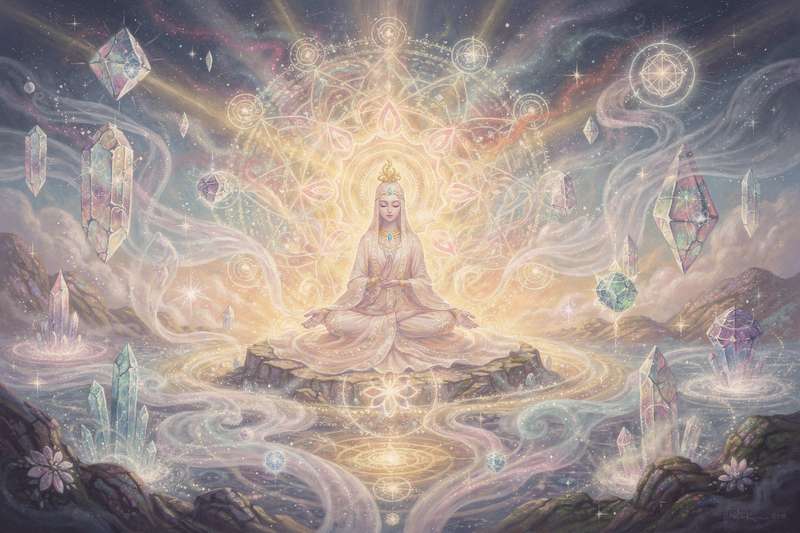
Tarot card symbolism is one of the most rewarding — and, honestly, one of the most misunderstood — parts of learning to read the cards. Every image on every card carries layers of meaning: color, number, figure, animal, landscape, celestial body. When you first sit down with a new deck, those layers can feel like a foreign language. But here is the truth: you do not need a PhD in Kabbalah or a year of art history to start translating what the symbols are telling you. You already have two powerful tools available — the collective wisdom that has built up around these images over centuries, and your own intuitive, personal response to what you see. BTP36, which focuses specifically on translating symbols in the tarot, is built around exactly this idea: that symbol literacy is a learnable skill, and it gets easier the moment you stop trying to memorize everything at once.
What Tarot Symbol Translation Actually Means
When people talk about translating tarot symbols, they usually mean one of two things. The first is decoding the traditional, collectively agreed-upon meaning behind an image — what a white rose has signified across spiritual traditions, for example, or why a mountain appears on so many Major Arcana cards. The second is noticing your own gut response to an image and trusting that response as valid data.
Both of these approaches matter, and neither cancels the other out. Think of collective symbolism as the grammar of the tarot language. It gives you a shared framework so that when you read for someone else, your interpretation has roots. Personal symbolism is your dialect — the unique associations your own life experience brings to an image.
The Rider-Waite-Smith deck, created in 1909 by Pamela Colman Smith and A. E. Waite, is probably the best example of how layered collective symbolism can be. Within its 78 cards you will find visual references drawn from Kabbalah, numerology, astrology, Christianity, Paganism, and the philosophical tradition of the Hermetic Order of the Golden Dawn. That is a lot of territory. Other decks organize themselves around entirely different symbolic systems — Zen philosophy, Celtic mythology, Jungian archetypes, or the personal artistic vision of a single illustrator. This is why the same card position can look and feel different depending on which deck you are holding.
The Two Streams of Tarot Symbolism: Collective and Personal
Collective Wisdom
Collective symbolism refers to meanings that have been agreed upon, refined, and passed down across generations, cultures, and spiritual lineages. A circle, for instance, has been understood across almost every human civilization as a symbol of cycles, wholeness, and continuity — because a circle has no beginning and no end. When you see a circular wreath on the World card or a circular coin arrangement in the Ten of Pentacles, that centuries-old resonance is already working on you, whether you consciously recognize it or not.
Other examples of traditional tarot symbolism include:
- Water — emotion, intuition, the unconscious mind; associated with the suit of Cups and the element of Water
- Mountains — challenge, achievement, or higher perspective; they appear repeatedly in the Pentacles and Wands suits
- The sun and moon — consciousness and subconsciousness, masculine and feminine energies, cycles of light and shadow
- Animals — specific animals carry specific archetypal energy; the lion represents courage and raw power, the dove stands for peace and divine message
- Colors — red signals passion or danger, yellow suggests intellect and optimism, white speaks to purity or spiritual protection
- Numbers — numerology runs through every pip card; the Threes carry themes of creation and community, the Fives bring conflict and change, the Tens signal completion or excess
You do not need to memorize all of this before your first reading. But the more you read and practice, the more these associations will start to feel natural rather than academic.
Personal Symbolism
This is where your own story enters the picture. Personal symbolism is any association you bring to an image based on your own life, culture, memories, or emotional response. If you grew up near the ocean, water imagery in a card might feel immediately familiar and comforting — rather than mysterious or unknown. If you had a difficult relationship with a father figure, the Emperor card might evoke feelings that go beyond the textbook definition of structure and authority.
These personal responses are not errors. They are information. When a symbol lights something up inside you — or makes you instinctively recoil — that reaction is your intuition speaking. One of the most powerful things you can do as a tarot reader is to start noticing those moments instead of overriding them with whatever a book says the card is “supposed” to mean.
How to Start Translating Tarot Symbols: Six Practical Approaches
Here are six concrete techniques you can begin using right now, whether you are brand new to tarot or looking to deepen a reading practice you have already been developing.
- Scan the card before you label it. Before you reach for a meaning — whether from memory or a guidebook — spend thirty seconds just looking at the card. What is the first thing your eye goes to? What is the mood of the image? What colors dominate? This first impression is valuable and worth writing down.
- Ask what the figures are doing. The people, creatures, and even objects in a tarot card are often engaged in some kind of action. Are they moving toward something or away? Are they looking up or down? Are their hands open or closed? Body language in tarot imagery carries enormous symbolic weight and can shift a card’s meaning dramatically.
- Pick one symbol per card to investigate. Rather than trying to decode everything at once, choose a single element — a specific animal, a particular color, a recurring shape — and research it. What does this symbol mean in mythology? In astrology? In your own personal history? Over time, these small investigations compound into real fluency.
- Keep a symbol journal. A dedicated notebook where you record symbols that catch your attention, along with both their traditional meanings and your personal associations, becomes a genuinely useful reference tool. It is your own living tarot dictionary.
- Let the symbols jump-start your intuition. When a symbol triggers a feeling or a memory, follow that thread before you consult any external resource. Intuition in tarot is not guessing — it is pattern recognition, and symbols are the patterns. Trust what arises first, then cross-reference with collective wisdom to see if there is alignment.
- Compare the same symbol across multiple cards. Many symbols — the same animal, the same celestial body, the same architectural element — appear across different cards in a deck. Comparing those appearances reveals how context shifts meaning. The moon in the High Priestess sits calmly at her feet; the moon in The Moon card transforms into something far more ambiguous and liminal. Same symbol, different energy, different message.
Common Misconceptions About Tarot Symbolism
- “I need to master all the symbolism before I can give a real reading.” No. Symbolism is a lifelong study, not a prerequisite. You can read meaningfully with partial knowledge and grow from there.
- “My personal response to a symbol is probably wrong.” It is not wrong — it is additional data. A good reader holds both the collective meaning and the personal response, and decides which one is speaking most clearly in context.
- “Different decks mean I have to learn entirely new symbol systems from scratch.” Many symbols are universal. Once you understand what water represents or what a tower implies, you carry that knowledge across most decks, even if the imagery is stylized differently.
- “Symbolism only matters for the Major Arcana.” The Minor Arcana are equally rich with symbolic content — the suits themselves (Wands, Cups, Swords, Pentacles) each carry elemental and energetic symbolism, and the pip imagery in illustrated decks like the Rider-Waite-Smith is full of meaningful detail.
- “If I do not know what a symbol means, the reading is invalid.” An unknown symbol is an invitation to explore, not a failure. Sitting with uncertainty and asking the card a question is itself a legitimate part of the reading process.
- “Tarot symbolism is fixed and unchanging.” Symbols evolve. Their meanings shift across cultures and centuries. Being flexible and curious about symbolism will serve you far better than treating any single interpretation as absolute truth.
Bringing It All Together: Symbol Fluency as a Living Practice
Reading tarot symbols well is less like passing an exam and more like learning a language by living in the country. The more you immerse yourself — pulling cards daily, journaling your responses, researching individual symbols when curiosity strikes — the more fluent you become without it ever feeling like a grind.
The symbols in the tarot cards are not puzzles to be solved. They are doorways. Each one opens into a conversation between the image on the card, the accumulated wisdom of people who have worked with that image before you, and the unique lens of your own lived experience. When you hold all three of those at once — traditional meaning, personal resonance, and present-moment context — you are not just reading a card. You are having a genuine dialogue with your own intuition.
Start small. Pick one card. Look at one symbol. Ask yourself what it means to you before you ask any book. That single practice, repeated regularly, will do more for your reading confidence than any amount of memorization ever could.
Frequently Asked Questions
What is the difference between traditional and personal tarot symbolism?
Traditional tarot symbolism refers to meanings that have been collectively agreed upon across spiritual and philosophical traditions over centuries — for example, water representing emotion, or the color yellow signifying intellect. Personal symbolism is your own unique association with an image based on your individual life experience. Both are valid and useful in a reading, and the most skilled readers hold both simultaneously.
Do I need to learn Kabbalah or astrology to understand tarot symbols?
Not at all, especially when you are starting out. These philosophical systems add depth for those who want to go further, but they are not required to give meaningful readings. Beginning with visual observation and your own intuitive responses will take you a long way before you ever need to study Kabbalah or astrological attributions.
How do I know if my personal interpretation of a tarot symbol is correct?
In tarot, “correct” is context-dependent rather than absolute. If a personal association makes emotional sense within the situation you are reading for, it is worth taking seriously. Cross-referencing your instinct with the card’s traditional meaning can help you see whether they align, contradict, or offer two complementary perspectives on the same question.
Is tarot symbolism the same across all decks?
The core symbolic language — elemental associations, numerology, archetypal figures — carries across most decks, but individual decks can emphasize different philosophical traditions. A deck built around Zen philosophy will look and feel different from one rooted in Celtic mythology, even though both contain 78 cards. Learning to identify what symbolic system a deck draws from will help you read it more fluently.