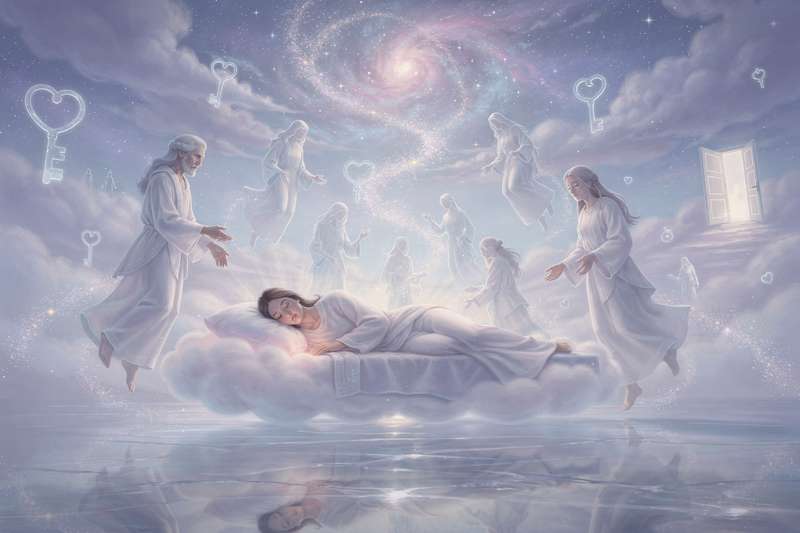
Analyzing the Symbolism of Dead People in Dreams: What It Really Means
Dreaming of dead people — whether a beloved grandmother, a lost friend, or even a stranger — ranks among the most vivid and emotionally intense experiences your sleeping mind can create. These dreams about deceased loved ones tend to linger long after waking, carrying a weight that ordinary dreams rarely match. The good news is that they are almost never a bad omen. Most of the time, they are your own psyche doing profound inner work: processing grief, seeking closure, or surfacing wisdom you have not yet consciously claimed.
Understanding the symbolism of the deceased in dreams requires looking at multiple layers — the emotional, the psychological, and the spiritual — because no single explanation fits every dreamer or every dream.
General Interpretation of Dreaming About Deceased People
At the broadest level, the appearance of a dead person in your dream is a signal from your unconscious mind that something connected to that person — or to what they represent — still matters to you. Carl Jung believed that dreams serve a purposive function, acting as natural defense mechanisms for the psyche when it encounters emotional injury. He wrote that the dream “furnishes the unconscious material constellated in a given conscious situation and supplies it to consciousness in a symbolical form.” In plain terms: your dreaming mind is not randomly generating images. It is working for you.
Sigmund Freud, writing in On Dreams, described dreams as “concealed realizations of repressed desires.” By that lens, dreaming of a deceased parent who is somehow alive again does not predict their return — it expresses a deep, carefully held wish that they were still here. Both frameworks arrive at the same essential truth: these dreams are purposeful, and they deserve your respectful attention.
Common themes reported across many dreamers include:
- The deceased appearing free of illness, young, or glowing with health
- Conversations that never happened in waking life
- The deceased delivering a message or warning
- A sense that the person is “okay” or at peace
- Reliving familiar memories or old settings together
Positive Meanings: When These Dreams Bring Healing
Not every dream about the dead is heavy or unsettling. Many people describe waking from these experiences feeling genuinely comforted — as though something quietly unfinished has finally been resolved. Here are the most affirming interpretations to consider:
Emotional Closure
If your relationship with the deceased was complicated, or if you never had the chance to say a proper goodbye, your dreaming mind may be constructing the closure your waking life could not provide. Conversations that bring relief, warm embraces, or a simple sense that the person is at peace — these are your inner world’s way of completing what was left open.
Inner Wisdom Surfacing
The deceased does not always represent themselves literally. A strict father appearing in a dream might symbolize the part of you that holds discipline and standards. A beloved mentor might represent the wisdom you already carry but have forgotten to trust. When you see someone who has passed, ask yourself: what quality or lesson did they embody? That quality may be exactly what your current life situation is calling for.
Grief Doing Its Work
Grief has no fixed timeline, and the unconscious mind knows this. Dreaming repeatedly of someone you have lost — even years after their passing — is not a sign that you are stuck. It is often a sign that your love for them remains alive and that your psyche is still integrating the reality of their absence. This is healthy, not pathological.
Warning Signs: When Dead People Dreams Signal Something Deeper
While most of these dreams lean toward healing, some carry a different energy worth paying attention to.
The Deceased Appears Angry or Distressed
If the person in your dream is upset, frightened, or appearing as they did during illness or at the time of death, this usually reflects your own unresolved guilt, regret, or unprocessed grief — not the actual state of the deceased. Your inner world is using their image to surface emotions that have not yet been acknowledged.
Recurring Dreams That Leave You Anxious
A dream that repeats itself is always worth examining more closely. Recurring dreams of the deceased often point to a specific emotional knot — something you feel you did or did not do, something that was said or left unsaid. Journaling about the specific details, or speaking with a counselor or trusted spiritual advisor, can help you identify what your subconscious is persistently trying to bring to light.
Feeling Trapped or Followed
Dreams in which the deceased seems to pursue you or in which you feel unable to escape their presence may reflect feelings of guilt, obligation, or a sense of being emotionally bound to the past. These dreams gently ask you to examine whether you are carrying a burden — perhaps responsibility for someone else’s pain — that was never truly yours to hold.
Spiritual and Metaphysical Meaning of Dead People in Dreams
From a spiritual perspective, dreams of the deceased occupy a uniquely sacred space across virtually every culture in human history. Ancient Greeks understood this intuitively — the twins Hypnos (sleep) and Thanatos (death) ruled neighboring kingdoms, separated only by a thin membrane. Many Indigenous traditions, as well as Buddhist, Hindu, and various Western esoteric traditions, teach that the veil between the living and the dead thins during sleep, making genuine contact more possible.
What many people describe as a visitation dream carries distinct hallmarks that set it apart from ordinary dreaming:
- The dream feels unusually vivid and real — more like a memory than a dream
- The deceased appears healthy, luminous, or younger than at death
- There is a calm, intentional quality to the encounter
- You remember the dream with striking clarity upon waking
- You are left with an unmistakable feeling of peace or reassurance
Whether you interpret this spiritually — as a genuine reaching across the veil — or psychologically — as the deepest layers of the unconscious communicating through an emotionally powerful symbol — the practical effect is often the same: comfort, acceptance, and a renewed sense that love does not simply cease when a body does.
From a more esoteric standpoint, some teachers connect these dreams to the third-eye chakra and its role as a receiver of non-ordinary information. Crystals such as amethyst and clear quartz are traditionally associated with dream clarity and spiritual communication, and some practitioners place them near the bed to encourage meaningful dream experiences. Dream work also connects naturally to shadow work — the practice of consciously meeting the parts of yourself that normally remain hidden.
Common Dream Scenarios and What They Mean
The specific details of your dream matter enormously. Here are five of the most frequently reported scenarios and what each one tends to signal:
- The deceased is alive and healthy, but only you know it. This powerfully common dream typically reflects ongoing love and longing. Your psyche has not finished integrating the loss. It is not a sign of pathology — it is a sign of how deeply that person mattered to you.
- The deceased speaks directly to you. Pay close attention to what is said. Whether you interpret this as a spiritual message or a projection of your own inner wisdom, the words spoken in these dreams frequently address something real and unresolved in your waking life.
- The deceased appears but stays silent. Silence in a dream often points to unanswered questions or unexpressed feelings. What would you most want to say to this person if you could? That question is worth sitting with.
- Dreaming of someone you barely knew or a stranger who is dead. This scenario is less about personal grief and more often symbolic. The unknown deceased may represent a part of yourself — an old identity, a habit, a chapter of life — that has ended or needs to end. It can also appear as a sign of spiritual guidance from beyond your immediate circle.
- The deceased is angry or upset with you. As noted earlier, this reflects your own inner emotional state more than anything about the deceased. It is an invitation to examine where you are carrying guilt or where you feel you fell short — and to extend yourself some honest compassion.
What To Do After This Dream
Waking from a dream about a deceased person can leave you emotionally raw, strangely comforted, or somewhere in between. Here are grounded steps to help you honor what arose:
- Write it down immediately. Before the details fade, capture everything — who appeared, what was said, how you felt, the setting. Patterns in recurring dreams often only become visible when you read them back over time.
- Sit with the emotion before analyzing it. Before you rush to interpret, allow yourself to simply feel whatever the dream stirred. Grief, love, relief, unease — all of it is valid data.
- Ask the symbolic question. What did this person represent in your life — safety, criticism, joy, challenge? How does that quality relate to something you are currently facing?
- Consider speaking about it. Sharing the dream with a trusted friend, spiritual advisor, or therapist can surface meanings you would not reach alone.
- Honor the connection. Light a candle, look at a photograph, or write a letter to the person who appeared. Simple acts of remembrance can help integrate what the dream was processing.
Dream Journal Prompt
Sit quietly for a few minutes after waking. Then write: “When [name or ‘the person’] appeared in my dream, I felt… The one thing I most wish I had said to them is… The quality they embodied that I most need right now is… What this dream may be asking me to release is…”
There is no single, definitive answer to what dead people in dreams mean — and that is precisely what makes them so rich. They sit at the intersection of memory, emotion, love, and mystery. Approach yours with curiosity rather than fear, and you may find that the person who visited you in sleep had something genuinely worth hearing.
Frequently Asked Questions
Is it normal to dream about someone who has died?
Yes, entirely. Dreams featuring deceased loved ones are among the most commonly reported dream experiences across all cultures and age groups. They are especially frequent during periods of active grief but can occur years or even decades after a loss, often resurfacing during times of significant personal change.
Does dreaming about a dead person mean they are trying to contact me?
This depends on your personal beliefs. Many spiritual traditions teach that dreams are a genuine channel through which those who have passed can offer comfort or guidance. From a psychological perspective, these dreams reflect your unconscious mind processing grief, love, and unresolved emotion. Both interpretations can coexist — and both honor the profound significance of the experience.
Why do I keep having recurring dreams about the same deceased person?
Recurring dreams generally signal something unresolved. It may be grief that has not yet been fully acknowledged, guilt or regret around the relationship, or a quality that person represented — wisdom, safety, challenge — that your current life is actively calling forward. Keeping a dream journal and noting the specific emotions and details each time can help you identify the pattern.
What does it mean if the dead person in my dream seems angry or frightening?
A distressing or angry deceased figure in a dream typically reflects your own emotional state — particularly guilt, unresolved conflict, or feelings of inadequacy — rather than anything about the person themselves. Think of it as your inner world using a powerful symbol to draw your attention to something that needs honest acknowledgment and, ultimately, self-compassion.