Understanding the Trine: Your Cosmic Gift of Grace
When you look at your birth chart, you’re reading a personal roadmap written in the language of the cosmos. Among the symbols and planetary positions, you’ll find something that marks some of your greatest natural gifts: the trine aspect. This 120-degree angle between planets is considered one of the most fortunate configurations in astrology, and for good reason.
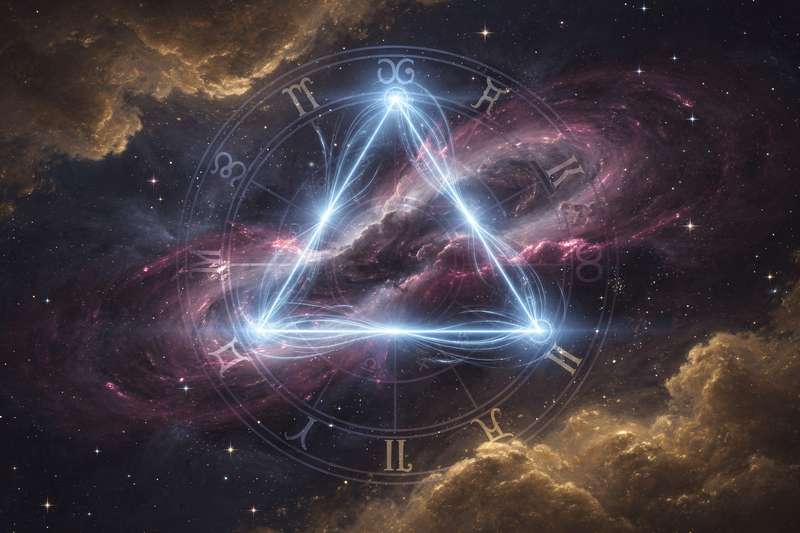
A trine occurs when two planets are positioned approximately 120 degrees apart in your chart. This specific distance creates a geometric relationship that astrologers have observed for centuries to bring ease, talent, and positive momentum. Unlike challenging aspects that push you toward growth through friction, trines offer you something different—they hand you abilities and opportunities that feel almost effortless.
What Makes a Trine Different From Other Aspects
Your birth chart contains many types of planetary aspects: squares, oppositions, conjunctions, and sextiles, each with their own flavor and purpose. The trine stands apart because it represents a flow state. When planets form a trine, they speak the same energetic language. They’re in compatible zodiac elements—fire with fire, water with water, earth with earth, or air with air—which means their energies naturally support one another rather than create tension.
This doesn’t mean trine aspects are boring or passive. Rather, they represent areas of your life where your inner resources are already aligned. You possess natural talent here. You don’t have to fight yourself or work against your own grain. The energy moves like water finding the easiest path downhill.
How Trine Aspects Show Up in Your Life
When you have a trine in your chart, you’ll notice certain areas feel surprisingly natural to you. A Venus trine Mars, for example, often indicates someone who expresses affection easily and attracts romantic attention without much effort. A Mercury trine Jupiter might mean learning comes naturally to you, that you can communicate your ideas clearly and others listen. A Sun trine Moon suggests emotional harmony within yourself—your conscious goals and emotional needs don’t pull you in opposite directions.
The beautiful part? These aren’t abilities you need to struggle to develop. You already have the foundation. Your work is simply to notice them, refine them, and share them with the world.
Recognizing Your Trine Gifts
- They feel easy: Tasks and interactions that trigger your trine aspects don’t feel forced or exhausting.
- They emerge early: People with strong trines often showed natural talent in these areas from childhood.
- Others notice: Your trine gifts are visible to people around you, even if you take them for granted.
- They bring opportunity: Doors tend to open in areas connected to your trines without you having to push hard.
- They feel authentic: Expressing your trine gifts aligns with who you genuinely are.
The Planets Most Often Found in Trines
Every trine involves two planets, and the pair matters. A Sun trine Saturn is very different from a Sun trine Neptune, even though both are trines. The Sun represents your core identity and life purpose, so a Sun trine with any planet amplifies that planet’s positive qualities in your personality. A Sun trine Jupiter, for instance, often brings natural confidence and optimism. A Sun trine Pluto might indicate someone with natural magnetism and transformative power.
Venus trines—whether Venus trine Mars, Venus trine Neptune, or Venus trine Pluto—deeply affect how you experience relationships and creative expression. Mercury trines influence your communication style and mental processing. Moon trines shape your emotional nature and how you nurture yourself and others.
The outer planets (Jupiter, Saturn, Uranus, Neptune, Pluto) form trines more slowly over time, so if you have these, they represent generational gifts that shape longer arcs of your life.
Trine Aspects in Different Life Areas
In Relationships and Love
Trines in your chart that involve Venus or Mars often indicate natural ease in love and attraction. You may find it simple to express affection, to know what you want in a partner, or to create harmony in close relationships. If you have a Venus-Mars trine, physical chemistry often feels natural and unforced. A Venus-Jupiter trine can bring generosity and warmth that others are drawn to. These gifts don’t guarantee perfect relationships, but they do give you foundational strengths to build from.
In Career and Creativity
Your professional talents often correlate with your trine aspects. If you have Mercury trines, you may excel in communication-based work—writing, teaching, speaking. Sun-Jupiter trines often indicate natural leadership and the ability to inspire others. A well-placed Mars trine can mean you have energy and motivation that others lack. Moon-Neptune trines frequently appear in the charts of artists and healers who seem to intuitively understand human emotion.
In Personal Growth
While trine aspects represent gifts more than challenges, they also show where growth comes from pleasure rather than pain. You’re more likely to develop and refine your talents in areas where trines exist because the work doesn’t feel like work. This is actually a spiritual advantage—you can evolve through joy.
Why Trines Can Sometimes Hold You Back
Here’s a subtle truth about trine aspects: their very ease can become a limitation if you’re not conscious. Because these gifts come naturally, you might take them for granted. You might not push yourself to develop them further because they already work well enough. You might also rely on them so heavily that you neglect other areas of your chart that need attention.
A person with a strong Venus trine Mars might attract partners easily but never develop the deeper relational skills needed for lasting intimacy. Someone with a Mercury trine Jupiter might talk a good game but lack the discipline to follow through. The invitation from trine aspects isn’t to be complacent—it’s to polish the gifts you already have.
Working With Your Trine Aspects Consciously
To make the most of your trines, first identify them in your birth chart. Look at which planets are involved and which zodiac signs and houses they occupy. This tells you where your natural gifts lie. Then ask yourself: Am I actually developing these abilities, or am I taking them for granted? Am I sharing these gifts with others? Are there subtle ways I could go deeper?
You might also consider how your trine aspects can support the more challenging parts of your chart. If you have a difficult square aspect between two planets, a trine from a third planet might help you navigate that tension. Your birth chart is a whole system, and your trines are resources you can consciously activate.
Practices to Activate Your Trines
- Notice them: Simply becoming aware of your trine gifts shifts how you experience them from invisible to intentional.
- Express them: Find ways to use your trine talents in your work, relationships, and creative life.
- Develop them: Just because something is natural doesn’t mean it can’t be refined. A natural musician still benefits from practice.
- Share them: Your gifts are often meant not just for you but for your community. How can you offer them to others?
- Balance them: Make sure you’re not overlooking other important areas of your chart because trines make certain areas feel so comfortable.
Trine Aspects in Synastry: Relationship Charts
When you compare your birth chart with someone else’s—a practice called synastry—trines between your charts indicate areas where your energies naturally blend. If your Venus trines their Mars, there’s likely physical attraction and romantic ease between you. If your Mercury trines their Moon, you probably communicate in ways that feel emotionally comfortable to them. These trine connections are what astrologers call “glue” in relationships—they’re the reasons two people feel naturally drawn to each other.
However, synastry trines alone don’t create lasting relationships. They create initial ease and compatibility, but depth requires navigating challenges too. The healthiest relationships include some trine aspects for ease, some sextiles for supportive energy, and even some squares and oppositions that encourage growth.
Trine Transits: Temporary Blessings
Beyond your birth chart, transits also create trine aspects. When a planet currently moving through the sky forms a trine to a planet in your natal chart, you experience a window of favorable energy. These transiting trines usually last a few weeks to a few months (depending on which planets are involved) and bring a sense of flow and opportunity to the areas of life they touch.
Many astrologers use transiting trines as timing guides for important decisions or new projects. When a transiting planet trines your natal Sun, for example, it’s an excellent time to step into new leadership roles or pursue goals that are deeply important to you.
FAQ
What does it mean if I have no trines in my birth chart?
First, check carefully—most charts have at least some trines. If yours genuinely lacks major trines, it doesn’t mean you lack talent or ability. It may mean your gifts come through different channels, perhaps through sextiles (which offer supportive energy in a slightly different way) or through working with challenging aspects to develop strength. Some people are naturally driven to grow through overcoming obstacles rather than flowing through ease.
Can I have too many trines?
While it’s rare to have an excessive number of trines, some charts do have many. The concern here is the opposite of what you might think: instead of being blessed, you might lack the friction needed for growth and motivation. People with many trines sometimes struggle with discipline or follow-through because everything comes so easily. The remedy is conscious intention—choosing to deepen your gifts even when it’s not required of you.
Are trine aspects more important than challenging aspects?
Both matter, but in different ways. Trines show your gifts and natural flow. Challenging aspects (squares and oppositions) show where you grow, develop character, and find meaning through difficulty. A rich, full life uses both. Your trines are where you rest and share your talents. Your challenges are where you develop resilience and depth. Together, they create a complete person.
How wide can a trine orb be and still count?
Astrologers vary on this, but most allow orbs of 5-8 degrees for major planets in natal charts. Faster-moving planets like Mercury and Venus can have slightly tighter orbs. When reading your chart, check with an astrologer you trust, as different traditions have different standards. The closer to exact, the stronger the aspect’s influence.